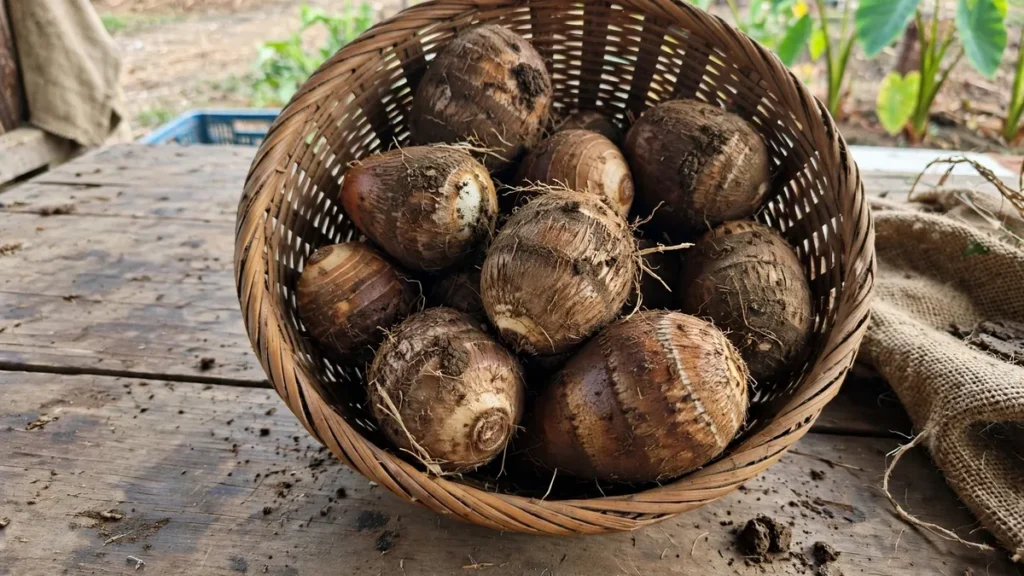
A taro farm escape is a short stay on a working farm where the crop sets the schedule. The corms take most of a year to grow, the harvest lasts a few weeks, and the kitchen cooks what comes out of the ground that morning. You plan around the plant, not around the calendar, and that is what makes the trip different from an ordinary holiday. The farm will not rearrange its harvest for you, and it should not have to.
The trip itself is simple: a flight to the nearest city, a drive or a booked lift to the farm, two to four nights in a farmhouse or cottage, and days built around the fields and the kitchen. Mornings are for the harvest, afternoons are for cooking or walking, and evenings are for the meal that the day’s work produced.
This guide walks through the nine decisions that shape the trip, from timing the harvest to buying taro to take home. Each step is practical, and each one comes from the way taro farms actually work.
Key takeaways
- Book inside the harvest weeks: taro is ready 7 to 12 months after planting, and the season varies by place.
- Choose the farm first and the flights second, because the harvest calendar does not move for a cheap fare.
- Taro must be cooked thoroughly before eating, and the leaves need the same treatment.
- Wetland farms mean wet feet and dry-field farms mean dust, so pack boots and clothes you do not mind ruining.
- Taro has no gluten in itself, yet wheat is used daily in farm kitchens, so tell the farm about gluten before you book.
What a taro farm escape involves
A taro farm escape involves a stay of two to four nights on a farm that grows taro as its main crop. You sleep on the property, eat in the farm kitchen, and join the harvest if the season allows. The farm is a working place, not a resort, so the days follow the work: an early start in the fields, a midday break in the heat, and a long evening meal.
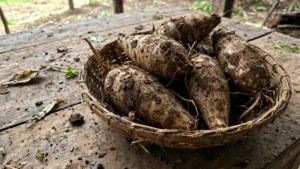
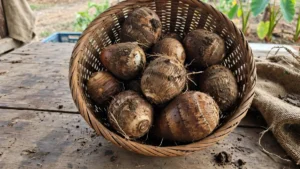
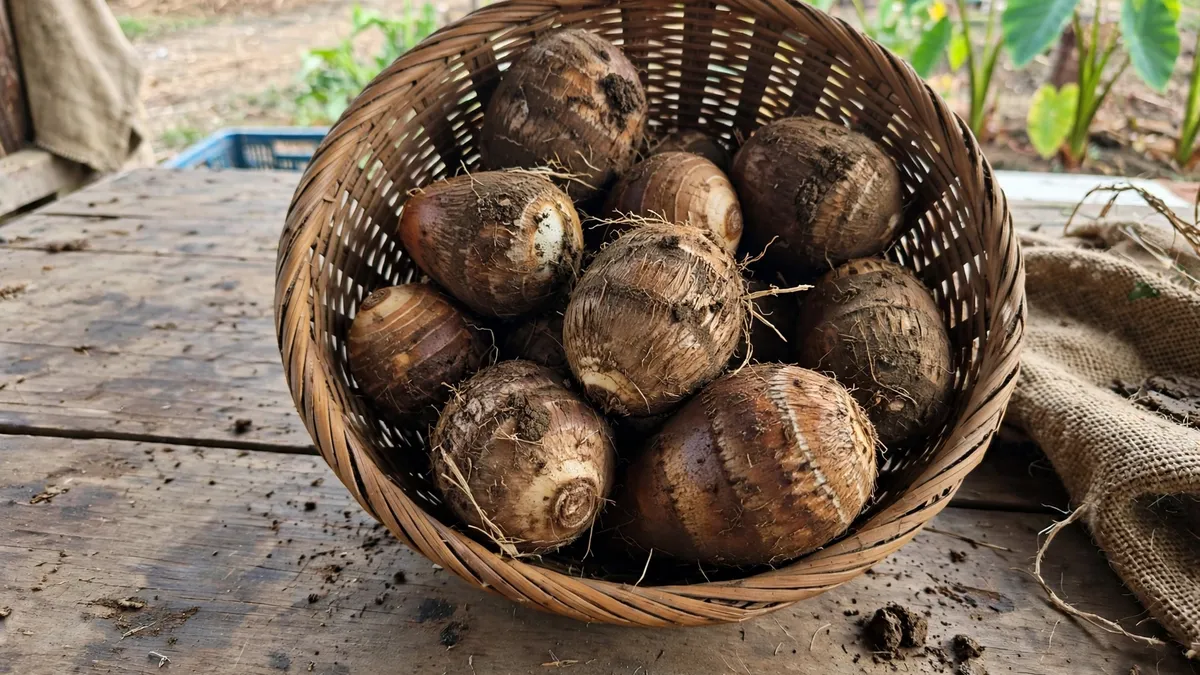
The harvest is the heart of it. In a wetland farm you wade into a flooded terrace and pull corms from the mud by hand. On a dry-field farm you work the rows with a fork and lift the corms out of the red earth. Either way the corms are washed, peeled and cooked the same day, and the meal that evening is built around them.
Between the field work there is time to walk, to cook, and to sit. The farms in this guide all keep guest numbers small, so the kitchen can cook for the people who are actually there, and the farmer has time to talk.
How to plan it, and what to check first
Begin with the harvest calendar, and leave the flights until later. Write to two or three farms and ask when their taro is dug, because a farm outside its harvest season is still a pleasant stay, but it is not a taro escape. Compare the answers, pick the farm whose weeks fit your dates, and only then look at flights. The harvest calendar is the one thing in this trip that cannot be negotiated.
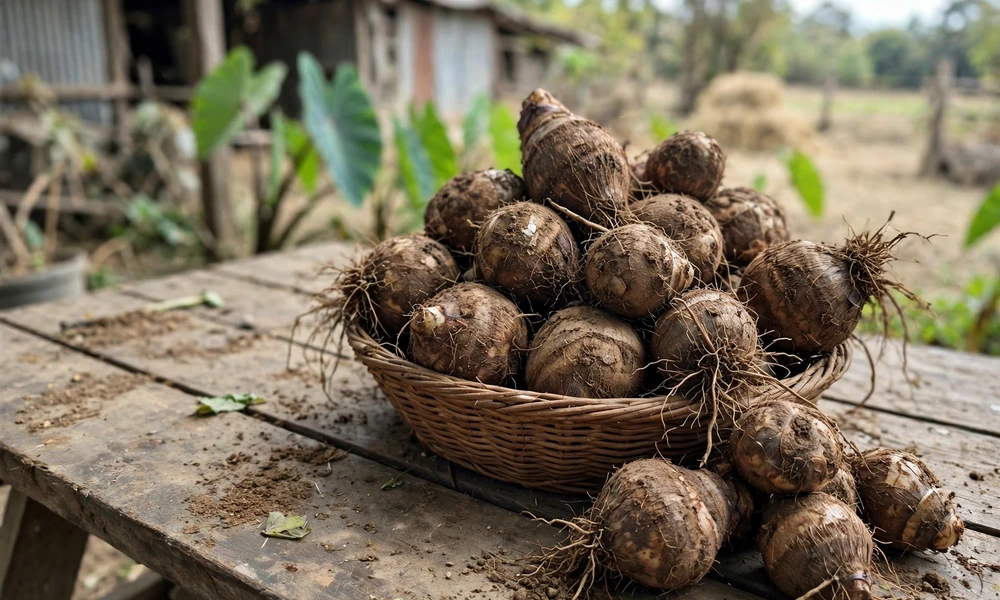
Next, check the practical details in the same message. Ask whether guests can join the harvest, whether the fields are wet or dry, how far the farm is from the airport, and whether a lift can be booked. Ask about gluten too, in the same message, because farm kitchens cook with wheat every day and a clear question now saves an awkward meal later. Travellers who have planned a fruit farm trip before will find the shape familiar, and our guide to how to plan a jabuticaba farm escape covers the same first steps, even though the crop is entirely different.
The 9 steps to plan a taro farm escape
1. Time the trip for the taro harvest season
What to do: Write to the farm and ask for its exact harvest weeks, then book your travel inside them. Hawaii harvests for much of the year, while the mainland farms in Vietnam and Thailand harvest in a shorter season after the rains. What to avoid: Booking flights first and hoping the harvest lines up, because it usually does not. Best For: Every traveller, because the harvest is the trip. Time Needed: A week of messages before you book. Standout Tip: Ask which week the farm digs its best rows, not just when the season opens.
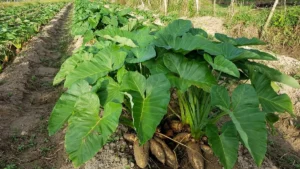
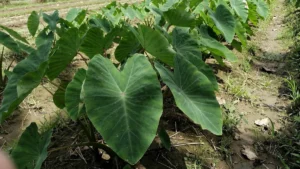
The leaves tell you when taro is ready: they yellow and fall, and the corms underneath are at their fullest.
2. Decide between island farms and mainland stays
What to do: Pick the island farms in Hawaii, Samoa and Fiji if you want wetland terraces and a long harvest season, and the mainland farms in Vietnam and Thailand if you want cooking, markets and river towns. What to avoid: Choosing by photograph alone, because a pretty terrace and a good kitchen are different things. Best For: Travellers deciding where their time is best spent. Time Needed: An evening of reading and one message to each farm. Standout Tip: If the kitchen matters most, pick the mainland; if the paddy matters most, pick the islands.
Island farms give you water, mud and long mornings in the fields. Mainland farms give you markets, bicycles and a kitchen that works all day.
3. Check that guests may join the digging morning
What to do: Ask the farm directly whether guests can join the digging, and whether the work is in wet terraces or dry rows. What to avoid: Assuming that a farm stay means a farm job, because some farms keep the wet fields for staff only. Best For: Travellers who want to work in the fields. Time Needed: A single message, sent before you pay anything. Standout Tip: Ask what time the digging starts, because it is usually before breakfast.
Wetland digging means wading ankle-deep in a flooded terrace and pulling corms from the mud with your hands. Dry-field digging means a fork, red earth and dust.
4. Pick a room with the paddies outside the window
What to do: Ask for a room with a view of the terraces or the rows, and a veranda where you can sit in the evening. What to avoid: Taking the cheapest room without asking, because it is often the one behind the kitchen with no view at all. Best For: Couples and anyone who likes a slow morning. Time Needed: One line in your booking message. Standout Tip: The rooms facing the water are worth the small extra cost.
A taro farm is at its best in the early morning, when the mist sits over the paddies and the leaves are still wet.
5. Ask the farm how it handles wheat in the kitchen
What to do: Tell the farm in your first message that you avoid gluten, and ask whether the kitchen can cook your meals without wheat. What to avoid: Waiting until you sit down to dinner, because the kitchen will already have cooked for the table. Best For: Guests who avoid gluten. Time Needed: A sentence in the message you send first. Standout Tip: Ask whether the sauces and breads are made separately from the taro dishes.
Taro itself has no gluten, but a farm kitchen uses wheat flour every day, in bread, in noodles, in sauces and in batter. If you have already planned a trip around another crop, our guide to how to plan a grumixama farm escape makes the same point for the same reason.
6. Taste taro steamed, as poi and in a curry
What to do: Eat taro three ways during your stay: steamed and plain, pounded into poi, and simmered in a curry or coconut milk. What to avoid: Judging taro on a single dish, because one preparation will not show you what the corm can do. Best For: Hungry travellers who like to try everything on the menu. Time Needed: Two or three evenings at the farm table. Standout Tip: Try the poi warm, the way the farm family eats it.
Steamed taro is mild and fluffy, poi is smooth and faintly sour, and taro in a curry takes on the flavour of the sauce around it.
7. Learn the cook-it-first rule before you eat taro
What to do: Ask the farmer or the cook how long taro needs to cook, and watch a corm go from raw to ready. What to avoid: Tasting raw taro or a raw taro leaf, however fresh it looks, because the crystals inside sting the mouth and throat. Best For: Every guest, without exception. Time Needed: Ten minutes in the kitchen on your first day. Standout Tip: If a dish looks undercooked, say so and wait; the kitchen would rather recook it than have you eat it raw.
The rule is simple and it is absolute: taro is cooked thoroughly or it is not eaten. The same applies to the leaves, which need long cooking too.
8. Walk the paddies with a farmer who knows them
What to do: Join the farm’s own walk through the terraces or rows, and let the farmer explain which variety grows where and why. What to avoid: Wandering the fields alone, because the wet terraces are slippery and the irrigation channels are easy to misjudge. Best For: Travellers who want to understand the crop. Time Needed: An hour in the morning or late afternoon. Standout Tip: Ask which variety the family saves for feasts, because the answer tells you a lot about the farm.
A taro farm grows more than one variety, and each one has a purpose: one for steaming, one for mashing, one for feasts, one that keeps longest in storage.
9. Buy taro chips and poi to take home
What to do: Buy taro chips, dried taro or a pot of poi from the farm shop on your last morning, and ask how to keep it. What to avoid: Buying fresh corms to carry home, because they are heavy, they spoil, and many countries will not let you bring them through customs. Best For: Travellers who want a taste of the trip at home. Time Needed: Half an hour on the morning you leave. Standout Tip: Ask the cook for the chip recipe, because it is easier than it looks.
Taro chips travel well, dried taro keeps for months, and poi keeps for a few days in a cool bag.
Picking the right season and region
The season is set by the plant, and the plant follows the rain. Hawaii harvests for much of the year, which makes it the easiest choice for a first trip, because the dates are flexible. Fiji and Samoa harvest in a long season too, with the wet months giving the biggest corms. Vietnam and Thailand harvest after the rains, in a shorter window, and the farms there plan their guest weeks around it, so book early.
For a first escape, pick Honolulu or Suva and stay three nights. The travel is simple, the farms are used to guests, and the harvest runs long enough that a small change of dates will not ruin the trip. If you have already planned a trip for another tropical crop, the contrast is instructive, and our guide to how to plan a pitanga farm escape shows how a different harvest, at the other end of the season, changes the shape of the same kind of trip.
The caveats that matter
Taro is a gentle crop, but a farm escape still needs honest expectations. The work is physical, the mud is real, and the food is filling and starchy. Wetland farms mean wet feet, dry-field farms mean dust, and both mean early mornings. Pack boots, pack clothes you do not mind ruining, and drink water through the day, especially in the tropics.
The cooking rule is the one that matters most. Raw taro and raw taro leaves sting the mouth and throat, and they must be cooked thoroughly before anyone eats them. If your stomach is easily upset, start with a small helping and see how it sits. If a dish looks undercooked, say so. The kitchen would rather cook it again than have you eat it raw, and a good farm expects the question.
| Detail | What is known |
|---|---|
| Best months | Hawaii harvests for much of the year; Vietnam and Thailand harvest in a shorter season after the rains |
| The raw rule | Never eat taro raw; it must be cooked through to remove the crystals that sting the mouth |
| Cooking time | Corms need long, thorough cooking; the leaves need it too |
| Stomach | Eat a small portion first if your stomach is sensitive, and drink water with the meal |
| Weather | Wet paddies mean mud and wet feet; dry fields mean dust and heat |
| Gluten | Taro itself has no gluten, but farm kitchens cook with wheat, so ask before you book |
| Getting there | Some farms need a car or a booked lift from the nearest town |
| What it is not | Not a potato; taro is an arum-family corm from Asia and the Pacific, potato is a nightshade tuber from the Andes |
Checklist: before you book a taro farm escape
Run through these checks when you book, then once more in the week before you travel.
- Check the digging weeks: ask when the farm lifts its taro, and keep your travel inside them.
- Check the field work: ask if guests may join the digging, and whether the ground is wet or dry.
- Check the kitchen: mention gluten in your opening message, and ask what the cooks can do.
- Check your footwear: bring boots or sandals you can afford to ruin, and keep white shoes at home.
- Check the journey: confirm how long the drive from the airport takes, and whether the farm sends a car.
- Check the cooking rule: never eat taro or its leaves raw, however fresh they seem.
Frequently asked questions
How many nights does a taro farm stay need?
Three nights for a farm near a city, four for a remote one. Two nights is enough to see the harvest and eat at the table, but three gives you a full digging morning, a cooking afternoon, and a slow last day.
Do I need a car to reach a taro farm?
Not always, but check before you book. Farms near Honolulu, Suva and Bangkok are reachable by taxi or a booked lift, while the hillside farms in Chiang Mai and the delta farms outside Hanoi are easier with a car.
Can children join the taro harvest?
Yes, on most farms, if they are old enough to follow instructions in muddy water. Dry-field digging suits children better than wading in a flooded terrace, and the kitchen is a good place for younger children while the adults are in the fields. Ask the farm about ages before you book.
What should I pack for a taro farm stay?
Boots or sandals you do not mind ruining, light clothes that dry fast, a hat, sunscreen, insect repellent, and a waterproof bag for your phone. Leave white shoes and anything you would hate to stain at home.
How is taro different from a potato?
Taro is Colocasia esculenta, an arum-family corm from Asia and the Pacific, while potato is Solanum tuberosum, a nightshade tuber from the Andes. Taro is softer and milder when cooked, it must be cooked thoroughly because of the crystals inside, and it is pounded into poi, which potato never is.
What taro foods can I bring home?
Taro chips, dried taro and a pot of poi travel best. Fresh corms are heavy, they spoil, and many countries will not let you bring them through customs.
The bottom line
A taro farm escape is a simple trip done well: pick the harvest weeks, book a farm that grows its own crop, tell the kitchen about gluten in your first message, and pack boots you do not mind ruining. Honolulu and Suva are the easiest first escapes, the mainland farms are the best second ones, and the cooking is the part you will remember longest.
Go in the right season, join the digging morning, taste taro three ways, and never eat it raw. Do those things and the trip gives you what it promises: muddy mornings, a kitchen that knows its crop, and a table where the taro you helped dig is the centre of the evening meal.