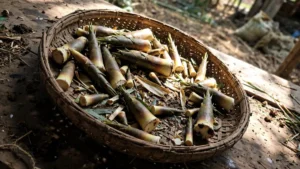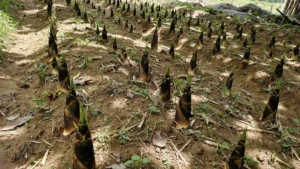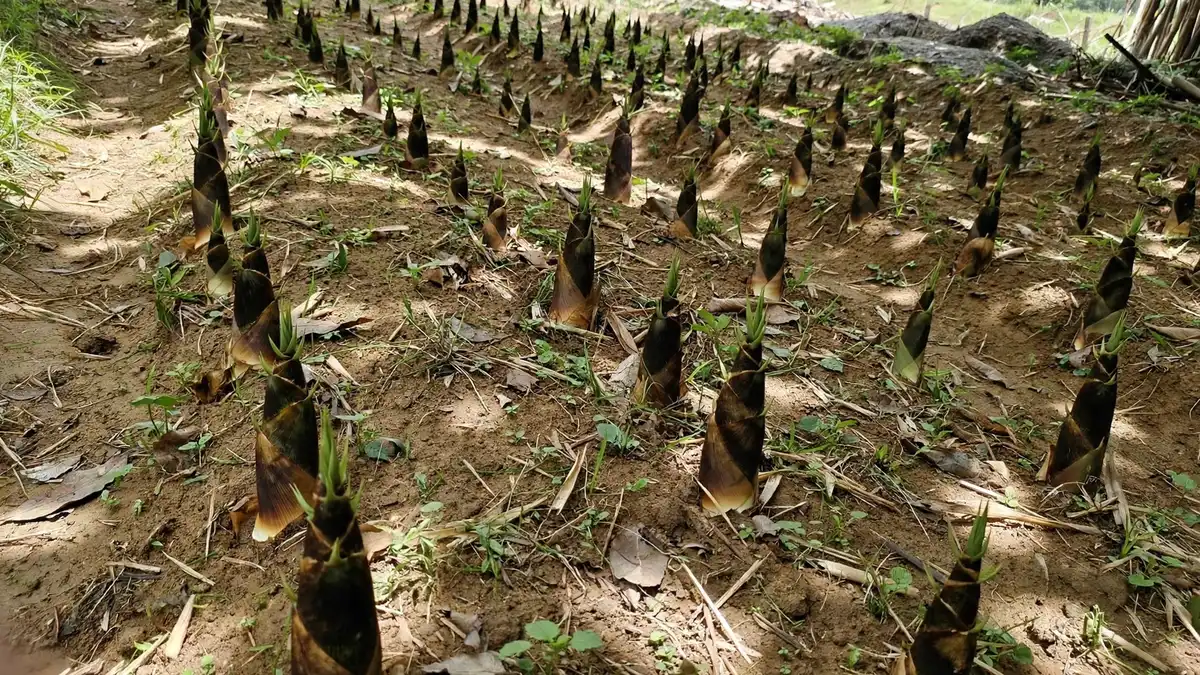
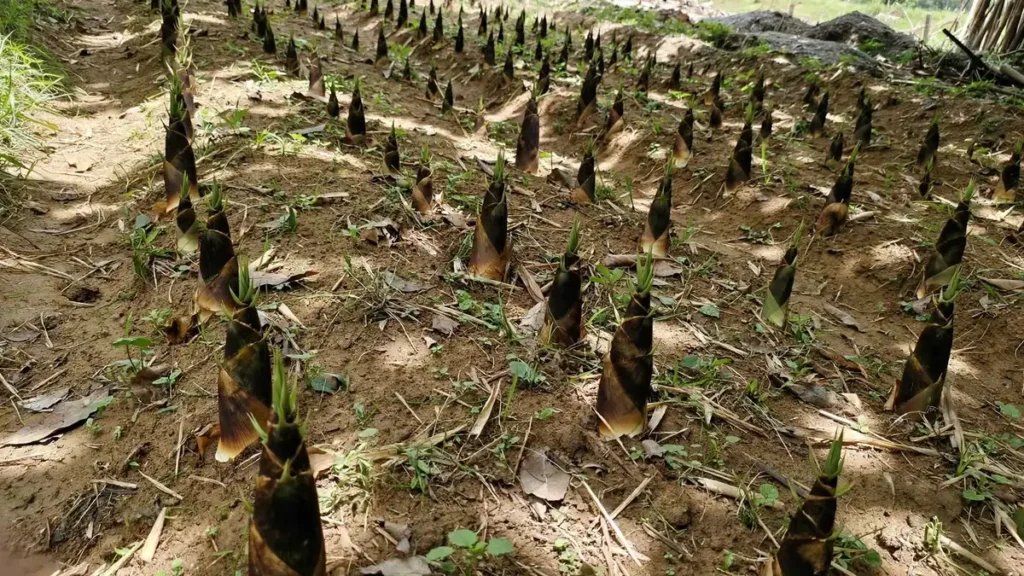
A bamboo shoot farm retreat is a short stay built around the brief spring harvest, when the young shoots push out of the soil and the kitchen works at full speed. You sleep in a farmhouse at the edge of a bamboo stand, walk the rows at dawn with a spade, and spend the rest of the day learning how a shoot becomes a dish. Bamboo shoots are the young, tender stems of bamboo, cut while still underground or just breaking the surface, and their harvest window is measured in days, not weeks.
The appeal is the pace of it. A shoot that is perfect on Tuesday can be woody by Friday, so the farm day is shaped by the ground, not by a schedule. Mornings are for cutting and peeling, midday for boiling out the bitterness, and evenings for stir-fries, soups, pickles and dumplings made from that morning’s cutting.
Below are nine bamboo shoot farm retreats worth considering in 2027, from a moso grove outside Chengdu to a hillside farm above Kuala Lumpur. Each one is described by what it offers, what to be careful about, and who will enjoy it most, so you can choose by the way you like to travel, not by the photograph.
Key takeaways
- A bamboo shoot farm retreat is a spring stay: the shoots are cut at dawn, peeled and boiled the same morning, and cooked by evening.
- Pick the region by its bamboo. Moso shoots around Chengdu and Hangzhou, madake shoots around Kyoto, and ma bamboo across Bangkok, Hanoi and Taipei each cook differently.
- Many bamboo shoots must be boiled before eating. Raw or undercooked shoots can be bitter and hard on the stomach, so never taste one straight from the soil.
- Book the harvest window, not the city. The best weeks fall in early spring, and a stay booked a month late can miss the shoots entirely.
- Bamboo shoots themselves are naturally gluten-free, but soy sauces, oyster sauce, shared woks and thickeners vary by kitchen, so confirm the details with the host, not with a booking page.
What a bamboo shoot farm retreat actually is
Most bamboo shoot stays are small: a family farm with three to eight guest rooms, a kitchen cooking what the stand gives, and a host who farms as well as hosts. The day follows the shoots: rain can push up a flush overnight and make the morning busy, while a slow spell puts pickles on the menu instead.
The work is light but early. You learn to spot the cracked soil where a shoot is pushing up, to cut it low with a spade without damaging the rhizome, and to peel away the tough outer husk to the pale, tender core. Then comes the boiling, which is the part no visitor should skip. Bitter compounds sit in the fresh shoot, and a proper boil in fresh water takes them out. Our guide to the best luxury taro farm retreats makes a similar point about cooking a root properly, and the same patience applies here.
That is the honest difference between a farm retreat and a food tour: a tour shows you finished dishes, while a retreat shows you where they come from and asks you to get up early and cut some yourself.
How we chose these retreats and what to look for
Look first at the bamboo itself. A farm that grows one variety well will feed you better than a farm that grows five badly. Moso gives fat, sweet shoots for braising and soup. Madake gives slimmer, crisper shoots for grilling and pickling. Ma bamboo gives tender shoots for quick stir-fries. Ask the farm which variety it grows, and when its main flush falls, before you pay.

Look next at the kitchen. A good shoot farm cooks the harvest three or four ways in a week: a clear soup, a stir-fry, a pickle, and a dumpling or rice dish. A farm that serves the shoot once, boiled and plain, is not really a shoot farm. Ask for the week’s menu in your first message, and listen for specifics, not promises.
Finally, look at the size of the stay. Smaller, and the farm may lack a proper kitchen rota. Larger, and you are a hotel guest who happens to be near bamboo, not a guest on a working farm.
The 9 best bamboo shoot farm retreats of 2027
Moso Grove Farmhouse, Chengdu
What we like: Fat moso shoots cut at dawn, a wood-fired kitchen, and a host family growing bamboo for three generations. The morning cutting walk is short and well taught, and the evening table always has a clear shoot soup. What to consider: Spring rain can turn the rows to mud, and the farmhouse has no lift, so heavy luggage is a nuisance. Best for: First-time farm guests who want a gentle introduction. Style: Rustic farmhouse, shared table. Price range: $85–$130 per night, with meals. Standout feature: The dawn cutting walk, with the host showing you how to read the cracked soil.
Chengdu is the heart of moso country, and the clear shoot soup here is the best argument for the trip.
West Lake Shoot Farm, Hangzhou
What we like: A lakeside setting, moso and bitter bamboo grown side by side, and a cooking class that covers pickling as well as stir-frying. The farm keeps its own pickling jars, and guests take one home. What to consider: Weekends fill fast in spring, and the lakeside rooms cost more than the garden rooms. Best for: Couples who want a farm stay with a view. Style: Lakeside farmhouse, private rooms. Price range: $90–$140 a night, food included. Standout feature: The pickling class, where you jar your own shoots with the farm’s brine.
Hangzhou’s shoots are prized for their sweetness, and the pickled jar you carry home proves the point.
Arashiyama Bamboo Farm Stay, Kyoto
What we like: Slim madake shoots, a quiet grove a short walk from the farmhouse, and a kitchen that grills as well as boils. The tatami rooms are simple and calm, and the morning is silent except for the birds. What to consider: The stay is small, with only four rooms, and the kitchen closes early, so late arrivals miss dinner. Best for: Travellers who want quiet and precision. Style: Traditional farmhouse, tatami rooms. Price range: $120–$180 per night with all meals. Standout feature: Grilled madake shoots with salt, served the evening they are cut.
Kyoto’s bamboo is famous for its looks, but the grilled madake shoots are the quieter prize.
Chao Phraya Shoot Garden, Bangkok
What we like: Tender ma bamboo shoots, a fast, lively kitchen, and a market morning in the city included in the stay. The stir-fries are quick and bold, and the garden is easy to walk. What to consider: The heat is real in spring, and the garden has little shade at midday. Best for: Food lovers who want bold flavours. Style: Garden guesthouse, open kitchen. Price range: $70–$110 a night, meals in the price. Standout feature: The market morning, where the host buys herbs and chillies beside you.
Bangkok’s shoot cooking is fast and confident, and the market morning teaches you what to buy at home.
Red River Bamboo Farm, Hanoi
What we like: A riverside farm with ma bamboo and a kitchen that specialises in soups. The pho-style shoot soup is the dish of the week, and the farm’s own fish sauce is made on site. What to consider: The road from Hanoi is slow, and the farm’s English is limited, so a translation app helps. Best for: Adventurous eaters who like soup. Style: Riverside farmhouse, family-run. Price range: $65–$105 per night, meals covered. Standout feature: The shoot soup, made with the farm’s own fish sauce and morning herbs.
Hanoi’s shoot cooking is soup-led, and the farm’s broth is worth the slow road out of the city.
Yangmingshan Shoot Retreat, Taipei
What we like: Cool mountain air, sweet bamboo shoots, and a kitchen that steams as well as stir-fries. The farm sits above the city heat, and the hot springs nearby make a good afternoon out. What to consider: Mountain weather changes fast, and the road up is winding, so carsick guests should sit in front. Best for: Travellers who want mountain air with their farm stay. Style: Mountain lodge, steamed dishes. Price range: $95–$150 a night with meals. Standout feature: Steamed sweet bamboo shoots, served with a light ginger dressing.
Taipei’s mountain farms grow some of the sweetest shoots in the region, and steaming suits them best.
Tagaytay Bamboo Hills Farm, Manila
What we like: A hillside farm with a view of the lake, tender shoots for sinigang, and a host who grows vegetables alongside the bamboo. The sour soup with fresh shoots is the signature dish. What to consider: The drive from Manila can take three hours in traffic, so leave early. Best for: Families who want a hillside escape. Style: Hillside farmhouse, lake view. Price range: $75–$120 per night, food in the price. Standout feature: Sinigang with fresh bamboo shoots, cooked in the farm kitchen.
Tagaytay’s cool hills suit bamboo well, and the farm’s sinigang shows it off.
Bogor Shoot Plantation Stay, Jakarta
What we like: A large, well-kept plantation, a kitchen that cooks shoots into curries, and a rainforest walk included in the stay. The farm grows its own chillies and turmeric. What to consider: Bogor rain is frequent, and the plantation paths get slippery, so proper shoes matter. Best for: Travellers who like rainforest and spice. Style: Plantation guesthouse, curry kitchen. Price range: $70–$115 a night, all meals included. Standout feature: The shoot curry, made with the farm’s own chillies and turmeric.
Bogor’s wet climate grows bamboo fast, and the farm’s coconut curry uses that abundance well.
Cameron Highlands Shoot Farm, Kuala Lumpur
What we like: Cool highland air, sweet bamboo shoots, and a tea garden next door. The farm’s stir-fry with garlic and the afternoon tea make a good pair. What to consider: The highlands are busy on weekends, and the farm’s rooms book out early in spring. Best for: Travellers who want cool air and tea. Style: Highland farmhouse, tea garden nearby. Price range: $80–$125 per night, meals provided. Standout feature: Garlic stir-fried shoots, eaten with tea from the neighbouring garden.
The Cameron Highlands keep shoots tender for days, and the garlic stir-fry lets the shoot speak.
Bamboo shoots worth knowing before you go
Not all shoots are the same, and the difference matters at the table. Moso shoots are fat and sweet, suiting braising and soup. Madake shoots are slimmer and crisper, suiting grilling and pickling. Ma bamboo shoots are tender and mild, built for quick stir-fries. Sweet bamboo shoots, from the mountains around Taipei and the Cameron Highlands, are the mildest of all. A farm that names its variety knows its crop.
The harvest is short. Spring is the season, and the main flush lasts a few weeks, with the timing set by rain and warmth. A shoot that is perfect on Tuesday can be woody by Friday, which is why the farm day starts at dawn. The boiling rule is the other thing to know: many varieties carry bitter compounds that a proper boil in fresh water removes, and raw shoots can be bitter and hard on the stomach. Our guide to the best luxury yacon farm retreats covers a different Andean crop, but the habit is the same: learn the cooking rule before you eat anything the farm hands you.
The caveats that matter
A bamboo shoot farm retreat is a gentle trip, but it is still a working farm in spring. Rain changes the plan, the kitchen has limits, and the road takes longer than the map suggests. The shoots are safe once boiled properly, but they are not a food to improvise with, and a farm that skips the boiling step is a farm to leave.
| Detail | What is known |
|---|---|
| Best season to go | Early spring, during the main shoot flush, which lasts only a few weeks |
| How long to stay | Three nights minimum, five nights for a proper harvest and a market morning |
| What must be boiled | Most varieties, before eating; raw shoots can be bitter and hard on the stomach |
| What to pack | Boots, gloves, long sleeves, a hat, and clothes you do not mind getting muddy |
| How to get there | Most farms need a car or an arranged lift; buses rarely reach the gate |
| What to ask first | Gluten, allergies, the week’s menu, and what is included in the price |
| Money | Cash is common; confirm the currency, the deposit, and what is extra before you pay |
| What it does not include | Flights, most dinners and airport transfers are usually extra |
Allergies and dietary needs deserve a message before you pay, not a mention at the table. Shoots are naturally gluten-free, but soy sauce, oyster sauce, shared woks and thickeners are not, and a kitchen that has been warned can cook around them. A kitchen that has not been warned cannot.
Checklist: choosing a bamboo shoot farm retreat honestly
Use these checks before you book, and again the week before you go.
- Check the variety: ask which bamboo the farm grows, and when its main flush falls.
- Check the boiling rule: ask how the farm boils its shoots, and how long, before you eat anything.
- Check the menu: ask for the week’s dishes, and look for three or four different ways of cooking the shoot.
- Check the season: confirm the harvest is actually happening during your dates, not a month earlier or later.
- Check the food questions: put gluten, allergies and anything else in your first message, not at the table.
- Check the transport: confirm how you reach the farm, and whether the farm arranges a lift from the nearest town.
Frequently asked questions
When is the best time to visit a bamboo shoot farm?
Early spring, during the main flush, when the shoots push up daily and the kitchen cuts every morning. The exact weeks shift with rain and warmth, so ask the farm for its dates. A stay booked a month late can miss the harvest entirely.
Do bamboo shoots really need to be boiled?
Most varieties do. Fresh shoots carry bitter compounds that a proper boil in fresh water removes, and raw or undercooked shoots can be bitter and hard on the stomach. Very sweet mountain shoots need only a short boil, but none should be eaten raw, so ask why before you eat if a farm skips the step.
How long should a bamboo shoot farm stay last?
Three nights is the shortest stay worth booking: an arrival day, a full field-and-kitchen day, and a market morning. Five nights is better, leaving room for a day trip and a slow day. A single night is not a farm retreat; it is a bed near a farm.
Can I eat bamboo shoots if I am gluten-free?
The shoots themselves are naturally gluten-free, but the sauces are the risk. Soy sauce, oyster sauce, shared woks and thickeners vary by kitchen, so tell the farm before you pay. Clear answers about gluten mean a kitchen run with care.
What should I pack for a bamboo shoot farm?
Sturdy boots, work gloves, long sleeves and a hat. The rows are wet in spring, the husks scratch, and the sun is strong even on a cloudy day, so bring clothes you do not mind getting muddy and leave white clothes at home.
Is a bamboo shoot farm good for children?
Often yes, if the children like mud and cooking. The cutting walk is easy, the peeling is satisfying, and the kitchen is the best part of the day. Children who want a pool and fast internet will be bored, so check what else the farm offers. Our roundup of the best luxury oca farm retreats makes the same point about matching the stay to the traveller.
The bottom line
The best bamboo shoot farm retreat in 2027 is not the one with the prettiest photographs. It is the one that grows one variety well, boils it properly, and cooks it three or four ways in a week. Chengdu and Hangzhou suit moso lovers, Kyoto suits quiet and precision, and Bangkok and Hanoi suit bold, soup-led cooking, so pick the region by its bamboo and ask about the menu before you pay.
Go in spring, rise at dawn, learn to read the cracked soil, and eat what you cut the same day. That is the whole pleasure of a bamboo shoot farm, and the season is short, so book while the shoots are underground.