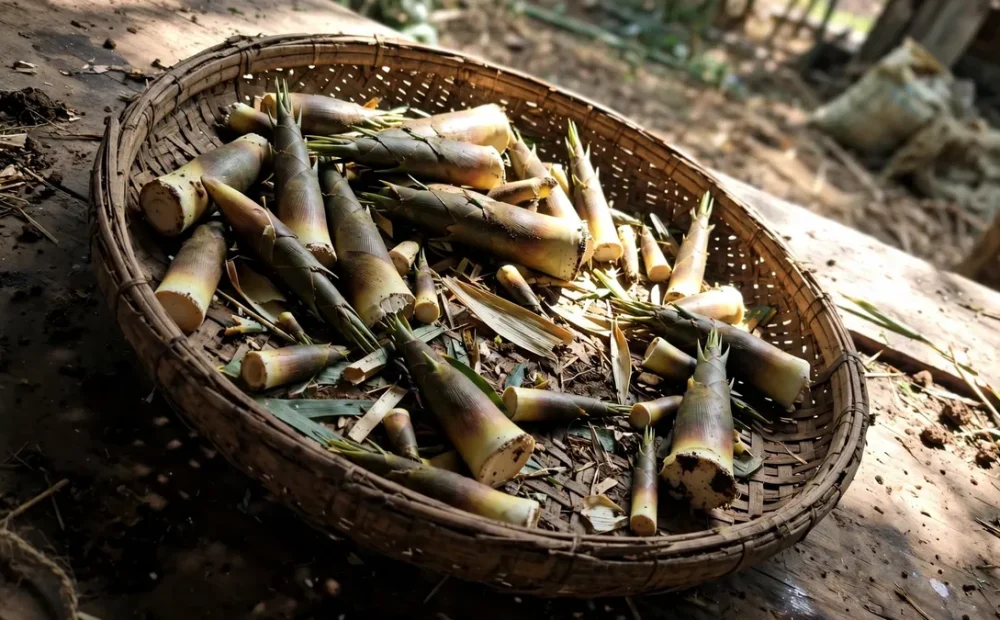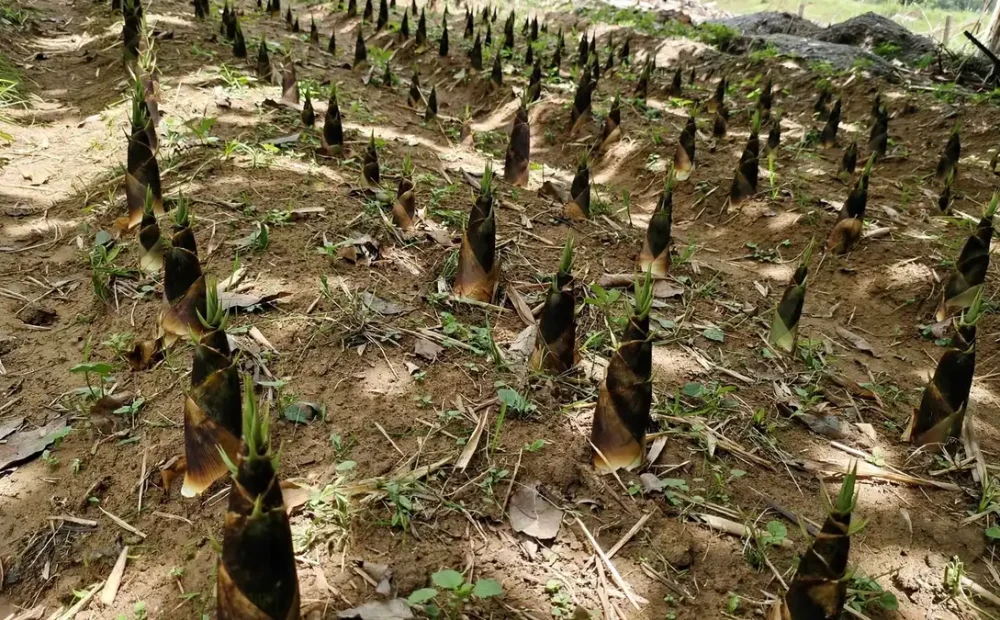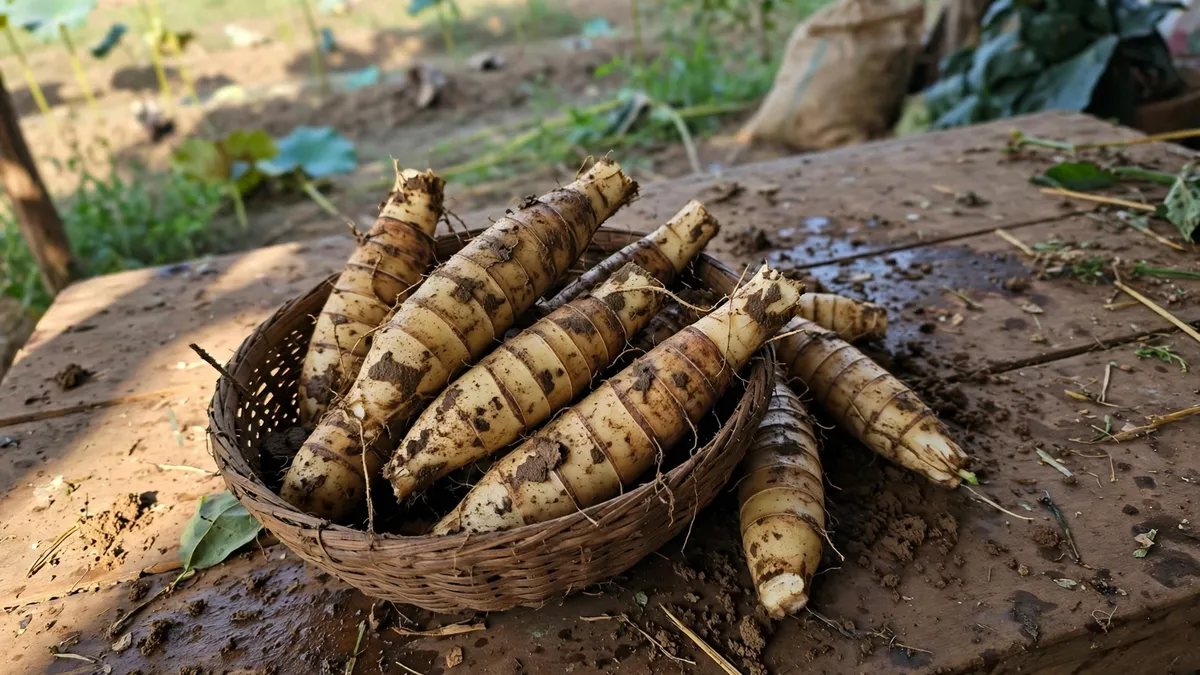
Planning a lotus root farm escape is simpler than it looks, once you know the order of the decisions. The season comes first, because a pond in the wrong month will not give you a harvest. The farm comes second, because a working pond farm and a flower garden with a pond are two different places. The room, the food and the travel come after that, and they are all easier to sort once the first two are settled.
A lotus root escape is a short, slow trip. You stay two or three nights near the ponds, you dig in the cool of the morning, you cook in the afternoon, and you eat what you dug. It is not a sightseeing holiday, and it is not a spa break. It is a working food farm with a bed, a kitchen, and a pond, and the best days are the ones with mud on your boots and a good soup at the end of them.
This guide walks through the nine steps that make the trip work, from picking the season to settling the bill, so you arrive prepared, dig safely, and eat well.
Key takeaways
- Pick the season first: late summer into autumn in temperate regions, and the drier months in the tropics, when the beds are at their best.
- Choose a working pond farm, not a flower garden, and check that guests actually dig, with waders and gloves provided.
- Book two or three nights, with a room that has a fan or air conditioning, screens against insects, and a warm place to wash after the pond.
- Plan your food around the farm kitchen, and tell the farm about allergies and gluten-free needs before you arrive.
- Never eat lotus root raw, and never wade in a pond you have not been shown how to enter, because the mud is deeper than it looks.
What a lotus root farm escape involves
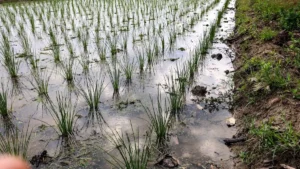
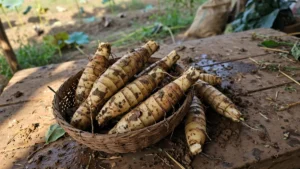
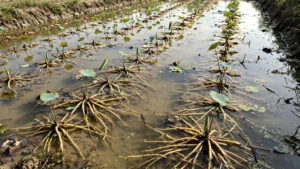
A lotus root farm escape is a stay of two or three nights at a farm that grows lotus in shallow ponds. The rhizome lies in the mud below the water, and the farmer lifts it by hand, feeling for the joints and loosening the mud around them so each segment comes up whole. You will be in the pond with them, in waders, with a bucket, learning to feel for the rhizome without snapping it.
The day has a shape you can rely on. Mornings start early, before the heat, with digging, then the middle of the day is for shade, rest and a long lunch. Afternoons belong to the kitchen: peeling, slicing, and learning the dishes that suit the root best, from a clear soup to a quick stir-fry, and evenings are quiet, with tea and the sounds of the pond.
How to plan it, step by step
The nine steps below follow the order that works: season first, farm second, then the practical details, and the money last.
Start with the digging season
What to do: Choose your dates around the harvest. Temperate farms in Kyoto and Taipei dig mainly from late summer into autumn, while tropical farms near Hanoi, Bangkok and Manila work for much of the year, with the fullest beds in the drier months. What to avoid: Do not book in the middle of the wet season, when the ponds are high and the digging is thin. Best For: Anyone planning a first visit. Time Needed: An evening of research. Standout Tip: Ask the farm what the beds will look like on your dates, not just whether the farm is open.
Find a farm with ponds you can walk beside
What to do: Look for a farm that grows its own root, in ponds you can walk beside, with a farmer who digs in front of you. Ask whether guests actually dig, and what gear is provided. What to avoid: Do not book a place that only offers a viewing deck and a restaurant, because you will see the pond but never touch the crop. Best For: Visitors who want to dig rather than only look. Time Needed: An hour of checking farms and reading reviews. Standout Tip: A farm that talks about the mud, the joints and the harvest is a working farm; a farm that only talks about the flowers is not.
Ask for a room beside the pond
What to do: Ask for a room with a view of the water, a fan or air conditioning, and screens against insects. What to avoid: Do not take a room beside a busy road, because pond country is quiet at night and road noise carries. Best For: People who sleep lightly and rise early. Time Needed: A few minutes while you book. Standout Tip: A room facing the ponds gives you the dawn light and the evening quiet, and it is worth asking for even if it costs a little more.
Plan the journey before the booking
What to do: Work out how you will reach the farm, whether by train, bus, car or booked lift, and check the times against your arrival and departure. What to avoid: Do not assume a taxi will be waiting at a rural station, because pond farms are often a long way from the nearest town. Best For: Visitors arriving without a car. Time Needed: Half an hour of checking timetables. Standout Tip: Ask the farm about a pick-up, because most working farms will collect you if you ask in advance, and it is often cheaper than a taxi.
Send the farm your food list before you travel
What to do: Write to the farm about allergies, gluten-free needs, and anything you cannot eat, and ask which dishes can be made plain. What to avoid: Do not wait until you are at the table to mention a food need, because the kitchen may already have cooked with soy sauce or a shared fryer. Best For: Anyone with an allergy or a gluten-free diet. Time Needed: One email, sent a week before you travel. Standout Tip: The root on its own has no gluten, but soy sauce, thickeners and shared fryers are common, so ask about each dish, not just the root. Our guide to planning an arrowroot farm escape covers the same point for another starch root, because the kitchen is where a food need is met or missed.
Pack for mud, not for photographs
What to do: Pack light clothes you do not mind getting muddy, a hat, sun protection, insect repellent, and a change of dry clothes for after the pond. What to avoid: Do not bring good shoes, white clothes, or anything you would mind losing to the mud, because the pond will take them. Best For: Anyone who hates overpacking. Time Needed: Half an hour on the evening before you travel. Standout Tip: Pack a small dry bag for your phone and wallet, because the pond is wet, the mud is everywhere, and a dry bag is the cheapest insurance you will ever buy.
Watch the farmer dig before you wade in
What to do: Listen to the farmer, watch them dig first, and learn how to feel for the joints and lift each segment whole. What to avoid: Do not step into a pond you have not been shown how to enter, and do not pull at a rhizome you cannot feel, because a snapped rhizome is wasted. Best For: First-time diggers. Time Needed: Twenty minutes of watching and listening. Standout Tip: The farmer’s hands are the lesson: slow, patient, and feeling for the joints, never yanking, and never rushing the mud.
Sample three lotus root dishes on your first day
What to do: Try the root in a clear soup, a quick stir-fry, and a salad or pickle, to learn how its crunch changes with the cooking. What to avoid: Do not eat it raw, even if it looks clean, because pond water can carry parasites and bacteria that cooking removes. Best For: Curious eaters who want to understand the crop. Time Needed: One lunch and one dinner. Standout Tip: The soup shows the root at its cleanest, the stir-fry shows its crunch, and the pickle shows how it keeps, so three dishes teach you more than three days of one dish.
Settle up before your last morning
What to do: Ask for the bill the evening before departure, check the meals, the lifts and any extras, and settle it then, so the morning is free for a last walk by the ponds. What to avoid: Do not leave the bill until the morning you leave, because the farm may be busy with the harvest and you may be in a hurry for your transport. Best For: Travellers leaving early in the morning. Time Needed: Ten minutes the night before. Standout Tip: Paying the night before also gives you time to ask about anything that looks wrong, while the farm still has time to fix it.
When to go and how long to stay
Two or three nights is the right length for a first lotus root escape. One morning in the pond, one afternoon in the kitchen, and a second day to rest and eat is a good shape, and a third night lets you learn the cooking properly instead of just watching it.
The season matters more than the length. In Kyoto and Taipei, the rhizomes are at their best from late summer into autumn, and the digging is worth the trip. In Hanoi, Bangkok and Manila, the drier months give you the fullest beds and the most comfortable mornings. A short stay in the right season is worth more than a long stay in the wrong one. Our guide to planning a yautia farm escape makes the same point about another root crop, because the harvest, not the calendar, decides whether the trip works.
If you can only travel in one month, ask the farm what that month looks like before you book anything else. A good farm will tell you honestly whether the beds are worth digging.
What to eat, and what to bring home
The kitchen is where a lotus root trip earns its keep. A clear soup shows the root at its cleanest, a quick stir-fry shows its crunch, and a pickle shows how it keeps, so try all three on your first day. Lotus seed soup, lotus leaf rice and lotus tea often appear in the same meal, and they are worth tasting, because they show how the whole plant is used. If you want to cook at home, buy pickled lotus root and dried lotus seeds from the farm shop, and ask the cook how long each keeps and how to store it.
Bringing food home is easy, but bringing the plant home is not. Fresh rhizomes travel badly, and many countries restrict live plants and fresh roots at the border, so buy the pickled and dried versions instead, which keep for weeks and weigh little.
The caveats that matter
The two rules that matter most are simple: never eat lotus root raw, and never wade in a pond you have not been shown how to enter. Raw lotus root can carry parasites and bacteria from the pond water, and cooking removes them. The mud is deeper than it looks, and a farmer who knows the pond will show you where to step and where not to.
| Detail | What is known |
|---|---|
| What it is | The rhizome of the sacred lotus, Nelumbo nucifera, dug from pond mud |
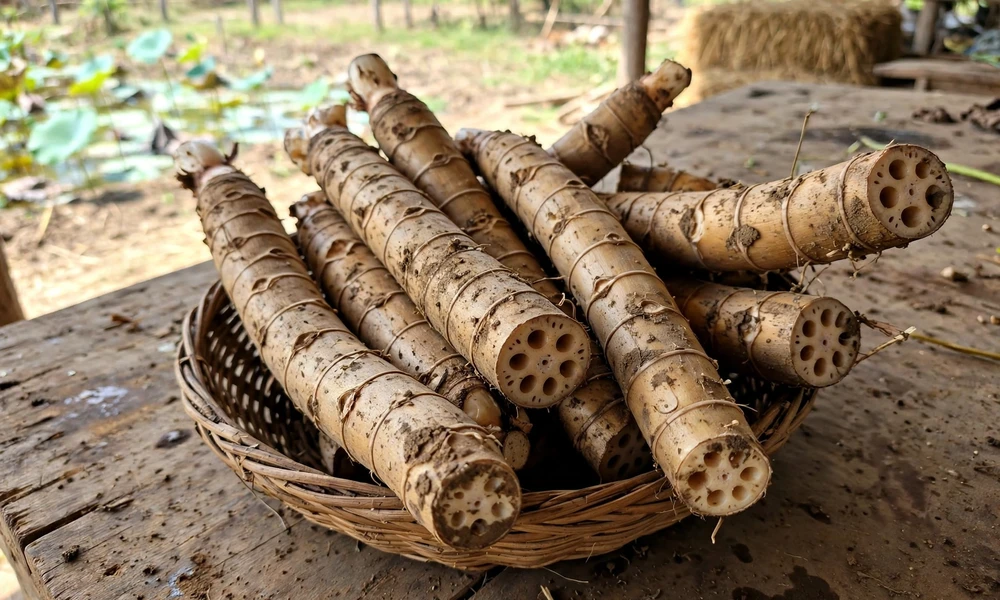
| How it looks sliced | Pale flesh with a ring of hollow chambers, neat as lacework |
| Best season | Late summer into autumn in temperate regions; most of the year in the tropics |
| How it is eaten | Soups, stir-fries, salads, pickles and crisps, always cooked |
| What never to do | Never eat lotus root raw; pond water can carry parasites and bacteria |
| Who should take care | Anyone with a lotus or seed allergy, and anyone who needs gluten-free food |
| What to check | Ask whether the kitchen uses wheat soy sauce, thickeners or shared fryers |
| What it is not | It is not a water lily root, and it is not a flower-viewing trip |
Allergies are rare, but lotus seed and lotus leaf are often served in the same meal, so tell the farm about any allergy before you arrive. Gluten is the more common problem, because the root itself is naturally gluten-free while soy sauce, thickeners and shared fryers are often part of the cooking. Insects are the other practical matter: mosquitoes are serious after sunset, so bring repellent and sleep behind screens or a net.
Checklist: planning a lotus root farm escape honestly
Use these checks before you book, and again the night before you travel.
- Check the season: late summer into autumn in temperate regions, and the drier months in the tropics, with the farm confirming the beds on your dates.
- Check the farm: a working pond farm where guests actually dig, with waders, gloves and a bucket provided.
- Check the room: a fan or air conditioning, screens against insects, and a warm place to wash after the pond.
- Check the food: tell the farm about allergies and gluten-free needs before you arrive, and confirm each dish.
- Check the journey: a pick-up arranged in advance, or a lift booked before you travel, not a taxi hoped for at a rural station.
- Check the money: the bill settled the night before you leave, with meals, lifts and extras all checked.
Frequently asked questions
What month should I book a lotus root farm escape for?
Temperate farms in Kyoto and Taipei are at their best from late summer into autumn, while tropical farms near Hanoi, Bangkok and Manila dig for much of the year and are fullest in the drier months. Check with the farm about your dates before you book.
Is it safe to taste lotus root before it is cooked?
No. The rhizome sits in pond mud and pond water, so it needs a good wash and thorough cooking. Uncooked lotus root can carry parasites and bacteria that heat removes, so never taste it raw, even if it looks clean.
How do I know I am eating true lotus root, not water lily?
True lotus root is the rhizome of the sacred lotus, Nelumbo nucifera. Water lilies sit in a different genus, Nymphaea, and their roots are a different food altogether. Slice the rhizome open and look for the ring of hollow chambers, which is the mark of real lotus root.
Will the kitchen be able to cook gluten-free for me?
Usually yes, if you ask in advance. The rhizome on its own has no gluten, but the cooking often adds soy sauce, thickeners or a shared fryer, so ask the kitchen to confirm each dish and tell the farm about your needs before you arrive.
How many nights does a lotus root escape need?
Two or three nights suits most first visits. One morning in the pond, one afternoon in the kitchen, and a second day to rest and eat is a good shape, while a longer stay suits travellers who want to learn the cooking properly.
Is digging lotus root hard on the back?
It is gentle work if you take it slowly. You stand in knee-deep water and mud and bend to feel for the rhizome, and the farmer does the heavy lifting. If your back is weak or your balance is poor, tell the farm in advance and ask to dig from the bank instead. Our guide to planning a yam farm escape covers the same question for another root crop, because digging is the part of the trip that most people underestimate.
The bottom line
A lotus root farm escape works when the season, the farm and the kitchen are all right at the same time. Pick the harvest first, choose a working pond farm second, and sort the room, the food and the journey after that, with the bill settled the night before you leave. Two or three nights is enough, and a short stay in the right season is worth more than a long stay in the wrong one.
Never eat the root raw, never wade in a pond you have not been shown how to enter, and tell the farm about allergies and gluten-free needs before you arrive. Do those things, and the trip gives you what it promises: mud on your boots in the morning, and a good soup at the end of the day.