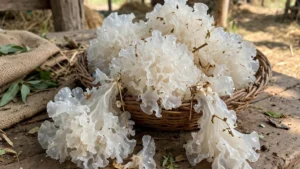
A wood ear farm escape is a slow kind of holiday: no single moment to chase, no dawn flush to beat, no basket that fills in an hour. The crop grows in dark brown folds on dead logs, swells after rain, and is cut, soaked and cooked over a day. The farms are small, the work is gentle, and the reward is a bowl of hot-and-sour soup from a fungus you picked yourself that morning.
Planning one takes more care than booking a hotel, because a wood ear farm is a working place, not a resort. The logs fruit in seasons, the growing room is humid, the yard is muddy after rain, and the kitchen needs to know about your diet before you arrive. Get those details right and the stay is easy; get them wrong and you spend two days eating around a sauce you cannot have.
This guide walks through the nine steps that matter, from choosing the season to packing a bag of dried wood ear for home. Each step says what to do, what to avoid, who it suits, how long it takes, and the tip that matters.
Key takeaways
- Book the season first and the farm second: log yards fruit best in spring and autumn, growing rooms all year.
- Ask for the soak-and-cook session in writing; it is the heart of a wood ear stay and not always included.
- Fresh wood ear needs cooking, and dried wood ear needs a 20 to 30 minute soak in cold water, a rinse and a full cook.
- Tell the farm about allergies and gluten-free needs at booking, because farm kitchens use soy sauce, wheat noodles and shared pans.
- Wood ear is naturally gluten-free, but soy sauce and wheat noodles are not, so check sauces and noodles before you eat.
What a wood ear farm escape is
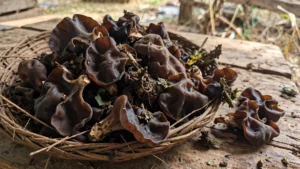
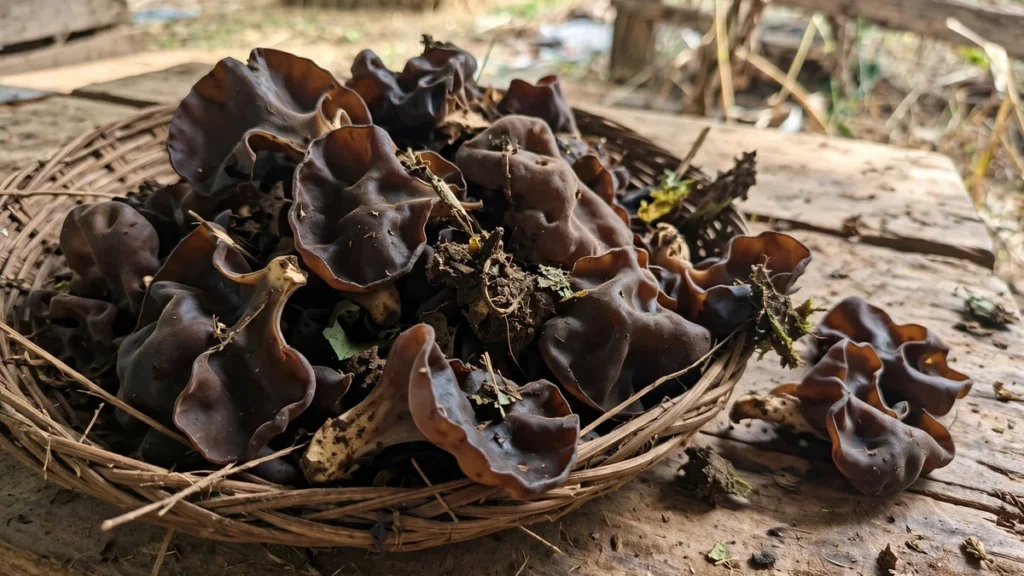
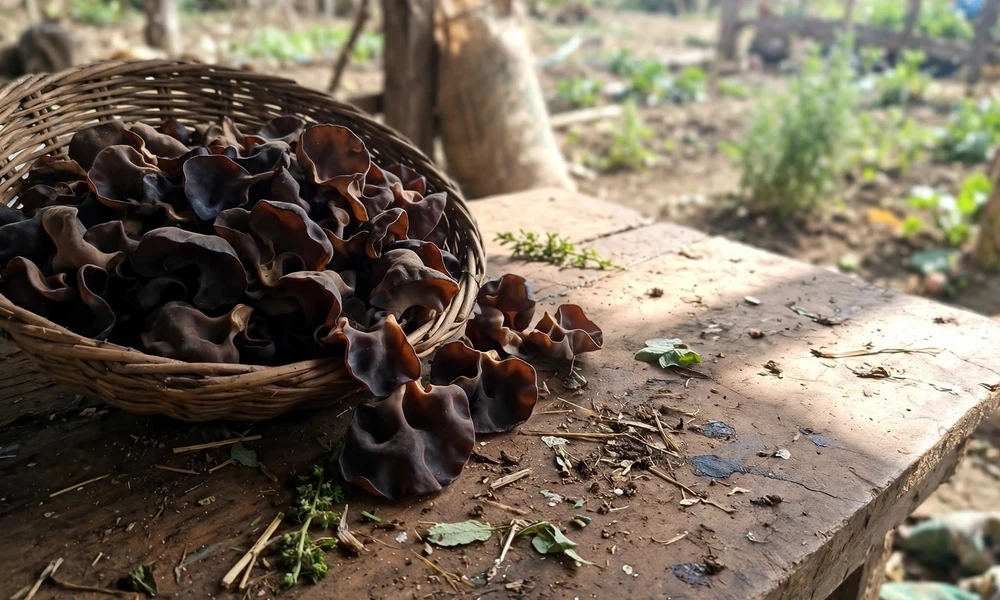
A wood ear farm escape is a short stay on a farm growing wood ear, Auricularia auricula-judae, a dark brown jelly fungus in ear-shaped folds on dead logs. It usually lasts two nights, centred on the log yard or growing room, the drying shed, and the kitchen. Guests cut the ears in the morning, soak the dried harvest at noon, and cook the crop at lunch or dinner, often as hot-and-sour soup, a garlicky stir-fry, or a cold salad with black vinegar.
It differs from a shiitake stay or a chanterelle walk. Shiitake is a brown-capped mushroom with gills and a stem, and chanterelle is foraged in the woods, but wood ear is farmed on logs in a shaded yard, and the work is slower and more predictable. The skill is spotting a fold swollen enough to cut, trimming the woody stem, and knowing the soak time. It is a craft of patience, and the farms are built around that pace.
An escape suits travellers who like quiet mornings, hands-on work and long lunches, not anyone looking for nightlife, a spa, or a packed itinerary. The best days have nothing much planned beyond the yard, the kitchen and a walk, and the farms on this list are chosen for exactly that kind of day.
How to plan a wood ear farm escape
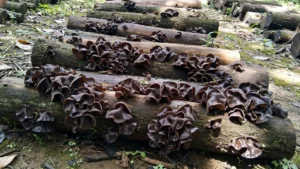
Start with the season, then the farm, then the journey. Outdoor log yards fruit best in spring and autumn, when the air is damp and rain comes regularly. Growing-room farms keep their crop warm and humid indoors, so they fruit all year, and they are safer if you can only travel in summer or winter. Once you know which kind of farm you want, check the soak-and-cook session is included, because it is the reason to go, and it is not always part of the price.
Then work out the journey before you book the flights. Many wood ear farms sit at the end of a winding road, a bus ride from the station, or a walk up a slope, and the last stretch is often the slowest part of the trip. A farm that looks close on a map can take half a day to reach, so check bus times, taxi cost and check-in hour first. Our guide to planning a chanterelle farm escape covers the same journey problem for a woodland mushroom stay: the trip to the farm is part of the plan, not an afterthought.
Finally, tell the farm about your diet at booking. Wood ear itself is naturally gluten-free, but farm kitchens cook with soy sauce, wheat noodles and shared pans, and a cook who knows in advance can set aside a pan and a bottle of tamari. A cook who finds out at the table often cannot, and the same goes for allergies and blood-thinning medicine.
The 9 steps to planning your escape
Start with the season, not the farm
What to do: Choose spring or autumn for a log yard, when damp air and rain bring folds out. What to avoid: Booking a log-yard farm in midsummer heat and expecting a full harvest. Best For: Travellers who can choose their dates. Time Needed: An evening of reading farm pages and checking the fruiting months. Standout Tip: Ask which week the logs fruit, and book that week.
The season decides what you will see: a log yard in the right month is full of soft folds, while a month later it can be quiet.
Decide between a log yard and a growing room
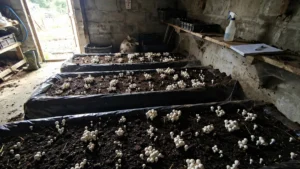
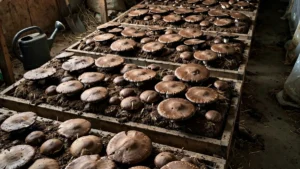
What to do: Pick a log yard for shade, damp air and a walk between the stacks, and a growing room for a reliable harvest. What to avoid: Assuming every farm has both; most have one or the other. Best For: Travellers who know whether they want outdoor work or indoor certainty. Time Needed: Half an hour comparing farm descriptions and photos. Standout Tip: Look for photos of the yard or room, not the dining table.
The two settings feel very different: a log yard is outdoors, muddy and quiet, while a growing room is warm and humid.
Get the soak-and-cook session confirmed in writing
What to do: Email the farm: is the session included, and does the meal use the day’s pick? What to avoid: Assuming the session is included; some charge for it separately. Best For: Anyone travelling for the cooking as much as the harvest. Time Needed: Ten minutes to write the email and a day to get the reply. Standout Tip: Save the reply and bring it, so check-in is clear.
The session is the heart of the stay: it is where you learn the soak, the rinse, and the crunch.
Sort the journey out before you book flights
What to do: Check bus times, taxi cost and check-in hour for the last stretch. What to avoid: Booking a late flight and expecting to reach a mountain farm by evening. Best For: Travellers heading to a farm at the end of a winding road. Time Needed: An hour of checking timetables and messages to the farm. Standout Tip: Ask how guests usually arrive, and copy that route.
The last stretch is the slowest part of the trip: a farm an hour from the station can take three.
Tell the farm about allergies and diet when you book
What to do: Message the farm about allergies, gluten-free needs and blood-thinning medicine when you book. What to avoid: Mentioning a dietary need at the table, once cooking has started. Best For: Anyone with an allergy, a gluten-free diet, or a medical reason. Time Needed: A few minutes while you write the booking message. Standout Tip: Ask about soy sauce, wheat noodles and shared pans; those are the usual risks.
A farm kitchen cooks what it has planned, and a cook who knows in advance can set aside a pan and open tamari.
Bring boots that can handle mud and morning damp
What to do: Pack sturdy boots, a rain jacket, and layers for cold mornings. What to avoid: Wearing smooth-soled shoes or light trainers on a wet log yard. Best For: Anyone visiting a log yard in spring or autumn. Time Needed: Ten minutes packing, and a check that the boots still fit. Standout Tip: Bring spare dry socks; the yard is damp even on a fine day.
The yard is muddy after rain and damp even when it has not rained; the logs are kept moist on purpose.
Taste the hot-and-sour soup before you fill your plate
What to do: Take a small bowl first, taste the sour, the heat and the crunch, then decide how much. What to avoid: Filling a large bowl before you know if you like the vinegar and chilli. Best For: First-time wood ear eaters and anyone unsure about sour flavours. Time Needed: Five minutes at the start of lunch. Standout Tip: Ask what went into the broth; the recipe changes with the season.
Hot-and-sour soup is the dish most farms serve first, and its crunch stands out against soft tofu and warm broth.
Spend one morning in the market town down the road
What to do: Keep a morning free for the nearest market town, and go early. What to avoid: Spending every hour on the farm, never seeing the town that feeds it. Best For: Travellers who like markets, and anyone buying dried wood ear for home. Time Needed: A morning, including the bus or taxi both ways. Standout Tip: Compare dried ears at three stalls; quality and price vary a lot.
The market is where the crop meets the town: stalls sell dried wood ear by weight, and sellers tell you the soak time for each batch.
Pack a bag of dried wood ear for the journey home
What to do: Buy a bag of dried wood ear from the farm shop or market, and pack it in checked luggage in a sealed bag. What to avoid: Carrying fresh wood ear on a long journey; it spoils quickly. Best For: Anyone who wants to cook the crop again at home. Time Needed: Ten minutes at the farm shop or the market stall. Standout Tip: Write the soak time on the bag; batches need different soaks.
Dried wood ear travels well: light, keeps for months, and a small bag makes a dozen meals once soaked.
When to go, and how long to stay
Spring and autumn are the best months for an outdoor log yard: damp air, regular rain, and logs fruiting in waves that last for weeks. Summer can work, but heat dries the yard and the ears stay small, and winter is quiet, with the logs resting until the weather warms. A growing-room farm is different, since the crop is kept warm and humid indoors and fruits all year, and it is the right choice if your dates are fixed.
Two nights suits most travellers. One full day covers the harvest, the soak and the cooking, and a second leaves time for a market morning or a walk to a nearby temple. Three nights suits a slower pace, or a farm combined with a town stay. One night is too short: you arrive late, miss the morning harvest, and leave before learning the soak.
Book at least a month ahead for spring and autumn, since small farms have few rooms and fruiting weeks fill early. Growing-room farms are easier to book at short notice, and winter stays are usually available a week or two ahead. Our guide to planning a lion’s mane farm escape gives the same advice for another log-grown mushroom, since the farms are the same size.
The caveats that matter
Wood ear is a safe and forgiving crop, but it has rules worth knowing before you eat a large amount. Fresh ears need proper cooking, and dried ears need a soak, a rinse and a full cook; never eat either raw or barely warmed. Ears left soaking too long turn slimy, and market dried ears should be checked for grit and rinsed well. Wild jelly fungi need expert identification, so never pick them from a park or woodland alone.
| Detail | What is known |
|---|---|
| Best season | Spring and autumn for outdoor logs; growing rooms fruit all year |
| First step | Pick the season, then the farm, then the journey |
| What to pack | Sturdy boots, rain jacket, layers, dry socks |
| How long to stay | Two nights for most people; three for a slower pace |
| Eating safely | Cook fresh ears through; soak, rinse and cook dried ears |
| Dried wood ear at home | Soak 20 to 30 minutes in cold water, rinse, then cook |
| Who should check first | Anyone with a mushroom allergy or taking blood-thinning medicine |
| What it does not do | It does not replace a meal alone, and it is not a medicine |
If you take blood-thinning medicine or have a mushroom allergy, ask your clinician before eating a large amount of wood ear. It is widely eaten and safe for most people, yet a farm stay is a poor place to find out you are sensitive, so check beforehand and save an awkward week.
Checklist: planning a wood ear farm escape honestly
Run through these checks before you book, and again before you pay in full.
- Check the season: spring or autumn for a log yard, any time for a growing room.
- Check the session: confirm the soak-and-cook session is included and save the reply.
- Check the journey: bus times, taxi cost and check-in hour for the last stretch.
- Check the diet: tell the farm about allergies and gluten-free needs when you book.
- Check the packing: boots with grip, a rain jacket, layers, and a spare pair of dry socks.
- Check the return: buy dried wood ear for home, and leave the fresh ears on the farm.
Frequently asked questions
How far ahead should I book a wood ear farm stay?
Book at least a month ahead for spring and autumn, since small farms have few rooms and fruiting weeks fill early. Growing-room farms and winter stays are usually available a week or two ahead, and a growing-room farm is safer if your dates are fixed.
Do I need experience to join in with the harvest?
No. The grower shows you how to spot a ripe fold, cut it cleanly at the base, and trim the woody stem. The work is gentle and done at a walking pace, with no test or skill needed. Children old enough to hold a small knife safely can join in with an adult beside them.
Can I eat wood ear if I have never tried it?
Yes, and a farm stay is a good place to try it, since the kitchen cooks it properly and the grower can answer questions. Start with a small bowl of hot-and-sour soup and see how you feel. If you have a mushroom allergy or take blood-thinning medicine, check with your clinician first. Our guide to planning a maitake farm escape covers the same first-timer question: start small, eat it cooked, and ask the cook.
Are wood ear farms safe for children?
Mostly yes, for older children. The yard is muddy and the knife work needs an adult beside them, but the cooking session is safe and children often enjoy the soup bar. Very young children are better off with one parent while the other joins the harvest; the yard is not a playground.
What should I do if a wood ear makes me feel unwell?
Stop eating it, drink water, and tell the farm straight away. A mild stomach upset usually passes in a few hours, but if you feel dizzy, develop a rash, or have trouble breathing, seek medical help at once and tell the clinician what you ate and how it was cooked.
Can I take wood ear home on a flight?
Dried wood ear, yes. It is light, it keeps for months in a dry cupboard, and it passes through customs as a dried food in most countries, though you should check your destination’s rules. Fresh wood ear, no: it spoils quickly.
The bottom line
A wood ear farm escape is worth planning properly, and the plan is simple: pick the season, choose a log yard or a growing room, confirm the soak-and-cook session in writing, work out the journey, and tell the farm about your diet. Two nights is enough, spring and autumn are best for a log yard, and a growing-room farm is safer with fixed dates.
Do those nine steps, pack boots that can handle mud, and you will come home knowing how to soak, rinse and cook dried wood ear, with a bag of it in your luggage and a soup recipe you cooked yourself. That is the honest return on a slow, damp, satisfying holiday.