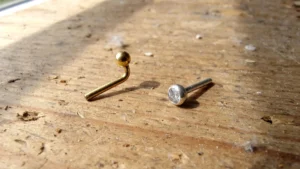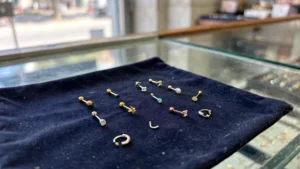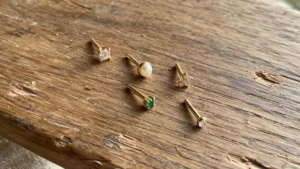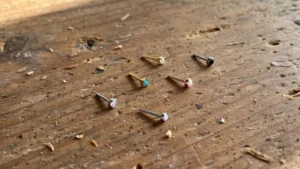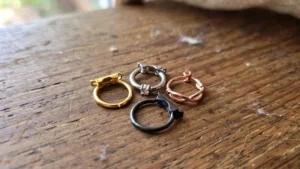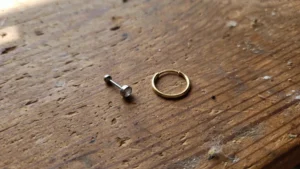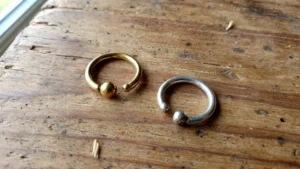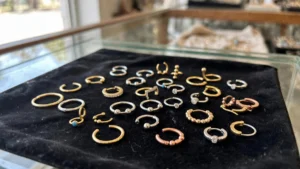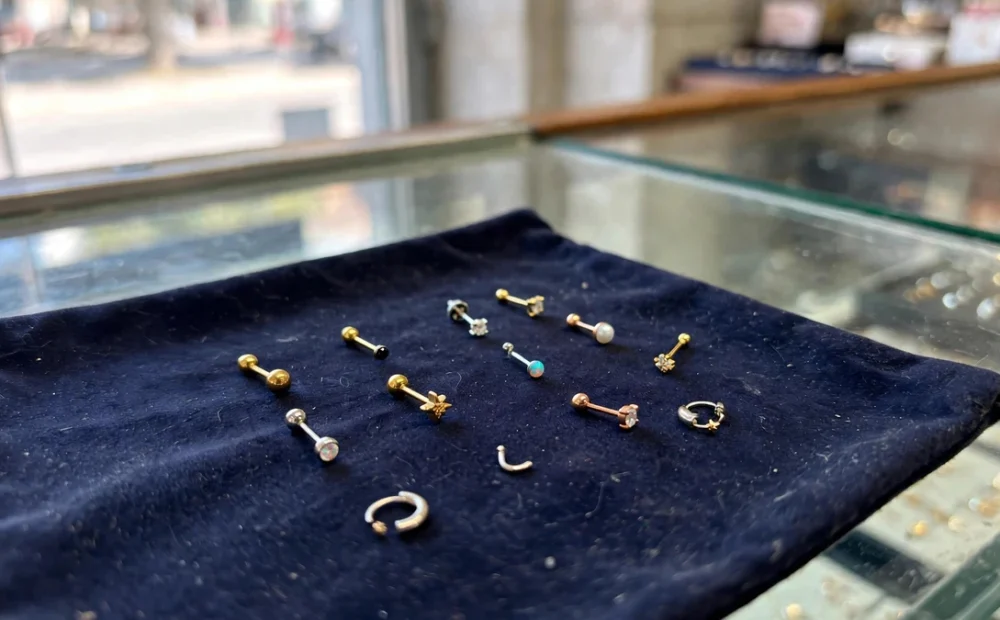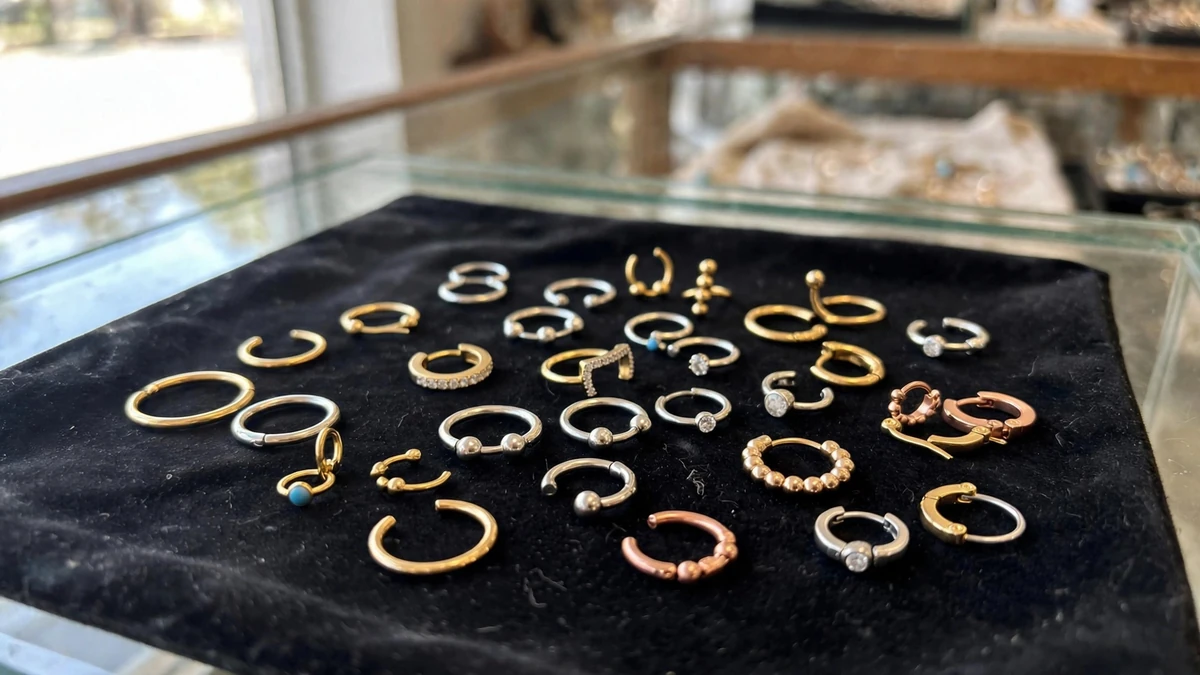

Buying a nose ring sounds simple until you stand in front of a tray of them. Studs, hoops, screws, bones, clickers, and clip-ons all look similar at a glance, yet they fit differently, feel different after a few hours, and suit different noses. A ring that looks perfect in a photograph can pinch, slip, or catch on a scarf within a day, while a plain-looking one can be so comfortable you forget it is there.
That is why this guide is organised as a buying process, not a shopping list. A nose ring is a small purchase, but it sits in the middle of your face, against skin that is easy to irritate, and it is worn every day. The metal matters, the size matters, the closure matters, and the rules around piercings matter too. Getting those four things right is worth more than finding the prettiest design first.
Below are nine steps to buying a nose ring in 2027, from measuring your nose to keeping the receipt. Each step is described by what it is good for, what to watch out for, and who it suits, so you can buy once and wear it happily, rather than buying twice and learning the hard way.
Key takeaways
- Measure before you buy: the right size depends on your nostril, not on the size a shop displays.
- Choose a skin-friendly metal first: sterling silver, gold-filled, surgical steel, or titanium, and avoid unnamed alloys.
- Match the closure to your life: a screw or bone stays put, a hoop is easy to change, and a clip-on needs no piercing at all.
- Set a budget before you shop, and compare like with like: metal, size, and closure, not just price.
- No nose ring suits every nose or every skin type, and a piercing needs proper aftercare and, for under-18s, usually a parent or guardian’s permission.
What buying a nose ring actually involves
Buying a nose ring involves three decisions, and they are best made in order. First, whether the ring will go through a piercing or sit on the nose without one. A pierced ring needs a healed piercing and a size that matches it. A clip-on or magnetic ring needs no piercing, but it needs a good grip and a light weight, or it will slip or pinch.
Second, the metal. A nose ring touches skin all day, and the inside of the nose is more sensitive than an earlobe. Cheap plated alloys are the most common cause of redness and soreness, and they are also the most common thing sold at the lowest prices. Spending a little more on a named metal is the single best upgrade you can make.
Third, the size and the closure. A stud that is too long will wobble, a hoop that is too small will pinch, and a closure that is hard to open will make you dread changing the ring. These are small details, but they decide whether a nose ring is worn every day or left in a drawer. A ring that is too heavy will drag, one that is too loose will wobble, and one made from the wrong metal will make itself felt within a day.
How we chose these steps and what to look for
We built these steps from the mistakes people actually make. The most common is buying by photograph alone, without knowing the gauge, the diameter, or the metal. The second is buying the cheapest ring and then paying for it with irritated skin. The third is buying a style that suits someone else’s face and not your own. Each step below is designed to stop one of those mistakes before it happens.
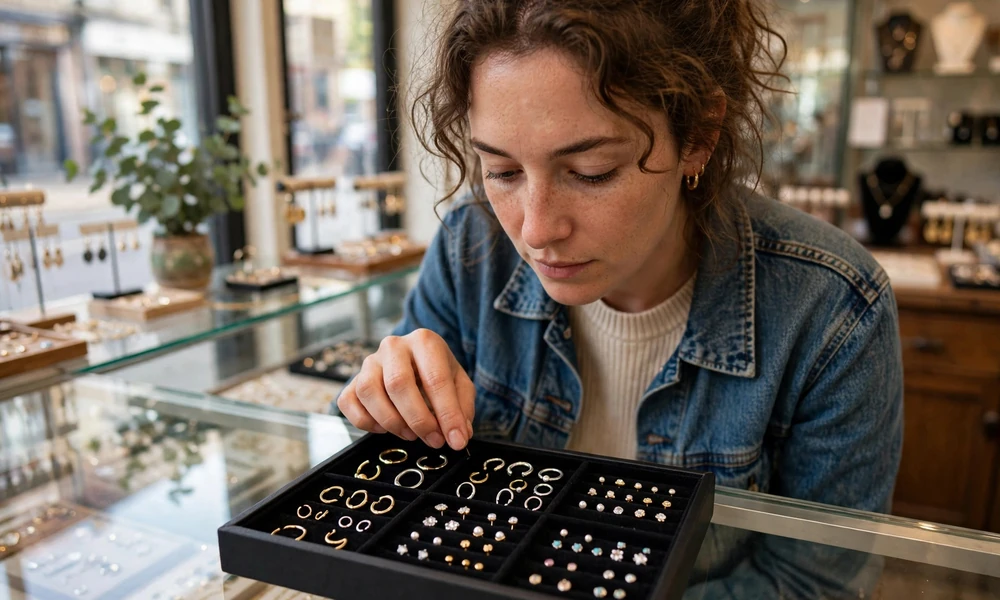
We also kept budget in mind. A good nose ring does not have to be expensive, and many of the best options cost less than a takeaway meal. The trick is to compare like with like, which is the same habit that helps when you are choosing anklets under $50: set a ceiling, then judge metal, size, and finish inside it, rather than letting price alone decide.
Finally, we kept the steps practical. None of them needs special tools or expert knowledge, and all of them can be done in a shop or at home before you spend anything.
The 9 steps to buying a nose ring in 2027
Measure your nose first
What we like: A quick measure takes the guesswork out of sizing, so the ring sits close to the nostril instead of sticking out or pulling. What to consider: Noses are not symmetrical, so measure the side you will wear the ring on, not the other one. Best for: Anyone buying a first nose ring. Cost: Free at home, or free in most jewellery shops. Time needed: Five minutes.
Hold a soft tape or a strip of paper against the nostril where the ring will sit, and note the curve. That one measurement is worth more than an hour of browsing.
Decide how snug you want it
What we like: A snug fit looks neat, stays put, and does not catch on clothes, while a looser fit is easier to take in and out. What to consider: Too snug is worse than too loose: a ring that pinches will irritate skin within hours. Best for: Anyone who wears a ring all day. Cost: Nothing. Time needed: A few minutes of thinking, or a quick try-on.
If you are between sizes, choose the looser one. Comfort always wins over a millimetre of neatness.
Choose a metal that suits your skin
What we like: Sterling silver, gold-filled, surgical steel, and titanium are all widely used against skin and rarely cause problems. What to consider: If you have reacted to cheap earrings before, start with titanium or surgical steel, which are the gentlest options. Best for: Sensitive skin. Cost: $8–$40 depending on the metal. Time needed: Ten minutes of checking labels.
Read the label, not the price tag. A ring that only says “alloy” or “fashion metal” is a gamble, whatever it costs.
Pick a size that fits your face
What we like: A small stud flatters most faces, while a slim hoop suits a broader face and a bolder style. What to consider: A ring that is too big will dominate the face, and one that is too small can look lost, so try both before deciding. Best for: Anyone choosing between a stud and a hoop. Cost: Nothing to decide, $8–$35 to buy. Time needed: Ten minutes trying styles on.
Hold the ring up to your nose in a mirror before you buy it. What looks tiny in a tray often looks bigger on a face.
Match the metal to your other jewellery
What we like: Matching metals make a small piece of jewellery look intentional, and they make the whole outfit feel pulled together. What to consider: Mixing metals can work, but it needs confidence, and it is easier to get wrong with a nose ring than with a bracelet. Best for: Anyone who wears other jewellery daily. Cost: Nothing extra if you already own matching pieces. Time needed: Five minutes.
If your earrings and necklace are silver, a silver nose ring is the easy choice. If they are gold, go gold, and let the nose ring join the set rather than fight it.
Check the clasp and the closure
What we like: A good closure holds all day, opens easily when you want it to, and has no sharp edge to catch skin. What to consider: Screw backs are secure but fiddly, bones are easy but can slip, and clickers are simple but need a smooth hinge. Best for: Anyone who changes their ring often. Cost: Nothing to check, and a better closure is rarely more expensive. Time needed: A minute in the shop.
Open and close the ring before you pay for it. If it fights you in the shop, it will fight you every morning.
Decide between one nose ring and a set
What we like: A set gives you options: a plain stud for weekdays, a crystal for evenings, a hoop for weekends. What to consider: A set only saves money if you will wear all of it, and two piercings are needed for two pierced rings. Best for: Anyone who likes to change their look. Cost: $15–$45 for a set, $8–$30 for one ring. Time needed: Ten minutes to compare.
Buy one good ring before you buy a set. Once you know your size and your metal, a set becomes a bargain instead of a gamble.
Set a budget and compare like with like
What we like: A budget stops impulse buying and makes it easy to compare rings on metal, size, and finish instead of on price alone. What to consider: The cheapest ring is often the most expensive in the end, if it irritates skin or needs replacing in a month. Best for: Anyone shopping online. Cost: $10–$40 covers most good nose rings. Time needed: Five minutes before you shop.
Write down your ceiling, then compare rings inside it. Two rings at the same price can be very different in metal and finish, and the label tells you which one is better.
Keep the receipt and the care instructions
What we like: A receipt makes a return simple if the ring does not fit, and care instructions tell you how to clean it and when to take it out. What to consider: Some shops do not take back pierced jewellery for hygiene reasons, so ask about returns before you buy. Best for: Every buyer, especially online. Cost: Nothing. Time needed: A minute at the till.
Keep the receipt in the box with the ring, along with any spare backings. It is a small habit that saves a second trip to the shop.
Which nose ring is right for you
Start with the piercing, or the lack of one. If you have a healed piercing, your options are wide: studs, hoops, screws, and clickers will all work, and the only question is size and metal. If you have no piercing, a clip-on or magnetic ring is the way to try the look, and it is worth buying a good one rather than the cheapest, because a good clip-on holds without pinching. If the piercing is still healing, stick to the stud your piercer fitted and do not swap it for a hoop until they say it is ready.
Then think about your day. If you play sport, swim, or work with your hands, a small stud is the practical choice, because it is the least likely to catch or be knocked. If your days are mostly desk, studio, or social, a slim hoop or a crystal stud is an easy upgrade. The ring should fit the life, not just the face.
Finally, think about the rest of your jewellery. A nose ring looks best when it belongs with what you already wear, whether that is a simple chain, a pair of studs, or a watch. Our guide to necklaces for women shows how a small piece can anchor a whole look, and the same idea applies here: one metal, one mood, and nothing fighting for attention.
The caveats that matter
Buying a nose ring is easy. Buying the right one takes a little more care, because the mistakes are easy to make and annoying to fix. The most common is buying a size by eye, without measuring, and then finding the ring sticks out or pulls. The second is buying a cheap alloy and discovering the irritation a day later. The third is forgetting the rules: school policies, workplace dress codes, and the permission needed for a piercing under 18. A ring bought in a hurry is the one most likely to be returned, and a ring bought after measuring is the one most likely to be worn every day.
| Detail | What is known |
|---|---|
| Best metals | Sterling silver, gold-filled, surgical steel, or titanium |
| Best first style | A small stud, or a clip-on if there is no piercing |
| Typical budget | $10–$40 covers most good nose rings; sets run $15–$45 |
| What to check in the shop | Metal, size, closure, and the returns policy before paying |
| School and work rules | Many schools and workplaces limit visible facial jewellery; check first |
| Piercing permission | Under-18s usually need a parent or guardian’s permission; check local rules |
| What to avoid | Unnamed alloys, home piercing kits, and buying by photograph alone |
| What it does not do | No ring suits every nose, and a piercing does not heal in a few days |
If a new piercing becomes red, sore, or swollen, get advice promptly rather than waiting to see if it settles. A small problem caught early is easy to fix, and a small problem ignored is not.
Checklist: buying a nose ring well
Use these checks before you pay, and again after a week of wear.
- Check the metal on the label: sterling silver, gold-filled, surgical steel, or titanium.
- Check the size against your nose, not against the display tray.
- Check the closure: open and close it in the shop before you buy.
- Check the rules: school, work, and parental permission if a piercing is involved.
- Check the returns policy, especially for pierced jewellery bought online.
- Check the skin after a week: no redness or soreness means the metal and fit are right.
Frequently asked questions
How much should I spend on a nose ring?
Most good nose rings cost $10 to $40, and a set runs $15 to $45. Below $10, check the metal carefully, because cheap alloys are the most common cause of irritation. Above $40, you are usually paying for a brand or a gemstone, not for a better fit. As with luxury watches, the price should follow the material and the craft, not the other way round.
What size nose ring do I need?
It depends on your nostril. Most studs use a 20 or 18 gauge post, and most hoops run 8 to 10 millimetres in diameter, but the only reliable way is to measure your own nose or ask the piercer who did the piercing. If you are between sizes, choose the slightly looser fit.
Can I buy a nose ring online?
Yes, if you know your size and your metal. Buy from a seller that lists the gauge, the diameter, and the metal clearly, and check the returns policy before ordering, because many shops do not take back pierced jewellery for hygiene reasons.
Do I need a piercing to wear a nose ring?
No. Clip-on and magnetic nose rings sit on the nose without a hole, and they look very close to a real piercing in photographs and at a normal distance. They are the best way to try the look, and the right choice where a piercing is not allowed or not wanted.
How do I clean a nose ring?
Take it out, wash it gently with warm water and mild soap, dry it fully, and store it clean. For a new piercing, follow the piercer’s aftercare advice exactly, and do not use harsh antiseptics or alcohol unless they tell you to.
What if the ring does not fit?
Take it back if the shop allows returns, or keep it as a spare if the size is close. Do not force a ring that pinches or pulls, and do not try to bend a hoop into shape yourself, because a bent ring is more likely to catch and irritate.
The bottom line
Buying a nose ring well comes down to four checks: the metal, the size, the closure, and the rules. Get those right and the design almost chooses itself. A small stud in sterling silver or titanium is the safest first buy, a slim gold hoop is the natural next step, and a clip-on is the right choice for anyone without a piercing.
Measure first, read the label, open the closure in the shop, and keep the receipt. Those four habits take five minutes and save most of the mistakes people make with nose rings. Buy once, wear it every day, and judge it on comfort after a week, not on how it looked in the tray. And if the first ring is not right, treat it as information, not a failure: now you know your size, your metal, and your style.