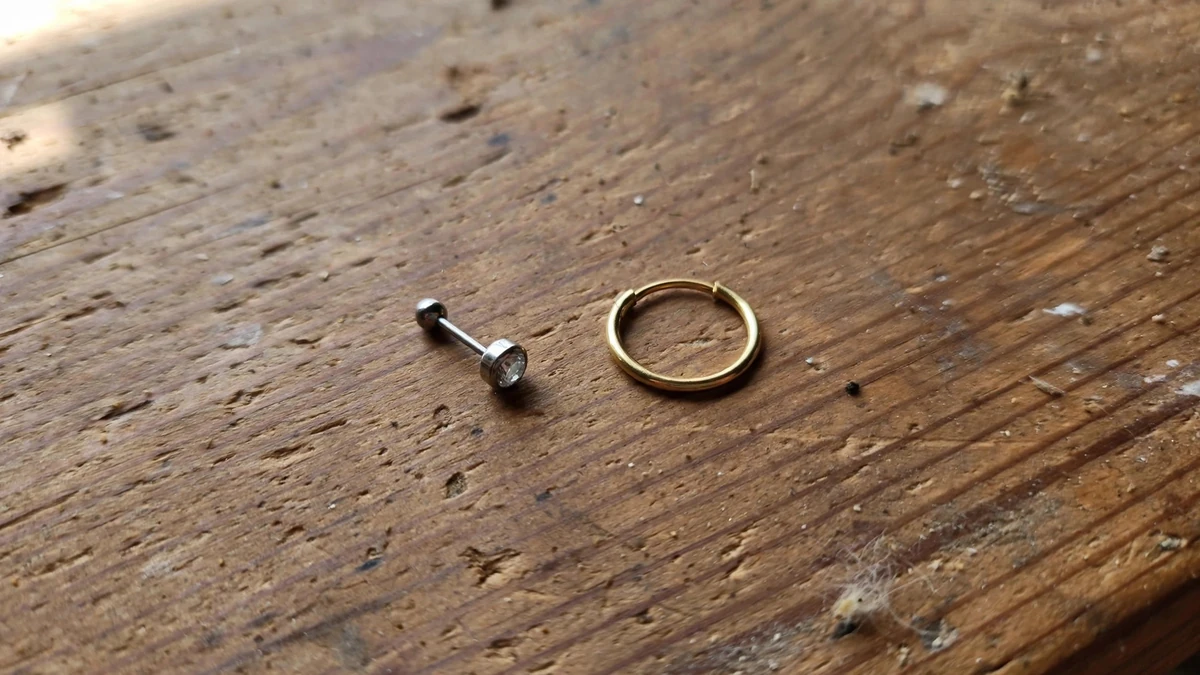

Stud vs Hoop Nose Rings 2027: 9 Comparisons That Matter
A stud and a hoop are the two classic nose rings, and choosing between them is the first decision most people make after picking a metal. A stud is a small, quiet dot of metal or stone that sits close to the nose. A hoop is a thin circle that catches the light and moves with you. Both are worn every day by millions of people, and both can look elegant, but they behave very differently on the face, in a photograph, and in the first weeks after a piercing.
The choice matters because a nose ring is worn in the middle of your face, where even a millimetre of size or a slight change in shape is visible. A stud draws the eye to one small point, which suits a minimal look and a busy face. A hoop draws a line around the nostril, which suits a bolder look and a simpler outfit. Neither is right for everyone, and many people end up owning both, switching between them for work, weekends, and evenings out.
Below are nine comparisons that cover what actually matters in 2027, from comfort and care to cost and dress code, so you can choose the shape that fits your face, your routine, and your style.
Key takeaways
- A stud is quieter, safer for a fresh piercing, and easier to wear at work; a hoop is bolder and more visible.
- Hoops move more, so they can catch on clothing and take longer to settle after a piercing.
- Studs are usually cheaper and easier to clean, while hoops need the right diameter to sit comfortably.
- Both shapes suit most faces, but a small stud flatters a small nose and a thin hoop flatters a longer nose.
- No shape is right for every occasion; many people keep one of each and switch between them.
What stud and hoop nose rings actually are
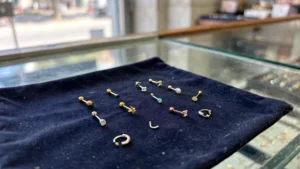
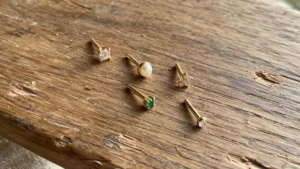
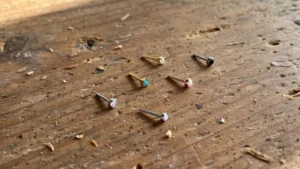
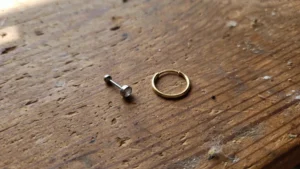
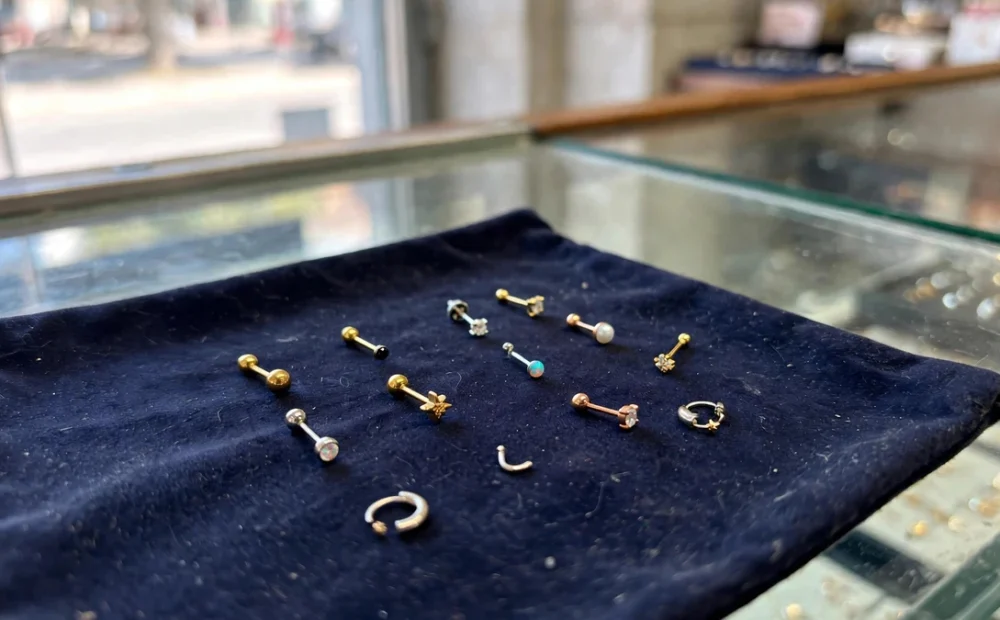
A stud is a short post with a decorative end, usually a small ball, a flat disc, or a gemstone, that sits flat against the nostril. The post goes through the piercing and is held in place by a backing, a screw, or a bend in the metal. Because the stud does not move much, it is gentle on a healing piercing, and because it sits close to the skin, it rarely catches on scarves, towels, or clothing. Studs come in many sizes, but the most popular are small, between 1.5 and 3 millimetres across, which is enough to be noticed without dominating the face.
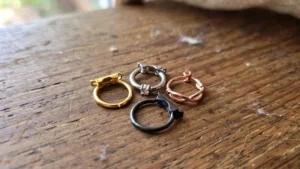
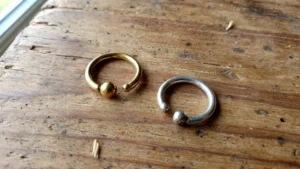
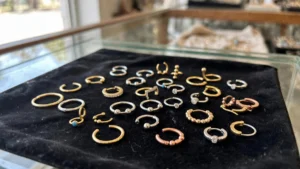
A hoop is a thin ring that passes through the piercing and forms a circle around the nostril. Hoops can be seamless, with a tiny join that closes flush, or they can be clickers, which open on a hinge and snap shut. A hoop moves slightly as you talk and turn your head, which is part of its charm, but also the reason it needs a healed piercing. The diameter matters a great deal. A hoop that is too small will pinch, and one that is too large will hang low and look heavy. Most people wear hoops between 6 and 10 millimetres in diameter.
Both shapes are made in the same metals, gold, silver, and titanium, and both can carry a stone or stay plain. The shape does not change the metal, only how the ring sits, how it moves, and how much attention it draws. That is why this comparison is about your face and your life, not about which shape is fashionable this year.
How we chose these comparisons and what to look for
Look first at the fit, not the style. A stud needs the right post length, long enough to allow for slight swelling but short enough not to poke the inside of your nose. A hoop needs the right diameter, snug enough to sit close to the nostril but loose enough not to pinch. A ring that fits well should feel like nothing at all after the first few days, and if it does not, the size is usually the problem, not the shape.

Look next at the closure. A stud with a secure backing or a screw thread will not fall out in your sleep. A seamless hoop needs a join that closes flush, with no gap to catch skin, and a clicker needs a hinge that snaps shut cleanly. Cheap closures are the most common reason a nose ring is lost, so check the join before you buy. Our guide to the best necklaces for women makes the same point about clasps, and it matters even more for a nose ring, where a lost ring is a small piece of jewellery gone for good.
Finally, think about when you will wear it. If you want one ring for everything, a small stud is the safest choice. If you want a ring that makes a statement, a thin hoop is the bolder one. If you are still healing, start with a stud and switch to a hoop later, once the piercing is fully settled.
The 9 comparisons that matter in 2027
First impressions and how they photograph
What we like: A stud reads as a small, bright point that draws the eye without pulling focus from the rest of your face. A hoop reads as a deliberate line that frames the nostril and catches the light as you move.
In photos, a stud is the safer choice if you want your face to do the talking, and a hoop is the better choice if you want the jewellery to be part of the picture. Both photograph well, but they photograph differently.
Comfort and how they feel all day
What we like: A stud sits still, so once you forget it is there, it stays forgotten. A well-fitted hoop is light and moves gently, and many people find the movement pleasant rather than distracting.
If a ring feels uncomfortable after a week, try a different size before giving up on the shape. A stud with a shorter post or a hoop with a smaller diameter often solves the problem completely.
Durability and what can go wrong
What we like: A stud has few moving parts, so there is little to break, and a lost backing is easy to replace. A seamless hoop has no hinge to wear out, and a good clicker can last for years.
The most common problem with a hoop is snagging, especially when drying your face or changing clothes. Take a little care at those moments, and a hoop will last as long as a stud.
Matching outfits and seasons
What we like: A stud goes with everything, from a summer dress to a winter coat, because it is small enough to disappear into any outfit. A hoop suits summer best, when bare skin and light fabrics make it look natural, and it pairs well with other hoops and rings.
If you own one of each, you can switch by season and by outfit, which is what many people do. A stud for the working week, a hoop for the weekend, and neither one feels like a compromise.
Care, cleaning, and upkeep
What we like: A stud is easy to clean, because the post is short and the decoration is small, and a gentle rinse is usually enough. A hoop is also easy to clean, and its open shape lets cleaning solution reach the whole ring.
Clean a nose ring once a week with warm water and a mild, fragrance-free soap, and dry it gently. Avoid harsh chemicals and alcohol-based cleaners, which can irritate the skin and dull the metal.
Cost for one ring and for a set
What we like: Studs are usually a little cheaper than hoops, because they use less metal and a simpler closure. Hoops cost a little more, but the difference is small, and a good hoop will last as long as a good stud.
Because the cost difference is small, the sensible approach is to buy the shape you like best in the best metal you can afford, rather than letting a few pounds decide the shape for you.
Skin sensitivity and allergies
What we like: A stud made from solid gold or implant-grade titanium is one of the gentlest options for sensitive skin, because it barely moves and the metal is well tolerated. A hoop in the same metals is equally gentle once the piercing is healed.
If your skin is sensitive, choose nickel-free metals and avoid plated rings. A ring that irritates your skin will not become comfortable with time, so take it out and try a different metal.
Occasion and dress code
What we like: A tiny stud is the most discreet nose ring you can wear, and it passes in almost every workplace and formal setting. A thin hoop is still discreet, but it is more visible, and it suits evenings, weddings, and parties.
For a formal occasion, choose the smallest ring you own in either shape. A tiny stud or a thin, close-fitting hoop both add polish without drawing attention away from the rest of your look.
Keeping it afterwards as a keepsake
What we like: A good stud in solid gold is a small, lasting piece that is easy to keep and easy to pass on. A good hoop in solid gold is just as lasting, and a hoop with a stone can feel more special as a keepsake.
Think of a keepsake nose ring as a small piece of jewellery you own, not a fashion item you replace. Buy it in solid gold, in the shape you love most, and it will still be there in twenty years.
Which nose ring is right for you
Start with your piercing. If it is new or still healing, a stud is the right choice, because it moves less and lets the skin settle. Once it is fully healed, you can try a hoop and see how it feels. Many people keep both, wearing a stud most days and a hoop when they want a bolder look, and that is the simplest answer to the whole comparison.
Then think about your face. A small stud flatters a small nose and a delicate face, because it adds a point of light without adding a line. A thin hoop flatters a longer nose and a stronger face, because its curve balances the length. Our guide to everyday anklets makes a similar point about proportion, and it applies to a nose ring too: the right size matters more than the shape itself.
Finally, think about your life. If you work in a formal setting, a stud is the easier ring to wear every day. If you love to change your look, a hoop gives you more to play with. There is no wrong answer, and the ring you will actually wear, comfortably and happily, is always the right one.
The caveats that matter
Both shapes are safe for most people, but the shape matters most when a piercing is new. A hoop in a fresh piercing moves more, which can slow healing and increase irritation, and a stud that is too tight can press on swollen skin. If your piercing is new, follow your piercer’s advice, keep the ring clean, and do not change it early. If a ring makes your skin red, sore, or swollen, take it out and seek advice rather than hoping the problem will pass on its own.
| Detail | What is known |
|---|---|
| Best for a fresh piercing | A stud, because it moves less and lets the piercing heal undisturbed |
| Best for a bold look | A hoop, which draws a visible line around the nostril |
| Comfort | A stud sits still; a well-fitted hoop is light, but a loose one can pull |
| Snagging risk | Higher for hoops, which can catch on towels and scarves |
| Cost | Studs are usually a little cheaper; the gap is small either way |
| Care | Both need a weekly gentle clean; hoops need a check that the join closes flush |
| Sensitive skin | Choose nickel-free gold or titanium; a stud is gentler on a new piercing |
| What neither shape fixes | Size and fit matter as much as shape; a badly sized ring will not suit you in any shape |
If you are unsure about size, ask the seller or your piercer to measure your nostril and recommend a diameter or post length. A few millimetres make a real difference on a nose ring, and a ring that fits is a ring you will actually wear.
Checklist: choosing between a stud and a hoop
Use these checks before you buy, and again after a week of wear.
- Check the piercing: if it is new, choose a stud and wait until it is fully healed before a hoop.
- Check the size: the right post length for a stud, the right diameter for a hoop.
- Check the closure: a secure backing on a stud, a flush join or a clean click on a hoop.
- Check the metal: solid gold, gold-filled, or nickel-free silver, not a mystery alloy.
- Check your routine: a stud for formal work, a hoop for evenings, or one of each.
- Check after a week: no redness, soreness, or pulling, and the ring still sits comfortably.
Frequently asked questions
Is a stud or a hoop better for a new nose piercing?
A stud is better for a new piercing, because it moves less and lets the skin heal without being disturbed. Most piercers start with a stud and suggest waiting until the piercing is fully healed, usually several months, before switching to a hoop.
Can I switch from a stud to a hoop?
Yes, once the piercing is fully healed. Change it gently, choose the right diameter, and check that the join closes flush. If the piercing feels sore after the change, switch back to the stud for a few more weeks.
Do hoop nose rings fall out easily?
A well-fitted hoop with a flush join or a working clicker does not fall out easily. Cheap hoops with a gap in the join are the ones that slip out, so check the closure before you buy, and keep a spare stud at home just in case.
Which shape suits a small nose?
A small stud usually suits a small nose best, because it adds a point of light without adding a line that can overwhelm the face. A very thin, close-fitting hoop can also work, but choose the smallest diameter that sits comfortably. A luxury watch guide is a useful reminder that proportion matters in every piece of jewellery, and a nose ring is no exception.
Can I wear a nose ring at work?
Usually yes, especially a tiny stud, which is discreet in most workplaces. Check your employer’s policy first, and if in doubt, choose the smallest, simplest ring you own. A thin hoop is also fine in most settings, but a large or ornate one may draw more attention than you want.
How do I clean a nose ring?
Once a week, wash your hands, rinse the ring with warm water and a mild, fragrance-free soap, and dry it gently with a clean cloth. Do not use alcohol or harsh chemicals, and do not force a ring that feels stuck. If the skin is sore, leave the ring in place and seek advice from your piercer.
The bottom line
A stud and a hoop are both good nose rings, and the right one depends on your piercing, your face, and your life. A stud is quieter, safer for a fresh piercing, and easier to wear anywhere, while a hoop is bolder, more visible, and more fun to change with your outfit. Neither shape is a mistake, as long as it fits well, is made from a good metal, and has a secure closure.
Start with a stud if your piercing is new, try a hoop once it is healed, and keep one of each if you like both. The ring you will actually wear, comfortably and happily, is always the right choice, and the best nose ring is the one that feels like it belongs on your face.