Buying a nose stud looks simple. It is a small piece of jewellery, it costs less than most rings, and there are hundreds of them for sale online and in every jewellery shop. The trouble starts when the stud arrives and it does not fit, it irritates the skin, or it looks nothing like the photograph. A stud that is the wrong gauge will not sit properly. A stud made from cheap plated metal can turn the skin red within days. A stud that is too large can dominate a face instead of flattering it.
That is why buying a nose stud is worth doing slowly, even though it is a small purchase. The metal, the size, the back and the budget each matter, and getting them right the first time saves the cost and the annoyance of a second purchase. A little measuring and a little patience at the start is the difference between a stud you wear every day and a stud that lives in a drawer.
Below are nine steps to buying a nose stud in 2027, from measuring your nose to keeping the receipt. Each step explains what to do, what to watch for, and how long it takes, so you can buy once, buy well, and wear the stud with confidence.
Key takeaways
- Measure your nose and know your gauge before you buy, because a stud that does not fit will not sit properly no matter how pretty it is.
- Choose implant-grade titanium, 14k gold or genuine sterling silver, and avoid cheap plated studs and unnamed alloys.
- Match the stone size to your face, usually 1.5 to 2.5 millimetres, and pick a back that suits how you sleep and move.
- Compare like with like on price, and remember that one good stud worn daily is better value than three cheap ones.
- No stud is worth sore skin, and any stud that causes lasting redness, swelling or pain should be removed and the skin allowed to rest.
What buying a nose stud actually involves
Buying a nose stud involves four decisions, and they are best made in order. First comes the fit: the gauge, which is the thickness of the post, and the diameter or length, which decides how the stud sits on the nose. Then comes the metal, which decides whether the stud is comfortable against the skin. Then comes the style: the stone, the colour and the shape. Then comes the price, which is easier to judge once the other three are settled.
Most nose studs are sold in a standard gauge of 20 or 18, which is roughly 0.8 to 1 millimetre thick. If you already have a piercing, the piercer will have used a particular gauge, and the new stud should match it. If you are buying for a fresh piercing, the piercer will advise you, and it is best to wait until the piercing has settled before changing the stud. Guessing the gauge is the most common mistake, and it is the easiest one to avoid by asking.
Where you buy matters too. A reputable jewellery shop or a specialist piercing studio will name the metal, state the gauge, and answer questions about fit. A market stall or a very cheap online listing often does none of these things. Paying a little more from a seller who gives clear information is usually the cheaper choice in the end.
How we chose these steps and what to look for
Look first at the information the seller gives you. A good listing states the metal, the gauge, the stone size, the post length and the type of back. If any of those are missing, ask before you buy. A seller who cannot answer is a seller to avoid, because the missing detail is usually the one that matters most.
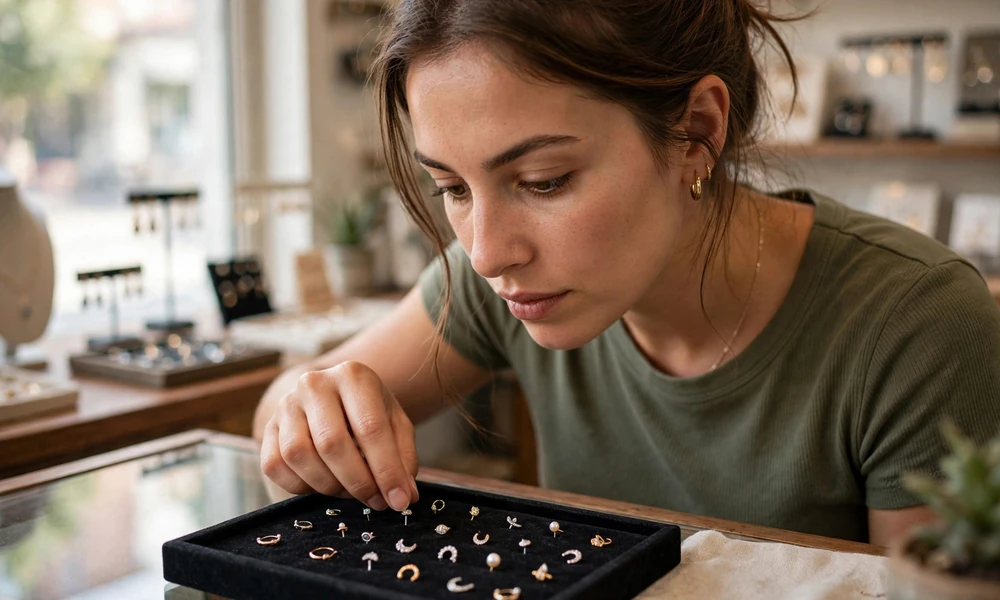
Look next at the metal and the finish. Implant-grade titanium, 14k gold and genuine sterling silver are the metals that most skin tolerates well. The finish should be smooth, with no rough edges, a secure setting, and a back that fits snugly without pressing. Our roundup of the best anklets for women makes the same point about everyday jewellery: a simple, well-made piece that is comfortable all day is worth more than a fancier one that is not.
Finally, look at the price with the metal in mind. A titanium or silver stud usually costs £8 to £30, a gold-filled stud £15 to £40, and a solid gold or diamond stud considerably more. If a solid gold stud is priced like a plated one, it almost certainly is not solid gold. Compare studs of the same metal and the same gauge, and the fair price becomes clear.
The 9 steps to buying a nose stud in 2027
Measure your nose first
What we like: Measuring takes two minutes and removes the guesswork entirely. What to consider: A paper ruler is less accurate than a jeweller’s gauge, so ask a piercer to confirm it if you can. Best for: Anyone buying a replacement stud. Cost: Free, or a few pounds at a piercing studio. Time needed: Two minutes.
Decide how snug you want it
What we like: A snug stud sits flat and looks neat, while a slightly looser stud is easier to put in and take out. What to consider: Too snug can press and irritate, and too loose can catch on clothes and scarves. Best for: Everyday wear and first-time buyers. Cost: No extra cost. Time needed: A few minutes of thought.
Choose a metal that suits your skin
What we like: Implant-grade titanium suits almost everyone, 14k gold suits warm skin, and sterling silver suits cool skin. What to consider: Cheap plated metals often contain nickel and are the most common cause of redness. Best for: Sensitive skin and daily wear. Cost: £8 to £40 for a good everyday metal. Time needed: A few minutes of checking the listing.
Pick a size that fits your face
What we like: A stone of 1.5 to 2.5 millimetres suits most faces, and a small ball end is the most discreet option of all. What to consider: A stone that looks small in a photograph can look large on a small nose, so check the measurements, not just the picture. Best for: First-time buyers and smaller faces. Cost: No extra cost. Time needed: A few minutes of comparing measurements.
Match the metal to your other jewellery
What we like: Matching the stud to your earrings and necklaces gives a finished, deliberate look with no extra effort. What to consider: Mixing metals can work, but it takes a confident eye, so match first and mix later. Best for: Formal occasions and photographs. Cost: No extra cost. Time needed: A few minutes of looking at what you already own.
Check the back and the closure
What we like: A flat back is the most comfortable for sleeping, an L-shaped post needs no separate back, and a screw back holds most firmly. What to consider: Tiny backs are easy to lose, and a back that is too tight can press and irritate. Best for: All-day wear and sport. Cost: No extra cost. Time needed: A few minutes of reading the listing.
Ask yourself when you will wear the stud. A flat back suits sleep and sport, an L-shaped post suits anyone who changes studs often, and a screw back suits anyone who worries about losing a stud. The right back is the one that fits your life.
Decide between one stud and a set
What we like: A set gives you a choice for different outfits, while a single stud lets you spend more on a better metal and a better stone. What to consider: Sets often mix metals and sizes, so check each piece rather than assuming they match. Best for: Building a small collection. Cost: £15 to £50 for a set. Time needed: A few minutes of deciding.
If this is your first stud, buy one good one and wear it for a few weeks. You will learn what size and metal suit you, and the second purchase will be a better one for it. Sets are best bought once you know what you like.
Set a budget and compare like with like
What we like: A budget of £10 to £30 buys a good everyday stud, and comparing the same metal and gauge makes the fair price obvious. What to consider: A solid gold stud priced like a plated one is almost certainly not solid gold. Best for: Anyone shopping online. Cost: £10 to £30 for everyday wear. Time needed: Ten minutes of comparing listings.
Compare three studs of the same metal, the same gauge and a similar stone size. The price that sits in the middle is usually the fair one, and the cheapest is usually cheap for a reason. Our guide to how to wear a nose ring makes a similar point about starting simple: one well-chosen piece, worn well, is worth more than a handful of compromises.
Keep the receipt and the care instructions
What we like: A receipt makes a return or an exchange simple, and care instructions tell you how to keep the stud looking new. What to consider: Some sellers will not accept returns on body jewellery for hygiene reasons, so check the policy before you buy. Best for: Online purchases. Cost: Free. Time needed: A minute to file the receipt.
Read the returns policy before you order, and keep the receipt until you have worn the stud for a week. If the metal irritates your skin or the fit is wrong, you will want the option to return it, and a lost receipt removes that option.
Which nose stud is right for you
Start with the practical facts: your gauge, your metal, and your budget. Once those are settled, the style follows naturally. A sensitive skin points to titanium. A warm skin tone points to gold. A small face points to a small stone. A busy life points to a flat back. None of these choices is a compromise. They are the choices that make a stud comfortable enough to wear every day.
Then think about how you will actually wear it. If you want one stud for everything, choose a classic silver or gold ball end in a safe metal. If you want a stud for special occasions, choose a small diamond, pearl or opal. If you are not yet sure about a piercing, try a clip-on first and see how the look feels before you commit to anything permanent.
Finally, buy from a seller who gives you information. A listing that names the metal, states the gauge, and shows the back is a listing from a seller who understands the product. A listing that shows only a pretty photograph is a gamble, and a nose stud is too close to your skin to gamble on.
The caveats that matter
The most common mistake in buying a nose stud is buying the wrong gauge. A post that is too thick will not fit, and a post that is too thin will move around and irritate the piercing. Ask your piercer for the gauge, write it down, and do not guess. The second most common mistake is buying a cheap plated stud and assuming it is safe because it looks like gold. Plating wears off, the metal underneath is often nickel-heavy, and the result is redness that could have been avoided for a few pounds more.
| Detail | What is known |
|---|---|
| Standard gauges | 20 gauge (0.8 mm) or 18 gauge (1.0 mm) for most nose piercings |
| Safest metals | Implant-grade titanium, 14k gold and genuine sterling silver |
| Metals to be careful with | Cheap plated alloys and unnamed metals, which often contain nickel |
| Best stone size | 1.5 to 2.5 millimetres for most faces |
| Most comfortable back | A flat back for sleeping and sport; an L-shaped post for easy changing |
| Typical budget | £10 to £30 for a good everyday stud; more for diamond or solid gold |
| Returns | Check the policy before buying, as many sellers do not accept returns on body jewellery |
| What it does not do | No guide replaces a piercer’s advice, and no stud is comfortable if the gauge or metal is wrong |
Timing matters too. Do not buy a new stud for a fresh piercing until the piercer says it has settled, and do not change a stud the day before an important event in case the new one does not sit quite right. Buy early, try it at home, and give yourself time to change your mind.
Checklist: buying a nose stud well
Use these checks before you order, and again when the stud arrives.
- Check the gauge: know whether you need 20 or 18 gauge, and buy a stud that matches it exactly.
- Check the metal: implant-grade titanium, 14k gold or genuine sterling silver, with the metal named on the listing.
- Check the size: a stone of 1.5 to 2.5 millimetres, and a post length that fits your nose without pressing.
- Check the back: a flat back for sleeping and sport, or an L-shaped post if you change studs often.
- Check the price: compare three studs of the same metal and gauge, and be wary of a solid gold stud priced like a plated one.
- Check the returns policy: read it before you buy, and keep the receipt until you have worn the stud for a week.
Frequently asked questions
How do I know my nose stud gauge?
Ask your piercer, who will know the gauge they used. Most nose piercings are 20 gauge (0.8 millimetres) or 18 gauge (1.0 millimetre). If you no longer have the original stud, a piercer or a jewellery shop can measure the piercing for you in a minute.
Can I wear a nose stud if my skin is sensitive?
Yes, if you choose the right metal. Implant-grade titanium is the safest choice for sensitive skin, followed by 14k gold. Avoid cheap plated studs and unnamed alloys, which often contain nickel and are the most common cause of irritation.
How much should a good nose stud cost?
A good everyday stud in titanium or sterling silver usually costs £8 to £30, and a gold-filled stud £15 to £40. Solid gold and diamond studs cost considerably more. Compare studs of the same metal and gauge, and be wary of prices that look too good to be true.
Should I buy one stud or a set?
Buy one good stud first, wear it for a few weeks, and learn what size and metal suit you. A set is a better second purchase, once you know what you like, because you can judge whether each piece in the set is actually worth wearing.
Can I return a nose stud if it does not fit?
It depends on the seller. Many sellers will not accept returns on body jewellery for hygiene reasons, so always read the returns policy before you buy. If a return is not possible, a reputable seller may still offer an exchange for a different size.
When should I change a new piercing to a different stud?
Only when the piercer says it has settled, which usually takes several weeks. Changing it early can irritate the piercing and slow healing. A luxury watch guide may seem far from nose jewellery, but it makes the same point about patience: a well-made piece is worth waiting for, and rushing a purchase usually costs more in the end.
The bottom line
Buying a nose stud well comes down to four facts: the gauge, the metal, the size, and the back. Get those right and the style takes care of itself, because a stud that fits, suits your skin and stays comfortable is a stud you will actually wear. Measure first, buy from a seller who gives clear information, and spend a little more on the metal if you have to choose.
Buy one good stud, wear it for a few weeks, and let what you learn guide the next purchase. That is how a small collection grows into a good one, and how a simple piece of jewellery becomes the one you reach for every morning.