Amethyst Nose Bars 2027: 9 Picks Worth Wearing
Amethyst is the purple stone that has been worn in jewellery for centuries, and it brings something to a nose bar that no other stone quite matches. The colour ranges from pale lilac to deep, almost inky purple, so it can be a soft whisper of colour or a bold statement, depending on the shade you choose. A nose bar, the straight bar that sits across the nostril with a stone at the front, suits amethyst well because the stone is hard enough for daily wear and the straight bar keeps it sitting neatly against the skin.
The problem is not finding an amethyst nose bar. It is finding one where the colour is even, the stone is well cut, and the bar actually fits. A pale stone can look washed out in daylight. A deep stone can look almost black indoors. A bar that is too long snags on everything, and a cheap setting loosens within weeks. Price is a poor guide on its own. Some of the best amethyst bars are modestly priced, and some of the most expensive are simply a larger stone in the same setting.
Below are nine amethyst nose bars worth considering in 2027, from a classic violet stud-style bar to a vintage-inspired piece with a deep purple stone. Each one is described by what it does well, what to watch for, and who it suits best, so you can choose with your piercing and your style in mind, not just a bestseller list.
Key takeaways
- Amethyst ranges from pale lilac to deep purple, and the shade changes the whole look of a nose bar.
- A straight bar should fit your nostril thickness with a little room to move, and the stone should sit flat against the skin without pressing in.
- Implant-grade titanium and 14k gold are the most reliable metals for a new or sensitive piercing; plated metal is better saved for a fully healed piercing.
- Amethyst is hard enough for daily wear at 7 on the Mohs scale, but it can fade with long exposure to strong sunlight, so store it away from heat and light.
- No nose bar suits every face, and a bar that is too long, too thick or too heavy will irritate a piercing no matter how pretty the stone is.
What amethyst nose bars actually are
A nose bar is a straight piece of jewellery that passes through a nostril piercing, with a decorative end on each side. In an amethyst nose bar, one or both ends carry an amethyst stone, usually set in a small bezel or prong setting. The bar itself is most often implant-grade titanium, surgical steel or solid gold, and the gauge is usually 18 or 16, which is thin enough to be comfortable and thick enough to hold its shape.
Amethyst is a variety of quartz, and its purple colour comes from iron and natural radiation in the stone. It is almost always natural in colour, which is one of its attractions. Unlike blue topaz, it is not routinely colour-treated. The best stones have an even, saturated purple with no brown or grey patches, and a clean cut that lets the light move through the stone.
The appeal of an amethyst nose bar is its colour. Purple is unusual in nose jewellery, so it stands out without being loud, and it pairs well with both silver-toned and gold-toned metals. It suits a healed piercing best, because a bar moves less than a hoop and puts less pressure on the piercing channel while it settles.
How we chose these nose bars and what to look for
Look first at the colour. A good amethyst should be an even purple from edge to edge, with no pale patches or brownish zones. Pale lilac should look soft and clear, not washed out. Deep purple should look rich and saturated, not black. Hold the stone up to the light. If you can see through it and the colour stays even, it is a good stone. If it looks cloudy or patchy, it is a lower grade, and it will not improve with wear.
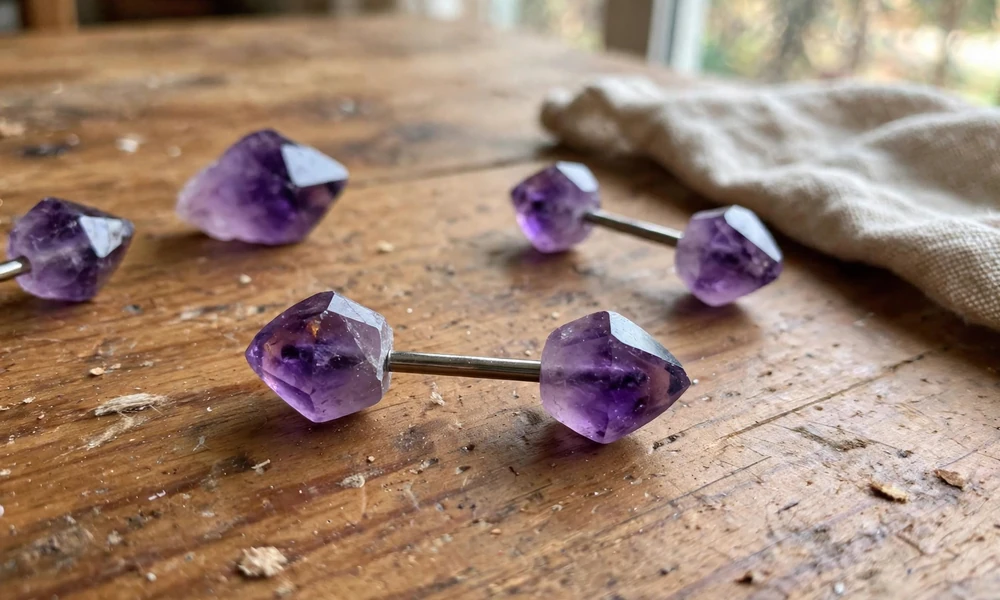
Look next at the setting and the metal. A bezel setting, where the metal wraps around the edge of the stone, protects the stone best and is the safest choice for everyday wear. A prong setting shows more of the stone but leaves the edges exposed, so check that the prongs are even and firmly closed. For the metal, implant-grade titanium is the safest choice for a sensitive or recently healed piercing, and 14k gold is a good option if you want warmth. Our guide to diamond necklaces covers how to judge a setting in the same way, because a secure setting matters just as much in a small nose bar as it does in a necklace.
Finally, look at the length and gauge. A bar that is too long will move around and snag. A bar that is too short will press into the skin. If you are unsure, measure your current jewellery or ask a piercer to check the fit. A straight bar should sit comfortably with a small amount of movement, and the ends should not dig in when you smile.
The 9 best amethyst nose bars of 2027
The Classic Violet Amethyst Bar
What we like: A medium violet amethyst in a simple titanium bezel, light, easy to wear every day, and a colour that suits most skin tones. What to consider: The medium shade is the most common, so it is less distinctive than a very pale or very deep stone. Best For: Everyday wear and first amethyst bars. Material: Implant-grade titanium, violet amethyst. Price Range: $25 to $45. Standout Feature: The most wearable, most versatile amethyst shade.
This is the bar to start with if you have never worn amethyst before. The colour is clear and even, the setting is secure, and it goes with almost everything you already own.
The Deep Purple Amethyst Bar
What we like: A rich, saturated purple that looks luxurious against the skin and pairs well with gold. What to consider: The deep colour can look almost black in low light, so check it in daylight before you commit. Best For: Evening wear and dramatic looks. Material: 14k gold, deep purple amethyst. Price Range: $75 to $130. Standout Feature: The richest, most dramatic amethyst colour.
Deep purple amethyst is the most grown-up choice on this list. It reads as a piece of fine jewellery rather than a casual piercing, and it is at its best with warm metals.
The Pale Lilac Amethyst Bar
What we like: A soft, pale lilac stone that is gentle, romantic and flattering on fair skin. What to consider: The pale colour can look washed out in bright sunlight, so it is best for people who like subtle jewellery. Best For: A soft, understated look. Material: 14k white gold, pale lilac amethyst. Price Range: $60 to $110. Standout Feature: The softest, most delicate amethyst shade.
Pale lilac is the quietest amethyst on the list, and that is its charm. It adds a hint of colour without demanding attention, and it pairs beautifully with white gold.
The Amethyst Bezel Bar
What we like: A full bezel setting that wraps the stone completely, protecting it from knocks and keeping it secure. What to consider: The bezel covers the edges of the stone, so the stone looks slightly smaller than the same stone in a prong setting. Best For: Active lifestyles and new piercings. Material: Implant-grade titanium, violet amethyst. Price Range: $30 to $55. Standout Feature: The most protective, most practical setting.
If you work with your hands, play sport, or simply want jewellery you never have to think about, a bezel setting is the sensible choice.
The Rose Gold Amethyst Bar
What we like: A violet amethyst set in warm rose gold, a combination that softens the purple and flatters warm skin tones. What to consider: Rose gold is a fashion metal, so it may not suit every wardrobe, and it is more expensive than titanium. Best For: Warm skin tones and romantic styles. Material: 14k rose gold, violet amethyst. Price Range: $80 to $140. Standout Feature: The warmest, most flattering metal pairing for amethyst.
Rose gold and amethyst are a natural pairing. The warmth of the metal takes the cool edge off the purple, and the result is soft, romantic and easy to wear.
The Amethyst and Diamond Accent Bar
What we like: A deep purple amethyst flanked by two tiny diamonds, giving extra sparkle without overwhelming the main stone. What to consider: The most expensive bar on this list, and the small diamonds need the same care as the amethyst. Best For: Special occasions and gifts. Material: 14k white gold, deep purple amethyst, diamond accents. Price Range: $150 to $260. Standout Feature: Diamond accents that lift the deep purple stone.
This is the bar for a milestone or a gift. The diamonds add light, the deep purple adds depth, and together they make a small piece of jewellery feel special.
The Vintage-Style Amethyst Bar
What we like: A milgrain-edged setting with a violet stone, giving the bar an old-fashioned, romantic feel. What to consider: The decorative edge can trap makeup and skincare, so it needs a little more cleaning. Best For: Vintage and romantic styles. Material: 14k yellow gold, violet amethyst. Price Range: $85 to $150. Standout Feature: Fine milgrain detailing around the stone.
This bar looks like something passed down rather than bought new, which is exactly the point. It suits soft, romantic styling and warm metals.
The Amethyst Hoop Bar
What we like: A bar with a small hoop detail at one end and an amethyst at the other, giving the look of a hoop with the stability of a bar. What to consider: The hoop detail adds a little weight and movement, so it suits a fully healed piercing best. Best For: People who like hoops but want a bar. Material: Implant-grade titanium, violet amethyst. Price Range: $35 to $60. Standout Feature: A hoop detail on a stable straight bar.
This is a clever hybrid. It gives you the look of a hoop without the movement, and the amethyst keeps it from looking plain.
The Siberian-Style Amethyst Bar
What we like: A deep, reddish-purple stone in the style of the finest Siberian amethyst, with a rich colour that looks expensive. What to consider: True Siberian amethyst is rare and costly, so most bars in this style use a similar deep stone rather than the real thing. Best For: Collectors and lovers of deep colour. Material: 14k white gold, deep reddish-purple amethyst. Price Range: $120 to $200. Standout Feature: The deepest, most coveted amethyst colour.
Siberian-style amethyst is the connoisseur’s choice. The reddish-purple is the most prized shade, and even a good lookalike stone has a depth that cheaper amethyst lacks.
Which amethyst nose bar is right for you
Start with your skin tone and your wardrobe. Cool skin tones usually suit violet and deep purple best, because the blue undertone in the stone picks up the coolness in the skin. Warm skin tones often look better in amethyst set in yellow or rose gold, because the warm metal balances the cool stone. Pale lilac suits fair skin, because it is gentle enough not to overwhelm it.
Think about how you will wear it. If you want a bar you can leave in for weeks, choose a bezel setting in titanium or solid gold, in a shade you will not tire of. If you like to change your jewellery often, a prong setting in a brighter shade is more fun. A guide to the best nose studs for women is a useful next step, because it covers stone sizes and settings in more detail, and the same fitting rules apply whatever stone you choose.
Finally, be honest about your piercing. A bar is a good choice for a healed piercing, but if your piercing is new, irritated or still settling, wait. A straight bar is stable, but no jewellery heals a piercing that is not ready for it.
The caveats that matter
Amethyst is hard, but it is not unbreakable. It can chip if it is knocked against a hard surface, and a chipped stone should be replaced, because a sharp edge can irritate the piercing. Amethyst can also fade with long exposure to strong sunlight or heat, so it is worth taking the bar out before a long day in direct sun, and storing it away from a hot bathroom window.
| Detail | What is known |
|---|---|
| Best shade for beginners | Medium violet, even colour, suits most skin tones |
| Hardness | 7 on the Mohs scale, hard enough for daily wear |
| Best metal for sensitive skin | Implant-grade titanium or 14k solid gold |
| Usual gauge | 18 or 16 gauge for most nostril piercings |
| Most protective setting | A full bezel, which wraps the stone edge completely |
| What to avoid | Plated metal on a new or irritated piercing, and cloudy stones |
| Cleaning | Warm water and mild soap, soft brush, dry fully before wearing |
| When to replace it | If the stone chips, fades badly, the setting loosens, or the bar no longer fits |
If your piercing becomes red, sore or swollen after changing to a new bar, take the bar out and put your previous jewellery back in. If it does not settle within a few days, see your piercer. A new stone is never worth a damaged piercing.
Checklist: buying an amethyst nose bar honestly
Use these checks before you buy, and again after a week of wear.
- Check the colour: even purple from edge to edge, no pale patches or brownish zones.
- Check the setting: bezel or prongs firm, no wobble, no sharp edges against the skin.
- Check the metal: implant-grade titanium or solid 14k gold, not plating, for a sensitive piercing.
- Check the length and gauge: the bar should sit comfortably with a little movement, not press or slide.
- Check the seller: ask whether the amethyst is natural, and whether the metal is solid or plated.
- Check the fit after a week: no redness, no soreness, no snagging on clothing or masks.
Frequently asked questions
Is amethyst natural?
Yes, almost always. Amethyst is a variety of quartz, and its purple colour is natural. Unlike blue topaz, it is not routinely colour-treated, which is one of its attractions.
Can I wear an amethyst nose bar every day?
Yes. Amethyst is hard enough for daily wear, and a bezel setting protects it well. Take it out before swimming in a chlorinated pool or using strong chemicals, and clean it regularly.
What gauge should I choose?
Most nostril piercings are 18 or 16 gauge. If you are unsure what gauge your piercing is, ask your piercer or measure your current jewellery before ordering.
Does amethyst suit warm skin tones?
Yes, especially when it is set in yellow or rose gold. The warm metal balances the cool purple. Pale lilac suits fair skin, and deep purple suits medium and deep skin tones.
How do I clean an amethyst nose bar?
Warm water and a drop of mild soap, with a soft brush around the setting, then rinse and dry fully. Avoid ultrasonic cleaners on a stone with a visible crack, and avoid harsh chemicals. A statement necklace guide may seem unrelated, but its cleaning advice applies here too: gentle, regular cleaning keeps stones looking their best.
Will an amethyst nose bar irritate my piercing?
It should not, if the piercing is healed and the metal is implant-grade titanium or solid gold. If irritation appears, the cause is usually the metal, the fit, or a piercing that was not fully healed. Change back to your previous jewellery and see your piercer.
The bottom line
The best amethyst nose bar in 2027 is the one that fits your piercing, suits your skin tone, and that you will actually enjoy wearing every day. For most people that means a medium violet stone in a titanium bezel, because it is comfortable, secure and easy to live with. For a more luxurious feel, a deep purple stone in gold, or a Siberian-style stone in white gold, is a beautiful step up.
Choose one bar, check the colour and the setting in daylight, wear it for a week, and judge it on comfort as much as colour. A nose bar that feels good and looks good is the one you will keep wearing, and that is what makes it worth buying.