Best Opal Nose Bars 2027
An opal nose bar is a small, straight bar of jewellery that sits across the nostril, with an opal set at one or both ends. It is quieter than a hoop and softer than a plain metal stud, and the opal gives it a gentle flash of colour that changes as the light moves. For 2027, opal nose bars are a favourite for people who want a nose piercing that looks delicate in daylight and a little more interesting up close.
The appeal is in the stone itself. Opal is not one colour but many, with white opal showing soft blue and green fire, Ethiopian opal leaning bright and glassy, and black opal offering a deeper, darker base with flashes of colour. That variety means an opal nose bar can suit warm or cool skin, everyday wear or a special occasion, depending on the setting and the size of the stone.
Below are nine opal nose bars worth considering in 2027, from a classic white opal bar in gold to a tiny ball-end style for a first piercing. Each one is described by what it does well, what to watch for, and who it suits best, so you can choose a bar that fits your piercing, your skin, and the way you actually wear jewellery.
Key takeaways
- Opal nose bars pair a straight bar with an opal at one or both ends, giving a softer look than a hoop and more colour than a plain metal stud.
- White opal suits most skin tones, Ethiopian opal is brighter and more glassy, and black opal gives the strongest contrast.
- Straight bars suit a healed nostril piercing, while curved bars sit more comfortably in a fresh or sensitive piercing.
- Implant-grade titanium and 14k gold are the safest everyday metals; check the bar length and gauge before you buy.
- Opal is softer than diamond or sapphire and can scratch or dry out, so it needs gentle care and should not be worn in a fresh, unhealed piercing.
What opal nose bars actually are
A nose bar is a straight piece of jewellery worn through the nostril, with a decorative end on the outside and a small ball or flat disc on the inside to hold it in place. An opal nose bar replaces the plain metal end with a cabochon opal, usually set in a bezel or a small prong setting. Most bars are 6 to 8 millimetres long and 18 or 20 gauge, which suits a standard healed nostril piercing, and the stone is usually 2 to 4 millimetres across, small enough to sit neatly on the side of the nose.
The stone is what makes the piece. White opal has a milky base with soft blue and green fire. Ethiopian opal is clearer and brighter, with a watery flash of green and orange. Black opal has a dark grey or near-black base that makes the colour stand out sharply. A doublet, which is a thin slice of opal glued to a dark backing, can look similar at a lower price, but it is more fragile and should be kept away from water.
Opal bars suit people who want colour without size. They are a good choice if a hoop feels too bold and a plain stud feels too plain, and they work well for both everyday wear and occasions. Because the bar is straight, it sits flat and does not swing or catch the way a hoop can, which makes it comfortable for sleeping and for active days.
How we chose these opal nose bars and what to look for
Look first at the metal and the fit. Implant-grade titanium and 14k gold are the safest choices for skin that reacts easily, and they hold up to daily wear far better than plated base metal. Check the gauge against your piercing, usually 18 or 20, and the length against your nostril thickness. A bar that is too short will press and irritate, while one that is too long will stick out and catch. Our guide to gold jewellery for everyday wear explains why solid gold is worth the extra cost for a piece you wear every day.
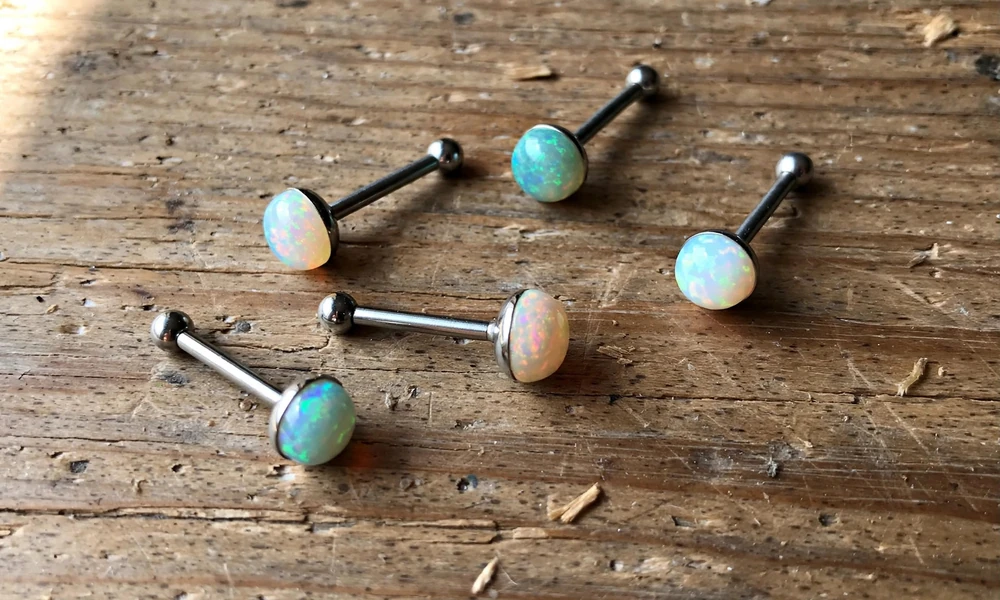
Look next at the stone. A solid opal is more durable than a doublet, and a bezel setting protects the edge of the stone better than open prongs. Ask whether the opal is natural or lab-created, and whether it is solid or a doublet, because that affects both the price and how you should care for it. A reputable seller will answer both questions plainly.
Finally, think about the inside of the bar. A flat-back disc sits flush inside the nostril and is the most comfortable option for all-day wear, while a small ball end is simpler and easier to change. If your piercing is still healing, wait. An opal bar belongs in a fully healed piercing, not a fresh one, because opal is soft and a healing piercing needs simple, inert jewellery.
The 9 best opal nose bars of 2027
These nine bars cover the main opal types, the safest metals, and the most comfortable fittings, from a classic gold bar to a tiny ball-end style.
The Classic White Opal Bar
What we like: A round white opal in a slim gold bezel, with a soft blue-green fire that suits almost every skin tone. What to consider: The stone is small, so the colour play is subtle rather than bold. Best for: Everyday wear and first opal bars. Material: 14k gold with a solid white opal. Price range: Mid-range. Standout feature: The classic bezel setting keeps the stone secure and smooth against the skin.
This is the bar to choose if you want opal without fuss. It reads as a small, bright stud from a distance and shows its colour only when the light catches it, which makes it easy to wear with everything else you own.
The Ethiopian Opal Bar
What we like: A bright, glassy Ethiopian opal with a lively flash of green and orange. What to consider: Ethiopian opal is more porous than Australian opal, so it needs to stay dry. Best for: People who want the brightest opal colour. Material: Implant-grade titanium with a solid Ethiopian opal. Price range: Mid-range. Standout feature: The stone’s clear, watery brightness.
Ethiopian opal is the most eye-catching of the white opals. Keep it out of long showers and swimming pools, and it will hold its brightness far longer.
The Tiny Opal Ball-End Bar
What we like: A tiny opal ball at each end of a short bar, light enough to forget you are wearing it. What to consider: The stones are small, so the colour is a hint rather than a feature. Best for: Small nostrils and minimal everyday looks. Material: Titanium with two small white opals. Price range: Affordable. Standout feature: The double-ended ball design.
A good first opal bar, and a good choice if your piercing is on the smaller side. The short length sits neatly without poking or catching on clothing.
The Rose Gold Opal Bar
What we like: A white opal set in warm rose gold, which flatters warm and neutral skin tones. What to consider: Rose gold can darken slightly with wear, so it needs an occasional polish. Best for: Warm skin and soft, romantic styling. Material: 14k rose gold with a solid white opal. Price range: Mid to premium. Standout feature: The warm metal against the cool stone.
Rose gold softens the opal’s cool fire and makes the whole piece feel warmer. It pairs well with other rose gold jewellery and with autumn colours.
The Silver Opal Bar
What we like: A clean silver bar with a white opal that looks bright and modern. What to consider: Silver can tarnish, so store it dry and polish it now and then. Best for: Cool skin and minimal, everyday outfits. Material: Sterling silver with a solid white opal. Price range: Affordable. Standout feature: The bright, high-contrast finish.
Silver keeps the look simple and the price sensible. It is a good way to try an opal bar before spending more on gold or titanium.
The Opal and Diamond Accent Bar
What we like: A white opal flanked by two tiny diamonds, adding sparkle without overpowering the stone. What to consider: The diamonds add cost, and the setting needs a careful clean. Best for: Special occasions and gifts. Material: 14k white gold with opal and diamond accents. Price range: Premium. Standout feature: The diamond accents framing the opal.
The diamonds lift the opal rather than competing with it. This is the dressiest bar in the list, and the one most likely to be given as a gift.
The Black Opal Bar
What we like: A dark black opal with strong flashes of blue, green and orange against a near-black base. What to consider: Black opal is the priciest opal here, and fakes are common, so buy from a trusted seller. Best for: Evening wear and anyone who wants drama. Material: 14k gold with a solid black opal. Price range: Premium. Standout feature: The deep, dark base that makes the colour fire stand out.
Black opal is the boldest choice in this roundup. A little goes a long way, so even a small stone makes a clear statement.
The Opal Flat-Back Bar
What we like: A flat disc on the inside of the nostril, so the bar sits comfortably and does not snag. What to consider: Flat-back bars need the right length, so measure your piercing first. Best for: Sleeping, sports, and sensitive piercings. Material: Implant-grade titanium with a white opal. Price range: Mid-range. Standout feature: The flat back that sits flush inside the nose.
Comfort is the point here. A flat back means no ball pressing inside your nostril, which matters if you wear the bar all day and night.
The Double-Opal Bar
What we like: An opal at each end of the bar, so the colour shows from more than one angle. What to consider: Two stones mean twice the care, and the bar is slightly heavier. Best for: People who want the most opal for their money. Material: 14k gold with two solid white opals. Price range: Mid to premium. Standout feature: The matched pair of opals.
Two opals give the bar a balanced, finished look from every side. It is a little more jewellery than a single-stone bar, and it shows.
Which opal nose bar is right for you
Start with your piercing. If it is fully healed and you want the simplest option, a straight white opal bar in gold or titanium will suit most people, and it is the easiest to live with. If your piercing is sensitive or you sleep in your jewellery, choose a flat-back bar in the right length, because comfort matters more than the stone once the novelty wears off. A roundup of the best nose bars for women covers the general styles if you want to compare bar shapes before choosing a stone.
Then match the stone to your skin and your habits. White opal is the safest all-rounder, Ethiopian opal is the brightest but needs to stay dry, and black opal is the boldest and the most expensive. If you swim often or shower in your jewellery, a harder stone or a plain metal bar may be a better daily choice, with the opal saved for days when you can give it a little care.
The caveats that matter
Opal is a soft stone, and that is the main thing to understand before buying. It can scratch, chip, and dry out, and it does not forgive rough handling the way a diamond or sapphire would. That does not make it a bad choice, only a choice that asks for a little attention. Keep it clean with lukewarm water and a soft cloth, store it away from other jewellery so the stone does not get scratched, and take it out before swimming, heavy exercise, or anything that might knock it.
| Detail | What is known |
|---|---|
| Bar length | 6 to 8 mm suits most nostrils; measure your piercing before ordering |
| Gauge | 18 or 20 gauge is standard; a wrong gauge can irritate a healed piercing |
| Opal type | Solid opal is more durable than a doublet; doublets need extra care with water |
| Metal | Implant-grade titanium and 14k gold are the safest for sensitive skin |
| Setting | A bezel setting protects the stone edge better than open prongs |
| Water | Remove before swimming or long showers; opal can dry out or cloud |
| Fresh piercings | Do not put an opal bar in an unhealed piercing |
| What opal cannot do | It will not stay bright without care, and it scratches more easily than harder stones |
If your skin reacts to jewellery, choose implant-grade titanium and avoid plated base metal, which can flake and irritate a piercing. If you are unsure about your gauge or length, ask a piercer to measure your piercing before you order, because a bar that fits properly is far more comfortable than one that almost fits.
Checklist: buying an opal nose bar honestly
Use these checks before you buy, and again when the bar arrives.
- Check the gauge and length: 18 or 20 gauge, and 6 to 8 mm for most nostrils.
- Check the metal: implant-grade titanium or 14k gold, not plated base metal.
- Check the stone: solid opal, not a doublet, unless you accept the extra care a doublet needs.
- Check the setting: a bezel protects the opal edge better than open prongs.
- Check the fit: the bar should sit flat without pressing, and the inside end should not poke.
- Check the seller: buy from a trusted source, especially for black opal, where fakes are common.
Frequently asked questions
Can I wear an opal nose bar every day?
Yes, if your piercing is fully healed and you treat the stone gently. Take it out before swimming and heavy exercise, clean it with lukewarm water and a soft cloth, and store it separately so it does not get scratched.
What gauge should I choose?
Most nostril piercings are 18 or 20 gauge. If you are unsure, ask a piercer to check your piercing before ordering, because a bar in the wrong gauge can irritate even a healed piercing.
Is Ethiopian opal better than white opal?
Neither is better in general. Ethiopian opal is brighter and more glassy, while white opal is milkier and softer. Ethiopian opal is more porous, so it needs to stay dry, while white opal is a little more forgiving.
Can I wear an opal nose bar in a fresh piercing?
No. A fresh piercing needs simple, inert jewellery, usually implant-grade titanium with no stone, until it is fully healed. Put the opal bar in only once healing is complete.
How do I clean an opal nose bar?
Use lukewarm water and a soft cloth, and dry it gently. Do not use ultrasonic cleaners, steam, or harsh chemicals, which can damage the stone. For more on opal jewellery in general, our best opal nose rings guide covers the same care rules for rings.
Does opal suit warm or cool skin?
Both. White opal suits most skin tones, rose gold settings flatter warm skin, and silver or white gold settings suit cool skin. Black opal gives the strongest contrast on deeper skin tones and a bold look on fair skin.
The bottom line
The best opal nose bar in 2027 is not the most expensive or the most dramatic. It is the one that fits your piercing, suits your skin, and survives the way you actually live. For most people, that is a solid white opal in a bezel setting, in 14k gold or implant-grade titanium, in the right gauge and length.
Choose one bar, check the fit before you commit to wearing it daily, and give the stone a little care. Opal rewards gentle handling with colour that no plain metal stud can match, and a bar that fits well is one you will reach for again and again, whether you are dressing up or keeping things simple.