Emerald Nose Bars 2027: 9 Picks Worth Wearing
An emerald nose bar is a straight bar of metal, usually gold or titanium, with an emerald set at one or both ends. It sits across the nostril in a straight line, which gives it a tidy, structured look that a hoop or a curved stud cannot match. The stone is the whole point of the piece. A deep green emerald reads as rich and classic, while a pale green or a lab-grown stone changes the same simple shape into something lighter and more everyday.
The appeal is partly practical. A straight bar is easy to clean, it does not catch on clothing the way a hoop can, and it stays where you put it. The appeal is also visual. A small green stone on a straight bar draws the eye without dominating the face, which is why emerald nose bars suit people who want colour in their jewellery but not a lot of drama.
Below are nine emerald nose bars worth considering in 2027, from a classic green stone in gold to a lab-grown option and a tiny pin-style bar for everyday wear. Each one is described by what it does well, what to watch for, and who it suits best, so you can choose with your piercing and your budget in mind.
Key takeaways
- A nose bar is a straight bar with a stone at one or both ends, and it suits people who want a tidy, structured look rather than a curve or a hoop.
- Emerald is softer than sapphire at 7.5 to 8 on the Mohs scale, so it needs a protective setting and gentle handling, but it holds up well to daily wear.
- Implant-grade titanium and 14k gold are the safest common choices for a new or sensitive piercing; plated base metals are more likely to irritate.
- Measure your piercing before you buy: bar length, gauge and stone size all need to match, and a bar that is too long moves around and delays healing.
- No nose bar suits every piercing, and a bar should never be forced through a piercing that is swollen, infected or still healing.
What emerald nose bars actually are
A nose bar, sometimes called a straight barbell for the nose, is a short straight post with a decorative end on each side. One end is usually a fixed stone, the other a removable ball or a second stone. In a nostril piercing the bar runs horizontally across the nostril, with the stone sitting on the outside of the nose and the other end resting inside the nostril. In a septum piercing the bar runs across the base of the nose instead.
Emerald is a good match for this shape when it is set well, because its green colour is deep and distinctive. Natural emerald is almost always treated with oil to fill tiny surface-reaching fissures, which is standard practice and does not make the stone fake, but it does mean the stone should be cleaned gently and kept away from harsh chemicals and ultrasonic cleaners. Lab-grown emerald has the same composition and is usually cleaner, with fewer inclusions, which makes it a practical choice for a small piece that is handled often.
Most emerald nose bars are made in 18 or 20 gauge, which matches the most common nostril piercings, and in lengths from 6 to 8 millimetres. A shorter bar sits closer to the nose and looks neater, while a longer bar gives room for swelling in a fresh piercing. If you are unsure of your size, measure your current jewellery or ask your piercer before ordering, because a bar that is too short presses on the skin and a bar that is too long catches and moves.
How we chose these nose bars and what to look for
Look first at the metal. Implant-grade titanium and 14k solid gold are the most reliable choices for a nose piercing, because they are stable, they do not flake, and they rarely cause a reaction. Sterling silver is fine for a healed piercing but it can tarnish and stain skin over time, and gold-plated base metal wears through with daily cleaning. If your piercing is new or easily irritated, titanium is the safer starting point.
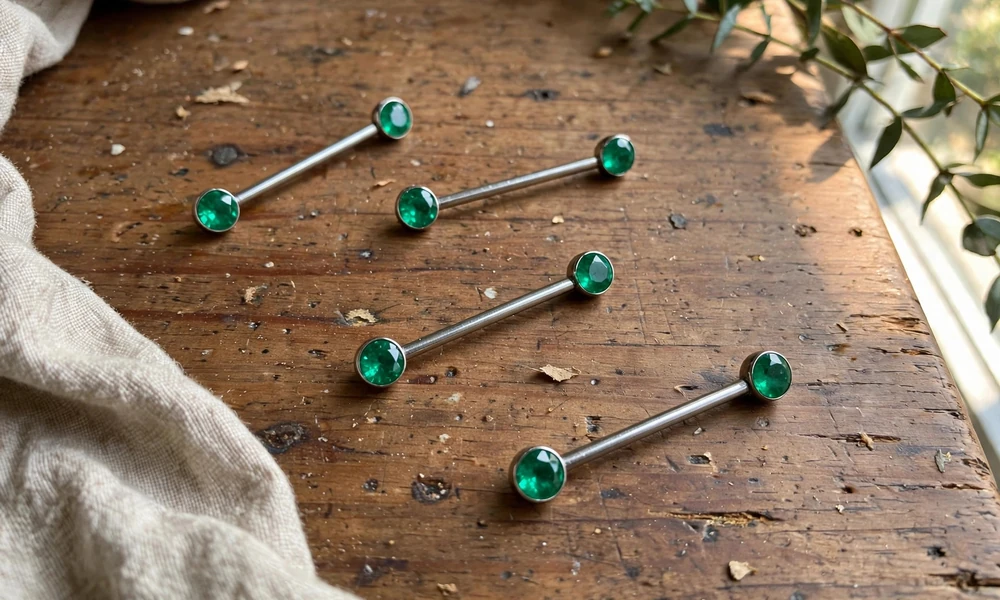
Look next at the setting. A bezel setting wraps the stone in a rim of metal, which protects the edges and is the best choice for emerald, because emerald is softer than sapphire and chips more easily. Prongs show more of the stone and let in more light, but they leave the edges exposed and they need checking now and then, because a bent prong can loosen a stone. For a nose bar that is worn every day, a low bezel is the practical choice.
Finally, look at the stone itself. Colour should be a clear green, not too dark and not too pale, the stone should sit level in its setting, and the surface should be free of chips and cracks. A smaller stone, around 2 to 3 millimetres, looks neat and suits most faces, while a 4 millimetre stone makes a clearer statement. Our guide to the best diamond necklaces covers the same questions about stone quality and setting, because the rules that make a necklace last also apply to a small piece worn in a piercing.
The 9 best emerald nose bars of 2027
The Classic Green Emerald Bar
What we like: A deep green emerald in 14k yellow gold, with a low bezel setting that sits close to the nose and does not snag. What to consider: The gold price puts it above most titanium bars, and emerald needs gentler cleaning than sapphire. Best for: Everyday wear and a first emerald bar. Material: 14k yellow gold, natural green emerald. Price range: $120–$180. Standout feature: A rich, even green with a secure bezel.
This is the bar to start with if you want the classic emerald look without complication. The green is deep enough to read as emerald at a glance, the gold warms it up, and the low setting means it rarely catches on a towel or a pillowcase.
The Bezel-Set Emerald Bar
What we like: A smooth rim of metal wraps the whole stone, so there are no prongs to catch and the edges are protected from knocks, which matters more for emerald than for harder stones. What to consider: A bezel shows slightly less of the stone than prongs, and the bar is only made in one length. Best for: Active days and anyone who has chipped a stone before. Material: Implant-grade titanium, natural green emerald. Price range: $45–$70. Standout feature: A fully enclosed setting that protects a softer stone.
The Zambian Emerald Bar
What we like: A Zambian emerald with a deep, slightly bluish green, in white gold, which keeps the colour looking cool and clear rather than warm. What to consider: Zambian emeralds vary in tone, so the colour of the stone you receive may differ slightly from a photo. Best for: A rich, cool green that suits cool skin tones. Material: 14k white gold, natural Zambian emerald. Price range: $130–$190. Standout feature: A deep bluish-green stone from a well-known source.
The Light Green Emerald Bar
What we like: A pale, fresh green stone in rose gold, which reads as light and gentle rather than heavy, and suits fair skin tones well. What to consider: A pale stone can look washed out in dim light, and it shows inclusions more easily than a darker stone. Best for: A softer, lighter take on an emerald bar. Material: 14k rose gold, natural light green emerald. Price range: $100–$150. Standout feature: A fresh pale green in warm rose gold.
The Lab-Grown Emerald Bar
What we like: A lab-grown emerald with a clean, even colour and very few visible inclusions, set in titanium, at a lower price than a mined stone of the same size. What to consider: Some buyers prefer a mined stone, and resale value is lower for lab-grown stones. Best for: A larger, cleaner stone on a smaller budget. Material: Implant-grade titanium, lab-grown emerald. Price range: $40–$65. Standout feature: A clear, even green at an everyday price.
The Emerald and Diamond Halo Bar
What we like: A green emerald surrounded by a halo of tiny diamonds, which brightens the stone and makes it look larger than it is. What to consider: The halo adds cost and a little extra height, so the bar sits slightly proud of the nose. Best for: A special-occasion bar or a gift. Material: 14k white gold, natural emerald, small diamonds. Price range: $190–$280. Standout feature: A ring of diamonds around the emerald.
The Emerald Seamless Bar
What we like: A smooth, seamless bar with a small emerald set flush into the metal, so there is no visible joint and nothing to catch. What to consider: The stone is small, so the green is subtle, and the seamless design means the bar is fitted by a piercer rather than changed at home. Best for: A discreet, low-maintenance bar that stays in place. Material: Implant-grade titanium, natural emerald. Price range: $50–$80. Standout feature: A flush-set stone with no visible join.
The Oval Emerald Bar
What we like: An oval emerald set lengthwise along the bar, which makes the stone look larger and gives the bar a longer, more elegant line. What to consider: An oval stone is more exposed at the ends, so it needs a bezel to protect it, and it suits a slightly longer bar. Best for: A more elegant, elongated look. Material: 14k yellow gold, natural oval emerald. Price range: $140–$200. Standout feature: An oval stone that follows the line of the bar.
The Tiny Emerald Pin Bar
What we like: A very small 2 millimetre emerald on a short, slim bar, so light you forget it is there, and neat enough for work or school. What to consider: The stone is tiny, so the colour is subtle, and the short bar only fits piercings with a standard placement. Best for: Minimal everyday wear and a first nose bar. Material: Implant-grade titanium, natural emerald. Price range: $30–$50. Standout feature: The smallest, lightest bar in this guide.
Which emerald nose bar is right for you
Start with your piercing. A nostril piercing suits a bar of 6 to 8 millimetres in 18 or 20 gauge, and the stone should sit flat against the outside of the nose without pressing into the skin. A septum piercing needs a bar that matches its own gauge and diameter, which is often larger, so check before you buy. If you are still healing, stick to implant-grade titanium and a simple bezel setting, and wait until the piercing is fully settled before switching to gold or to a prong setting.
Then think about colour. Deep green is the safest and most classic choice, and it suits most skin tones. A pale green is lighter and more casual, a Zambian stone is cooler and bluer, and a lab-grown stone is the cleanest and cheapest way to get a good green. Our guide to the best nose bars for women covers sizing and fit in more detail, because the right bar length matters more than the stone once the piece is in your nose.
Finally, think about how you will wear it. A titanium bezel bar is the best everyday choice: cheap, light, and hard to damage. A gold bar with a larger stone is better for occasions, and a lab-grown stone is the best way to get a bigger, cleaner stone without a bigger price. Buy the bar you will actually wear, not the one that looks best in a photograph.
The caveats that matter
Emerald is softer than sapphire, so it needs more care. A hard knock can chip it, especially at the edges, and harsh chemicals can damage the oil treatment that most natural emeralds carry. Clean it gently with warm water and a mild, fragrance-free cleanser, never with an ultrasonic cleaner, and check the setting every few weeks by gently pressing the stone with a clean fingertip. If it moves, take the bar to a piercer rather than trying to tighten it yourself.
| Detail | What is known |
|---|---|
| Stone hardness | Emerald is 7.5 to 8 on the Mohs scale, softer than sapphire, so it needs a protective setting |
| Best metals | Implant-grade titanium and 14k solid gold are the safest choices |
| Common gauge | 18 or 20 gauge for most nostril piercings |
| Common length | 6 to 8 millimetres for a nostril bar |
| Best setting for daily wear | A low bezel, which protects the edges of a softer stone |
| Who should avoid gold-plated bars | New, healing or easily irritated piercings, because plating wears off |
| Cleaning | Warm water and a mild, fragrance-free cleanser only, never ultrasonic cleaners or harsh chemicals |
| What it does not do | No nose bar suits every piercing, and a bar cannot fix a piercing that is infected or badly placed |
If your piercing becomes red, swollen, painful or starts to discharge, remove the bar only if a piercer or clinician advises it, and seek advice promptly. Changing jewellery in a troubled piercing often makes things worse, and a professional can tell whether the problem is the metal, the fit, or an infection.
Checklist: buying an emerald nose bar honestly
Use these checks before you buy, and again when the bar arrives.
- Check the gauge and length: match them to your piercing, not to the prettiest listing.
- Check the metal: implant-grade titanium or 14k solid gold, not plated base metal, for a new or sensitive piercing.
- Check the setting: a low bezel for daily wear, because emerald chips more easily than harder stones.
- Check the stone: even green colour, no chips or cracks, and sitting level in its setting.
- Check the finish: smooth edges, no rough spots, and a ball or end that screws on cleanly.
- Clean before first wear: wash the bar in warm water with a mild, fragrance-free cleanser and let it dry fully.
Frequently asked questions
Can I wear an emerald nose bar in a new piercing?
Yes, if it is implant-grade titanium and the right size, and your piercer agrees. Gold is also fine once the piercing has settled, but plated jewellery should wait until healing is complete.
Is a lab-grown emerald a real emerald?
Yes. Lab-grown emerald has the same chemical composition and hardness as mined emerald. The difference is origin and price, not the stone itself, and lab-grown stones are often cleaner.
How do I clean an emerald nose bar?
Remove it if your piercing is healed, wash it gently in warm water with a mild, fragrance-free cleanser, rinse well and pat dry. Do not use ultrasonic cleaners, steam cleaners or harsh chemicals, because they can damage the stone.
Will an emerald nose bar irritate my piercing?
It should not, if the metal is titanium or solid gold and the bar fits well. Irritation usually comes from the wrong metal, the wrong size, or a piercing that is still healing.
What size emerald looks best on a nose bar?
A 2 to 3 millimetre stone looks neat and suits most faces. A 4 millimetre stone makes more of a statement. Larger stones can look heavy on a small nose, so try the smaller size first if you are unsure.
How long does an emerald nose bar last?
The stone itself can last for years with gentle care, but it needs more attention than a harder stone. The bar may need replacing sooner if the threading wears, and a bezel setting should be checked by a piercer once a year. Our guide to the best statement necklaces makes the same point about clasps and settings: small metal parts wear out first, and a quick check saves a lost stone.
The bottom line
The best emerald nose bar in 2027 is the one that fits your piercing, suits your skin, and is made from a metal your nose tolerates. For most people that means a titanium bezel bar with a green emerald for everyday wear, and a gold bar with a larger or more unusual stone for occasions. Colour is a matter of taste, but metal, setting and fit are matters of comfort, and comfort decides whether a bar gets worn or sits in a drawer.
Choose one bar, check the size and the setting before you buy, clean it gently before first wear, and give your piercing a few days to settle with it. That is the honest way to enjoy an emerald nose bar without the irritation that makes people give up on nose jewellery altogether.