

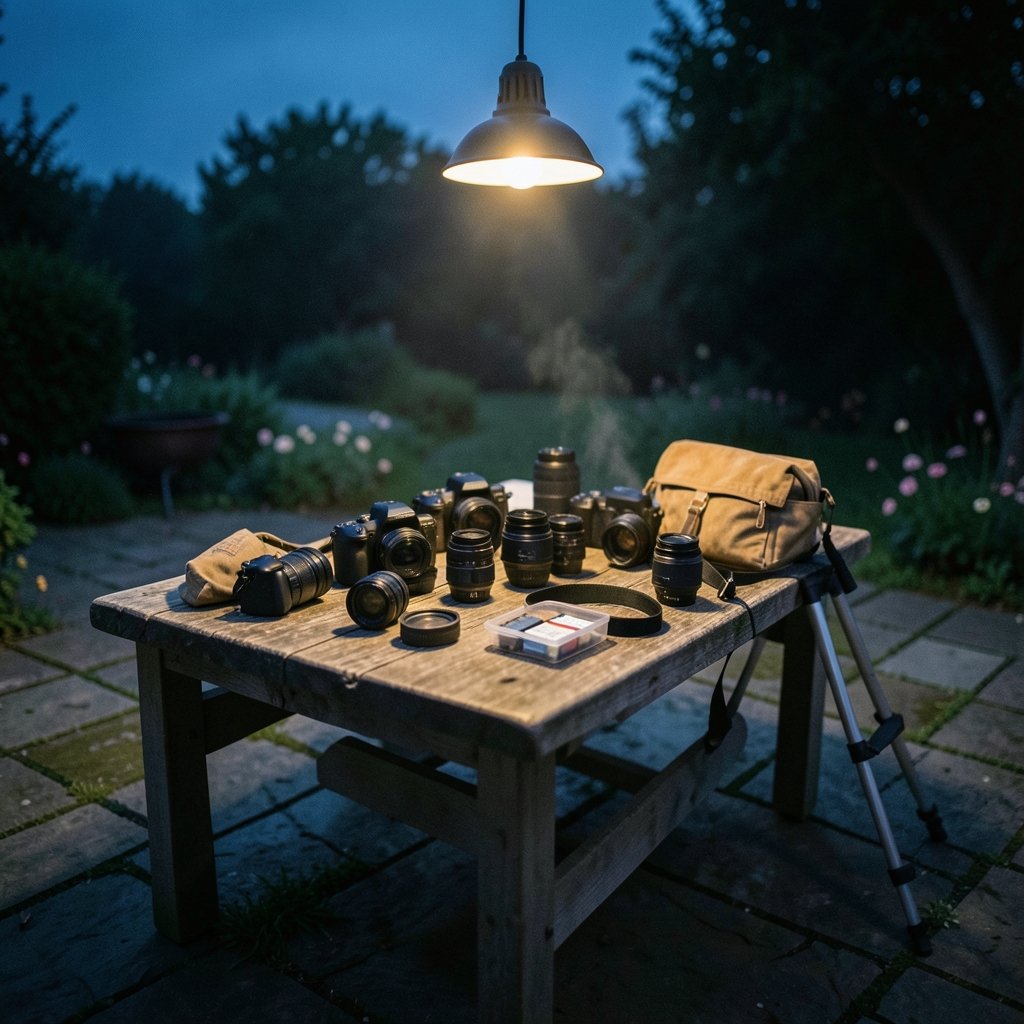
What if the difference between a good photo and a great one isn’t your eye, but the camera sitting in your bag? That question drives a lot of gear shopping, and it’s worth taking seriously. The good news is that the current crop of cameras is genuinely excellent, and the harder part is figuring out which one fits how you actually shoot.
This roundup cuts through the noise. It names specific cameras, explains who each one suits, and flags the one real limitation you should know before you buy. Prices come from published reviews and are listed in the currency those reviews used, so treat them as a guide rather than a quote. The picks below reflect what reviewers consistently praise, not what a spec sheet says in isolation.
Quick Comparison of the Top Picks
| Camera | Best for | Sensor | Standout strength | Price (body only) |
|---|---|---|---|---|
| Nikon Z5II | All-round stills | Full frame | Value and handling | $1,696 / £1,599 |
| Sony A7 V | Stills and action | Full frame | Subject detection AF, battery life | Check retailer |
| Canon EOS R5 Mark II | Demanding all-rounders | Full frame, 45MP stacked | Speed plus resolution | Check retailer |
| Fujifilm X-S20 | Enthusiasts and families | APS-C, 26MP | Film simulations, stabilization | Check retailer |
| Nikon Z50II | Beginners and travel | APS-C, 20.9MP | Small body, Z-mount lenses | Check retailer |
| OM System OM-1 Mark II | Wildlife and outdoors | Micro Four Thirds | Computational features, burst buffer | Check retailer |
| Fujifilm X100VI | Everyday carry | APS-C, fixed lens | Shooting experience | Check retailer |
Nikon Z5II: The Best All-Rounder for Most Photographers

If someone wants one camera to do nearly everything and doesn’t want to think too hard about it, this is the answer most reviewers land on. The Nikon Z5II is a full-frame body with sensibly laid-out controls, and it earns praise as the best value full-frame all-rounder available right now. At $1,696 or £1,599 body-only, it sits in a sweet spot where the money goes into image quality and usability rather than headline specs. (Pick best camera photography without wasting money)
Who it suits: hobbyists stepping up from a crop-sensor body, parents photographing fast-moving kids, and anyone who shoots a mix of portraits, travel, and landscapes. Image quality is described as fantastic, and the Z-mount lens lineup covers ultra-wide views, background-blurring primes, and macro lenses for nature work, so the system grows with you.
The real limitation: it’s a stills-first camera. If video is a big part of your plan, compare carefully before committing, because the value story here is built around photography.
One practical note from experience: full-frame bodies reward good glass, and a cheap kit zoom can make an expensive sensor look ordinary. Budget for one genuinely good prime lens alongside the body. If you’re weighing that trade-off, think carefully about where the money actually matters before you buy.
Sony A7 V: Best for Stills Shooters Who Need Speed
The Sony A7 V uses superb subject detection autofocus and high-speed frame rates, which means it handles a wide range of subjects without fuss. It’s a full-frame camera with 33MP resolution and a hybrid autofocus system, and reviewers single out its class-leading battery life as a genuine advantage over rivals.
Who it suits: photographers who shoot both still and moving subjects, from pets and kids to sports and events. The combination of reliable subject detection and long battery life means fewer missed frames and fewer spare batteries in your pocket.
The real limitation: video. Despite having more pixels than the Nikon Z6 III, the A7 V only shoots 4K, while the Canon EOS R6 III offers open gate recording and the A7 V does not. If you need high-resolution video, look elsewhere.
There’s also a smart money angle. The older Sony A7 IV has the same 33MP resolution and costs much less, so a simple stills shooter could reasonably choose it instead. That’s the kind of advice worth hearing before you spend: the previous generation is often the better buy. The same logic applies across the market, and it’s why so many photographers end up choosing a compact camera for everyday shooting as a second body rather than a second flagship.
Canon EOS R5 Mark II: Best When You Need Resolution and Speed Together
The Canon EOS R5 Mark II packs a 45MP stacked CMOS sensor, eye-controlled autofocus subject selection, and continuous shooting up to 30fps. Reviewers describe it as one of the most all-around capable cameras they’ve tested, with excellent image quality, fast and dependable autofocus, and good video support as well.
Who it suits: working photographers and serious enthusiasts who need high resolution for cropping and printing plus the speed to catch action. The ISO range runs from 50 to 102,400 (extended), and image stabilisation is rated at 8.5 stops, which helps in low light without a tripod.
The real limitation: cost and complexity. This is a professional-grade body, and the file sizes from a 45MP sensor demand fast cards and real storage planning. Eye-controlled AF is genuinely useful but takes a session or two to trust.
If portraits are a big part of your work, the resolution headroom matters more than you’d think. High-megapixel files let you crop tight and still print large, which is part of why portrait photography’s likeness became a lasting record people keep on their walls for decades.
Fujifilm X-S20: Best for Enthusiasts and Family Historians
The Fujifilm X-S20 is a better-than-entry-level camera that should make photo enthusiasts and hobbyists quite happy. It has a stabilized 26MP image sensor, a reliable phase detection autofocus system, and a good set of tasteful Fuji Film Simulation looks. It also supports Raw capture for photographers who prefer to edit to taste.
Who it suits: two groups, really. Shutterbugs who want more control than an entry-level body offers, and family photographers who want a camera that produces pleasing JPEGs straight out of the camera. The built-in flash helps indoors, and the X-S20 works with a wide range of Fujinon XF lenses.
The real limitation: no weather sealing. The magnesium body, all-day battery, and strong lens selection are enough to make it a favorite APS-C mirrorless for creators and enthusiasts, but a rainy hike is a risk.
Practical tip: the film simulations are not a gimmick. They cut editing time dramatically for family and travel work, and shooting Raw plus JPEG lets you keep both options open.
Nikon Z50II: Best Small Body for Beginners and Travel
The Nikon Z50II is an APS-C camera with a 20.9MP CMOS sensor and excellent picture quality and autofocus. It works with a good set of Z-series lenses, letting you switch between ultra-wide views, background-blurring primes, and macro lenses for nature photography. Manual controls and Raw capture mean it stands up to edits.
Who it suits: beginners who want room to grow, and travelers who want a light body. The 3.2-inch screen, 2.4m-dot electronic viewfinder, and 1.04m-dot display resolution make framing comfortable, and connectivity covers Wi-Fi, Bluetooth, USB-C, micro HDMI, and 3.5mm headphone and microphone jacks. Maximum ISO reaches 204,800, with a minimum of 100.
The real limitation: a single SD card slot (UHS-II). For most shooters that’s fine, but event photographers who want instant backup will feel the gap.
If you’re building toward paid work, start here and reinvest in lenses before upgrading the body. That path is covered in this guide on how to start a photography business that actually turns a profit, which is more about margins than megapixels.
OM System OM-1 Mark II: Best for Wildlife and the Outdoors
This Micro Four Thirds mirrorless model offers clever computational features that are unique among its peers, such as a digital Live Grad ND filter that’s fully adjustable, making it easy to control bright skies for balanced exposures when shooting outdoors. The autofocus system has been upgraded compared to the previous OM-1, and a deeper buffer lets you keep burst-shooting for longer: at the maximum rate of 120fps, the OM-1 Mark II can capture up to 213 RAW files.
Who it suits: wildlife, bird, and nature photographers who hike far and want reach without weight. The ISO range runs from 80 to 102,400 (extended), and the 3.0-inch, 1.62m-dot vari-angle touchscreen helps with low angles and awkward positions.
The real limitation: it’s not a huge departure from the previous model, which is still available and may be the smarter purchase if you don’t need the deeper buffer. The smaller sensor also gives less shallow depth of field than full frame, which some portrait shooters miss.
Fujifilm X100VI: Best for Everyday Carry and Street
The X100VI earns its place for a different reason: it’s fun. From its body design to its exposure dials, it’s packed with retro appeal, and the hybrid viewfinder is a shooting experience worth trying at least once.
Who it suits: street photographers, travelers, and anyone who wants a camera they’ll actually carry every day. It’s a fixed-lens compact with a 35mm equivalent field of view.
The real limitation: flexibility. The fixed 35mm lens is slightly tighter than a smartphone’s camera, so fitting more in the shot means stepping back. You can’t zoom for a different field of view, though the higher pixel count lets you crop in.
That constraint is also the point. A single focal length forces you to move and compose, which is why so many photographers pair a compact like this with a bigger body. The same instinct drives people covering fashion photography where runway moments become lasting images: one camera, one lens, and a lot of anticipation.
What About DSLRs?
Every camera above is mirrorless, and that’s the direction the market has gone. But one DSLR still earns a mention: the Nikon D850. Its 45.7MP back-illuminated sensor still produces files that hang with modern bodies, the optical viewfinder shows the world with zero lag and zero battery anxiety, and its 1,840-shot battery rating remains a number no mirrorless camera on that list approaches.
The catch is the F-mount. Nikon has ended production, the F-mount future is frozen, and the service window is shrinking. The used F-mount lens market is a bargain bin, though, which makes the D850 a genuinely interesting option for nature and studio shooters on a budget who don’t mind buying into a system on its way out.
How to Choose Without Overthinking It
Work through these in order, and the shortlist usually narrows itself.
- Decide what you shoot most. Action and wildlife reward autofocus and buffer depth. Landscapes and studio work reward resolution and dynamic range. Family and travel reward size and straight-out-of-camera color.
- Set a body budget and reserve at least a third of it for lenses. A mid-range body with one excellent lens beats a flagship with a kit zoom every time.
- Check the lens mount’s used market. A system with a deep secondhand catalog saves more money over five years than any body discount.
- Handle the camera if you can. Controls that feel wrong on day one will still feel wrong in year three.
- Be honest about video. If you don’t shoot it, don’t pay for it.
- Buy the previous generation when the specs overlap. The Sony A7 IV versus A7 V comparison is the clearest example in this list.
Common mistakes worth avoiding: buying a flagship for the badge, ignoring card and storage costs on high-megapixel bodies, and upgrading the body before outgrowing the lens. If you also shoot video for an audience, the same logic applies to choosing the best cameras for vlogging that actually work.
Conclusion
There is no single best camera for photography, but there is a best camera for the way you shoot. The Nikon Z5II wins on value for most people, the Sony A7 V wins for speed and battery life, and the Canon EOS R5 Mark II wins when you need resolution and speed in the same body. The Fujifilm X-S20 and Nikon Z50II cover enthusiasts and beginners without cutting corners, the OM-1 Mark II is the outdoors specialist, and the X100VI is the one you’ll carry when you don’t feel like carrying a camera.
Pick the one that matches your subjects, spend the savings on glass, and stop shopping. The photos are the point.
Frequently Asked Questions
What is the best camera for photography overall?
The Nikon Z5II is the strongest all-round choice for most photographers. It’s a full-frame body priced at $1,696 or £1,599 body-only, with sensibly laid-out controls and excellent image quality. Reviewers describe it as the best value full-frame all-rounder available right now.
Is mirrorless better than DSLR for photography?
For most buyers, yes. Mirrorless bodies dominate current recommendations, and every pick in this roundup except the Nikon D850 is mirrorless. The D850 remains compelling for its 45.7MP sensor, lag-free optical viewfinder, and 1,840-shot battery rating, but Nikon has ended production and the F-mount future is frozen.
How much should I spend on a camera body?
Spend less than you think and put the rest into lenses. A full-frame all-rounder at roughly $1,700 leaves budget for good glass, while a high-end body like the Canon EOS R5 Mark II costs considerably more. A mid-range body with one excellent lens outperforms a flagship with a kit zoom.
Do I need a full-frame camera?
Not necessarily. APS-C bodies like the Fujifilm X-S20 and Nikon Z50II deliver sharp, properly focused photos and work with wide lens ranges. Full frame helps most with low light and shallow depth of field. Micro Four Thirds, as in the OM-1 Mark II, trades some of that for reach and lighter gear.
What camera is best for wildlife photography?
The OM System OM-1 Mark II is built for it. It offers computational features like an adjustable digital Live Grad ND filter, upgraded autofocus over the previous OM-1, and a buffer that captures up to 213 RAW files at 120fps. The trade-off is less shallow depth of field than full frame.
Is a fixed-lens camera like the Fujifilm X100VI limiting?
Yes, deliberately. Its 35mm equivalent lens is slightly tighter than a smartphone’s camera, and you can’t zoom for a different field of view. The higher pixel count lets you crop in, though. Many photographers treat it as a daily carry alongside a larger system rather than a sole camera.











