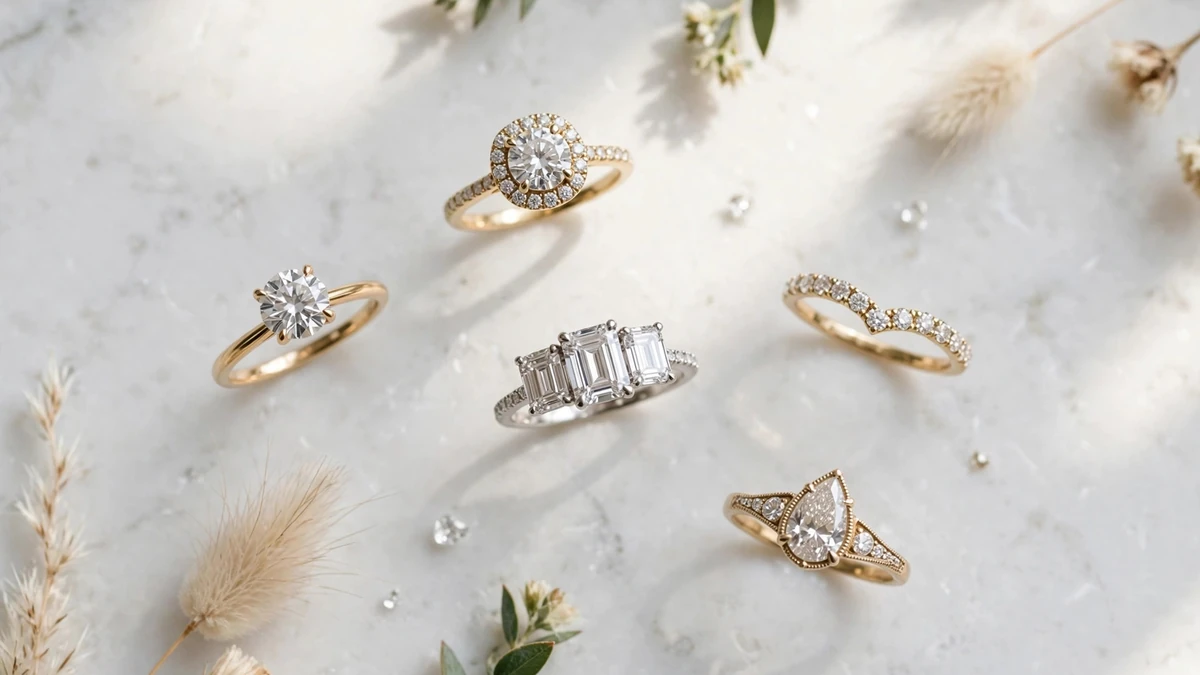

Ten thousand dollars is a serious engagement ring budget. It is enough for a well-cut natural diamond of meaningful size, a larger lab-grown diamond, a fine coloured stone, or a beautifully made designer setting, and it is also enough to make expensive mistakes. The difference between a ring that looks extraordinary for decades and one that disappoints in a year usually comes down to where the money went: into the cut and the setting, or into a brand name, a large but poorly cut stone, or a design that is hard to wear every day.
The good news is that ten thousand dollars buys more in 2027 than it did five years ago. Lab-grown diamonds have brought the price of a two-carat stone down sharply, moissanite has become a respectable choice rather than a compromise, and designers such as Mejuri and Monica Vinader have made well-made settings available at prices that leave room for a better centre stone. The challenge is not finding options. It is knowing which ones hold their beauty and which ones trade it away for size.
Below are nine engagement rings under $10,000 worth considering in 2027, from classic solitaires to coloured-stone and lab-grown options. Each one is described by what it is good at, what to watch for, and who it suits best, so you can spend your budget where it shows, not where it disappears.
Key takeaways
- Ten thousand dollars buys a well-cut natural diamond of about one to one and a half carats, or a lab-grown diamond of two carats or more, in a quality setting.
- Cut matters more than carat weight. A smaller, well-cut stone looks brighter and larger than a bigger stone with a poor cut.
- Lab-grown diamonds and moissanite let you spend more on the setting and less on the stone, with no visible difference to the eye.
- Always ask for a grading report, check the return policy, and have the ring independently appraised before the return window closes.
- No engagement ring is a financial investment, and a ring bought at the top of your budget leaves nothing for insurance, resizing, or a wedding band.
What $10,000 actually buys in an engagement ring
A natural diamond is priced by the four Cs: cut, colour, clarity and carat weight. At a $10,000 budget, the realistic target is a round brilliant of about one to one and a half carats in G or H colour, VS2 or SI1 clarity, with an excellent cut, set in 14k or 18k gold or platinum. Go larger and you will usually have to accept lower colour, lower clarity or a weaker cut, and the stone will show it. Go smaller and the money can go into a better cut, a finer setting, or a matching wedding band.
Lab-grown diamonds change the arithmetic. Because a lab-grown diamond costs roughly 70 to 90 percent less per carat than a natural stone of the same quality, the same budget buys a two-carat stone, or a one-carat stone in a much more elaborate setting. Lab-grown diamonds are real diamonds, chemically and physically identical to mined ones, and they need a grading report from GIA or IGI just as a natural stone does. The trade-off is resale value, which is low for lab-grown stones, and that matters only if you ever plan to sell.
Coloured stones open a third path. A sapphire or ruby engagement ring under $10,000 can be larger and more vivid than any diamond at the same price, and a moissanite ring can be larger still. The honest question is not which stone is best in the abstract, but which one fits the person who will wear it every day: how hard it is, how it handles knocks, how it is cleaned, and whether its colour will still please in ten years.
How we chose these rings and what to look for
Look first at the cut. For a round diamond, an excellent or ideal cut is what makes the stone bright, and brightness is what the eye notices first. A well-cut one-carat stone can look larger than a poorly cut one-and-a-half-carat stone, and it will keep looking good in ordinary light, not just under a jeweller’s spotlight. For fancy shapes, oval and cushion cuts face up larger than round stones of the same weight, which is one reason they are popular at this budget.
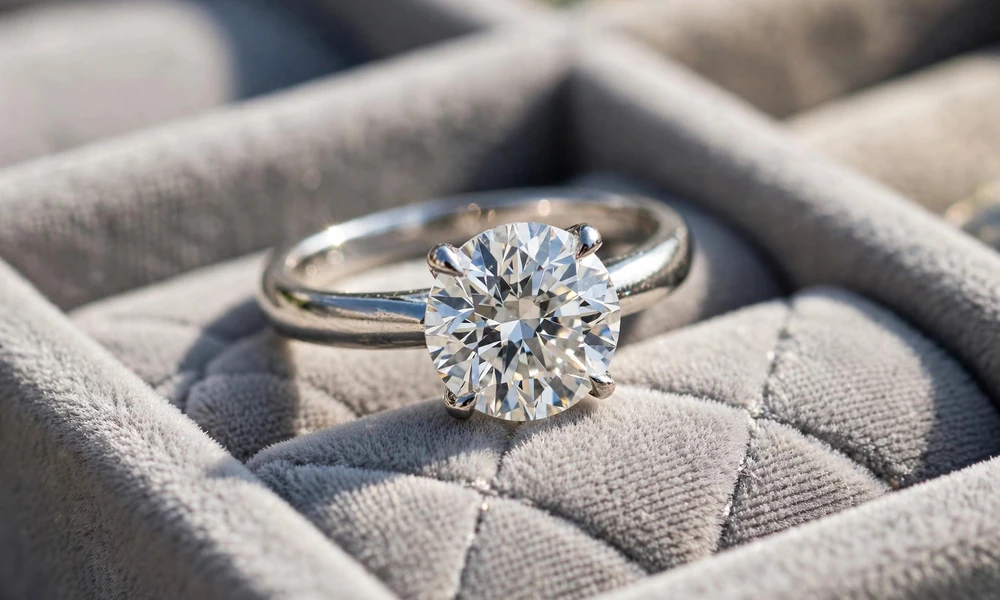
Look next at the setting and the metal. A six-prong solitaire is the safest choice: it shows the stone, it is easy to clean, and it can be resized. A pavé or halo setting adds sparkle and makes the centre stone look larger, but it has more small stones to lose and costs more to repair. Platinum is durable and needs little upkeep but costs more; 18k gold is a good balance of colour and strength; 14k gold is harder and cheaper. Our diamond buying guide explains the four Cs in detail, and it is worth reading before you spend anything, because a jeweller’s advice is only as good as your ability to check it.
Finally, look at the paperwork. A grading report from GIA or IGI, a clear return policy of at least 30 days, and a warranty that covers prong tightening and cleaning are the three things that separate a careful purchase from a gamble. Ask for the report before you pay, not after, and have the ring independently appraised within the return window. If a seller will not provide a report or a return, walk away, however good the price looks.
The 9 best engagement rings under $10,000 of 2027
Tiffany & Co. Tiffany Setting
What we like: The original six-prong solitaire, in platinum or 18k gold, with a round brilliant that is cut for brightness and a setting that has been made the same way for over a century. What to consider: The brand carries a premium, so the stone will be smaller than an equivalent ring from a smaller jeweller. Stone: Natural diamond, round brilliant. Setting: Six-prong solitaire. Best for: A classic, understated ring from a house with a lifetime of service behind it. Price range: $6,500 to $10,000.
Cartier Solitaire 1895
What we like: A slim, elegant solitaire with a round brilliant, made by one of the great jewellery houses, with a setting that is refined rather than showy. What to consider: As with Tiffany, the name adds to the price, and the slim band needs care with daily wear. Stone: Natural diamond, round brilliant. Setting: Six-prong solitaire. Best for: A discreet, elegant ring from a heritage house. Price range: $6,000 to $9,500.
David Yurman Solitaire Cable
What we like: A solitaire on David Yurman’s signature cable band, which gives a classic diamond a distinctive, sculptural character without adding fragility. What to consider: The cable detail is a matter of taste, and the band is harder to resize than a plain shank. Stone: Natural diamond, round brilliant. Setting: Solitaire on a cable band. Best for: Someone who wants a recognisable designer ring with a classic stone. Price range: $5,500 to $9,000.
Mejuri The Lab Diamond Solitaire
What we like: A lab-grown diamond solitaire that buys roughly twice the carat weight of a natural stone at the same price, in a clean, modern setting, with transparent pricing. What to consider: Lab-grown diamonds have little resale value, and the setting is simpler than a heritage house ring. Stone: Lab-grown diamond, round or oval. Setting: Four-prong solitaire. Best for: The largest possible stone on a $10,000 budget. Price range: $2,000 to $6,000.
Monica Vinader Solitaire Signet
What we like: A modern signet-style solitaire in 18k gold vermeil or solid gold, with a clean profile that suits everyday wear and a price that leaves room for a better stone. What to consider: Vermeil is gold over sterling silver and will wear over time, so choose solid gold if the budget allows. Stone: Lab-grown diamond or moissanite. Setting: Signet solitaire. Best for: A contemporary, understated ring for daily wear. Price range: $1,500 to $5,000.
Missoma Solitaire Stacking Ring
What we like: A slim solitaire designed to stack with a wedding band, in 18k gold vermeil or solid gold, with a small but bright stone and a price that makes a larger stone an easy upgrade. What to consider: The stone is small at the entry price, and vermeil needs care. Stone: Lab-grown diamond or white topaz. Setting: Slim solitaire. Best for: A delicate ring that sits neatly beside a wedding band. Price range: $800 to $4,500.
Maria Black Solitaire Sculptural
What we like: A sculptural, architectural setting that treats the ring as a piece of design, not just a stone holder, with a strong, modern character. What to consider: The sculptural setting is a bold choice, and it may not suit someone who wants a classic ring. Stone: Lab-grown diamond. Setting: Sculptural solitaire. Best for: Someone who loves modern design and wants a ring that looks like nothing else. Price range: $2,500 to $7,000.
Astrid & Miyu Solitaire Halo Band
What we like: A halo setting that makes a modest centre stone look larger and brighter, with a slim band and a price that leaves room for a better-quality stone. What to consider: Halo settings have more small stones to maintain, and the halo can make the centre stone harder to clean. Stone: Lab-grown diamond or moissanite. Setting: Halo solitaire. Best for: Maximum sparkle from a smaller centre stone. Price range: $1,800 to $6,500.
Thomas Sabo Solitaire Charm
What we like: A charming, accessible solitaire with a bright stone and a classic setting, at a price that makes it easy to spend more on the stone itself. What to consider: The brand is fashion-led rather than fine-jewellery-led, so the setting and service are simpler. Stone: Cubic zirconia or lab-grown diamond. Setting: Four-prong solitaire. Best for: A beautiful ring on a smaller share of the budget. Price range: $500 to $3,500.
Which ring is right for your budget
If your budget is close to $10,000 and you want a natural diamond, spend it on cut first, then colour, then clarity, and let carat weight follow. A one-carat, G-colour, VS2 stone with an excellent cut will look better than a one-and-a-half-carat stone with a fair cut, and it will keep looking better for decades. Choose a six-prong solitaire in platinum or 18k gold, and you have a ring that is easy to wear, easy to clean, and easy to resize.
If your budget is closer to $5,000, a lab-grown diamond is the honest answer. It buys a two-carat stone in a quality setting, and nobody looking at the ring will know the difference. Our guide to the best moissanite engagement rings covers the other way to get a large, bright stone for less, and moissanite is harder and more durable than most people expect, though it does have a different kind of sparkle that some people love and others do not.
If your budget is under $2,000, spend it on the setting and the cut, not the size. A small, well-cut stone in a solid gold setting looks far better than a large, cloudy stone in a thin band, and a solid gold band will outlast a vermeil one by years. Whatever you spend, keep a reserve for insurance, for resizing, and for a wedding band, because a ring bought at the very top of the budget leaves nothing for the things that follow it.
The caveats that matter
A $10,000 budget does not protect you from a bad purchase. The most common mistake is buying size over cut, and the second is buying from a seller who will not provide a grading report or a return policy. A third is choosing a setting that looks beautiful in a box and is hard to live with: a high setting that catches on everything, a pavé band that loses stones, or a band so thin it bends. Wear the ring for a week before the return window closes, and notice how it actually feels.
| Detail | What is known |
|---|---|
| Natural diamond at this budget | About 1 to 1.5 carats, G or H colour, VS2 or SI1 clarity, excellent cut |
| Lab-grown diamond at this budget | Two carats or more, same quality, 70 to 90 percent less per carat |
| What matters most | Cut first, then colour, then clarity; carat weight last |
| Best setting for daily wear | Six-prong solitaire; easy to clean, easy to resize, shows the stone |
| Best metal for durability | Platinum, then 18k gold; 14k gold is harder and cheaper |
| Paperwork to ask for | GIA or IGI grading report, 30-day return, warranty on prongs |
| What to keep in reserve | Insurance, resizing, and a wedding band |
| What it is not | An investment; resale value is low for all engagement rings |
If you are buying a ring as a surprise, check the finger size first, and buy from a seller who resizes for free. A ring that is a size too small is uncomfortable and hard to remove, and a ring that is too large can slip off. If the person has sensitive skin, choose platinum or 18k gold rather than a nickel-containing alloy, and ask the jeweller to confirm the metal composition in writing.
Checklist: buying an engagement ring under $10,000 honestly
Use these checks before you buy, and again before the return window closes.
- Check the cut first: excellent or ideal for a round diamond, and a well-proportioned fancy shape otherwise.
- Check the report: GIA or IGI grading, seen before you pay, with the stone’s measurements matching the ring.
- Check the return policy: at least 30 days, in writing, with resizing included or clearly priced.
- Check the setting: six prongs for a solitaire, smooth edges, no sharp claws, and a band thick enough to last.
- Check the metal: platinum or 18k gold for sensitive skin, and the composition confirmed in writing.
- Check the reserve: insurance, resizing, and a wedding band budgeted before you spend the full $10,000.
Frequently asked questions
How big a diamond can I get for $10,000?
A natural diamond of about one to one and a half carats in G or H colour and VS2 or SI1 clarity, with an excellent cut, in a quality setting. A lab-grown diamond of the same quality can be two carats or more at the same price.
Is a lab-grown diamond a real diamond?
Yes. A lab-grown diamond is chemically and physically identical to a mined diamond. It needs the same grading report, and it looks the same to the eye. The difference is price and resale value, which is low for lab-grown stones.
Should I spend the whole $10,000 on the ring?
No. Keep a reserve for insurance, resizing, and a wedding band. A ring bought at the very top of your budget leaves nothing for the costs that follow, and insurance alone is worth having from the first day.
Is moissanite a good choice under $10,000?
It can be. Moissanite is hard, bright, and much cheaper than diamond, so it buys a large stone for very little money. It has stronger rainbow sparkle than diamond, which some people love and others do not. Our guide to non-diamond engagement rings compares moissanite, sapphire, ruby and other stones in detail.
What metal is best for an engagement ring?
Platinum is the most durable and the best for sensitive skin, but it costs more. 18k gold is a good balance of colour, strength and price. 14k gold is harder and cheaper, and it is a sensible choice if the budget needs to go further.
Do I need to insure an engagement ring?
Yes, from the day you buy it. An independent appraisal within the return window gives you the value for insurance, and a policy that covers loss, theft and damage is inexpensive compared with the cost of replacing the ring.
The bottom line
The best engagement ring under $10,000 in 2027 is not the largest stone your money can buy. It is the best-cut stone in a setting that is comfortable to wear every day, with a grading report, a return policy, and a reserve left over for insurance and a wedding band. For a natural diamond, that means about one to one and a half carats with an excellent cut. For a lab-grown diamond, it means two carats or more and a setting that shows it well.
Choose the stone first, the setting second, and the brand last, and judge the ring on how it looks in ordinary daylight, not under a jeweller’s spotlight. That is the honest way to spend $10,000 on a ring that will still look beautiful in twenty years.