Hair extensions change what your hair can do, but they also change what your hair needs. The lengths look fuller and longer, yet the ends are the oldest, driest part of the set, and they do not get the natural oils your scalp produces. That is why hair oil is one of the most useful products in an extensions routine, and also one of the easiest to get wrong. The wrong oil, or the right oil used too close to the bonds, can loosen tape, slip beads, or leave the lengths limp and greasy.
The answer is not to avoid oil altogether. Extensions, whether tape-in, clip-in, sew-in, keratin bond, or halo, are real hair in most cases, and real hair dries out. A light oil on the mid-lengths and ends keeps the lengths soft, reduces tangling, and helps the extensions blend with your own hair. The rule is simple: oil the lengths, never the attachment points, and use less than you think you need.
Below are nine oils worth considering in 2027, chosen for light textures, bond-safe use, and honest performance on extension hair. Each one is described by what it is good at, what to watch for, and who it suits best, so you can choose with your extensions in mind, not just a bestseller list.
Key takeaways
- Hair oil keeps extension lengths soft and tangle-free, because extension hair does not receive natural oils from your scalp.
- Light, fast-absorbing oils are the safest choice for extensions; heavy oils can weigh lengths down and creep toward the bonds.
- Apply oil only to the mid-lengths and ends, keeping it well away from tape, keratin bonds, beads, and wefts.
- Two to three drops warmed between your palms is usually enough; more oil does not make extensions softer, it makes them greasy.
- Oil does not repair split ends, regrow hair, or fix slipping bonds, and any oil that reaches an attachment point should be washed out promptly.
What hair oil actually does for extensions
Hair oil works on extensions in the same way it works on natural hair, with one difference: it cannot reach the roots. Your scalp produces sebum, a natural oil that travels down the hair shaft and keeps the lengths supple. Extension hair is cut off from that supply. It is also often processed, coloured, and heat-styled more than natural hair, which leaves the cuticle rougher and more prone to tangling. A light oil smooths that cuticle, reduces friction between strands, and gives the lengths a softer, more natural finish.
What oil does not do is repair damage. It cannot seal a split end back together, it cannot restore elasticity to over-processed hair, and it cannot make a slipping bond hold. It is a surface treatment, and that is enough, because most extension problems are surface problems: dryness, tangling, frizz at the ends, and a visible difference in texture between your own hair and the extensions. Oil addresses all four, quietly and cheaply, as long as it stays where it belongs.
The attachment points are the boundary. Tape tabs, keratin bonds, micro beads, and sewn wefts all rely on grip, and oil is the enemy of grip. A drop of oil on a tape tab can weaken the adhesive over days. Oil on a keratin bond can make it soft and slippery. Oil near a bead can let the extension slide. Our guide to what a hair oil is explains the basics of how oils work, if you want the background before choosing one.
How we chose these oils and what to look for
Look first at the texture. For extensions, a light, fast-absorbing oil is almost always the right choice. Argan, camellia, and squalane-based oils sink in quickly and leave the lengths soft without a heavy film. Thick oils such as pure castor oil or raw coconut oil can work on very coarse, dry ends in tiny amounts, but they are harder to distribute evenly and more likely to travel up the hair toward the bonds. If an oil feels heavy on your hands, it will feel heavy on your extensions.
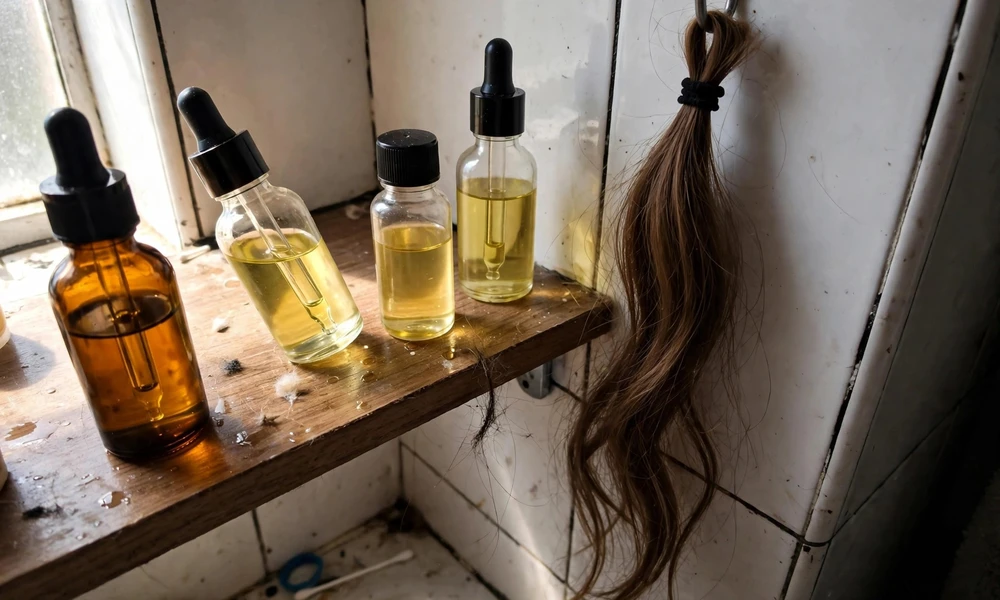
Look next at the formula. A silicone-heavy oil can give a beautiful instant shine, but it can also build up on extension hair, which is washed less often than natural hair in some routines. A simple oil with a short ingredient list is easier to wash out and less likely to leave a residue that dulls the lengths over time.
Finally, look at the bottle and the dropper. A pump or a dropper that gives you two or three drops at a time is worth more than a wide-mouthed bottle that pours too much. Extensions are expensive, and the cheapest way to protect them is to use less product, more carefully.
The 9 best hair oils for extensions of 2027
Oribe Gold Lust Nourishing Hair Oil
What we like: A light, fast-absorbing oil with a soft, polished finish, designed to smooth frizz and add shine without weighing fine or medium hair down.
What to consider: Premium price, and a little goes a long way, so overuse is easy if you pour rather than pump. Best for: Tape-in and keratin bond extensions, fine to medium hair. Material: Argan, jasmine, and edelweiss oil blend. Price range: About $55 to $65. Standout feature: A feather-light texture that disappears into the lengths.
This is the oil to reach for when your extensions look dry but you do not want them to feel coated.
Shu Uemura Essence Absolue
What we like: A camellia-oil formula that softens the lengths and reduces tangling, with a smooth, non-greasy feel that suits daily use on extensions.
What to consider: The scent is noticeable, and the price is at the higher end for a daily oil. Best for: Sew-in and weft extensions, medium to thick hair. Material: Camellia oil. Price range: About $55 to $70. Standout feature: Camellia oil that detangles as it softens.
A good choice for thicker extension sets that tangle easily.
K18 Molecular Repair Hair Oil
What we like: A light oil built around a peptide complex, aimed at hair that feels weakened or over-processed, with a clean finish that does not sit on the surface.
What to consider: The price is high for the size, and it is not a heavy moisturiser, so very dry ends may need a second product. Best for: Keratin bond extensions on colour-treated hair. Material: Squalane and peptide blend. Price range: About $65 to $75. Standout feature: A peptide-based formula for weakened, processed lengths.
Best for extensions that have been coloured or heat-styled often and feel brittle at the ends.
Ouai Hair Oil
What we like: An affordable, lightweight oil that smooths frizz and adds shine, with a pump that makes it easy to dispense two or three drops at a time.
What to consider: The fragrance is strong, and it is lighter than some oils, so very coarse ends may need more. Best for: Clip-in extensions and halos, fine to medium hair. Material: Ama oil and borage seed oil blend. Price range: About $28 to $32. Standout feature: A precise pump and a genuinely light texture.
A practical everyday oil for clip-ins and halos, which are removed at night and oiled off the head.
Bumble and bumble Hairdresser’s Invisible Oil
What we like: A versatile oil that softens, smooths, and protects against heat, with a finish that looks natural rather than glossy.
What to consider: It is easy to use too much on fine hair, and the scent divides opinion. Best for: Micro bead and nano bead extensions, all hair types. Material: Six-oil blend including argan, macadamia, and sweet almond. Price range: About $40 to $45. Standout feature: Heat protection built into a light finishing oil.
Useful if you heat-style your extensions regularly, because it doubles as a light heat protectant on the lengths.
Redken All Soft Argan-6 Oil
What we like: A budget-friendly argan-based oil that softens dry lengths quickly, with a smooth texture that is easy to spread evenly.
What to consider: Slightly heavier than the lightest oils, so start with two drops and add more only if the ends still feel dry. Best for: Sew-in extensions on dry, coarse hair. Material: Argan oil. Price range: About $20 to $25. Standout feature: Strong softening at a low price.
The best value pick for coarse, dry extension lengths.
Living Proof No Frizz Vanishing Oil
What we like: A fast-absorbing oil that targets frizz and flyaways, leaving the lengths smooth without a heavy or sticky feel.
What to consider: It is designed for frizz control rather than deep softening, so very dry ends may need a richer oil as well. Best for: Tape-in extensions in humid weather, wavy or curly extensions. Material: Squalane and moringa oil blend. Price range: About $30 to $35. Standout feature: Frizz control that holds up in humidity.
A good summer oil for extensions that frizz in damp weather.
JVN Complete Nourishing Hair Oil
What we like: A silicone-free, lightweight oil with a clean ingredient list, easy to wash out, and gentle enough for daily use on extensions.
What to consider: The shine is subtle rather than dramatic, and the bottle is small for the price. Best for: Tape-in and clip-in extensions, sensitive scalps. Material: Hemisqualane and camellia oil. Price range: About $24 to $28. Standout feature: A silicone-free formula that washes out cleanly.
A sensible choice if you wash your extensions often and want an oil that will not build up.
Fable & Mane HoliRoots Hair Oil
What we like: A pre-wash treatment oil that softens the lengths deeply before shampooing, with a pleasant scent and a ritual-like feel.
What to consider: It is a treatment oil, not a daily leave-in, so it needs to be washed out properly, and it is heavier than a finishing oil. Best for: Sew-in extensions before wash day, very dry lengths. Material: Amla, ashwagandha, and castor oil blend. Price range: About $34 to $38. Standout feature: A pre-wash treatment that softens the driest lengths.
Use this one as a weekly treatment on the lengths before washing, not as a daily finishing oil.
Which oil is right for your extension type
Tape-in extensions need the lightest oils, because tape is the most sensitive attachment to oil. A fast-absorbing argan or squalane oil, used two drops at a time on the ends only, is the safest combination. Keratin bond extensions are more forgiving, but the same rule applies: oil below the bonds, never on them, and wash the hair thoroughly so no residue creeps upward between washes. Our guide to hair oils for wigs follows the same principle, because wigs and extensions share the same problem, hair that gets no oil from the scalp.
Clip-in extensions and halos are the easiest to oil, because you can take them out, oil the lengths on a flat surface, and wash them separately if you overdo it. Sew-in and weft extensions sit in between: the wefts are secure, but oil can travel along the weft if you use too much, so apply sparingly and brush the oil through the ends only. Micro beads are the most delicate, because a slippery bead can slide, so keep oil well below the beads and use the lightest oil you can find.
Your own hair type matters too. Fine hair needs the lightest oils, used in the smallest amounts, or the extensions will look limp next to your natural hair. Thick, coarse hair can take a richer oil and a little more of it.
The caveats that matter
Oil is a surface treatment, and it has real limits. It will not repair a split end, it will not strengthen a bond, and it will not make extensions last longer than their natural lifespan. What it will do is keep the lengths looking and feeling good while the extensions are in, which is a worthwhile job on its own. The risk is not the oil itself, it is where the oil goes, and the most common mistake is applying it too high, too close to the attachments, or in too large a quantity.
| Detail | What is known |
|---|---|
| Best oil texture | Light and fast-absorbing, such as argan, camellia, or squalane-based oils |
| Where to apply | Mid-lengths and ends only, at least a few centimetres below the lowest attachment |
| How much to use | Two to three drops warmed between the palms is usually enough |
| What to avoid | Heavy oils near tape, keratin bonds, beads, or wefts; oil on the roots |
| How often | Daily on the ends if needed, or two to three times a week for most extension types |
| Best time to oil | On damp or dry lengths, and as a pre-wash treatment once a week for very dry ends |
| When to wash it out | After a pre-wash treatment, and whenever oil has reached an attachment point |
| What oil does not do | It does not repair split ends, regrow hair, or fix slipping bonds |
If your extensions are slipping, shedding more than usual, or the bonds feel soft, stop oiling and speak to the stylist who fitted them. Oil is rarely the only cause, but it is one of the easiest causes to rule out, and a stylist can check the attachments and tell you whether the oil, the washing routine, or the fitting itself is the problem.
Checklist: oiling extensions honestly
Use these checks before you buy an oil, and again after a week of use.
- Check the texture: choose a light, fast-absorbing oil, not a thick or sticky one.
- Check the amount: start with two drops, warmed between your palms, and add more only if the ends still feel dry.
- Check the placement: apply to the mid-lengths and ends only, well below every bond, tape tab, bead, and weft.
- Check the wash: shampoo the lengths properly so no oil residue builds up or creeps toward the attachments.
- Check the attachments weekly: if tape feels loose or bonds feel soft, stop oiling and ask your stylist.
- Check the ends: trim frayed ends on schedule, because no oil can repair a split end.
Frequently asked questions
Can I use hair oil on tape-in extensions?
Yes, but only on the mid-lengths and ends, well below the tape tabs. Use a light oil, two to three drops at a time, and wash the hair properly so no residue reaches the tape. If the tape starts to lift, stop oiling and speak to your stylist.
Will hair oil make my extensions slip?
Oil on the lengths should not cause slipping. Oil that reaches the attachment points can, especially on tape and keratin bonds. Keep oil low, use small amounts, and wash out any oil that gets too high.
How often should I oil my extensions?
Two to three times a week is enough for most extension types, or daily on the very ends if they feel dry. More often is not better.
Can I use coconut oil on extensions?
You can, in very small amounts on the ends only, but pure coconut oil is heavy and hard to wash out, and it can travel up the hair toward the bonds. A lighter oil such as argan or camellia is usually a safer daily choice. Our guide to hair oils for frizzy hair covers lighter options that suit extensions well.
Should I oil extensions before or after washing?
Both work, for different reasons. A light oil on damp lengths after washing smooths and protects the ends. A heavier treatment oil before washing softens very dry lengths, as long as you shampoo it out properly afterwards.
Can I use the same oil on my natural hair and my extensions?
Yes, in most cases, but apply it differently. On your natural hair you can work oil closer to the roots if your scalp tolerates it. On extensions, keep it on the lengths only, and use less, because extension hair shows grease faster.
The bottom line
The best hair oil for extensions in 2027 is a light, fast-absorbing one that you use sparingly and only on the lengths. For most extension types, a two-drop argan or camellia oil on the ends is the safest and most useful choice, and a pre-wash treatment once a week is the best way to rescue very dry lengths. Price matters less than texture and placement, and the cheapest way to protect expensive extensions is to use less product, more carefully.
Choose one oil, apply it low, wash it out properly, and check your attachments every week. That is the honest way to keep extensions soft and tangle-free without risking the bonds that hold them in place.