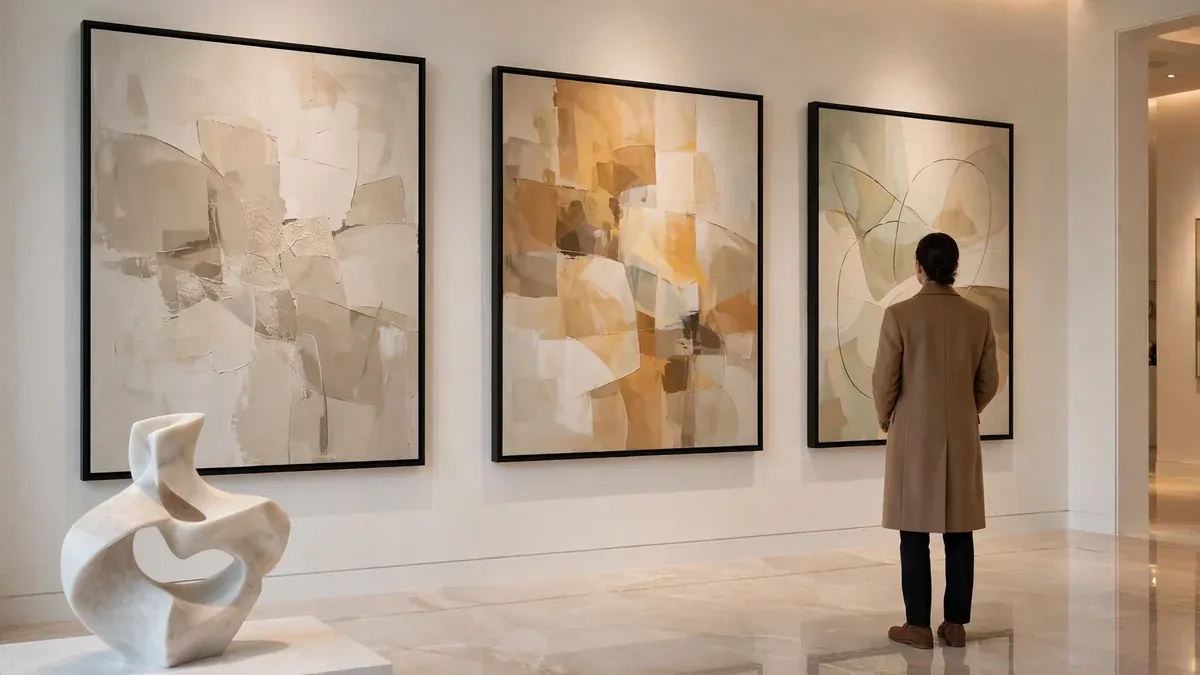

Best Luxury Art Collection Brands bring together heritage, expertise and access in a way that few other luxury markets can match. For a serious collector, the right brand is not simply a place to buy a painting. It is a partner that helps shape a collection, opens doors to artists and private sales, and guides decisions about provenance, condition, display and long-term care.
A great collection is built slowly, with intention and curiosity. Some collectors begin with a single work that speaks to them, while others arrive with a clear theme or group of artists to explore. In both cases, the brands in this guide offer knowledgeable specialists, carefully vetted works and discreet private dealing.
This guide looks at ten leading names, from historic auction houses to influential galleries and a modern collecting platform. Each is assessed on focus, heritage, services and client experience, so readers can compare them and choose the partner that fits their taste, budget and ambitions.
Key Takeaways
- The best luxury art collection brands combine deep expertise with access to exceptional works, private sales and trusted advice.
- Auction houses suit collectors who want breadth and competitive bidding, while galleries suit those who want close relationships with artists.
- Provenance, condition, authenticity and documentation matter as much as the artwork itself, and the strongest brands verify all four.
- Collecting for passion and investing for returns call for different strategies, timelines and levels of risk.
- A thoughtful collector starts with a focus, sets a budget, learns the market and builds a relationship with one or two trusted partners.
Best Luxury Art Collection Brands at a Glance
The table below compares the ten brands at a glance: main focus, heritage and the collector each serves best, with detail in the profiles that follow.
| Brand | Main Focus | Heritage | Best For |
|---|---|---|---|
| Christie’s | Auctions and private sales | Founded 1766 | Historic and blue-chip works |
| Sotheby’s | Auctions, private sales and advisory | Founded 1744 | Major collections and estates |
| Phillips | Modern and contemporary auctions | Founded 1796 | Contemporary and design collectors |
| Bonhams | Auctions across many categories | Founded 1793 | Accessible entry to auctions |
| Gagosian | Contemporary gallery | Founded 1980 | Leading contemporary artists |
| Hauser & Wirth | Contemporary and modern gallery | Founded 1992 | Museum-quality exhibitions |
| Pace Gallery | Contemporary and modern gallery | Founded 1960 | Innovative and large-scale art |
| David Zwirner | Contemporary gallery | Founded 1993 | Serious contemporary collecting |
| White Cube | Contemporary gallery | Founded 1993 | Bold contemporary works |
| 1stDibs | Online luxury marketplace | Founded 2001 | Curated discovery at home |
The 10 Best Luxury Art Collection Brands
Each brand below is presented the same way, so the comparison stays fair and easy to follow. Focus, heritage, services and client experience together give a rounded picture of each name.
1. Christie’s
Focus: Christie’s is one of the world’s best-known auction houses, with sales spanning Old Masters, Impressionist and modern art, contemporary art, jewellery and design. Its auctions attract collectors worldwide, and its private sales division handles works discreetly for those who prefer a quieter route.
Heritage: Founded in London in 1766, Christie’s has been part of the art world for over two and a half centuries, with landmark sales and long relationships with museums, estates and patrons.
Services: Christie’s offers auctions, private sales, valuations, appraisals and estate services, with detailed catalogues, condition reports and viewing opportunities for collectors.
Client experience: Working with Christie’s feels polished and well organised, with clear communication and expert guidance at every stage, and specialists happy to explain the process to new collectors.
2. Sotheby’s
Focus: Sotheby’s is a global auction house and advisory business covering fine art, decorative arts, jewellery, watches and collectibles. Its sales range from single-owner collections to themed evening auctions, and its advisory team works with collectors on acquisitions and collection strategy, much as collectors of luxury watches value craftsmanship, rarity and provenance in every piece they consider.
Heritage: Founded in London in 1744, Sotheby’s is among the oldest auction houses in the world, closely tied to great libraries, estates and collections.
Services: Sotheby’s provides auctions, private sales, valuations, art advisory and collection management support, with specialists across many fields, online bidding and private viewings.
Client experience: Clients describe Sotheby’s as discreet, knowledgeable and attentive, with a strong emphasis on relationships, and a dedicated specialist can become a long-term sounding board for the collector.
3. Phillips
Focus: Phillips is known for its fresh, focused approach to modern and contemporary art, design, photography and watches. Its sales often feel more curated and contemporary than those of larger houses, with a strong emphasis on living artists.
Heritage: Founded in London in 1796, Phillips has reshaped itself in recent decades around contemporary collecting, with an international reach and a loyal following among younger collectors.
Services: Phillips offers auctions, private sales, advisory services and valuations, with specialists in contemporary art, design and photography, and a digital platform that makes bidding straightforward.
Client experience: Phillips is often praised for being approachable and modern, with staff who guide new buyers through the auction process in a lively, welcoming atmosphere.
4. Bonhams
Focus: Bonhams is a broad-based auction house with sales in fine art, Asian art, jewellery, motor cars, wine and many other collecting fields. Its range makes it a good place to explore different interests, with estimates often starting at more accessible levels.
Heritage: Founded in London in 1793, Bonhams is one of the oldest auction houses still in operation, and has grown into an international business with salerooms in several major cities.
Services: Bonhams provides auctions, private sales, valuations, probate and insurance appraisals, and estate services, with specialists known for their knowledge of niche fields.
Client experience: Collectors often find Bonhams welcoming and unpretentious, with specialists generous with their knowledge, and a range of price points that lets new collectors bid confidently.
5. Gagosian
Focus: Gagosian is one of the most influential contemporary art galleries in the world, representing leading artists and estates across painting, sculpture, photography and installation. Its exhibitions are major events in the art calendar, with some of the most sought-after names in contemporary art.
Heritage: Founded by Larry Gagosian in Los Angeles in 1980, the gallery has grown into a global network with spaces in New York, London, Paris, Hong Kong, Rome and beyond.
Services: Gagosian offers primary and secondary market sales, advisory support and exhibition viewings, along with art books and publications, and its staff work closely with collectors on acquisitions.
Client experience: Working with Gagosian is a polished, gallery-led experience, with knowledgeable directors guiding collectors through exhibitions and available works, though demand for the most sought-after artists can be high.
6. Hauser & Wirth
Focus: Hauser & Wirth is a leading international gallery known for museum-quality exhibitions, historic artists and a thoughtful approach to collecting. Its programme spans modern masters, contemporary artists and estates, with a strong emphasis on scholarship.
Heritage: Founded in Zurich in 1992 by Iwan and Manuela Wirth and Ursula Hauser, the gallery has expanded to London, New York, Los Angeles, Hong Kong and Paris.
Services: Hauser & Wirth offers primary and secondary market sales, advisory support, exhibitions, publications and estate management, helping collectors build coherent holdings around a single artist or a broader theme.
Client experience: The gallery experience is calm, generous and intellectually rich, with staff who enjoy discussing artists and ideas, and collectors are encouraged to take time and learn before buying.
7. Pace Gallery
Focus: Pace Gallery is known for contemporary and modern art, with a particular strength in large-scale works, light, technology and installation. Its artists explore bold ideas and new materials, and its exhibitions often push the boundaries of a gallery show.
Heritage: Founded in Boston in 1960 by Arne Glimcher, Pace has a long history of working with pioneering artists, from modern masters to contemporary innovators.
Services: Pace provides primary and secondary market sales, advisory services, exhibitions and publishing, with support for large-scale commissions and installations in homes, offices and public spaces.
Client experience: Pace offers a confident, forward-looking gallery experience, with directors well versed in art history and new media, and thoughtful conversation about each work.
8. David Zwirner
Focus: David Zwirner is a leading contemporary gallery representing a carefully chosen group of artists, estates and collaborations. Its programme is known for quality and consistency, with exhibitions that attract serious collectors, curators and critics.
Heritage: Founded in New York in 1993, David Zwirner has grown into a global gallery with spaces in New York, London, Paris, Hong Kong and Los Angeles.
Services: David Zwirner offers primary and secondary market sales, advisory support and a rich programme of exhibitions and publications, helping collectors understand an artist’s development and the context of each work.
Client experience: The gallery is known for professionalism and discretion, with directors who build lasting relationships with collectors in a measured, informative experience.
9. White Cube
Focus: White Cube is a contemporary gallery known for bold, ambitious exhibitions and a roster of internationally recognised artists. Its shows often feature large-scale sculpture, painting and installation in spaces designed to let the work speak.
Heritage: Founded in London in 1993 by Jay Jopling, White Cube began as a small, focused space and grew into a global gallery with locations in London, Hong Kong, Paris and New York.
Services: White Cube offers primary and secondary market sales, advisory support, exhibitions and publications, and can advise on display and installation for larger pieces.
Client experience: Visiting White Cube is a striking experience, with spacious galleries, confident presentation and knowledgeable staff, and private viewings offer a quieter way to explore.
10. 1stDibs
Focus: 1stDibs is an online marketplace for luxury art, furniture, jewellery, watches and design, connecting buyers with vetted dealers and galleries around the world. Its art offering spans modern and contemporary works, photography and prints, with a strong emphasis on curation.
Heritage: Founded in Paris in 2001 and later based in New York, 1stDibs began as a marketplace for antiques and design and grew into a leading luxury platform.
Services: 1stDibs provides online listings, seller vetting, secure payment, shipping support and buyer protection, with editorial content and curated collections, and buyers can enquire directly with dealers.
Client experience: The experience is convenient and visual, with high-quality images, clear descriptions and easy communication with sellers, and collectors can explore at their own pace before committing.
Art Collecting vs Art Investment: What Is the Difference?
Art collecting and art investment are often spoken of as if they were the same thing, yet they rest on different motivations and different measures of success. Collecting is driven by passion, curiosity and the pleasure of living with art. A collector buys a work because it moves them, because it fits a theme they care about, or because it deepens their understanding of an artist.
Investment, by contrast, is driven by financial goals. An investor studies market trends, artist trajectories, auction results and resale demand, and buys with an eye on future value. A work that is loved but hard to resell may be a wonderful acquisition for a collector and a poor choice for an investor, which is why the distinction matters.
The two approaches can overlap, and many collectors hope their works will hold value or appreciate. Yet the strategies differ in practice. A collector may buy emerging artists or deeply personal works, while an investor may favour established names with strong auction records. A collector may keep a work for life, while an investor plans a holding period and monitors the market.
Risk is another point of difference. Art markets can be illiquid, tastes can change, and values can fall as well as rise, so art should never be treated as a guaranteed store of wealth. Costs also matter, including buyer premiums, shipping, insurance, storage and conservation, and these can affect returns more than many first-time buyers expect. Readers who enjoy thinking about long-term wealth may also find it useful to explore how to build passive income with real estate, a different kind of long-term asset that rewards patience and careful planning.
For most people, the healthiest approach is to collect first and invest second. Buy works that would still be loved if their market value stayed flat, learn the market gradually, and keep good records of provenance, condition and costs. If a work later appreciates, that is a bonus, and if it does not, the collection still holds its real value: the pleasure of the art itself.
Checklist: How to Choose the Right Art Collection Brand
Choosing a partner is easier with a clear checklist in mind. The six items below cover the essentials, from taste and trust to practical support, and they apply whether the first purchase is modest or significant.
- Define your focus: Decide on a period, medium, theme or group of artists before approaching a brand, so the conversation starts with direction rather than guesswork.
- Check reputation and provenance: Look for a brand with a strong record, transparent processes and thorough checks on authenticity, provenance and condition.
- Meet the specialists: Speak with the people who will advise you, and judge their knowledge, honesty and willingness to explain, not just their sales manner.
- Understand all costs: Ask about premiums, taxes, shipping, insurance and storage early, so the total cost of an acquisition is clear before bidding or buying.
- Plan display and care: Consider where the work will live, how it will be lit and protected, and what conservation or framing it may need over time.
- Start small and build trust: Begin with a modest purchase, observe how the brand communicates and delivers, and deepen the relationship as confidence grows.
Frequently Asked Questions
What is the best luxury art collection brand for a first-time collector?
There is no single best choice for every beginner, since the right brand depends on taste, budget and goals. Auction houses such as Bonhams and Phillips are often welcoming to new buyers, with accessible price points and clear guidance, while online platforms such as 1stDibs allow relaxed browsing and research. A good first step is to attend previews, ask questions and compare how different brands explain their works.
How much money do I need to start collecting luxury art?
Collecting can begin at many levels, from prints and photographs to works by emerging artists, and the brands in this guide cover a wide range of prices. What matters more than the starting budget is a clear focus and a willingness to learn. Many collectors begin modestly, build knowledge and confidence, and increase their spending gradually.
How do I know an artwork is authentic?
Authenticity rests on provenance, documentation, expert opinion and, where relevant, catalogue raisonné entries or artist estate records. Reputable auction houses and galleries check these carefully before offering a work, and they provide condition reports and provenance details. Buyers should ask for documentation and seek independent advice for any significant purchase.
Should I buy art at auction or from a gallery?
Auctions offer breadth, competitive pricing and the excitement of bidding, while galleries offer closer relationships, deeper knowledge of an artist and access to new works. Many collectors use both, buying primary market works from galleries and secondary market works at auction. The choice often depends on the specific work and its availability.
How should I display art at home?
Display deserves as much thought as acquisition, since light, humidity, hanging height and framing all affect how a work looks and how well it lasts. Works should be kept away from direct sunlight and damp, hung at eye level and framed with suitable materials. Inspiration for presenting art beautifully can be found in guides to celebrity home decor, which show how striking pieces can sit naturally within a well-designed living space.
Can art be a good long-term holding?
Art can hold value over the long term, particularly works by established artists with strong demand, yet it is not a predictable or liquid asset. Values depend on taste, reputation, condition and market cycles, and selling can take time and involve significant costs. The safest view is to collect for enjoyment first and treat any appreciation as a bonus.
The Bottom Line
The best luxury art collection brands share a simple quality: they help collectors buy with confidence and enjoy what they own. Christie’s and Sotheby’s offer history, breadth and advisory depth, Phillips and Bonhams bring a fresh and accessible energy to auctions, and galleries such as Gagosian, Hauser & Wirth, Pace, David Zwirner and White Cube offer close access to leading contemporary artists. 1stDibs adds the convenience of curated online discovery.
For a new collector, the wisest path is to start with a clear focus, learn from specialists, and build slowly with a trusted partner. Visit exhibitions, attend previews, ask about provenance and condition, and buy works that genuinely deserve a place on the wall. A collection built in that spirit will reward its owner every day, whatever the market does.