A cotton shirt is the simplest luxury to buy well and the easiest to buy badly. On a rail, two white cotton shirts can look identical, yet one will feel cool and smooth against the skin, hold its collar through a long day, and still look good after fifty washes, while the other will feel stiff, crease in the wrong places, and lose its shape within a season. The difference is the cotton, the weave, and the finishing. The best luxury cotton shirt brands are the ones that treat those details as the whole point, not as a footnote.
That is why this guide is organised around cotton first and brands second. A shirt made from long-staple Sea Island, Egyptian or Supima cotton behaves differently from a shirt made from short-staple cotton, whatever the label says. Two-fold, or two-ply, yarns make a smoother, stronger cloth than single-ply yarns. The weave matters too: poplin is crisp and formal, twill is soft and drapes well, Oxford is textured and relaxed, and pinpoint sits neatly in between. Once you know what to look for in the cloth, choosing gets much easier.
Below are nine brands worth considering in 2027, from the great Parisian and Jermyn Street shirtmakers to modern specialists in fine cotton. Each one is described by what its cotton shirting does best, what to watch for, and who it suits, so you can choose by the fabric in your hands, not just the name on the label.
Key takeaways
- The best luxury cotton shirt brands start with long-staple cotton, such as Sea Island, Egyptian or Supima, spun into two-fold yarns for a smoother, stronger cloth.
- Weave decides how a cotton shirt behaves: poplin is crisp and formal, twill is soft and supple, Oxford is textured and casual, and pinpoint is the versatile middle ground.
- Fit and finishing matter as much as fabric, so check the shoulder seam, the collar shape, the buttons and the stitching before you judge a shirt by its label.
- Specialist shirtmakers often deliver better cotton shirting than fashion houses at the same price, because shirts are their whole business rather than one line among many.
- No cotton shirt stays perfectly smooth all day, so buy cotton for comfort and drape, not for a pressed look.
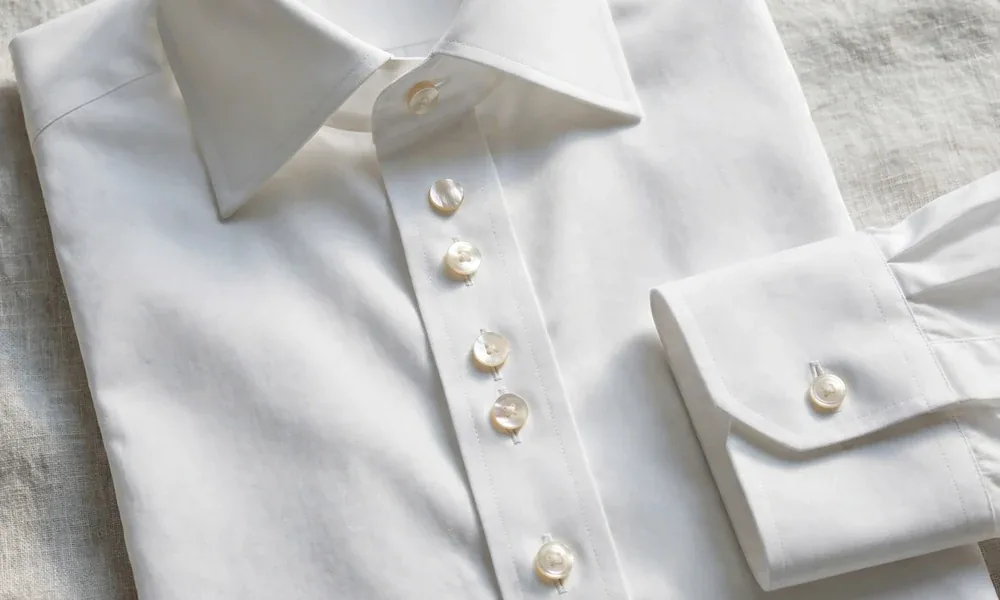
What makes a luxury cotton shirt different
Cotton is the most common shirting fibre in the world. Most cotton shirts use short-staple cotton, spun into single-ply yarns and woven quickly into a cloth that disappoints in the wearing. Luxury cotton shirting starts from a different place. The fibres are longer, which means fewer fibre ends sticking out of the yarn, a smoother surface, and a fabric that pills less and softens rather than roughening with washing.
The length of the fibre is measured in staple length, and the names worth knowing are Sea Island, Egyptian and Supima. Sea Island cotton, grown in the Caribbean, has the longest and finest staple of all, and it makes a cloth that feels almost silky while remaining unmistakably cotton. Egyptian cotton, grown in the Nile Delta, is the classic fine shirting cotton, with a long staple and a soft, strong yarn. Supima, grown in the United States, is a registered extra-long-staple cotton that offers much of the same quality at a more accessible price.
Spinning matters as much as the raw cotton. Two-fold yarns, often written as two-ply, twist two single yarns together, which makes the yarn rounder, stronger and smoother. Very high counts, above 200s, can feel exquisite but are more delicate and less hard-wearing, so a 100s to 140s two-fold cotton is often the sweet spot for a shirt you will wear every week. A guide to the best natural fibres in clothing explains how cotton compares with linen, wool and silk, and why cotton remains the most versatile shirting fibre of all.
What to look for in a luxury cotton shirt
Start with the cloth label, not the brand label. Look for a named cotton, such as Sea Island, Egyptian or Supima, and for two-fold yarns. If the label only says 100 percent cotton, the cotton could be anything, and the shirt should be judged on feel alone. Hold the fabric up to the light: a fine poplin should look even, with no slubs or thin patches, and it should feel smooth rather than fuzzy when you run it between your fingers.
Check the collar next, because it is the hardest part of a shirt to make well and the first to betray a cheap one. A good collar stands up under a jacket, sits flat when worn open, and keeps its points straight after washing. Then check the shoulder seam, which should sit exactly on the edge of your shoulder, and the body, which should skim your torso without pulling at the buttons or billowing at the back.
Charvet
What we like: Charvet, founded in Paris in 1837, is widely regarded as the finest shirtmaker in the world, and its cotton shirting is the reason why. The cloth selection is extraordinary, from Sea Island cotton poplins to fine twills and the cutting is precise.
What to consider: Charvet shirts are expensive, and the ready-to-wear range is deliberately narrow. Best cotton: Sea Island and fine Egyptian cotton poplin and twill. Best for: Classic dress shirts and made-to-measure. Price range: £300 and above.
Turnbull & Asser
What we like: Turnbull & Asser, the Jermyn Street shirtmaker founded in 1885, is the benchmark for the classic British cotton dress shirt. Its two-fold Egyptian cotton poplins are beautifully cut with a clean shoulder and a well-shaped collar.
What to consider: The house style is distinctly British and formal, so its shirts suit tailoring and smart occasions more than relaxed, unstructured dressing. Best cotton: Two-fold Egyptian cotton poplin and twill. Best for: Formal dress shirts and business wardrobes. Price range: £195 to £395.
Emma Willis
What we like: Emma Willis makes her cotton shirts in England, and she is unusually open about her cloth, much of it woven by the historic Swiss mill Alumo. Her two-fold cotton poplins and Oxfords are crisp, honest and beautifully finished.
What to consider: The range is small and deliberately classic. Best cotton: Two-fold Swiss-woven cotton poplin and Oxford cloth. Best for: Crisp white and blue cotton shirts made in England. Price range: £195 to £275.
Budd Shirtmakers
What we like: Budd, on Piccadilly since 1910, is a true specialist, making cotton shirts in London with a focus on fine two-fold cloths and a proper bespoke and ready-to-wear service. Its white poplin shirts are among the cleanest and crispest available anywhere.
What to consider: The styling is traditional. Best cotton: Two-fold Egyptian cotton poplin, pinpoint and twill. Best for: Traditional white cotton dress shirts. Price range: £175 to £350.
Eton
What we like: Eton offers some of the best value in luxury cotton shirting, with excellent two-fold cotton fabrics, a wide range of fits, and shirts that are genuinely easy to wear. The Swedish brand is particularly strong on non-iron cotton finishes that actually work.
What to consider: Eton is less exclusive than the shirtmakers in this guide, and its shirts do not carry the same heritage or handwork. Best cotton: Supima cotton poplin and twill, including non-iron options. Best for: Everyday luxury cotton shirts and easy-care finishes. Price range: £150 to £250.
Sunspel
What we like: Sunspel has made fine cotton clothing in England since 1860, and its cotton shirts carry that heritage lightly. The brand is best known for its Supima cotton, and its shirts have a soft, clean feel that comes from years of working with the same fibre.
What to consider: The range is more casual than the Jermyn Street makers. Best cotton: Supima cotton poplin and Oxford. Best for: Soft, everyday cotton shirts with a British heritage. Price range: £110 to £165.
Kiton
What we like: Kiton shirts combine Neapolitan softness with exceptional cotton cloth, and they are among the most comfortable luxury cotton shirts you can buy. The shoulders are soft, the collars are relaxed, and the fabrics feel noticeably luxurious.
What to consider: The soft, relaxed cut will not suit anyone who wants a crisp, formal shirt,. Best cotton: Fine two-fold cotton poplin and twill, often in pale, soft colours. Best for: Soft, comfortable luxury cotton shirts. Price range: £300 and above.
Brioni
What we like: Brioni shirts are cut with the same soft, luxurious approach that defines the house’s tailoring. The cotton cloths are superb, the construction is immaculate, and the shirts drape beautifully under a jacket.
What to consider: Brioni shirts are among the most expensive in this guide. Best cotton: Fine Egyptian cotton poplin and twill. Best for: Cotton shirts worn with fine tailoring. Price range: £350 and above.
Loro Piana
What we like: Loro Piana shirts are defined by extraordinary fabrics, from superfine cotton to cashmere blends and fine linen. The brand’s textile expertise is unmatched, and its cotton shirts feel softer and more refined than almost any rival.
What to consider: The range is relatively small and the styling is conservative. Prices are high, particularly for the finest cloths. Best cotton: Superfine cotton poplin and cotton-cashmere blends. Best for: The softest, most refined cotton shirts available. Price range: £300 and above.
Cotton weaves and weights explained
The weave is what turns cotton yarn into a shirt, and it decides how the shirt looks, feels and behaves. Poplin is the classic dress-shirt weave, with a smooth, flat surface and a crisp hand-feel. It is the right choice for formal shirts and business wear, and it takes a sharp crease and a clean collar better than any other weave.
Twill is woven with a diagonal pattern, which gives it a softer drape and a subtle sheen. It wrinkles less than poplin, feels more supple against the skin, and works well for shirts you will wear without a tie. Pinpoint is a finer, tighter version of Oxford cloth, with a slightly textured surface and a soft, matte finish. It is the most versatile weave in this guide, smart enough for the office and relaxed enough for the weekend. Oxford itself is the most casual of the four, with a basket weave that gives it a visible texture and a soft, slightly chunky feel. It is the weave of the classic button-down shirt, and it suits relaxed dressing better than formal occasions.
Weight matters too, although it is rarely printed on the label. A lightweight cotton, around 100 to 120 grams per square metre, is airy and cool, and it suits warm weather and summer shirts. A midweight cotton, around 130 to 160 grams, is the most versatile, with enough body to hold a collar and enough lightness to wear all year. A heavyweight cotton, above 170 grams, feels substantial and tailored, and it is the best choice for winter shirts and for anyone who wants a shirt that reads as smart rather than casual. Our guide to the best linen blazers of 2027 makes the same point about layering: a good cotton shirt is the foundation, and the jacket should be chosen to match it, not the other way round.
The caveats that matter
The first caveat is fit, and it applies to cotton more than to any other shirting fabric, because cotton does not stretch. Luxury brands do not share a standard size, and a medium in one brand can feel like a large in another. Always check the measurements. A shirt that is too tight across the chest will pull at the buttons, and no amount of fine cotton will fix that.
The second caveat is care. Fine cotton needs gentler laundering than a standard shirt, and some of the finest cloths are best washed cool and hung to dry rather than tumble dried. A luxury cotton shirt that is washed harshly will lose its softness and its shape, and the collar will be the first thing to go. The third caveat is price versus value. A high price does not always mean a better shirt, and a famous fashion label does not guarantee shirtmaking expertise. Compare the cloth, the construction and the fit before comparing prices
| Detail | What is known |
|---|---|
| Best cotton | Long-staple Sea Island, Egyptian or Supima cotton, spun into two-fold yarns |
| Best weave for formal wear | Poplin, in a 100s to 140s two-fold cloth, white or pale blue |
| Best weave for everyday wear | Pinpoint or twill, which drape well and wrinkle less than poplin |
| Best weave for casual wear | Oxford cloth, textured and soft, best with a button-down collar |
| Fit | Shoulder seam on the shoulder edge; cotton does not stretch, so do not buy tight |
| Washing | Machine wash cool, hang to dry, and avoid high dryer heat on fine cloths |
| Who should be careful | Anyone who needs a crease-free shirt all day; cotton creases, and a finish that stops it is usually chemical |
| What it does not do | It does not stay perfectly smooth, it does not breathe like linen in extreme heat, and it does not suit very cold weather on its own |
Checklist: choosing a luxury cotton shirt honestly
Use these checks before you buy, and again after the first wash.
- Check the cotton: look for a named long-staple cotton, such as Sea Island, Egyptian or Supima, and for two-fold yarns.
- Check the weave: poplin for formal, pinpoint or twill for everyday, Oxford for casual, and match the weave to the occasion.
- Check the collar and cuffs: they should hold their shape, sit flat, and be finished with clean, even stitching.
- Check the buttons: real mother-of-pearl is cool to the touch and slightly iridescent; plastic buttons are a warning sign at luxury prices.
- Check the fit: shoulder seam on the shoulder edge, chest skimming not pulling, and sleeve reaching the wrist bone.
- Wash it once before judging it: fine cotton softens and settles after the first wash, and the true fit and feel appear then.
Frequently asked questions
What is the best luxury cotton shirt brand overall?
There is no single best brand, because the right choice depends on how you will wear the shirt. Charvet is the finest all-round shirtmaker for classic elegance, Turnbull & Asser is the benchmark for formal British cotton shirts, and Kiton is the best choice for soft, comfortable luxury.
Is Egyptian cotton better than Supima cotton?
Both are excellent extra-long-staple cottons, and in a well-made shirt the difference is small. Egyptian cotton has the longer heritage in fine shirting, while Supima is a registered American cotton with strict quality controls.
What does two-fold cotton mean?
Two-fold, or two-ply, cotton twists two single yarns together to make one stronger, smoother yarn. A two-fold 120s shirt uses doubled yarns at a fine count, which gives a smoother surface, less pilling and a longer-lasting cloth than a single-ply shirt at the same weight.
How much should a luxury cotton shirt cost?
Expect to pay around £110 to £250 for a good luxury cotton shirt from a brand such as Sunspel or Eton, and from £300 upwards for shirts from Charvet, Brioni, Kiton or Loro Piana. The price should reflect the cloth, the construction and the longevity of the shirt, not just the label.
How do I care for a luxury cotton shirt?
Wash fine cotton shirts in cool water on a gentle cycle, with a mild detergent, and hang them to dry rather than tumble drying. Iron on a medium setting while the shirt is still slightly damp, and always read the care label first. A shirt that is washed gently will keep its softness and its collar shape for years. If you are organising a wardrobe around shirts you wear often, our guide to the best silk blouses for work shows how the same care and storage habits protect other fine fabrics too.
Are luxury cotton shirts worth the money?
They can be, if you choose well and wear the shirt often. A luxury cotton shirt made from fine two-fold cotton will feel better, hold its shape longer and look smarter than a cheaper shirt, and the cost per wear falls quickly if it becomes a regular part of your rotation.
The bottom line
The best luxury cotton shirt brands earn their reputation through cloth, cut and construction, and in that order. Charvet and Turnbull & Asser remain the finest specialist shirtmakers, Emma Willis and Budd prove that small English makers can match them, Eton and Sunspel deliver the most accessible route into genuine luxury cotton, and Kiton, Brioni and Loro Piana offer the softest, most refined cloths at the top of the market.
Buy the simplest shirt first, in white or pale blue poplin, and judge it on how it fits, how it feels, and how it looks after several washes. A luxury cotton shirt is not a status purchase; it is a practical one, and the best of them reward you every time you put them on.