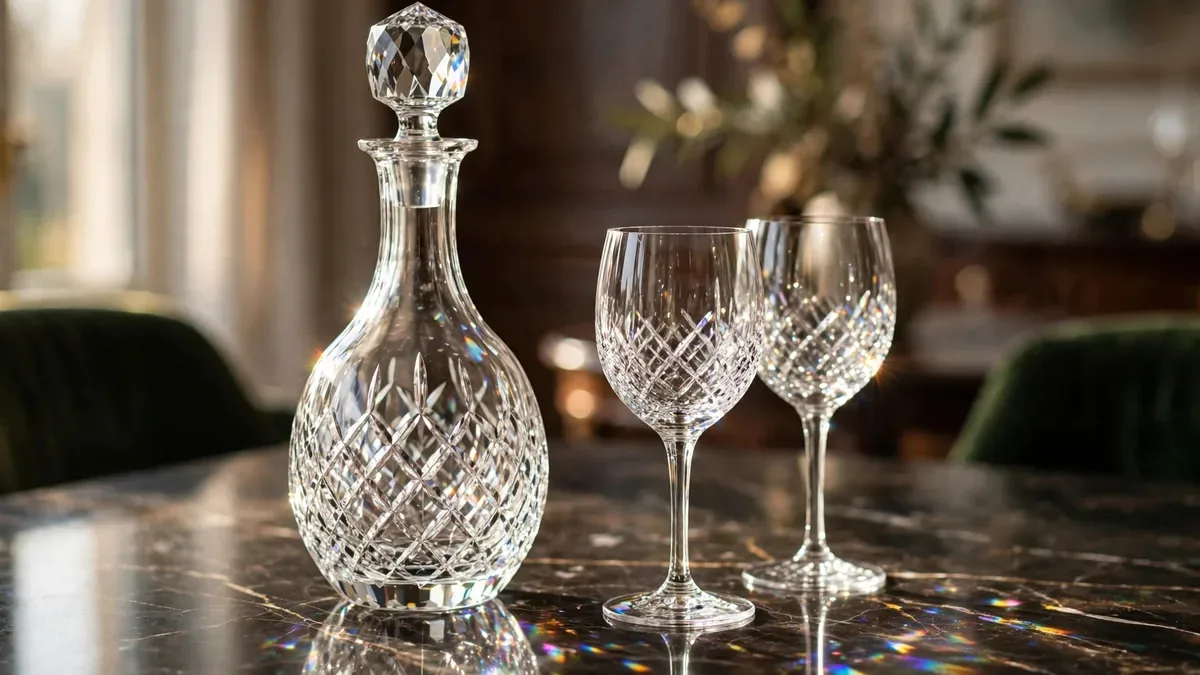

Best Luxury Crystal Brands turn an ordinary drink into a small ceremony. A well-cut crystal glass catches the light, feels balanced in the hand, and makes even a quiet evening at home feel considered. The difference between a mass-produced tumbler and a piece from a great crystal house is visible the moment it is set on the table, and it is felt every time it is lifted.
Choosing among the great houses is not only a matter of taste. Heritage, lead content, cutting technique, clarity, and the weight of the glass all shape how a piece looks, sounds, and lasts. Some brands are prized for bold barware, others for delicate stemware, and a few for sculptural objects that belong in a display cabinet as much as on a dining table.
This guide looks at ten houses that have earned their place at the top of the luxury crystal world. Each one brings a distinct character, from French opulence to Scandinavian restraint, and each offers a clear reason to choose it. Use the comparison table to narrow the field, then read the profiles to find the brand that fits your table, your budget, and your style.
Key takeaways
- True luxury crystal is defined by lead content, hand cutting, and exceptional clarity, not by a brand name alone.
- Baccarat and Saint-Louis lead for heritage and opulence, while Riedel and Waterford lead for everyday fine glassware.
- Hand-cut and mouth-blown pieces cost more but offer finer detail, lighter weight, and a clearer ring than machine-made glass.
- Match the brand to the use: delicate stemware for wine, heavier cut crystal for whisky, and sculptural pieces for display.
- Buy from authorised sellers, check for etched marks, and care for fine crystal by hand washing to protect the cut.

Best Luxury Crystal Brands at a Glance
The table below compares the ten brands in this guide. It covers where each house began, what it is best known for, and the kind of buyer it suits. Use it as a quick reference, then read the full profiles for the detail that matters before a purchase.
| Brand | Founded | Origin | Best Known For | Price Range | Best For |
|---|---|---|---|---|---|
| Baccarat | 1764 | France | Opulent cut crystal, chandeliers | High to very high | Statement pieces and gifts |
| Lalique | 1888 | France | Sculptural crystal art, vases | High to very high | Collectors and art lovers |
| Waterford | 1783 | Ireland | Classic cut stemware and barware | Mid to high | Traditional table settings |
| Saint-Louis | 1586 | France | Coloured crystal, fine stemware | High to very high | Colourful, refined dining |
| Riedel | 1756 | Austria | Grape-specific wine glasses | Mid to high | Serious wine drinkers |
| Swarovski | 1895 | Austria | Precision-cut crystal objects | Mid to high | Gifts and sparkling decor |
| Orrefors | 1898 | Sweden | Minimalist Scandinavian glass | Mid to high | Modern, understated homes |
| Kosta Boda | 1742 | Sweden | Artistic, expressive glassware | Mid to high | Bold design lovers |
| Moser | 1857 | Czech Republic | Hand-cut, hand-polished luxury | High to very high | Connoisseurs and collectors |
| Steuben | 1903 | United States | Clear crystal sculpture | High to very high | American heritage pieces |
The Ten Houses in Detail
Each brand below is profiled on its focus, its heritage, the services it offers, and what the buying experience is like. Prices are indicative and vary by collection, size, and retailer, so treat them as a guide rather than a fixed list.
Baccarat
Focus: Baccarat is the grandest name in French crystal, known for deeply cut, brilliantly clear pieces that range from wine glasses and decanters to chandeliers and sculptural objects. Its signature Harcourt glass, with its flat cut panels, is one of the most recognised designs in luxury tableware.
Heritage: Founded in 1764 in the Lorraine region of France, Baccarat supplied royal courts across Europe and became a byword for French luxury. Its craftsmen still work by hand, and many pieces pass through dozens of hands before they are finished.
Services: The house offers personalisation through engraving, a wide gift collection, and a repair and restoration service for older pieces. Its boutiques also provide table-setting advice for formal occasions.
Buying experience: Baccarat is sold through its own boutiques and authorised luxury retailers. Expect polished service, elegant packaging, and prices that reflect the handwork involved. A single Harcourt tumbler is a sensible first purchase for anyone testing the brand.
Lalique
Focus: Lalique treats crystal as sculpture. Its vases, figurines, bowls, and perfume bottles are as much art objects as functional pieces, with frosted and clear crystal worked into flowing natural forms.
Heritage: René Lalique founded the house in 1888, first as a jeweller and then as a glassmaker whose Art Nouveau designs changed decorative art. The brand remains rooted in French craftsmanship and artistic ambition.
Services: Lalique offers limited editions, numbered pieces, bespoke commissions, and a museum in Wingen-sur-Moder that documents the house’s history. Engraving and gift wrapping are available in boutiques.
Buying experience: Shopping Lalique feels closer to buying art than buying glassware. Pieces are presented as collectibles, and limited editions can hold their appeal for years. It is the right choice when the object itself is the point.
Waterford
Focus: Waterford is the classic name in cut crystal stemware and barware. Its deep, precise cuts and generous proportions suit traditional dining rooms, and its collections cover everything from champagne flutes to whisky tumblers.
Heritage: The original Waterford glassworks opened in Ireland in 1783. The modern house revived that tradition in the twentieth century and became the standard against which other cut crystal is measured.
Services: Waterford sells complete tableware collections, gift sets, and personalised engraving. Its pieces are widely available, which makes it easy to add to a set over time.
Buying experience: Waterford is one of the most accessible luxury crystal brands, sold through department stores and online retailers as well as its own shops. For a formal table, crystal stemware pairs naturally with the best silverware sets for a complete and coordinated setting. Prices are moderate for the category, and the range is broad enough for both first buyers and seasoned collectors.
Saint-Louis
Focus: Saint-Louis is celebrated for coloured crystal in rich reds, blues, greens, and ambers, layered over clear crystal and cut to reveal the colour beneath. Its stemware and vases bring colour to a table without losing refinement.
Heritage: Founded in 1586, Saint-Louis is the oldest crystal house in France. It was among the first to produce lead crystal in France, and its workshops have operated continuously for centuries.
Services: The house offers bespoke colours, engraving, restoration of antique pieces, and a wide catalogue of historic designs that can still be ordered today.
Buying experience: Saint-Louis pieces are sold through its Paris boutique and selected luxury retailers. The coloured ranges are the natural starting point, and the service is discreet and knowledgeable. Expect prices at the upper end of the market.
Riedel
Focus: Riedel designs glasses around grape varieties, arguing that the shape of a glass changes how a wine smells and tastes. Its varietal-specific stems are the standard in fine dining and among wine professionals.
Heritage: The Riedel family has made glass since 1756, and the modern company was built by Claus Riedel, who introduced the idea of functional, grape-specific glassware in the 1950s and 1960s.
Services: Riedel offers tasting events, glassware sets matched to wine styles, and a broad range from machine-made everyday glasses to mouth-blown Sommeliers pieces. Replacement glasses are easy to order.
Buying experience: Riedel is widely stocked, and its entry-level ranges are among the most affordable ways into fine crystal. Start with a set matched to the wines you drink most, then add varietal glasses as your interest grows.
Swarovski
Focus: Swarovski is known for precision-cut crystal in brilliant, sparkling forms. Its figurines, ornaments, home objects, and jewellery bring a bright, decorative quality that is lighter in mood than the traditional tableware houses.
Heritage: Daniel Swarovski founded the company in Austria in 1895, developing a machine that could cut crystal with exceptional precision. The brand grew from that innovation into one of the best-known crystal names in the world.
Services: Swarovski offers gift wrapping, engraving on selected pieces, a collectors’ club, and seasonal collections. Its boutiques are designed for browsing and gifting rather than formal consultation.
Buying experience: Swarovski is the most widely available brand on this list, with boutiques in most major cities and a strong online store. Crystal figurines and ornaments make popular presents, and the brand sits comfortably among luxury gifts for men and women alike. Prices start lower than the traditional houses, which makes it an easy entry point.
Orrefors
Focus: Orrefors represents Scandinavian restraint: clean lines, subtle engraving, and forms that favour light and proportion over ornament. Its vases, bowls, and stemware suit modern interiors.
Heritage: Founded in Sweden in 1898, Orrefors became famous for its Graal and Ariel techniques, which trap colour and air inside layers of glass. Its designers have shaped Swedish glass for more than a century.
Services: The house offers art glass editions, engraving, and a visitor experience at its Småland glassworks, where guests can watch glassblowing and buy directly from the studio.
Buying experience: Orrefors is sold through design retailers and department stores. The look is quiet and confident, and the prices are moderate. It is the best choice for buyers who prefer understatement to display.
Kosta Boda
Focus: Kosta Boda is the expressive sibling of Swedish glass. Its pieces are bold, colourful, and often playful, with sculptural vases and art glass that double as centrepieces.
Heritage: Founded in 1742, Kosta Boda is one of the oldest glassworks in Sweden. Its modern identity comes from artists who treat glass as a medium for colour and form rather than only for function.
Services: The brand offers limited art-glass editions, signed pieces by named artists, and a glassworks visitor centre with live demonstrations and a factory shop.
Buying experience: Kosta Boda is widely available in design stores, and its art pieces are often signed by the artist. It suits buyers who want a single striking object rather than a matching set.
Moser
Focus: Moser makes hand-cut, hand-polished crystal of exceptional purity, often in clear glass with subtle colour. Its decanters, vases, and stemware are prized by connoisseurs for their precision and weight.
Heritage: Ludwig Moser founded the house in Karlovy Vary in 1857. It supplied the courts of Europe and remains one of the few houses where almost every step is still done by hand.
Services: Moser offers bespoke commissions, engraving, restoration, and guided visits to its glassworks and museum in the Czech Republic. Each piece is signed by the maker.
Buying experience: Moser is sold through its own shops and a small number of luxury retailers. The service is personal and unhurried, and prices reflect the handwork. It is a connoisseur’s brand, best bought after seeing the pieces in person.
Steuben
Focus: Steuben is known for clear crystal sculpture of remarkable purity. Its vases, bowls, and figurines use the clarity of the glass itself as the decoration, with minimal cutting and maximum brilliance.
Heritage: Founded in New York in 1903 by Frederick Carder and Thomas Hawkes, Steuben became the leading American crystal house. Its pieces have been given as state gifts by American presidents.
Services: Steuben offers engraving, bespoke commissions, and a catalogue of historic designs. Its pieces are often numbered and signed.
Buying experience: Steuben is sold through its own channels and selected American luxury retailers. Availability is more limited than the European houses, which adds to its appeal for collectors of American design.
Crystal Versus Ordinary Glassware: What Really Sets Them Apart
The word crystal is often used loosely, but in fine glassware it has a precise meaning. Understanding the difference helps explain why luxury crystal costs more and why it looks and feels different in daily use.
Lead Content
Traditional luxury crystal contains lead oxide, usually between 24 and 32 percent. Lead makes the glass softer and easier to cut deeply, and it raises the refractive index, which is what creates the bright sparkle. Lead-free crystal uses barium, zinc, or potassium instead, and modern lead-free pieces can come close in clarity while being lighter. Ordinary glass contains no lead and is made mainly from sand, soda ash, and limestone.
Cutting
Fine crystal is cut by hand on a wheel, which allows for deep, sharp facets and complex patterns that catch the light from many angles. The cut edges are then polished to restore brilliance. Ordinary glassware is usually pressed in a mould, which produces rounded, shallow patterns and a thicker, heavier feel. Machine-cut crystal sits between the two: precise and affordable, but less sharp than hand cutting.
Clarity
High-quality crystal is remarkably clear, with no green or grey tint at the edges. Ordinary glass often shows a greenish tinge, especially at the rim or base, because of iron in the sand. Hold a piece up to white paper or a window and look through the thickest part: crystal stays bright and colourless, while ordinary glass reveals its tint.
Weight and sound are useful secondary clues. Fine crystal is often lighter than it looks because the walls can be blown thin, and a flicked rim produces a clear, sustained ring. Ordinary glass gives a duller thud. None of these tests alone proves quality, but together they make the difference easy to recognise.
Crystal Buying Checklist
Use this checklist before buying any fine crystal piece, whether it is a first wine glass or a full set. A dressed table pairs crystal with other considered objects, and the same care that goes into choosing the best luxury candles for a room applies to choosing crystal for the table.
- Checklist item 1 — Purpose: Decide how the piece will be used. Wine glasses should match the wines you drink, barware should suit the spirits you serve, and display pieces should suit the room they will live in.
- Checklist item 2 — Lead or lead-free: Choose traditional lead crystal for maximum sparkle and cutting depth, or lead-free crystal for everyday use and easier care. Both can be excellent when well made.
- Checklist item 3 — Handmade or machine-made: Mouth-blown and hand-cut pieces offer finer detail and lighter weight, while machine-made crystal offers consistency and a lower price. Match the making method to your budget.
- Checklist item 4 — Marks and authenticity: Look for an etched or acid-stamped maker’s mark, usually on the base. Buy from authorised sellers and keep receipts and certificates for valuable pieces.
- Checklist item 5 — Weight and balance: Hold the piece before buying when possible. A good wine glass feels balanced and light, a good tumbler feels solid without being heavy, and a decanter should pour without strain.
- Checklist item 6 — Care requirements: Plan for hand washing with mild detergent and drying with a soft cloth. Fine crystal can chip in a dishwasher and cloud over time, so care is part of the purchase decision.
Frequently Asked Questions
Is lead crystal safe to drink from?
Lead crystal is generally considered safe for normal use, such as serving and drinking wine or spirits. Lead can leach slowly into liquids stored for long periods, so avoid storing drinks in lead crystal decanters for weeks or months. For everyday use, lead-free crystal is a practical alternative.
How can I tell real crystal from ordinary glass?
Look for exceptional clarity with no green tint, sharp hand-cut facets, a relatively thin and light construction, and a clear ringing sound when the rim is flicked. An etched maker’s mark on the base is the most reliable confirmation.
Which crystal brand is best for wine glasses?
Riedel is the most focused choice for wine, because its glasses are shaped for specific grape varieties. Waterford and Saint-Louis are strong choices for classic, elegant stemware, while Baccarat suits buyers who want a more opulent table.
Should fine crystal go in the dishwasher?
Most makers recommend hand washing. Dishwasher heat, detergent, and vibration can chip rims, dull the surface, and damage delicate stems. Wash by hand in warm water with mild detergent, then dry with a lint-free cloth.
Does luxury crystal hold its value?
Some pieces do, particularly limited editions, signed art glass, and discontinued designs from houses such as Lalique, Moser, and Steuben. Everyday stemware and barware are better bought for enjoyment than as an investment, since resale values vary widely.
What is the best first piece of luxury crystal to buy?
A pair of wine glasses or a pair of whisky tumblers from a brand you like is the best starting point. A pair is useful, affordable, and easy to add to later, and it lets you judge the weight, clarity, and cutting before committing to a full set.
The Bottom Line
The best luxury crystal brand is the one that fits your table, your taste, and the way you actually live. Baccarat and Lalique suit collectors and grand occasions, Riedel and Waterford suit daily fine dining, and Orrefors and Kosta Boda suit modern homes. Buy the best piece you can afford, care for it by hand, and choose pieces you will reach for often rather than keep behind glass.