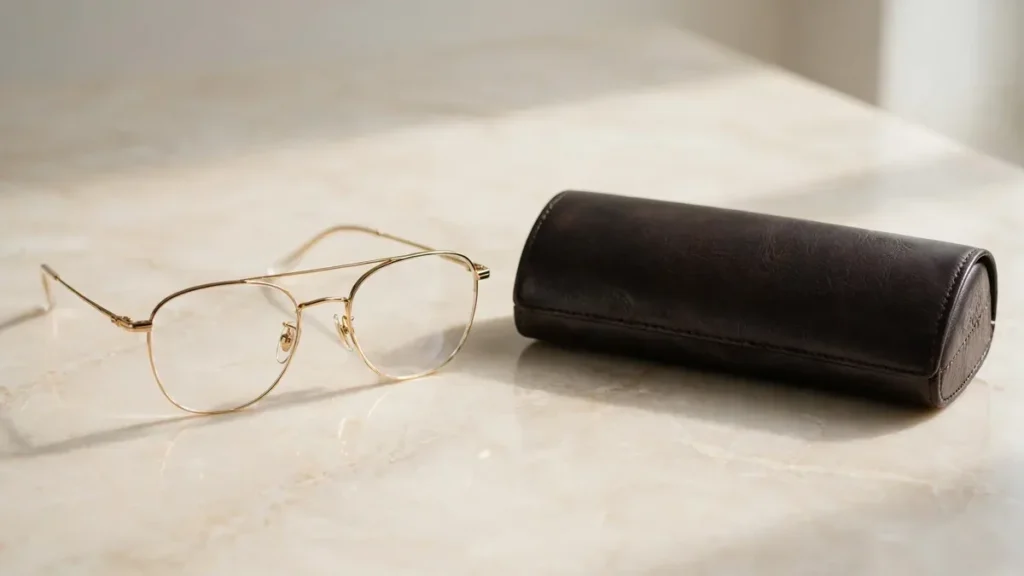
The Best Luxury Eyeglasses Brands are not the ones with the biggest logos or the loudest advertising. They are the workshops and houses that treat a frame as a piece of precision engineering and a piece of jewellery at the same time, where the acetate is polished by hand, the hinges are built to survive a decade of daily wear, and the fit is considered as carefully as the design. A luxury frame should feel weightless on your face, sit perfectly straight without constant adjustment, and still look right five years after you buy it.
The problem is that the price of a frame tells you very little on its own. A four-figure frame from a fashion house can be made on the same production line as a mid-priced one, while a quieter specialist brand can spend far longer on hand-finishing and use better materials for half the money. The name on the temple is only part of the story. What matters is who actually makes the frame, what it is made from, how it is finished, and whether the brand will stand behind it with repairs and spare parts.
Below are nine brands worth considering in 2027, from the great Paris and London houses to the Danish titanium specialists and the Japanese workshops that set the standard for the whole industry. Each one is described by what it does well, what to watch for, and who it suits best, so you can choose a frame for how it is made and how it fits, not just for the name on the side.
Key takeaways
- Handmade frames from Japan and Italy set the standard for luxury eyewear, with hand-polished acetate, precise hinges, and careful quality control.
- Titanium and stainless steel frames are the lightest and most durable choice, while acetate offers the richest colours and the boldest shapes.
- A luxury frame should fit straight, feel balanced, and stay comfortable for a full day without leaving marks or sliding down your nose.
- Expect to pay roughly $350 to $700 for most luxury frames, and $700 to $3,500 or more for the great jewellery houses and handmade specialists.
- No frame suits every face, and a famous name does not guarantee a good fit, so always try frames on, check the hinge and the finish, and buy from an optician who will adjust and service them.
What makes eyeglasses luxury
A luxury frame is defined by how it is made, not by how it is marketed. The best frames start with materials chosen for a reason: Italian acetate from Mazzucchelli, Japanese titanium, German stainless steel, or natural horn. Acetate is cut from sheets, tumbled and polished by hand over days until it has a deep, glassy shine. Metal frames are welded, filed and polished until the joints are invisible. A cheap frame is usually injection-moulded in minutes and sprayed with a coating that chips within a year. A luxury frame is built in dozens of steps, and the difference is visible the moment you hold it.
The hinge is the part that separates a good frame from a great one. Luxury makers use five-barrel or seven-barrel hinges, often with stainless steel screws, and some, like Lindberg, use a patented screwless hinge that cannot work loose. A hinge should open smoothly and snap gently into place. If a frame feels loose or wobbly in the shop, it will only get worse. The nose pads, the temple tips and the balance of the frame matter just as much. A well-made frame distributes its weight evenly, so it does not press on one spot or slide forward when you look down.
How we chose these brands and what to look for
We chose brands with a genuine record of craftsmanship, not just a famous name. Every brand here is known for making frames to a high standard, whether in its own workshop or through a specialist manufacturer. We looked at the materials, the construction, the range of shapes and sizes, the quality of the finish, and the availability of repairs and spare parts.

Look first at the material. Acetate frames are warm, colourful and easy to adjust, and they suit bold shapes. Titanium frames are feather-light, hypoallergenic and almost impossible to break, which makes them the best choice if you wear glasses all day. Stainless steel sits between the two, thin and elegant, and it is the material behind most rimless designs.
Look next at the fit. The width of the frame should match the width of your face, the bridge should sit comfortably without pinching, and the temples should be long enough to rest behind your ears without pressing. Your optician should measure your pupillary distance and fit the lenses to the frame, not the other way round. Our guide to eyeglass fashion trends shows which shapes are current this year, but fit should always come before fashion. A frame that is fashionable and uncomfortable will spend its life in a drawer.
Finally, look at the details. Check the inside of the temples for clean, even finishing and clear markings, and check that the acetate is polished on the inside edges as well as the outside. Check that the logo is engraved or inlaid rather than printed. These small signs tell you how much care went into the making.
The 9 best luxury eyeglasses brands of 2027
Cartier
What we like: Cartier is the great jewellery house of eyewear, with frames made in France and Japan from gold, titanium, wood and buffalo horn. The Santos de Cartier and the Panthère de Cartier are icons, and the detailing, from the screw heads to the temple engraving, is closer to watchmaking than to ordinary frame-making.
What to consider: Cartier is the most expensive brand on this list by a clear margin, and some of the most recognisable styles are also the most copied, so buy only from an authorised stockist. Materials: Gold, titanium, acetate, buffalo horn, wood. Price range: About $1,000 to $3,500 and above. Best for: Collectors and anyone who wants a frame that is also a piece of jewellery.
Lindberg
What we like: Lindberg, from Denmark, makes some of the lightest and most technically advanced frames in the world. Its titanium frames weigh as little as a few grams, it uses a patented screwless hinge that never works loose, and every frame is made to order in a huge range of sizes, colours and combinations.
What to consider: The minimalist, understated look is not for everyone, and the made-to-order process means a wait of several weeks. Materials: Titanium, acetate, buffalo horn. Price range: About $700 to $1,500. Best for: All-day wearers who want the lightest, most comfortable frame available.
DITA
What we like: DITA is a Los Angeles brand with its frames made by hand in Japan, and it is famous for combining bold, architectural design with meticulous craft. Each frame passes through hundreds of steps, the titanium is beautifully finished, and the acetates are deep and richly polished.
What to consider: The designs are strong and distinctive, which means they suit confident dressers best, and the price sits firmly in the upper range. Materials: Japanese titanium, acetate. Price range: About $600 to $1,200. Best for: Design lovers who want a frame with real presence.
Oliver Peoples
What we like: Founded in Los Angeles in 1987, Oliver Peoples makes understated, vintage-inspired frames by hand in Japan and Italy. The shapes are classic and flattering, the acetate is beautifully finished, and the brand has a rare talent for frames that look good on almost everyone.
What to consider: The classic styling can feel conservative if you want something dramatic, and popular styles sell out regularly. Materials: Acetate, titanium, stainless steel. Price range: About $350 to $650. Best for: Timeless, everyday luxury that works with any wardrobe.
Persol
What we like: Persol has been making glasses in Italy since 1917, and it invented the flexible Meflecto stem, which bends to fit the shape of your head. Its frames are handmade in Italy from acetate and metal, with a quiet, confident style that has barely changed in a century.
What to consider: The range is narrower than the fashion houses, and the classic shapes may feel familiar if you want something new. Materials: Italian acetate, metal. Price range: About $300 to $600. Best for: Classic Italian style and a supremely comfortable fit.
Tom Ford
What we like: Tom Ford eyewear, made by Marcolin in Italy, is polished, glamorous and instantly recognisable, with the T detail on the temples and bold, confident shapes. The acetate is thick and well polished, the metalwork is precise, and the frames suit people who like their glasses to make a statement.
What to consider: The branding is prominent, which will not suit minimalists, and the larger frames can feel heavy on smaller faces. Materials: Acetate, metal, titanium. Price range: About $400 to $700. Best for: Glamorous, high-impact frames for evenings and occasions.
Gucci
What we like: Gucci eyewear, made by Kering Eyewear in Italy, brings the house’s confident, decorative style to frames, from oversized acetate squares to delicate gold wire with the interlocking G detail. The quality is consistently high, and the range covers everything from classic to wildly expressive.
What to consider: The most decorative styles date quickly, so choose carefully if you want a frame to last for years. Materials: Acetate, metal, gold-tone finishes. Price range: About $350 to $700. Best for: Fashion-forward frames with real Italian craftsmanship behind them.
Cutler and Gross
What we like: Cutler and Gross has been hand-making frames in London and Italy since 1969, and it is the brand behind many of the most famous glasses in film and fashion. The acetate is cut and polished by hand, the shapes are bold and characterful, and the quality of the finish is among the best at any price.
What to consider: The bold shapes demand confidence, and the brand is stocked in fewer shops than the big fashion houses. Materials: Handmade Italian acetate, metal. Price range: About $450 to $700. Best for: Distinctive, handcrafted frames with a London heritage.
MYKITA
What we like: MYKITA, from Berlin, makes modern frames from thin stainless steel and a 3D-printed material called MYLON, with a patented hinge that uses no screws at all. The designs are clean, light and architectural, and the brand is known for its technical innovation and its in-house manufacturing.
What to consider: The modern, minimal look is very specific, and the lightweight frames can feel too delicate if you prefer a solid, heavy frame. Materials: Stainless steel, MYLON, acetate. Price range: About $400 to $700. Best for: Modern, lightweight frames with genuine technical innovation.
Choosing frames for your face shape
The right frame shape depends on your face, and a few simple rules help. Round faces suit angular, rectangular frames that add definition. Square faces suit round or oval frames that soften strong angles. Oval faces can wear almost anything, so choose on comfort and colour. Heart-shaped faces suit frames that are wider at the top.
Colour matters as much as shape. Tortoiseshell flatters warm skin tones, black suits strong contrast, and gold wire suits almost everyone because it is light and warm without being heavy. If you are choosing sunglasses as well as optical frames, our guide to sunglasses for round faces shows how the same rules apply to sun frames, and it is worth reading before you buy a second pair.
Above all, try frames on with your prescription in mind. A very strong prescription needs a smaller, deeper lens to keep the edges thin, and high-index lenses are worth the extra cost in a luxury frame. Your optician should check the fit with the lenses fitted and adjust the temples and nose pads until the frame sits level.
The caveats that matter
Luxury eyewear has a counterfeit problem, and the most copied brands are the ones with the most recognisable logos. Buy from an authorised optician, and be suspicious of large discounts on current styles. A genuine luxury frame comes with proper packaging, a case, a cleaning cloth and a certificate or serial card, and the markings inside the temples should be crisp and evenly engraved.
Prescription lenses are a separate cost, and they can cost as much as the frame. High-index lenses, anti-reflective coatings and transitions all add to the price, so ask for the total cost before you commit. Glasses are also part of a wider luxury wardrobe, and they sit naturally alongside other considered accessories, from the shoes and bags you choose to luxury watches for men, where the same rules of craft, materials and service apply.
| Detail | What is known |
|---|---|
| Best materials | Italian or Japanese acetate, titanium, stainless steel, and buffalo horn at the top of the market |
| Typical price range | About $350 to $700 for most luxury frames, $700 to $3,500 and above for the great houses |
| Lightest choice | Titanium, such as Lindberg, which can weigh only a few grams |
| Most durable hinge | Screwless designs from Lindberg and MYKITA, or a well-made five-barrel hinge |
| Who should try before buying | Everyone, and especially strong prescriptions, which need the right frame size and lens index |
| What to avoid | Unauthorised sellers, large discounts on current styles, and frames with loose hinges or rough inside edges |
| Care | Clean with a microfibre cloth and lens spray, store in a hard case, and have the fit checked yearly |
| What it does not do | A luxury frame does not improve your vision on its own, and a famous name does not guarantee a good fit |
Finally, remember that glasses are medical devices as well as fashion. Keep your prescription current, have your eyes tested regularly, and tell your optician if a frame causes headaches or pressure marks.
Checklist: choosing luxury eyeglasses honestly
Use these checks in the shop, before you pay, and again a week after you collect your glasses.
- Check the fit: the frame sits level, the bridge does not pinch, and the temples rest comfortably behind your ears.
- Check the weight: hold the frame with one finger at the bridge and see if it balances, then wear it for ten minutes to test comfort.
- Check the hinge: open and close both temples and feel for smooth, even resistance with no wobble or looseness.
- Check the finish: run a finger along the inside edges and look for smooth polishing, clean joints and crisp engraved markings.
- Check the seller: buy from an authorised optician, ask about repairs and spare parts, and keep the receipt and any certificate.
- Check the total price: ask for the full cost including lenses, coatings and fitting before you commit to a frame.
Frequently asked questions
Are luxury eyeglasses worth the price?
Usually yes, if you wear glasses every day. A well-made frame fits better, lasts longer, can be repaired, and is more comfortable over a full day. The value is in the materials, the hinges and the finish, not in the logo alone.
How much should I spend on luxury eyeglasses?
Most luxury frames cost between $350 and $700 before lenses. Titanium specialists and handmade brands run from $700 to $1,500, and the great jewellery houses start at about $1,000 and rise well above $3,500.
Which luxury eyeglasses brand is best for all-day wear?
Lindberg is the usual answer, because its titanium frames are exceptionally light and its screwless hinge never loosens. MYKITA is a close second for lightness. If you prefer acetate, Oliver Peoples and Persol make comfortable frames that are easy to wear for a full day.
How do I know if luxury eyeglasses are genuine?
Buy from an authorised optician, check the brand’s stockist list, and look for proper packaging, a branded case, a certificate or serial card, and crisp engraved markings inside the temples. Large discounts on current styles from unknown sellers are the most common warning sign.
Can I get prescription lenses in any luxury frame?
Almost always, yes, but very curved, very large or very thin frames can limit your lens options. Strong prescriptions need smaller, deeper frames and high-index lenses to stay thin and light.
How long should luxury eyeglasses last?
A well-made frame should last five to ten years with normal care, and many last longer. Acetate can be re-polished, hinges can be repaired, and good brands keep spare parts for years.
The bottom line
The best luxury eyeglasses brand for you is the one that makes a frame in a material you like, in a shape that flatters your face, with a hinge and a finish that will survive years of daily wear. Cartier is the finest and the most expensive. Lindberg is the lightest and most comfortable. DITA and Cutler and Gross are the most distinctive, while Oliver Peoples and Persol are the most reliable everyday choices.
Choose the frame, not the logo. Try it on, check the hinge and the finish, ask about repairs and the total price with lenses, and buy from an optician who will fit it properly. A luxury frame bought well is a frame you will wear every day for years, and that is the only test that really matters.