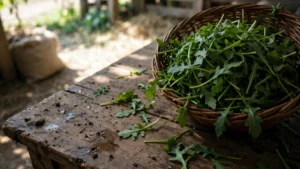
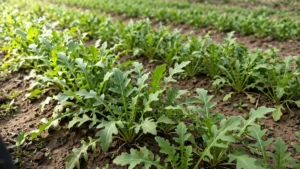
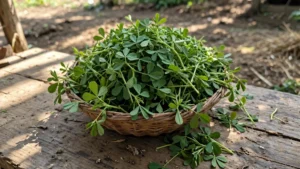
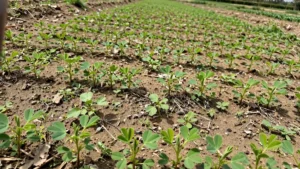
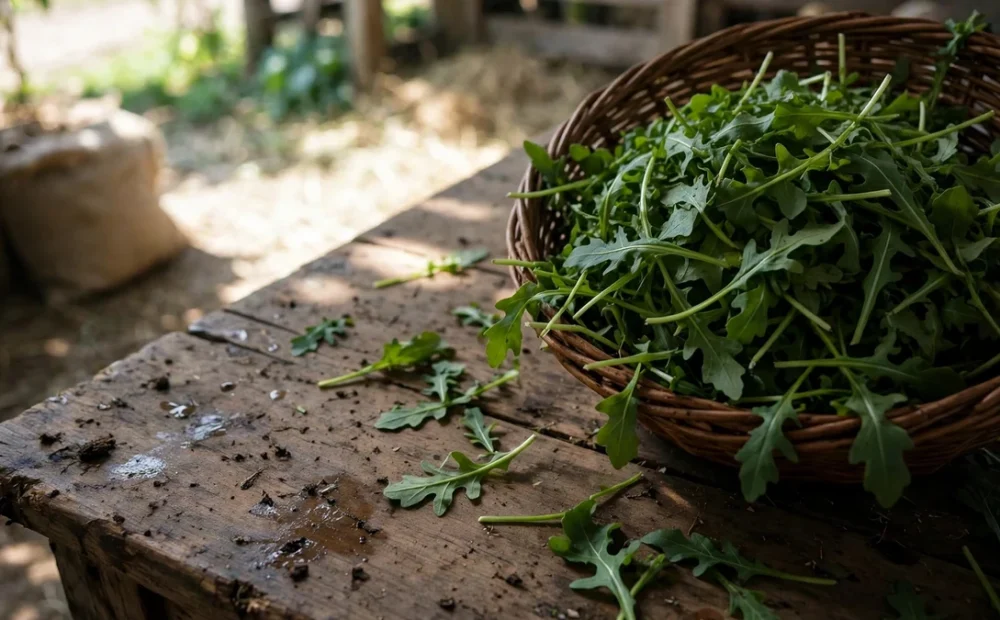
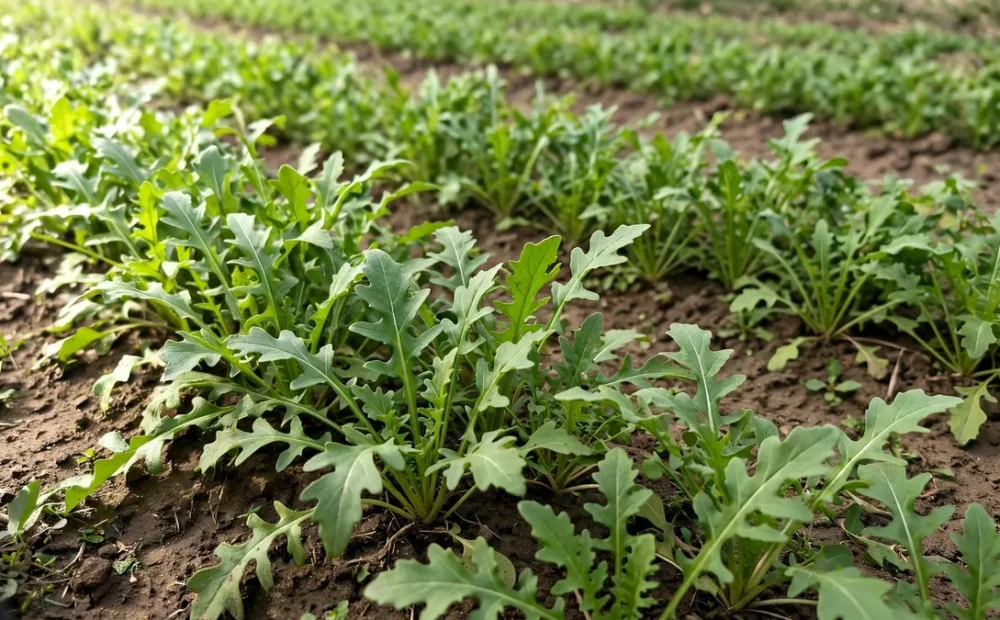
Rocket is the peppery leaf that turns a plain salad into something worth eating, and it is one of the fastest crops a traveller can visit. The seed goes into cool soil, and the leaves are ready to cut in three or four weeks, before the summer heat arrives. A rocket farm retreat is a stay on a working salad farm at cutting time, when the rows are picked in the morning, the leaves are washed and packed by midday, and the evening table is built around the harvest.
Most people meet rocket in a bag from the supermarket, washed and slightly tired. On the farm it is a different leaf altogether. Cut young, it is tender and bright, with a peppery bite from the mustard oils in the leaf. Cut late, after the flower stalks rise, it turns tough and bitter, and no amount of dressing saves it. The farms on this list grow rocket as a real crop, for restaurants and market stalls, and the stay runs alongside the cutting, not beside it.
Below are nine rocket farm stays worth considering in 2027, from a sunlit smallholding outside Athens to a farm in the Willamette Valley. Each one is described by what it does well, what to watch for, and who it suits best, so you can choose with the cutting week in mind, not just the price.
Key takeaways
- Rocket is a fast, cool-season leaf, ready to cut three to four weeks after sowing, and it bolts in heat, so the season is spring and autumn, not high summer.
- Cut the leaves young, before the flower stalks rise, because once the plant flowers the leaf turns bitter and tough.
- Wild rocket and cultivated rocket are different plants: wild rocket is narrower, hotter, and perennial, while cultivated rocket is broader, milder, and sown fresh each season.
- Pick a stay by whether you want the sowing, the cutting, or the washing and packing, because the three happen on different days.
- Rocket itself is naturally gluten-free, but farm kitchens bake bread every morning, so check how the kitchen handles flour before you book.
What a rocket farm retreat actually is
A rocket farm retreat is a stay on a working salad farm during the cutting season, usually three to five nights, with a room on the farm and meals from the farm kitchen. The days follow the leaf: out in the rows in the cool of the morning to see the rocket cut, back to the packing shed to watch it washed and bagged, and an evening meal where the harvest sits in the salad and the soup. Nothing is staged for show. The farm is growing rocket for the restaurants and markets of its region, and you are there while it happens.
The best stays take few guests at a time, usually no more than eight, because a cutting crew cannot do its work with a crowd standing in the rows. You sleep on the farm itself, in a farmhouse bedroom or a converted barn, and supper is served at the family table.
How we picked these stays, and what to ask first
We started with farms that grow rocket as a real crop, sold to restaurants and market stalls, not a patch beside the door for show. Each stay on the list cuts its own leaves, washes and packs them on the farm, and cooks with the harvest. We then checked that the farm takes guests in the cutting season, that the bedrooms sit on the farm itself, and that the kitchen can feed a table of people it has never met. Any farm that fell short on one of those three did not earn a place here, no matter how fine its rows look in a picture.
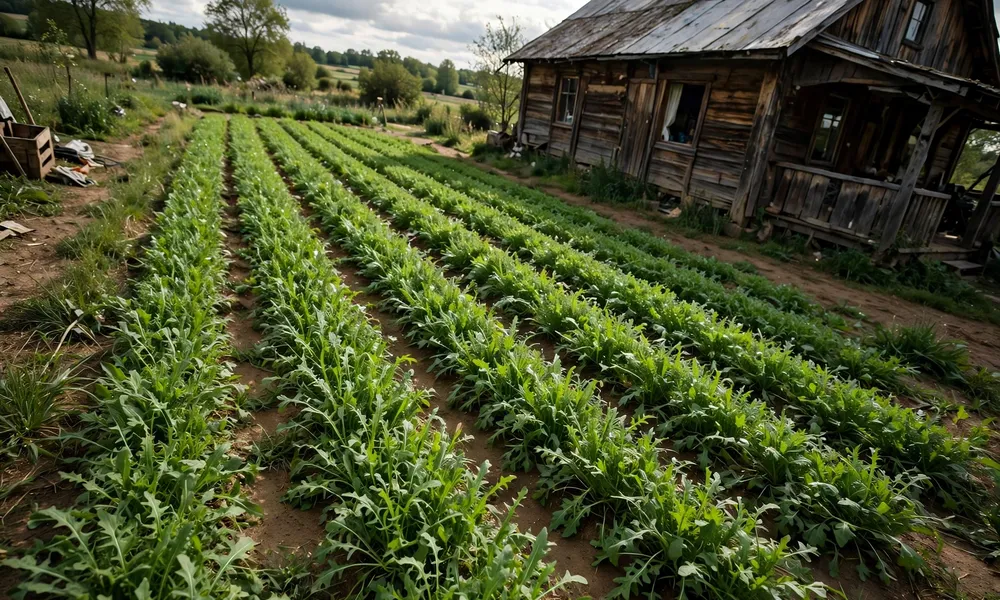
Before you book, ask three questions. First, which rocket the farm grows, wild or cultivated, and which week it cuts, because the two plants taste different and the cutting week decides what you see. Second, whether the kitchen cooks with its own rocket, or buys leaves in, because a farm that eats its own crop will show you more. Third, how the kitchen deals with flour and bread if you eat gluten-free, because a bakery that works every morning needs a straight answer. Our guide to the basil farm retreats asks the same three questions, and they serve just as well here.
The 9 best luxury rocket farm retreats of 2027
Attica, Greece — Rocket on the Sunlit Hills
What we like: Rocket in Attica grows on the sunlit hills outside Athens, where the spring soil warms early and the first cut comes while the city is still cool. The farm sells its leaves to the tavernas of the capital, and the kitchen serves rocket salad with lemon and olive oil.
What to consider: The spring season is short, and the farm is a drive from Athens.
Style: Greek sunlit-hills farm stay. Best for: Travellers who want rocket where the Mediterranean grows it best. Price range: $65–$95 per night. Standout feature: Leaves cut at dawn for the Athens tavernas the same day.
Dorset, England — Rocket by the Chalk Coast
What we like: Rocket in Dorset grows in the soft soil near the chalk coast, where the sea air keeps the leaves cool and the cutting season runs long into autumn. The farm supplies the restaurants of the south coast, and the kitchen serves rocket with goat cheese and beetroot.
What to consider: The coastal wind is strong at cutting time, and the farm sits down a long lane.
Style: English chalk-coast farm stay. Best for: Travellers who want rocket with sea air and a long season. Price range: $100–$130 per night. Standout feature: Leaves cut beside the coast for the south-coast restaurants.
Epirus, Greece — Rocket in the Mountain Valleys
What we like: Rocket in Epirus grows in the cool mountain valleys of the north-west, where the nights stay cold and the leaves keep their peppery bite. The farm grows wild rocket on the valley slopes, and the kitchen serves it with feta and walnuts.
What to consider: The valleys are remote, and the farm is a long drive from the nearest town.
Style: Greek mountain-valleys farm stay. Best for: Travellers who want wild rocket from the cool high valleys. Price range: $135–$165 per night. Standout feature: Wild rocket gathered on the valley slopes for the farm table.
Bordeaux, France — Rocket Among the Vineyards
What we like: Rocket in Bordeaux grows in the soft ground between the vineyards, where the spring sun is gentle and the leaves are cut before the vines take all the light. The farm sells to the bistros of the city, and the kitchen serves rocket salad with walnuts and duck.
What to consider: The vineyard rows are working ground, and the farm is busy at vintage time.
Style: French vineyard farm stay. Best for: Travellers who want rocket with wine country and a bistro table. Price range: $170–$200 per night. Standout feature: Leaves cut between the vines for the Bordeaux bistros.
Cotswolds, England — Rocket in the Stone Villages
What we like: Rocket in the Cotswolds grows in the sheltered walled gardens of the stone villages, where the soil is rich and the leaves are cut for the pubs and farm shops of the region. The villages are quiet, and the kitchen serves rocket with lamb and new potatoes.
What to consider: The gardens are small, and the farm books out early.
Style: English stone-villages farm stay. Best for: Travellers who want rocket from a walled garden. Price range: $205–$235 per night. Standout feature: Leaves cut in the walled garden for the village pubs.
Cyclades, Greece — Rocket on the White Islands
What we like: Rocket in the Cyclades grows on the dry white islands, where the sea wind keeps the leaves small and hot, and the farm cuts them for the tavernas of the harbour towns. The islands are bright and the sea is close, and the kitchen serves rocket with tomatoes and capers.
What to consider: The ferry timetables change with the season, and the farm is a walk from the harbour.
Style: Greek white-islands farm stay. Best for: Travellers who want rocket with island light and a harbour table. Price range: $240–$270 per night. Standout feature: Small hot leaves cut on the islands for the harbour tavernas.
Yorkshire, England — Rocket on the Northern Moors
What we like: Rocket in Yorkshire grows on the edge of the northern moors, where the cool air keeps the leaves tender long after the south has bolted. The farm supplies the restaurants of the market towns, and the kitchen serves rocket with game and mushrooms.
What to consider: The moor weather turns fast, and the farm is a long drive from the railway.
Style: English northern-moors farm stay. Best for: Travellers who want rocket when the south has finished. Price range: $275–$305 per night. Standout feature: Leaves cut on the moor edge for the market-town restaurants.
Herzegovina, Bosnia and Herzegovina — Rocket in the River Valleys
What we like: Rocket in Herzegovina grows in the warm river valleys of the south, where the spring comes early and the first cut is the earliest of the season. The farm sells its leaves to the restaurants of Mostar, and the kitchen serves rocket with grilled trout and peppers.
What to consider: The valley heat arrives early, and the farm is far from the nearest airport.
Style: Bosnian river-valleys farm stay. Best for: Travellers who want the earliest rocket of the year. Price range: $310–$340 per night. Standout feature: The first cut of the season, sold to the Mostar restaurants.
Oregon, USA — Rocket in the Willamette Valley
What we like: Rocket in Oregon grows in the rich soil of the Willamette Valley, where the cool nights keep the leaves sweet and the cutting season runs from spring into late autumn. The farm supplies the restaurants of Portland, and the kitchen serves rocket with salmon and hazelnuts.
What to consider: The valley rain is steady in autumn, and the farm is a drive from Portland.
Style: American Willamette Valley farm stay. Best for: Travellers who want rocket on a long cool season. Price range: $345–$380 per night. Standout feature: Leaves cut in the valley for the Portland restaurants.
Which rocket region fits your trip
If you want the leaf at its most Mediterranean, go to Attica or the Cyclades, where rocket is cut young and eaten the same day with lemon and olive oil. If you want the hottest leaf, choose Epirus, where the wild rocket grows on the valley slopes. If you want the longest season, Oregon is the farm to pick, where the cool nights keep the leaves tender from spring into late autumn.
For a first trip, Dorset is the simplest choice: easy to reach, a generous cutting season, and a kitchen that cooks with rocket every day. Our guide to the mint farm retreats reasons the same way for first-timers, and it holds here too: choose the farm that cooks its crop daily, and the rest of the trip falls into place.
The caveats that matter
Rocket answers to the weather more than most crops, because the leaf bolts the moment the heat arrives. A hot week can send a whole field to flower, and once the stalks rise the leaves turn bitter and the cutting ends. One heatwave can end a farm’s season, and a warm spring can bring the crop forward by a fortnight. A good farm will tell you the very day the dates move. Choose a stay that lets you shift the week without losing the deposit, and trust the farm’s own reading of the weather over the forecast on the news.
| Detail | What is known |
|---|---|
| Rocket leaf | The peppery salad leaf of the mustard family, also called arugula, cut young for the table |
| Wild vs cultivated | Wild rocket is narrower, hotter, and perennial; cultivated rocket is broader, milder, and sown fresh |
| Best cutting time | Three to four weeks after sowing, while the leaves are young and the stalks are still low |
| Why it bolts | Heat and long days push the plant to flower, and the leaf turns bitter once the stalks rise |
| Who should check first | Anyone with a mustard-family allergy, and anyone who eats gluten-free |
| What to avoid | Booking a high-summer week, when the fields have already gone to flower |
| How it travels | Washed leaves in a cool bag, never loose in a warm case, where they wilt within hours |
| What it does not do | It does not keep its bite once it is old; a leaf cut yesterday is not the leaf you tasted in the field |
Rocket is also easy to confuse with its lookalike leaves, especially dandelion and mizuna, which share the same jagged shape. Dandelion leaves are sharper and grow in rosettes on rough ground, while mizuna is softer and more feathery, with a gentler bite. A farm that grows rocket will show you the difference in the row, and it is worth learning, because the three leaves cook very differently. Our guide to the parsley farm retreats carries the same warning about lookalike crops, and the lesson is the same: trust the farmer’s eye, not the photograph.
Checklist: booking a rocket farm stay honestly
Work through these checks before you pay, and again the week before you travel.
- Check the plant: ask the farm whether it grows wild or cultivated rocket, because the two taste different.
- Check the cutting week: ask which week the farm cuts, and whether the leaves are young or already flowering.
- Check the kitchen: ask whether the farm cooks with its own rocket, or buys leaves in.
- Check the flour: ask how the kitchen keeps bread and pasta away from your plate, if you eat gluten-free.
- Check the room: confirm the bed is on the farm itself, not in a town an hour down the road.
- Check the shift: confirm the week can change without costing you the deposit when the season slips.
Frequently asked questions
What is rocket, and how is it different from arugula?
They are the same leaf. Rocket is the name used in Britain and across Europe, while arugula is the name used in North America. Both refer to Eruca vesicaria, the cultivated salad leaf, and to its wild cousin, Diplotaxis tenuifolia.
When is rocket harvested on the farms?
Most farms cut rocket three to four weeks after sowing, while the leaves are young and the flower stalks are still low. The cutting season is spring and autumn, when the weather is cool. In high summer the plants bolt, the leaves turn bitter, and the cutting stops.
Do guests get to cut rocket themselves?
Yes, on most of these farms, provided you ask the day before. The work is simple, cutting the outer leaves low with a sharp knife and leaving the centre to regrow, but the crew sets the pace. Wear gloves if your skin flares easily, and cut only the rows the farmer points out.
Which rocket region is best for a first trip?
Dorset, for the easiest journey and the longest cutting season. The farm cooks with rocket every day, the kitchen is used to guests, and the sea air keeps the leaves cool. Attica is the best choice if you want the warmest, most Mediterranean first trip.
Can you eat rocket straight from the row?
Yes, and you should, because a leaf tasted in the field is the truest test of the farm. Taste one leaf before you fill a basket, because the bite varies from row to row, and the hottest leaves are not always the ones you want for a salad.
Is a rocket farm stay workable if you eat gluten-free?
Yes, if you tell the farm when you book. Rocket itself is naturally gluten-free, and the fish, salads, and vegetables are usually safe. The risk is the bread baked every morning, so ask how the farm keeps it apart from your plate.
The bottom line
A rocket farm retreat suits travellers who like their food to come from the row they stand in, and who are happy to let the farm set the day. The leaf is plain, the season is brief, and the best stays cut it, wash it, and cook with it without any fuss.
Choose the region by whether you want Mediterranean sun, the wild mountain leaf, or the long cool season, ask the farm for its cutting week first, and eat the leaves the day they are cut. The rocket you carry home will keep the trip alive longer than any photograph.