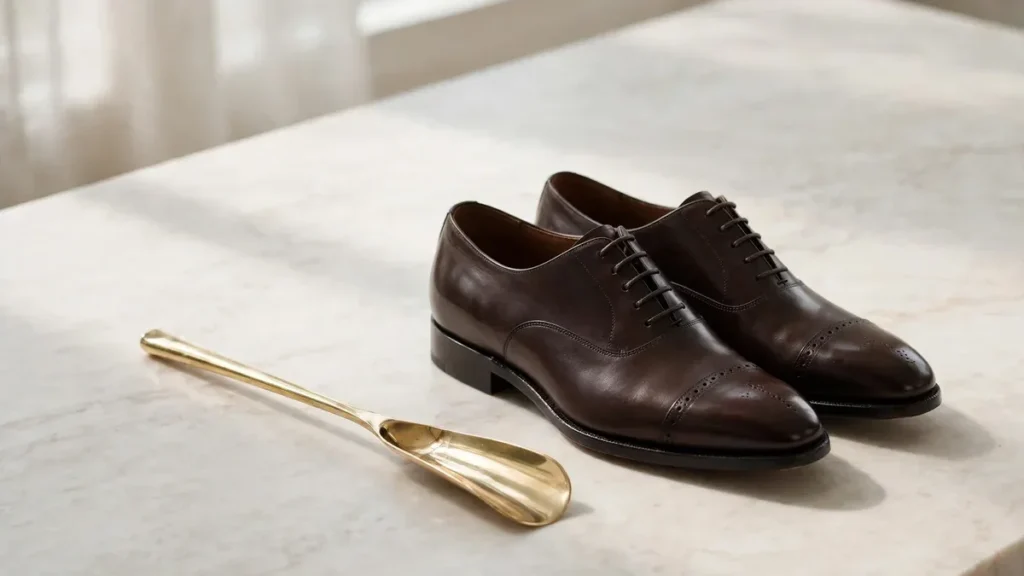
The best luxury shoe horn brands understand that a shoe horn is not a throwaway accessory. It is the small, daily tool that protects the heel of a good shoe, keeps the back of the shoe from collapsing, and lets you step into a well-made pair without crushing the leather you paid for. A cheap plastic horn bends, snaps, and scratches. A well-made one, in polished metal, genuine horn, or hand-finished wood, does the job smoothly for decades and looks like it belongs beside the shoes it serves.
The problem is that shoe horns are easy to overlook. Most people use whatever came free with a pair of shoes, or they force their heel in with a finger and wonder why the heel counter has gone soft after a year. A good horn is long enough to use standing up, smooth enough to glide, and shaped so the heel slides in without catching the lining or the sock.
Below are nine luxury shoe horn brands worth considering, from the great English and Italian shoemakers to the specialist horn makers who have been shaping this one object for generations. Each one is described by what it does best and what to watch for, so you can choose a shoe horn that suits your shoes, your home, and the way you dress, rather than the first one you happen to find.
Key takeaways
- A long shoe horn, around 45 to 60 centimetres, lets you put shoes on standing up and protects the heel counter of every pair you own.
- Polished metal, genuine horn, and hand-finished wood are the materials that last, while thin plastic bends, cracks, and can scratch leather.
- The best shoe horns are smooth, with a wide, gently curved blade and a comfortable handle, so the heel glides in without catching the lining.
- Match the horn to the shoe: a long metal horn suits tall boots and stiff dress shoes, while a shorter horn is better for travel and for loafers.
- No shoe horn repairs a heel counter that has already collapsed, and a horn that is too short or too rough can damage the lining it is meant to protect.

Why a good shoe horn matters
A shoe horn exists to protect the heel counter, the stiffened part at the back of a shoe that holds its shape. Every time you force your heel into a shoe without one, you press that counter down and crease the leather at the back. Do it often enough, and the heel collapses and the shoe slips when you walk. A shoe horn takes that pressure away entirely, guiding the heel in along a smooth surface.
It also protects the lining. A finger, a thumb, or a rough edge can snag the lining and wear a hole in it, especially in leather-lined shoes. A polished horn slides against the lining without catching, and it keeps your hands clean, which matters when you are wearing a good suit and polished shoes.
Length is the first practical question, and it matters more than material. A short horn, around 15 to 20 centimetres, is fine for travel and for shoes you put on sitting down. A long horn, around 45 to 60 centimetres, lets you put your shoes on standing up, without bending, which is a genuine pleasure in the morning and a real help if your back is stiff. Most people who buy one long horn for the hallway never go back to a short one. That ease is also why a horn suits slip-on styles so well, and our guide to penny loafers makes the same point about shoes that should slide on cleanly, because a loafer that is forced on with a finger soon loses the shape that made it elegant.
What to look for in a luxury shoe horn
Look first at the blade. It should be wide enough to support the heel, smoothly polished, and gently curved so it follows the shape of the foot. A narrow, flat blade can catch on the lining, and a rough or pitted surface can scratch leather over time. Stainless steel and brass polish to a mirror finish and keep it, genuine horn has a natural smoothness and warmth, and good wood, properly sealed, is kind to leather and comfortable to hold.
Look next at the handle and the balance. A long horn should feel balanced in the hand, not heavy at one end, with a handle that is comfortable to grip and, ideally, a hole or a loop so you can hang it by the door. A horn that hangs in the hallway, beside the shoes, is one you will use every day. The brands below are judged on those practical points as much as on how they look.
John Lobb
What we like: The benchmark English shoemaker, founded in London in 1849, makes shoe horns with the same restraint as its shoes. Polished metal and leather-handled versions, beautifully balanced, with no visible branding shouting from the handle, and a blade that is genuinely smooth.
What to consider: Premium prices, typically from around $150, and availability is mostly through John Lobb shops and its website, so it is not an impulse buy. Materials: Polished stainless steel and nickel, with leather-covered handles on some models. Length: Long-handled models around 50 centimetres, with shorter travel versions. Best for: Dress shoes and anyone who already owns John Lobb shoes and wants the matching care tools.
John Lobb is the quiet choice, and the long horn is the one to buy.
Berluti
What we like: A Parisian house founded in 1895, famous for its Venezia leather and its hand-applied patina, and its shoe horns carry that same colour and finish. A Berluti horn in deep oxblood or green-tinged brown is a genuinely beautiful object, not just a useful one.
What to consider: Prices typically from around $200, and the patinated leather handle needs the same care as a Berluti shoe, with occasional conditioning to keep its depth. Materials: Polished metal blades with Venezia calf leather handles, hand-finished. Length: Long-handled models around 55 centimetres. Best for: People who love colour and want a shoe horn that looks at home in a well-dressed hallway.
Berluti is for people who notice the details, and the patina is the reason to buy it.
Saphir
What we like: The French shoe care specialist, trusted by cobblers and shoemakers for generations, makes some of the best-value long shoe horns anywhere. Smooth, well-finished steel blades, comfortable handles, and a practical design that does the job without fuss.
What to consider: The design is plain and functional, so it will not impress anyone as an object, and the finish is workmanlike rather than luxurious. Materials: Polished stainless steel, with wood and leather handle options. Length: Long models around 58 centimetres, with shorter versions for travel. Best for: Everyday use, tall boots, and anyone buying their first proper long shoe horn.
Saphir is the sensible first buy, and it is the horn most cobblers would reach for themselves.
Abbeyhorn
What we like: A family-owned English maker that has been working with genuine horn since 1749, and the only brand on this list that specialises in the material itself. A genuine horn shoe horn has a warmth and a natural smoothness that metal cannot quite match, and each one is slightly different.
What to consider: Genuine horn is a natural material, so colours and markings vary, and it should be kept away from radiators and damp, which can dry or warp it. Materials: Genuine horn, often with a polished finish, in natural shades of brown and black. Length: From pocket sizes around 15 centimetres to long-handled models around 50 centimetres. Best for: Traditionalists, and anyone who wants the classic shoe horn as it was originally made.
Abbeyhorn is the heritage choice, made by people who have done nothing else for centuries.
Edward Green
What we like: The Northampton shoemaker, founded in 1890, makes shoe horns that match the understated elegance of its shoes. Clean lines, a beautifully polished blade, and a handle that feels considered rather than decorative.
What to consider: Prices typically from around $150, and like John Lobb, availability is mostly through Edward Green shops, so it is a deliberate purchase rather than a casual one. Materials: Polished steel with leather or wood handles. Length: Long-handled models around 50 centimetres. Best for: Owners of Edward Green shoes, and anyone who values English shoemaking tradition.
Edward Green is the choice for people who already know the brand.
Crockett & Jones
What we like: Another great Northampton maker, founded in 1879, whose shoe horns are practical, well made, and fairly priced for the quality. A long Crockett & Jones horn is a solid, honest tool that will last as long as the shoes it serves.
What to consider: The design is traditional and unadorned, so it will not stand out in a hallway full of more decorative accessories. Materials: Polished steel blades with leather or wood handles. Length: Long models around 50 centimetres, with shorter travel sizes. Best for: Everyday dress shoes, and buyers who want a Northampton-made horn without the top-tier price.
Crockett & Jones is the reliable middle ground, and one of the best made for the money.
Alden
What we like: The American shoemaker, founded in Massachusetts in 1884, is best known for its shell cordovan shoes, and its shoe horns are made with the same practical American sensibility. Sturdy, well finished, and designed to be used every day rather than admired.
What to consider: Availability outside the United States can be patchy, and the styling is plain, with little of the decoration of the European houses. Materials: Polished steel and wood handles, in classic designs. Length: Long-handled models around 60 centimetres, among the longest on this list. Best for: Shell cordovan shoes, tall boots, and anyone who wants the longest practical horn.
Alden is the practical American choice, built to be used rather than displayed.
Smythson
What we like: The London leather goods house, founded in 1887, makes shoe horns in its signature cross-grain leather, with the same refined finish as its notebooks and wallets. A Smythson horn is the most giftable on this list, and it arrives beautifully presented.
What to consider: Prices typically from around $150, and the leather handle is more decorative than the steel horns, so it suits a hallway rather than a workshop. Materials: Polished metal blades with cross-grain calf leather handles, in Smythson colours. Length: Long-handled models around 50 centimetres. Best for: Gifts, and anyone who wants a shoe horn that matches their other leather accessories.
Smythson is the gift choice, and the one most likely to be used every day because it looks so good hanging by the door.
Aspinal of London
What we like: The British leather goods house makes elegant shoe horns in full-grain leather and polished metal, at a more accessible price than the shoemakers above. The designs are classic, the leather is good, and the presentation is excellent.
What to consider: The blade is slimmer than the dedicated shoemakers’ horns, so it suits loafers and dress shoes better than very stiff boots. Materials: Full-grain leather handles with polished steel blades. Length: Long-handled models around 50 centimetres, with shorter travel versions. Best for: Loafers and dress shoes, and buyers who want a luxury horn without a luxury price.
Aspinal of London is the accessible luxury choice, and a sensible first luxury shoe horn.
The caveats that matter
A shoe horn is a simple tool, and the blade must be smooth. Run your thumb along it before you buy, and if you feel a rough edge, a burr, or a sharp point, do not use it on good shoes. A rough horn can scratch the lining and the leather at the heel, which is the opposite of what it is for. A bent or dented horn will not guide the heel cleanly either.
Care is simple but worth doing. Wipe a metal horn clean after use, especially if it has been near polish or cream, and keep it dry. Condition a leather handle occasionally, and keep a genuine horn away from radiators and damp. A horn that is looked after will last for decades. That same habit of regular, gentle care is what keeps the shoes themselves in good order, and our guide to keeping white sneakers pristine makes the same point for lighter shoes, because small, regular care beats an occasional rescue every time.
| Detail | What is known |
|---|---|
| Best length for home use | 45 to 60 centimetres, so you can put shoes on standing up |
| Best length for travel | 15 to 20 centimetres, short enough to pack in a shoe bag |
| Materials that last longest | Polished stainless steel and brass, with wood or leather handles |
| Most traditional material | Genuine horn, as made by Abbeyhorn since 1749 |
| Best first luxury horn | Saphir long horn, or Crockett & Jones for a Northampton-made option |
| Best for tall boots | A long steel horn, such as Alden at around 60 centimetres |
| What to avoid | Thin plastic, rough or burred blades, and horns that are too short to use standing up |
| What a horn does not do | It does not repair a heel counter that has already collapsed |
Finally, be honest about how you will use the horn. If you mostly wear loafers and slip-ons, a long horn by the door is all you need. If you wear tall boots, a longer, sturdier horn is worth the extra length. Buy for the life you actually live, and the horn will earn its place.
Checklist: choosing a luxury shoe horn honestly
Use these checks before you buy, and again after a month of use.
- Check the blade: it should be wide, smoothly polished, and gently curved, with no burrs or sharp edges.
- Check the length: 45 to 60 centimetres for home use, so you can put shoes on standing up.
- Check the handle: it should be comfortable to grip and balanced, with a hole or loop for hanging.
- Check the material: polished metal, genuine horn, or sealed wood, not thin plastic that bends.
- Check the fit: try it with your stiffest pair of shoes, and watch for catching on the lining.
- Check the home: hang it by the door, beside the shoes, so you actually use it every day.
Frequently asked questions
How long should a luxury shoe horn be?
For home use, 45 to 60 centimetres is ideal, because it lets you put your shoes on standing up without bending. For travel, 15 to 20 centimetres is more practical. Many people own both.
Are metal shoe horns better than horn or wood?
Metal is the most durable and the easiest to keep smooth, which makes it the safest choice for stiff dress shoes and boots. Genuine horn is warmer and more traditional, and wood is comfortable and kind to leather, but both need a little more care to keep them in good condition.
Can a shoe horn damage my shoes?
A smooth, well-made horn will not damage shoes, and it protects them. A rough, burred, or bent horn can scratch the lining and the leather at the heel, so check the blade before you use it, and replace a horn that has been dented or damaged.
Do I need a shoe horn for loafers?
Yes, especially for leather loafers. Loafers are designed to slip on, but forcing the heel in with a finger still presses the heel counter down over time. A short horn, or a long one by the door, keeps the loafer’s shape and makes putting them on effortless.
Do I need a different shoe horn for boots?
A longer, sturdier horn is better for boots, because the shaft is taller and the leather is often stiffer. A horn of around 55 to 60 centimetres works well, and the same length suits the taller styles in our guide to fall boot trends, because a boot that is forced on is a boot that will lose its shape at the heel.
How do I care for a luxury shoe horn?
Wipe a metal horn clean and keep it dry, condition a leather handle occasionally, and keep a genuine horn away from heat and damp. Hang it by the door so it is easy to reach, and check the blade now and then for dents or rough spots.
The bottom line
The best luxury shoe horn brands in 2027 are the ones that treat a simple tool with the same care as a good shoe. Saphir and Crockett & Jones are the sensible first buys, Abbeyhorn is the traditional choice in genuine horn, and John Lobb, Edward Green, and Berluti are the quiet luxury options for people who want their accessories to match their shoes. Alden is the practical choice for boots and cordovan, Smythson is the gift, and Aspinal of London is the accessible way in.
Start with one long horn, around 50 centimetres, in polished steel, and hang it by the door. Use it every day, with every pair, and your shoes will keep their shape far longer.