A white shirt is the hardest-working piece in almost any wardrobe, and one of the easiest to get wrong. It looks simple, but the difference between a shirt that feels polished and one that feels stiff, sheer or shapeless comes down to small decisions: the weight of the fabric, the cut, the collar and the length. Get those right and the same shirt can carry a work meeting, a weekend lunch and an evening out.
The trouble is that white shows everything. A fabric that is too thin will reveal what is underneath, a cut that pulls at the bust will gape at the buttons, and a collar that collapses will make the whole outfit look unfinished. That is why choosing a white shirt deserves more care than grabbing the first one on the rail.
Below are nine white shirts worth considering in 2027, described by style rather than by label, so you can match the shirt to your body and your day. Each one is described by what it does well, what to watch for, and who it suits best, so you can choose a shirt you will actually reach for again and again.
Key takeaways
- The best white shirt for you depends on fit and fabric first, not on the label, so start with how it sits on your shoulders.
- Cotton poplin and oxford cloth are the most reliable everyday choices, while linen blends suit warm weather and silk blends suit evenings.
- Check for sheerness in daylight, and choose a smooth, skin-toned layer underneath rather than a bright white one.
- A shirt that is slightly relaxed through the body is more forgiving than one cut very close, and it tucks and layers more easily.
- No single white shirt suits every body and every season, so expect to try more than one cut before you find the one that feels like yours.
What this guide covers
This guide covers nine styles of white shirt, from the classic cotton poplin button-down to a relaxed linen blend and a silk-blend option for evenings. It is written for women who want one or two really good white shirts rather than a drawer full of almost-right ones, and it focuses on the practical questions that decide whether a shirt earns its place: does it fit without pulling, does the fabric hold its shape, and does it stay opaque.
You will find guidance on fit, including what to do if shirts usually gape at the bust, ride up at the waist, or feel tight across the shoulders. You will also find fabric notes, because the same cut in a crisp poplin and in a soft linen blend behaves completely differently.
The guide also covers styling, from tucking and layering to what to wear underneath, and it ends with an honest look at the limits of any white shirt: keeping it bright, and knowing when it has had its day. Nothing here promises a perfect shirt for everyone, because there is no such thing, but it should help you find the one that is right for you.
How we chose these white shirts and what to look for
Look first at the fit, starting at the shoulders. The shoulder seam should sit at the edge of your shoulder, not drooping down the arm and not pulling inwards. Then check the bust: buttons should lie flat without gaping when you sit, stand and reach forward. If a shirt gapes, try a cut with more room through the bust, or a style with a hidden placket, rather than sizing up and losing the shoulders.
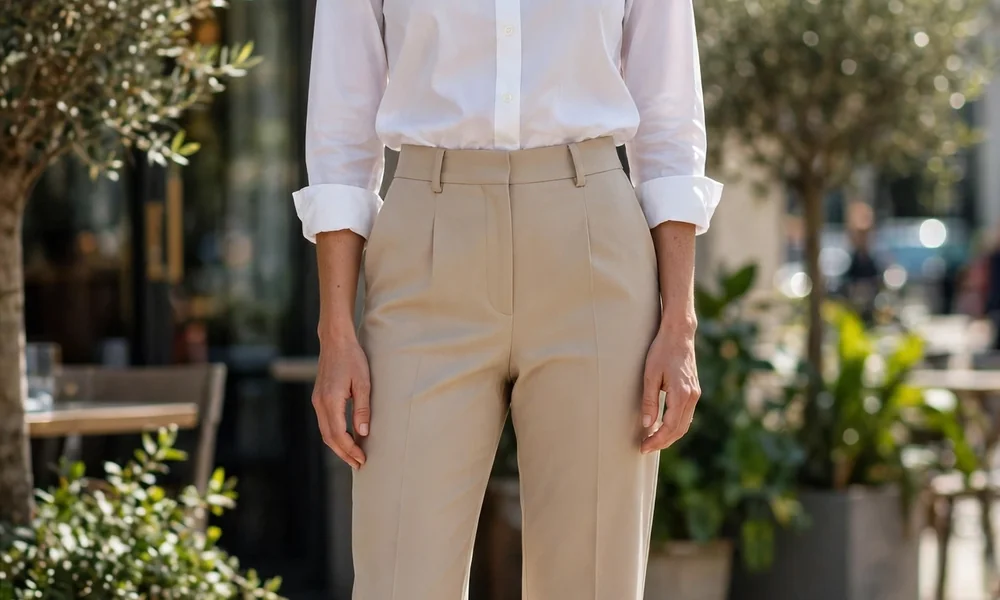
Look next at the fabric and how it behaves. Hold it up to the light to check for sheerness, and feel whether it is crisp, soft or slinky. Crisp cotton poplin holds a smart shape and irons well, which makes it a strong choice for work. Softer fabrics drape more easily but crease faster and can look less formal. A crisp shirt holds its collar under a well-cut blazer, while a very soft one can collapse and look untidy by midday.
Finally, look at the details and the length. A collar that stands up neatly, cuffs that sit at the wrist, a hem long enough to stay tucked in, and buttons that feel secure all matter more than they seem. A longer back hem is useful if you tuck the front in and leave the back out, and a curved hem is more flattering untucked than a straight one.
The Classic Cotton Poplin Button-Down
What we like: Crisp, smooth and reliably smart, cotton poplin holds its shape, irons to a clean finish, and works for work and formal occasions.
What to consider: Poplin can feel stiff at first and creases after a long day, and a very light poplin may be slightly sheer. Fit: True to size with a straight, tailored line; size up if the bust pulls. Fabric: Cotton poplin, usually with a small amount of stretch. Occasion: Work, formal events and smart layering.
Buy this one first if you only buy one: it tucks neatly, layers cleanly under a jacket, and looks just as good with the sleeves rolled up at the weekend.
The Relaxed Oxford Shirt
What we like: Oxford cloth is heavier and more textured than poplin, with a soft, lived-in feel, and the relaxed cut is comfortable for long days.
What to consider: The heavier fabric can look too casual for very formal workplaces, and it suits cooler days best. Fit: Relaxed through the body with dropped shoulders; take your usual size. Fabric: Cotton oxford weave, often with a touch of stretch. Occasion: Smart-casual workdays, weekends and travel.
Think of it as the weekend version of the classic button-down: it pairs beautifully with denim and relaxed tailoring, and the collar keeps it looking intentional.
The Slim-Fit Stretch Shirt
What we like: A closer cut with a little stretch skims the body neatly, stays tucked in, and gives a polished silhouette under jackets.
What to consider: A very slim fit leaves little room for movement, so it can pull at the bust. Fit: Close through the waist and bust with stretch; check the buttons while seated. Fabric: Cotton with elastane for stretch and recovery. Occasion: Office days, presentations and evenings out.
Choose it when the silhouette matters most, such as with a pencil skirt or slim trousers, and check the fit while sitting down, not just standing up.
The Oversized Boyfriend Shirt
What we like: Generously cut and easy to wear, the boyfriend shirt drapes beautifully and works as a shirt or a light jacket.
What to consider: Too much volume can swamp a petite frame, so balance it with slim bottoms. Fit: Deliberately oversized with a long hem; size down for a less dramatic shape. Fabric: Cotton or cotton-blend poplin, sometimes with a washed finish. Occasion: Casual days, travel and relaxed weekend outfits.
Wear it open over a camisole, half-tucked into jeans, or belted at the waist for a shape that still feels relaxed.
The Linen-Blend Shirt
What we like: Breathable and cool in warm weather, a linen blend feels light on the skin and suits holidays and hot days.
What to consider: Linen creases quickly, so it will never look razor sharp, and a blend with cotton or viscose is usually more comfortable than pure linen. Fit: Relaxed and easy, often with a dropped shoulder; allow room for the fabric to move. Fabric: Linen blended with cotton or viscose for softness. Occasion: Warm weather, holidays and outdoor lunches.
This is the shirt for heat, not for boardrooms: accept the creases, keep the styling simple, and let the fabric do the work on warm days.
The Silk-Blend Shirt
What we like: Soft, fluid and gently lustrous, a silk blend drapes beautifully and elevates a simple outfit for evenings and special occasions.
What to consider: Silk blends need gentler care than cotton and can show water marks, so they suit occasions, not everyday wear. Fit: Fluid and relaxed, often with a softer collar; let it drape. Fabric: Silk blended with cotton or viscose for easier care. Occasion: Evenings out, weddings and dinners.
Reach for it when the occasion deserves a little polish: it pairs beautifully with tailored trousers or smart denim and needs very little else to look finished.
The Tunic-Length Shirt
What we like: Longer in the body with a flattering line, the tunic shirt covers the hips and works beautifully with leggings.
What to consider: The extra length can look unbalanced with wide-leg trousers, so pair it with a slim lower half. Fit: Longer through the body with a straight or curved hem; choose a length ending at mid-hip or just below. Fabric: Cotton poplin or a soft cotton blend. Occasion: Everyday wear, travel and relaxed workdays.
A practical choice if standard shirts feel too short: comfortable, modest and neat untucked, which makes it ideal for long days.
The Short-Sleeve Camp-Collar Shirt
What we like: Relaxed and breezy, the camp-collar shirt has an open, notched collar and short sleeves that suit warm weather.
What to consider: It is casual, so it does not suit formal workplaces, and the open collar needs a neat layer underneath. Fit: Relaxed through the body with a straight hem; take your usual size. Fabric: Cotton, linen blend or a soft viscose. Occasion: Holidays, weekends and warm days.
Wear it as it is meant to be worn: open at the neck, sleeves as they fall, and paired with shorts, linen trousers or a simple skirt.
The Soft Ruffle-Detail Shirt
What we like: A gentle ruffle at the collar or cuffs adds softness and makes a plain white shirt feel special enough for occasions.
What to consider: Ruffles add volume at the neckline or wrist, so keep the rest of the outfit simple. Fit: Usually relaxed with detail at the collar or cuffs; check that the ruffle sits flat under a jacket if you plan to layer it. Fabric: Cotton, cotton voile or a soft blend. Occasion: Lunches, celebrations and date nights.
The shirt for days when a plain button-down feels too plain: keep the bottom half simple and the jewellery minimal, because the detail is already doing the work.
Which white shirt is right for you
If you want one shirt for work, choose the classic cotton poplin button-down or the slim-fit stretch shirt. Both tuck neatly, layer under jackets, and look polished in a meeting. Check the fit while seated and choose a fabric that is opaque in daylight. A classic trench coat over the top makes this a complete outfit for cooler days, from the office to an evening out.
If you want comfort and ease, choose the relaxed oxford, the boyfriend shirt or the linen blend. These suit weekends, travel and warm weather, when you want to look put together without feeling restricted. Pair them with denim or relaxed tailoring, and do not worry about a perfect tuck, because a half-tuck suits these styles better.
If you want something for evenings and occasions, choose the silk blend or the ruffle-detail shirt. Both are softer and more fluid than cotton, and both need little styling to feel special. Keep the rest of the outfit simple, choose a smooth layer underneath, and let the shirt be the focus. For a petite frame, a length that ends at the hip is usually more flattering than a very long, oversized shirt, while taller women can carry the longer styles easily.
The caveats that matter
White shirts need more care than darker clothes. They show stains, they can yellow with age, and they lose their brightness if washed with dark colours or stored in sunlight. Wash white shirts separately, avoid overloading the machine so they rinse properly, and dry them out of direct sun. If a shirt starts to look grey, it may be time to replace it rather than trying to rescue it with harsh treatments.
| Detail | What is known |
|---|---|
| Best first shirt to buy | A classic cotton poplin button-down, because it suits work, smart occasions and layering |
| Most comfortable everyday style | A relaxed oxford or boyfriend shirt, with room to move and a softer fit |
| Best fabric for warm weather | A linen blend, which is breathable and airy, though it creases more than cotton |
| Best fabric for evenings | A silk blend, which drapes softly and looks polished with minimal styling |
| How to check sheerness | Hold the shirt up to daylight and check it while wearing it, not only under shop lights |
| What to wear underneath | A smooth, skin-toned layer, which disappears under white far better than bright white |
| How to keep white bright | Wash separately from dark colours, avoid overloading the machine, and dry out of direct sun |
| When to replace a white shirt | When it looks grey or yellowed, the collar is worn, or the fabric has thinned |
Fit is the other honest caveat. A white shirt that pulls at the bust, rides up at the waist or droops at the shoulders will not improve with wear, and no amount of styling will fix a poor fit. Try shirts on while sitting and moving, not just standing still, and be willing to try a different cut rather than settling for one that is almost right.
Checklist: choosing a white shirt honestly
Use these checks before you buy, and after the first few wears.
- Check the shoulders: the seam should sit at the edge of your shoulder, not drooping or pulling inwards.
- Check the bust: buttons should lie flat without gaping when you sit and reach forward.
- Check for sheerness: hold the shirt up to daylight while wearing it, not only under shop lights.
- Check the length: the hem should stay tucked in when you move, or fall neatly untucked at the hip.
- Check the fabric: crisp poplin for work, softer blends for comfort, linen for warmth and silk blends for evenings.
- Check what is underneath: choose a smooth, skin-toned layer, and check the outline in a mirror before you leave.
Frequently asked questions
How many white shirts do I need?
Two are enough: one crisp cotton shirt for work and smart occasions, and one relaxed shirt for weekends and warm weather. Quality and fit matter far more than quantity, and two shirts you love will be worn far more than five that are almost right.
What should I wear under a white shirt?
A smooth, skin-toned layer, such as a camisole or a seamless bra close to your skin tone, disappears under white far better than a bright white layer, which shows through. Avoid lace or heavy texture under a thin shirt, because the outline will show.
Why does my white shirt gap at the bust?
Because the shirt is cut too straight through the bust for your shape, or the buttons are spaced too far apart. Try a cut with more room through the bust, a style with a hidden placket, or a shirt with a little stretch. Sizing up often makes the shoulders too wide, so a different cut is usually better.
Can I wear a white shirt to a wedding?
Yes, if it is styled as part of a smart outfit rather than on its own. A silk-blend or ruffle-detail white shirt with tailored trousers or an elegant skirt can work beautifully, but avoid anything that could be mistaken for a bridal look. Our guide to wedding guest dresses covers the same question of dressing well without overshadowing the occasion, and the same principle applies here: look polished, not bridal.
How do I stop a white shirt going grey or yellow?
Wash it separately from dark colours, use the right amount of detergent, and avoid overloading the machine so it rinses properly. Dry it out of direct sunlight, and store it away from heat. A shirt that is badly yellowed or thinned is usually better replaced.
Is a white shirt suitable for a job interview?
Yes, a classic cotton poplin button-down is one of the safest choices for an interview, because it looks clean, professional and considered. Make sure it is freshly pressed, the collar sits neatly, and the buttons lie flat. Pair it with tailored trousers or a skirt, and keep accessories simple.
The bottom line
The best white shirt in 2027 is not the most expensive or the most fashionable. It is the one that fits your shoulders and bust without pulling, made from a fabric suited to your climate and routine, that you will reach for again and again. For most women, that means a classic cotton poplin button-down first, with a relaxed oxford or linen blend as a second option.
Try shirts on while sitting and moving, check them in daylight, and be honest about whether they suit your life. A white shirt that fits well is one of the most useful pieces you can own, and it is worth taking the time to find the right one.
Note: This guide is general style information, not professional advice. Fit suits different bodies differently, so try shirts on before buying where you can, and follow the care label for washing and ironing.