Most bangle collections grow the same way: one piece at a time, bought for one outfit, and then left wherever it came off. After a few years, the box is full, but the bangle you want is always the one at the bottom, tangled with three others, or missing its match. The collection is not too big. It is unorganised, and that is a much easier problem to fix.
Organising a bangle collection is not about buying a new jewellery box. It is about knowing what you own, sorting it so you can see it, and giving every piece a home you will actually use. A collection you can see is a collection you will wear. A collection in a tangled pile is jewellery you have already paid for and stopped enjoying.
Below are nine steps that will take a bangle collection from a jumbled box to a system you can keep up in minutes a week. Each step is described by what to do, what to avoid, and how long it takes, so you can work through the whole collection in one afternoon or one step at a time.
Key takeaways
- Start by taking every bangle out and laying them in one place: you cannot organise a collection you cannot see in full.
- Sort by metal first, then by colour and occasion, because that is how you actually choose a bangle in the morning.
- Group bangles into ready-to-wear sets so getting dressed takes seconds instead of a hunt through the box.
- Give every group a fixed home, and put each bangle back in that home the moment you take it off.
- No system suits every collection, and a rigid plan that takes an hour a week to maintain will be abandoned, so keep the routine short and simple.
What organising a bangle collection actually means
Organising a bangle collection means three things: knowing what you own, being able to find any piece in under a minute, and keeping the pieces in good condition while they are stored. If your system does all three, it works. If it does only one, it is decoration, not organisation.
The most common mistake is starting with storage. People buy a beautiful box, fill it neatly, and then stop using it because the layout does not match how they choose jewellery. The box should come last, after you know what you own and how you wear it. A drawer with dividers you actually use beats a velvet box you open once a month.
The other mistake is keeping everything. A bangle that is broken, tarnished beyond repair, or never worn is not part of a collection; it is clutter that hides the pieces you love. Organising starts with honest decisions about what stays, and the pieces you let go of make room for the ones you wear.
What you need before you start
You need a clear table, a soft cloth, and three small trays or bowls. The table is for laying everything out. The cloth is for wiping each piece as you handle it. The trays are for sorting: one for pieces you wear often, one for pieces you wear rarely, and one for pieces that need a decision, such as repair or passing on.
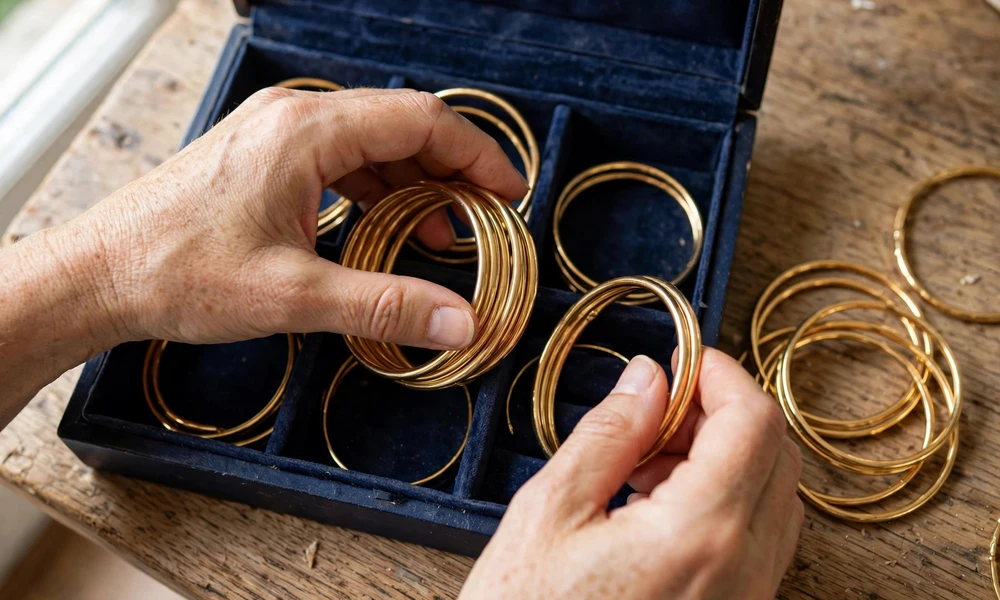
You do not need to buy anything to start. A muffin tin, a few small bowls, or a cutlery tray all work as sorting trays. If you do want proper storage, wait until the sorting is done, so you buy the right size. Our guide to how to store bangle bracelets explains which materials protect metal and stone, and which ones cause tarnish.
Set aside an afternoon, or at least two uninterrupted hours. Rushing the job means the decisions get deferred, and deferred decisions are how a collection ends up back in a pile. Put on some music, make a cup of tea, and treat it as a calm afternoon rather than a chore to rush through.
The 9 steps to organise a bangle collection
Take every bangle out and lay them in one place
What to do: Empty every box, drawer, and pouch onto one clear table, and lay the bangles out in a single layer so you can see them all at once. What to avoid: Do not sort as you empty; just get everything out first, because sorting half a collection gives you a false picture of what you own. Best for: Any collection, large or small. Time needed: 15 minutes. Standout tip: Check coat pockets, handbags, and bedside drawers too, because stray bangles hide in all of them.
Sort by metal first, then by colour
What to do: Make piles by metal: gold, silver, rose gold, and mixed or dark metals. Then split each pile by colour and stone, so all the gold pieces sit together and all the dark pieces sit together. What to avoid: Do not sort by when you bought them, because that tells you nothing about how you wear them. Best for: Collections with more than twenty pieces. Time needed: 20 minutes. Standout tip: Put mixed-metal pieces in their own pile, so they do not end up scattered across every group.
Metal first works because that is how you choose in the morning: you pick a metal to match your outfit and your other jewellery, then you pick a colour. Sorting any other way fights your own habits.
Decide what to keep, repair, and pass on
What to do: Hold each bangle and ask three questions: have I worn it in the last year, does it fit, and is it in good condition. Keep the yeses, set aside the ones that need repair, and put the rest in a bag to pass on. What to avoid: Do not keep a bangle because it was expensive or a gift if you never wear it; guilt is not a storage system. Best for: Collections that have grown without editing. Time needed: 30 minutes. Standout tip: Put the pass-on bag by the door immediately, so it leaves the house instead of drifting back into a drawer.
Group your bangles into ready-to-wear sets
What to do: Build small sets of two or three bangles that work together: one gold set, one silver set, one dark set, and one colourful set. Keep each set together from now on. What to avoid: Do not build sets of six or seven pieces, because a set that big is a decision, not a shortcut. Best for: Anyone who gets dressed in a hurry. Time needed: 20 minutes. Standout tip: Photograph each set on your wrist, so you remember the combination on a busy morning.
Ready-to-wear sets are the single biggest time saver in this whole process. Choosing a set takes seconds; choosing three separate bangles takes minutes and usually ends with you wearing the same one as yesterday.
Choose a home for each group
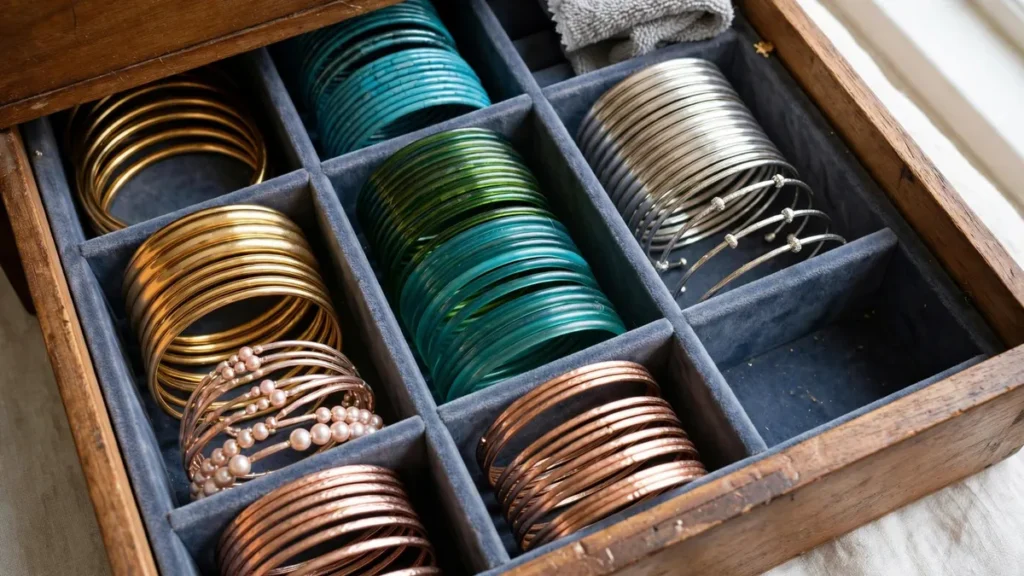
What to do: Give each metal group and each ready-to-wear set its own compartment, roll, or hook, and label it if the storage is not see-through. What to avoid: Do not store bangles loose in a single compartment, because they scratch each other and tangle. Best for: Collections of any size. Time needed: 20 minutes. Standout tip: Keep the everyday set at the front and the occasion pieces at the back, so the pieces you reach for most are easiest to grab.
Label and log what you own
What to do: Write a simple list, on paper or on your phone, of every bangle you kept: metal, colour, and which set it belongs to. Add a photo of each set. What to avoid: Do not build a complicated spreadsheet with twenty columns; a list you will not update is worse than no list at all. Best for: Large collections and valuable pieces. Time needed: 25 minutes. Standout tip: Note the purchase date and price for valuable pieces, so you have a record if anything is lost or damaged.
A log sounds fussy until the first time you cannot find a bangle. Then it tells you in seconds whether the piece is in the silver set, the occasion set, or the repair pile, and that is worth the twenty-five minutes.
Set a rotation so nothing sits unworn
What to do: Move the set at the back of the drawer to the front each Sunday, so every set gets a turn at the front over a month. What to avoid: Do not rotate daily, because a daily rotation is a chore you will abandon; weekly is enough. Best for: Collections with more than four sets. Time needed: 2 minutes a week. Standout tip: If a set reaches the front three times without being worn, it belongs in the pass-on bag.
Clean and check each bangle as you put it away
What to do: Wipe each bangle with a soft cloth before it goes back in its home, and check the clasp, the stones, and the edges for damage. What to avoid: Do not put a bangle away dirty or damp, because perfume, sweat, and moisture cause tarnish in storage. Best for: Every bangle, every time. Time needed: 1 minute per piece. Standout tip: Keep a soft cloth in the jewellery drawer, so cleaning takes seconds and needs no trip to find supplies.
This step is the maintenance that makes the whole system last. A bangle that is wiped and checked each time it is put away will look good for years; one that is tossed in dirty will need a deep clean every few months.
Do a quick seasonal review
What to do: Four times a year, take ten minutes to look at the collection: anything unworn for a season goes in the pass-on bag, and anything damaged goes in the repair pile. What to avoid: Do not skip the review because the collection looks tidy; tidiness hides the pieces you have stopped wearing. Best for: Keeping the system working long term. Time needed: 10 minutes, four times a year. Standout tip: Tie the review to the change of seasons, so it becomes a habit rather than a task you have to remember.
Which system suits your collection
A small collection, under twenty pieces, suits a single tray with dividers. You can see everything at once, and the sets are easy to keep together. A medium collection, twenty to fifty pieces, suits a drawer with compartments plus a roll for travel. Our guide to how to store bracelets explains which drawer materials protect metal and stone, and which ones cause tarnish. A large collection, over fifty pieces, needs a dedicated drawer or a stand, with the everyday sets at the front and the occasion pieces labelled at the back.
The other question is how you choose. If you choose by metal, sort by metal. If you choose by outfit, sort by colour. If you choose by occasion, sort into everyday, work, and evening groups. The system should match the way you already think, because a system that fights your habits will be abandoned within a month.
If you wear bangles every day, keep the everyday set on a small stand by the mirror, so getting dressed takes seconds. If you wear them only for occasions, keep the whole collection in one drawer and the everyday pieces in a small tray on top. The best bangles for everyday wear, such as the pieces in our guide to the best bangle bracelets for everyday, deserve the easiest spot to reach.
The caveats that matter
Organising has its own traps. The first is over-buying storage: a new box, a new stand, and a new roll before you have sorted anything is shopping, not organising. The second is over-sorting: a system with twelve categories is a system nobody will maintain. The third is the guilt pile: bangles kept out of obligation, not enjoyment, which take up space and attention that belong to the pieces you love.
| Detail | What is known |
|---|---|
| Best first step | Take every bangle out and lay them in one place before sorting anything |
| Best way to sort | By metal first, then by colour and occasion, matching how you choose in the morning |
| Ideal set size | Two or three bangles per ready-to-wear set; larger sets become a decision, not a shortcut |
| Storage to avoid | Loose piles in one compartment, which scratch and tangle pieces |
| How often to rotate | Weekly is enough; daily rotation is a chore that gets abandoned |
| Cleaning habit | Wipe each bangle with a soft cloth before it goes back, and check the clasp and stones |
| When to review | Four times a year, ten minutes each, tied to the change of seasons |
| What it does not do | Organisation cannot make a bangle you never wear into one you love; some pieces should leave the collection |
If you share a home, agree on the space first. A collection that spreads across shared drawers causes friction, and a system that only you understand will be undone by someone putting a bangle back in the wrong place. One drawer, one tray, and one rule about putting pieces back in their home is enough.
Checklist: organising a bangle collection honestly
Use these checks as you work through the steps, and again at each seasonal review.
- Check the full picture: every bangle out of every box, drawer, and bag before you sort anything.
- Check the keep test: worn in the last year, fits well, and in good condition, or it goes in the pass-on bag.
- Check the sets: two or three bangles per ready-to-wear set, photographed on your wrist so you remember them.
- Check the homes: every group has a fixed compartment, and the everyday set is the easiest to reach.
- Check the log: a simple list of what you kept, with a photo of each set, updated when something changes.
- Check the routine: a weekly rotation of two minutes and a seasonal review of ten minutes, or the system will slide back into a pile.
Frequently asked questions
How long does it take to organise a bangle collection?
About two hours for a medium collection, including sorting, deciding, and putting everything away. A small collection takes under an hour. The maintenance after that is about two minutes a week for rotation and ten minutes a season for review.
Should I store bangles by metal or by colour?
By metal first, then by colour. That matches how most people choose in the morning: pick a metal to match the outfit and the other jewellery, then pick a colour. Sorting by colour alone scatters the metals and slows you down.
What is the best storage for bangles?
A tray or drawer with dividers, so each group has its own compartment and the pieces do not scratch each other. A roll works well for travel. Avoid a single open compartment where bangles pile up loose.
How do I stop bangles from tangling?
Store them in separate compartments, or thread each set onto a soft ribbon or a bangle stand. The tangle happens when pieces share a compartment and move against each other, so separation is the fix.
Should I keep bangles I never wear?
Usually not. A bangle unworn for a year, that does not fit, or that you keep out of guilt is taking up space that belongs to pieces you love. Pass it on, and the collection becomes easier to use. Keep a piece only if you genuinely enjoy it, even if you wear it rarely.
How do I organise bangles for travel?
Pick one ready-to-wear set plus one spare, roll them in a soft cloth or a jewellery roll, and pack them in your hand luggage. Slim everyday bangles travel best, because they are sturdy and take up almost no room in a jewellery roll.
The bottom line
Organising a bangle collection is a two-hour job that pays off every morning. Take everything out, sort by metal and colour, keep what you wear, group the rest into ready-to-wear sets, and give every set a fixed home. The routine after that is two minutes a week and ten minutes a season.
The honest test of any system is whether you still use it in a month. If getting dressed is faster, if you wear pieces you had forgotten, and if nothing is tangled at the bottom of the box, the system works. If it feels like a chore, simplify it: fewer groups, fewer rules, and one home per set is enough.