


What if the only thing standing between you and a house full of great sound is one smart purchase? That is the promise of a wireless speaker system, and in 2026 the options are better than ever. The catch is that “wireless” now covers everything from a single battery-powered Bluetooth box to a full Wi-Fi multi-room network that streams in sync across every room. (Pick best bluetooth speaker without overpaying)
This roundup cuts straight to specific systems. Each pick below suits a different kind of listener, and each comes with one honest limitation you should know before you buy.
Quick Comparison of the Top Wireless Speaker Systems
| System | Best for | Connectivity | Standout feature | Watch out for |
|---|---|---|---|---|
| Yamaha NX-70A | Whole-home Hi-Fi | Wi-Fi, AirPlay 2, Google Cast, HDMI eARC | YPAO room calibration | Needs a stable home network |
| KEF LS Luxe | Critical listening | Wi-Fi streaming | Metamaterial Absorption Technology | Premium price tier |
| Sonos multi-room | App-first households | Wi-Fi | Simple setup and broad model range | Locked into one brand |
| Cambridge Audio L/R M | Stereo purists | Wi-Fi streaming | Matched stereo pair design | Fewer smart-home extras |
| Sharp HT-SBW55121 | Movie nights | Wireless sub and surrounds | Expandable to 7.1.4 | Fiddly menu navigation |
| Majority Everest 5.1 | Tight budgets | Bluetooth | Big sound for the money | No Wi-Fi or streaming apps |
| Bowers & Wilkins Zeppelin Pro | One-room statement | Bluetooth and Wi-Fi | Distinctive design, strong reviews | Polarizing looks |
1. Yamaha NX-70A: The Best All-Around Wireless Speaker System
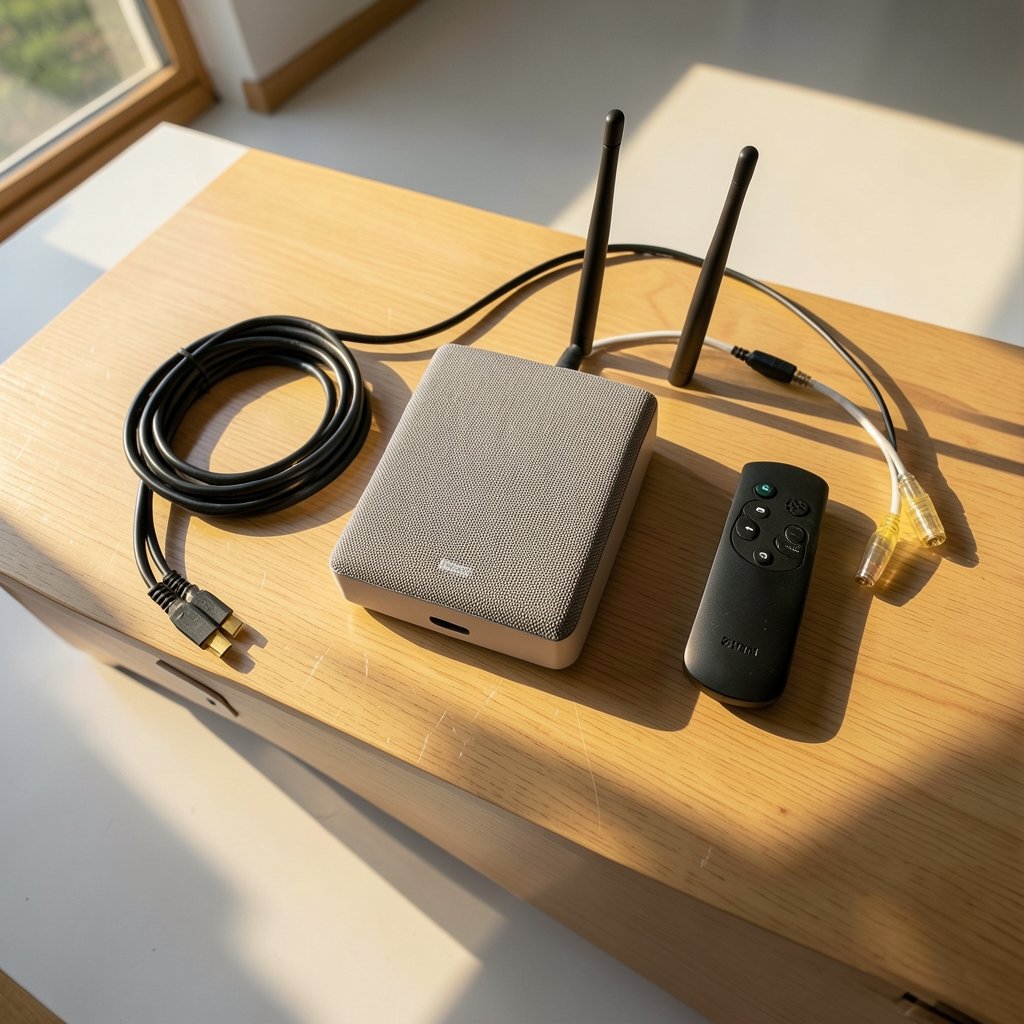
Yamaha showed the NX-70A at HIGH END Vienna 2026, and it earned the label of the best wireless speaker system at the show. The reason is simple: it does almost everything.
Who it suits: Listeners who want one system for music, TV, and multi-room audio without juggling apps.
What it does well: YPAO Room Optimization automatically calibrates the sound to whatever room you put it in. That matters more than most buyers realize, because a speaker that sounds brilliant in a showroom can turn boomy in a small bedroom. The NX-70A also runs on MusicCast for multi-room playback, is Roon Ready, and supports AirPlay 2, Google Cast, Spotify Connect, Tidal Connect, and HDMI eARC for TV integration. That last one means your soundbar can retire.
The limitation: All that network flexibility depends on a solid Wi-Fi signal. In a house with weak coverage, you will fight dropouts.
Practical tip: Set the speaker up before you mount or place it permanently. Room calibration works best when the mic can hear the speaker from your actual listening position, not from a spot you picked in a hurry. If you are also building out a desk or office setup, the same logic applies when you choose the best wireless mouse for work that actually matters in daily use.
2. KEF LS Luxe: Best for Serious Listening
KEF’s LS Luxe is the pick for people who care about detail more than features. The brand’s Uni-Q driver layout has not changed in concept for years, and that is the point: it is designed to deliver superior time-alignment and smooth driver integration.
Who it suits: Audiophiles and anyone who listens to full albums rather than background playlists.
What it does well: Metamaterial Absorption Technology sits behind the tweeter and cancels the energy moving backward from the tweeter dome, which in theory allows for cleaner, purer treble. The driver module is mechanically isolated from the cabinet, and a decoupling chassis minimizes vibrations from the motor system. KEF also uses Velocity Control Technology, first seen in its XIO soundbar, to measure the movement of the mid/bass driver and compensate in real time for discrepancies.
The limitation: This is a premium product aimed at buyers who will notice the difference. If your main source is a phone playing a compressed stream, you are paying for headroom you may never hear.
Practical tip: Give speakers like this breathing room. Pushing them against a wall muddies bass and wastes the cabinet engineering.
3. Sonos: The Easiest Multi-Room System to Live With
Sonos remains the default recommendation for multi-room audio, and the reason is consistency. The speakers have a sleek design and stay future-proof thanks to continuous updates, and the app guides you through setup quickly. The range covers different spaces too, including models with a waterproof design or a built-in battery for outdoor use.
Who it suits: Households that want music in several rooms with minimal fuss.
What it does well: Wi-Fi links the speakers into an audio network, so you can play the same track everywhere or tailor tunes room by room. That is the core difference from Bluetooth, which works point-to-point between a phone and a speaker and generally cannot manage multi-room by itself.
The limitation: You are choosing one brand’s system. If you later buy a speaker from another manufacturer, it will not join the group natively.
Practical tip: Start with one speaker, live with it for a month, then expand. Most buyers overestimate how many rooms they actually want covered.
4. Cambridge Audio L/R M: Best for Stereo Purists
Cambridge Audio’s new M model appeared alongside Yamaha at HIGH END Vienna 2026, and it targets a different buyer: the person who wants a proper left and right pair.
Who it suits: Listeners who sit down in one chair and pay attention.
What it does well: A matched stereo pair creates a real soundstage, with instruments placed left to right instead of crammed into a single box. For acoustic music and vocals, that separation is the whole experience.
The limitation: Two speakers mean two placements, two power points, and a narrower sweet spot. It is less forgiving of a room layout that fights back.
Practical tip: Measure before you buy. A stereo pair needs roughly symmetrical space on both sides, or the image collapses to one side.
5. Sharp HT-SBW55121: Best for Movie Nights
If your priority is film sound rather than music, a surround system beats a stereo pair. Sharp’s HT-SBW55121 is the company’s current flagship, built from a soundbar and subwoofer offering up to a 5.1.2 channel configuration. You can build out to 7.1.4 channels with optional 2.0.2 wireless surrounds.
Who it suits: Families and film fans who want a big, open movie soundstage.
What it does well: The soundbar packs eight drivers, including four front units (left, right, and two in the centre) plus two pairs of side and up-firing drivers. The 126cm soundbar and 45cm tall subwoofer share a cotton mesh design that looks tidy under a TV.
The limitation: Menu scrolling and selection are fiddly, so daily tweaking gets annoying.
Practical tip: Set the surround levels once with a familiar film scene and then leave them alone. Constant adjustment is the enemy of enjoyment.
6. Majority Everest 5.1: Best Budget Wireless Surround
Not everyone wants to spend flagship money. The Majority Everest 5.1 earns its place as the best budget wireless surround sound system, delivering a huge, open movie soundstage, punchy and detailed music, controlled, well-timed bass, and fine build quality for the price.
Who it suits: First-time surround buyers and second-room setups.
What it does well: It nails the basics. Bass timing and build quality are the two things cheap systems usually get wrong, and this one gets them right.
The limitation: There is no Wi-Fi and no streaming platforms. It is a Bluetooth-and-inputs system, so it will not join a multi-room network.
Practical tip: If you mainly watch discs or TV, that limitation barely matters. If you stream Spotify from your phone all day, it matters a lot. Match the system to your actual habits, the same way you would when you pick a Bluetooth speaker without overpaying.
7. Bowers & Wilkins Zeppelin Pro: The One-Room Statement Piece
The Zeppelin Pro is one of the oddest-looking speakers on the market. Its football shape is a conversation starter, and it happens to be a genuinely capable wireless speaker.
Who it suits: Buyers who want one handsome speaker in a living room rather than a network of small boxes.
What it does well: It combines striking design with sound quality that holds up in reviews, and it works well as a single-room system.
The limitation: Its looks are polarizing, and a single enclosure cannot create the stereo separation of a pair.
Practical tip: Treat it as furniture and sound in one. Measure the footprint first, because that shape takes up more visual space than a rectangular box.
Portable and Desktop Options Worth a Look
A full system is not always the goal. For a desk, a kitchen, or a garden, a compact Bluetooth speaker often makes more sense. The Bang & Olufsen Beosound A1 supports the aptX Adaptive codec, pairs with a second unit for stereo sound, and averages around 4.3 in customer review scores. Note that it downsamples to mono when used alone, so a pair is the better buy.
The same “buy for the room, not the spec sheet” rule applies across categories. A water filtration system is chosen to match your water, and a speaker is chosen to match your space. If you are outfitting a home office at the same time, it helps to compare the best wireless speakers for a home system and choose the right one before you commit to a brand.
How to Choose: Wi-Fi or Bluetooth First
The single biggest decision is not the brand. It is the connection type.
Choose Wi-Fi if: You want multi-room audio, synchronized playback, or lossless streaming. Wi-Fi audio includes standards like AirPlay 2, Google Cast, Spotify Connect, Tidal Connect, and Roon, and it lets the speaker stream independently after setup. Coolblue’s comparison of Wi-Fi speaker systems makes the point plainly: pick one brand and you pick one system, which is useful when you want speakers to work together as a stereo pair or multi-room setup.
Choose Bluetooth if: You want simplicity, portability, or a speaker guests can pair with in seconds. Bluetooth connects directly to almost any phone, tablet, or laptop and works without a shared home network. Its weaknesses are real, though: your phone stays the source, so calls, notifications, battery limits, and range can interrupt playback, and codec support varies between devices.
Three practical checks before you pay:
- Confirm the streaming services you actually use are supported natively.
- Check whether the system expands later, either with more speakers or a subwoofer.
- Decide whether HDMI eARC matters, because it changes how a system handles TV sound.
If you are also upgrading your listening chair setup with a headset for late-night sessions, the buying logic is similar to how you would choose a wireless gaming headset that actually matters when you buy: fit, connection, and battery life beat spec-sheet bragging rights. (Best crm software choose system your team will actually use)
Conclusion
The best wireless speaker system is the one that matches how you actually listen. For a whole-home setup with every streaming option covered, the Yamaha NX-70A is hard to beat. For pure detail, the KEF LS Luxe earns its price. Sonos wins on simplicity, Cambridge Audio wins on stereo imaging, Sharp and Majority cover movie night at two very different budgets, and the Zeppelin Pro gives a single room real presence.
Pick the connection type first, the brand’s system second, and the model third. That order saves more money and regret than any spec comparison.
Frequently Asked Questions
Is a Wi-Fi speaker better than a Bluetooth speaker?
For home listening, usually yes. Wi-Fi supports multi-room sync, higher-fidelity streaming, and independent playback after setup. Bluetooth is better for portability and quick guest pairing, but your phone stays the source, so notifications and range can interrupt the music.
Can I mix speakers from different brands in one system?
Rarely, and not natively. Multi-room platforms generally work within one brand. If you want speakers to form a stereo pair or play in sync across rooms, commit to a single brand from the start.
Do I need a subwoofer with a wireless speaker system?
Only if you watch a lot of films or listen to bass-heavy music. Many premium speakers handle low frequencies well on their own. Soundbar-based systems like the Sharp HT-SBW55121 include a subwoofer because movie soundtracks depend on it.
What is room calibration, and does it matter?
Room calibration uses a microphone to measure how your room colors the sound, then adjusts the output to compensate. It matters most in small or awkwardly shaped rooms. The Yamaha NX-70A includes YPAO Room Optimization for exactly this reason.
How many speakers do I need for multi-room audio?
Start with one and expand. Most people find two or three speakers cover the rooms they actually use. Buying a full set upfront often leaves speakers idle in rooms nobody spends time in.
Does a wireless system still need cables?
Yes, at least one per speaker for power. “Wireless” refers to the audio signal, not the electricity. Plan power outlets before you finalize placement, especially for rear surround speakers.











