Best Yacht Charter Companies 2027: 8 Brokers and Fleets Worth Your Money
The best yacht charter companies do more than hand you a boat. They match the yacht, the crew, and the route to the way you actually travel, and they stay reachable when the weather turns or the plan changes. Get that match wrong and the week feels like an expensive hotel room that happens to float. Get it right and the charter becomes the trip itself, with the coastline changing every morning and the hardest decision of the day being which bay to anchor in.
That is why choosing a charter company matters as much as choosing the yacht. A good operator is honest about what a boat can and cannot do, clear about what the quoted price includes, and specific about the crew you will live with for a week. A weak one sells the photograph and leaves the details for later, when the details are expensive to fix. The difference shows up in the contract, in the provisioning, and in how quickly someone answers the phone at nine in the evening.
This guide looks at eight of the best yacht charter companies operating in 2027, from large bareboat fleets to superyacht brokerages. It explains how each one works, who it suits, and what to watch before you sign.
Key takeaways
- The best yacht charter companies are transparent about total cost, including the advance provisioning allowance, taxes, and delivery fees, before you commit.
- Bareboat fleets such as The Moorings, Sunsail, and Dream Yacht Charter suit experienced sailors who want independence; full-service brokerages such as Fraser, Burgess, and Y.CO suit travellers who want a crewed superyacht experience.
- Crew quality shapes the week more than the yacht itself, so ask for crew profiles and references rather than relying on the boat’s photographs.
- Destination expertise matters: a company with a strong base in the Caribbean will usually serve a Caribbean itinerary better than a company that is only passing through.
- Charter prices move with the season, the yacht’s age, and the route, and the lowest quote is rarely the cheapest week once extras are added.
What this guide covers
This guide covers eight charter companies that serve the routes luxury travellers book most often: the Mediterranean, the Caribbean, and the South Pacific. It includes bareboat specialists, mid-size crewed fleets, and the large brokerages that arrange superyacht charters. Each profile notes the company’s strengths, its limits, and the kind of traveller it fits best.
The guide also explains the practical side of chartering: how pricing works, what the advance provisioning allowance covers, and the questions to ask before you pay a deposit. Destinations shape the choice more than many first-time charterers expect. The Caribbean, for example, rewards companies with deep local knowledge and well-stocked bases, and our St Barts travel guide is a useful companion if the French Caribbean is on your shortlist, since it covers the harbours, anchorages, and seasonal rhythms that a good charter plan should follow.
How we chose
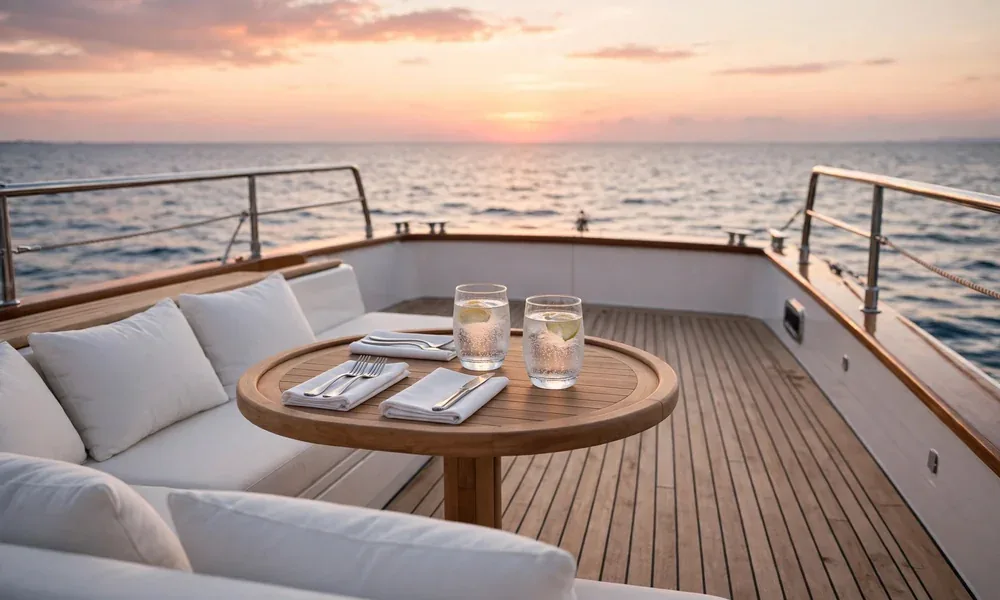
We chose companies with a long, verifiable track record, a fleet or brokerage network large enough to offer real choice, and a reputation for clear contracts. We looked at the range of yachts offered, the destinations covered, the quality of crew recruitment, and how each company handles the parts of a charter that go wrong: weather changes, mechanical problems, and itinerary changes. Published reviews and industry coverage from sources such as Boat International, Yachting World, and the companies’ own published fleet information informed the selection.
We did not rank the companies from first to last, because the right choice depends on the trip. A bareboat sailor in the British Virgin Islands needs a different company from a family booking a crewed superyacht in the Amalfi Coast. The profiles below are grouped by the kind of charter each company does best.
What to look for in a yacht charter company
Before the profiles, it helps to know what separates a strong charter company from a polished website. The points below apply whether you are booking a 45-foot catamaran or a 150-foot motor yacht, and they are worth checking for every company you consider.
The Moorings
The Moorings is one of the best-known names in bareboat and crewed yacht charter, with a large fleet of monohulls and catamarans and bases across the Caribbean, the Mediterranean, and the South Pacific. It has been operating since 1969, and its scale means it can usually offer a similar yacht in several destinations, which is useful if your dates are fixed and your destination is flexible.
What we like: a large, well-maintained fleet with consistent standards across bases, a straightforward booking process, and the option to add a skipper, a host, or a full crew to a bareboat.
What to consider: the fleet leans towards production yachts rather than one-off luxury builds, so travellers looking for a highly individual yacht may find the selection familiar rather than distinctive. Peak-season weeks in the Caribbean and the Mediterranean book early, and the most popular catamarans often go months ahead.
Sunsail
Sunsail runs a large bareboat fleet with a strong presence in the Mediterranean and the Caribbean, and it has long been a favourite of sailors who want a well-run boat without a crew. Its fleet is built around modern monohulls and catamarans, and its bases are set up for quick turnarounds, so a charter week starts on time and with a proper handover.
What we like: consistent fleet quality, clear pricing, and flotilla sailing for groups that want company and support without giving up independence.
What to consider: Sunsail is at its best for sailors. Travellers who want a fully crewed experience with a chef and a host will find more choice elsewhere, and the yachts are practical rather than opulent.
Dream Yacht Charter
Dream Yacht Charter operates one of the largest charter fleets in the world, with bases in more than 40 destinations. Its range runs from bareboat sailing yachts to crewed catamarans, and it has expanded steadily into the South Pacific, Southeast Asia, and the Indian Ocean, where some of the larger operators have a thinner presence.
What we like: the breadth of destinations is genuinely wide, and the company offers a good range of crewed catamarans for travellers who want space, stability, and a crew without stepping up to superyacht prices.
What to consider: with a fleet this large, the experience can vary between bases, so read recent reviews for the specific base you are booking from, and check the age and condition of the exact yacht offered, not just the model.
Fraser Yachts
Fraser is a full-service superyacht brokerage with a history stretching back to 1947. It arranges crewed charters on some of the largest and most luxurious yachts available, and its brokers handle the whole process, from matching a yacht and crew to the itinerary, to arranging provisioning, water toys, and shore excursions.
What we like: deep experience with large yachts, strong crew recruitment, and brokers who understand the details that matter on a superyacht charter, from cabin layout to the chef’s style.
What to consider: this is a premium service for premium budgets. If your charter is a mid-size catamaran rather than a superyacht, a fleet operator will usually be a better fit and better value.
Burgess
Burgess is one of the most established names in yachting, with a large charter fleet and offices in the key yachting centres of Europe, the United States, and Asia. It covers the full range of superyacht charter, and its brokers are known for careful matching: the right yacht, the right crew, and the right itinerary for the guests on board.
What we like: a large and varied fleet, strong coverage of the Mediterranean and the Caribbean, and a reputation for discretion and professionalism that has kept the company at the top of the brokerage world for decades.
What to consider: as with all the large brokerages, the service is built around superyacht budgets. Travellers booking their first charter may find the process more formal than a fleet operator’s, though the care is part of what you are paying for.
Northrop & Johnson
Northrop & Johnson has been in yachting since 1949 and offers a large charter fleet across the Mediterranean, the Caribbean, and the United States. Its brokers work closely with yacht owners and crews, and the company has a strong presence in the American market, including Florida, the Bahamas, and New England.
What we like: strong American coverage, a good range of motor yachts and sailing yachts, and brokers who know the Bahamas and the Florida coast particularly well. The company also publishes detailed crew and yacht information, which helps with the matching process.
What to consider: the fleet is broad, so the quality of the experience depends heavily on the specific yacht and crew. Take the time to review the crew profiles and the yacht’s recent refit history before committing.
Y.CO
Y.CO is a modern superyacht brokerage with offices in Monaco, London, and other yachting hubs. It has built a reputation for a younger, more design-led approach, and its charter fleet includes some of the most striking new yachts on the market, alongside established favourites.
What we like: a fresh, well-curated fleet, strong design sensibility, and a team that is comfortable arranging the extras that make a charter feel personal, from onboard events to unusual itineraries.
What to consider: Y.CO’s fleet is weighted towards larger yachts, so it is best suited to travellers booking at the top end of the market. Smaller parties may find better value with a fleet operator or a mid-size brokerage.
Simpson Marine
Simpson Marine is the leading yacht brokerage in Asia, with offices across the region, and it has become an important name for charters in Thailand, Indonesia, and the wider Asia-Pacific. For travellers who want to charter beyond the Mediterranean and the Caribbean, it offers local knowledge that the European and American brokerages cannot match.
What we like: unmatched regional expertise in Asia-Pacific, strong relationships with local crews and marinas, and a growing charter fleet that includes yachts specifically set up for cruising in tropical waters.
What to consider: the fleet is smaller than the big European brokerages, and the charter season in Southeast Asia runs to different rhythms, so plan well ahead and be flexible about dates.
How yacht charters actually work
A yacht charter is a rental with a crew, a route, and costs beyond the headline price. Most crewed charters are priced as a weekly rate plus an advance provisioning allowance, usually around 20 to 30 per cent of the rate, which covers food, drink, fuel, and port fees. The crew spends from that allowance and accounts for it at the end of the week, returning anything unspent. Bareboat charters work differently: you pay for the yacht, and you cover fuel, food, and mooring fees as you go.
The contract is the document that protects you, and it is worth reading properly. A standard charter agreement sets out the yacht, the crew, the itinerary area, the cancellation terms, and what happens if the yacht cannot sail. Reputable companies use the industry-standard agreements and are happy to explain them.
Itineraries are usually planned with the captain once you are on board, because wind and weather decide the day. A good captain will suggest anchorages and harbours you would not have found on your own. The quieter islands often make the best charters: Canouan, for instance, is a small Grenadine island with calm anchorages and a low-key luxury feel, and our Canouan Island travel guide explains what to expect ashore before you plan a stop there.
The caveats that matter
Chartering is straightforward when you know the rules, and expensive when you do not. The table below gathers the points that catch first-time charterers out most often.
| Caveat | What it means for you |
|---|---|
| Advance provisioning allowance | Budget 20 to 30 per cent on top of the weekly rate for food, drink, fuel, and port fees. |
| Taxes and VAT | Tax treatment varies by country and flag; ask for the total including tax before you sign. |
| Crew gratuity | Customary at 10 to 20 per cent of the charter rate, at your discretion, and not usually included. |
| Delivery and repositioning fees | Starting or ending in a different port from the yacht’s base can add a significant fee. |
| Weather and itinerary changes | The captain has the final say on safety; a flexible attitude to the route is part of the deal. |
| Yacht age and condition | Ask for the yacht’s build year and last refit date, and recent photographs, not just brochure shots. |
| Cancellation terms | Deposits are often non-refundable, so check the cancellation clause and consider travel insurance. |
| Water toys and equipment | Not every yacht carries the same toys; confirm what is on board if it matters to your group. |
Checklist: booking a yacht charter
- Decide bareboat, skippered, or fully crewed before you contact companies, since it changes everything else.
- Ask for the total price including taxes, the provisioning allowance, and any delivery or repositioning fees.
- Review crew profiles and, for crewed charters, ask about the chef’s cooking style and the crew’s experience with your kind of group.
- Confirm the yacht’s age, last refit, and cabin layout, and ask for recent photographs.
- Read the charter agreement and cancellation terms in full before paying a deposit.
- Plan the itinerary loosely and leave room for the captain’s advice on weather and anchorages.
Frequently asked questions
How much does a yacht charter cost?
There is no single answer, because the price depends on the yacht’s size and age, the season, the destination, and the crew. A bareboat catamaran in the Caribbean can start in the low thousands per week, while a large crewed superyacht in the Mediterranean in high season can run into six figures. Always ask for the total cost, including the provisioning allowance and taxes.
Do I need sailing experience to charter a yacht?
Only if you are booking a bareboat. For a bareboat charter, the company will ask for evidence of your sailing experience and qualifications. For a crewed charter, no experience is needed at all: the captain and crew handle the yacht, and your job is to enjoy it. Many first-time charterers choose a crewed catamaran for exactly this reason.
What is included in the charter price?
On a crewed charter, the weekly rate usually covers the yacht, the crew, and the use of onboard equipment. Food, drink, fuel, and port fees are normally covered by the advance provisioning allowance, which you pay on top. On a bareboat, the rate covers the yacht, and you pay for everything else as you go.
When is the best time to charter?
The Mediterranean season runs roughly from May to October, with June and September offering the best balance of weather and availability. The Caribbean season runs from November to April, with the winter months the busiest. Booking six to twelve months ahead gives you the widest choice, especially for popular yachts and peak dates.
Can I choose my itinerary?
Yes, within reason. You discuss your preferences with the broker before the charter and with the captain once on board. The captain will plan the route around the weather, the distances, and what your group wants to do. If you are pairing the charter with time ashore, our guide to the best luxury hotels in Santorini is a good place to start for a Mediterranean stay before or after your week at sea.
How far in advance should I book?
For a superyacht or a peak-season week, six to twelve months is sensible, and the most sought-after yachts are often booked a year ahead. For a bareboat in the shoulder season, three to six months is usually enough. Last-minute deals do appear, but the choice is limited, and you may have to be flexible about the yacht and the destination.
The bottom line
The best yacht charter companies share the same qualities: honest pricing, well-maintained yachts, strong crews, and brokers who listen before they recommend. The Moorings, Sunsail, and Dream Yacht Charter are strong choices for independent sailors; Fraser, Burgess, Northrop & Johnson, and Y.CO lead for crewed superyachts; and Simpson Marine is the name to know for Asia-Pacific.
Take your time with the shortlist, ask the awkward questions about total cost and the crew, and read the contract before you pay. A week on the water is one of the most rewarding ways to travel, and it is worth a little extra care at the booking stage to make sure the week itself lives up to the promise.
Meet Our Experts
BrassSmile’s travel editors cover luxury travel, yachting, and island destinations, drawing on published industry coverage, fleet information, and first-hand destination research to guide readers through high-value travel decisions.
Why Trust BrassSmile
BrassSmile covers luxury travel, fashion, beauty, and lifestyle with an emphasis on practical, specific advice. We verify the details that matter, name our sources, and never accept payment for a place in a guide.
Sources
Boat International, Yachting World, The Moorings, Sunsail, Dream Yacht Charter, Fraser Yachts, Burgess, Northrop & Johnson, Y.CO, Simpson Marine.