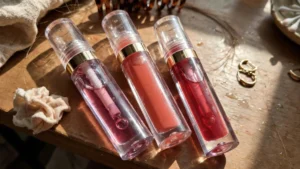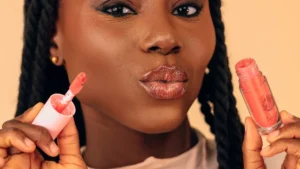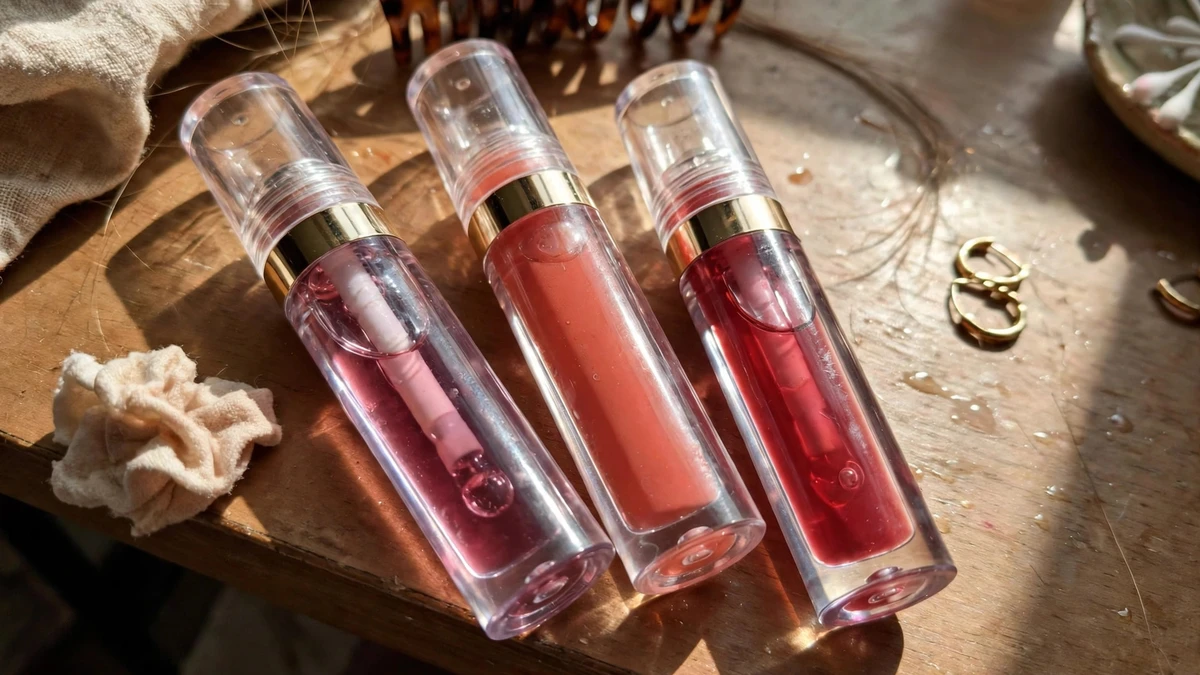
A tinted lip oil is one of the easiest lip products to wear, and one of the easiest to get wrong. Applied well, it gives you a sheer wash of colour, a healthy shine and lips that feel comfortable for hours. Applied badly, it slides off in twenty minutes, gathers in the corners, or looks patchy over dry skin. The difference is rarely the product. It is usually the preparation, the amount you use, and the order you apply things in.
Most people use far too much. A tinted lip oil is not a lipstick, and it does not need a heavy coat. One thin layer, applied to clean, dry lips and left alone for a minute, gives a better result than three layers piled on top of balm. The oil needs direct contact with the lips to grip, and the pigment needs time to settle into an even wash. Rush either step and the colour will fade unevenly or pool where you do not want it.
This guide walks through the nine steps that make a tinted lip oil look its best, from the night before you wear it to the moment you take it off. It works for sheer pinks, deep berries and everything in between, and it takes about five minutes once you know the routine.
Key takeaways
- A tinted lip oil works best on clean, dry, exfoliated lips, with no balm underneath.
- One thin layer, applied from the centre out and left to settle for a minute, gives a more even colour than several thick layers.
- Press your lips together once after applying, then wait before adding a second layer only where you need it.
- Clean up the edges with a cotton bud for a tidy finish, and reapply after eating or drinking rather than layering over a fading coat.
- No application trick fixes a formula that is too sheer for your lip colour, or lips that are cracked and flaking, so heal first and choose a shade with real pigment.
What a tinted lip oil is and why application matters
A tinted lip oil is a blend of plant oils with a small amount of pigment suspended in it. The oils soften the lips and give shine, while the pigment gives a sheer wash of colour. Because the pigment is diluted in oil rather than wax, the colour is translucent: your natural lip colour shows through, deepened and brightened, rather than covered up. That translucency is what makes a tinted oil look so natural, and it is also what makes application matter. Anything between the oil and your lips, a layer of balm, a flaky patch, a smear of foundation, changes how the colour sits and how long it lasts.
The other thing to know is that a tinted lip oil fades rather than wearing off in a line. After two to three hours the shine softens and the colour lightens, but it rarely leaves a harsh edge the way a lipstick does. That is good news, because it means reapplying is easy: a fresh thin layer over the faded one blends in without a visible join. The mistake is to keep adding layers without ever removing the old ones, which builds up a sticky, uneven coat. Remove, then reapply, and the colour stays fresh all day.
What you need before you start
You need very little: the tinted lip oil itself, a gentle lip scrub or a soft damp cloth, a plain lip balm for the night before, a lip liner in a shade close to your natural lip colour if you want definition, and a cotton bud for tidying the edges. That is the whole kit. A mirror helps, but a good tinted oil is forgiving enough to apply without one once you know the routine.

Choose your shade before you start, and test it on your lips rather than your hand. A shade that looks pale in the tube can turn surprisingly bright once it warms up, and a shade that looks deep can disappear on naturally dark lips. If you are choosing between two shades, pick the one closer to your natural lip colour for daytime, and keep the bolder one for evenings. Our guide to how to use a lip oil covers the plain, untinted oils too, which are useful to know about if you want a colour-free base layer on very dry days.
The 9 steps to applying a tinted lip oil
Exfoliate gently the night before
What to do: Use a gentle sugar scrub or a soft damp cloth on your lips the evening before, with light circular movements for about thirty seconds. What to avoid: Scrubbing hard, using a rough brush, or exfoliating on the same morning you apply colour. Best for: Flaky or rough lips that make colour look patchy. Time needed: One minute. Standout tip: Follow with a thick layer of plain balm overnight, so the lips are smooth and hydrated by morning.
Exfoliating the night before gives your lips time to recover. A same-morning scrub can leave lips slightly raw, which makes the oil sting and the colour catch unevenly.
Start with clean, dry lips
What to do: In the morning, wipe your lips with a clean, dry cloth or a splash of water, then pat them completely dry. What to avoid: Applying oil over toothpaste residue, foundation, or a layer of balm. Best for: Everyone, every time. Time needed: Thirty seconds. Standout tip: If you have just brushed your teeth, wait five minutes, because toothpaste residue makes oil slide off.
Clean, dry lips are the single most important step. The pigment needs direct contact with the lips to grip, and any barrier, even a thin layer of balm, will cut the wear time in half.
Blot away any balm
What to do: If you used balm overnight, blot it off with a tissue in the morning and let your lips breathe for a minute. What to avoid: Applying the oil directly over a thick balm layer, or skipping this step because your lips feel dry. Best for: Dry lips that need overnight balm. Time needed: Thirty seconds. Standout tip: If your lips feel tight after blotting, wait two minutes; they usually settle on their own.
This step feels wrong if your lips are dry, but it is what makes the colour last. Balm stops the pigment from gripping, and the colour slides off within the hour.
Line your lips first if you want definition
What to do: If you want a sharper edge, trace your lip line with a liner in a shade close to your natural lip colour, then soften it with a fingertip. What to avoid: A liner much darker than your lips, or a hard, unblended line. Best for: Mature lips, or anyone wearing a deeper berry shade. Time needed: One minute. Standout tip: Fill in the whole lip lightly with the liner for extra staying power under the oil.
Liner is optional, but it is the easiest way to stop a tinted oil from feathering into fine lines. A soft, blended line gives definition without looking drawn on.
Apply one thin layer from the centre out
What to do: Wipe excess oil off the applicator on the rim of the tube, then apply one thin layer starting at the centre of the lower lip and working outwards. What to avoid: Loading the applicator with product, or starting at the corners, where oil pools. Best for: Every shade, every time. Time needed: Thirty seconds. Standout tip: Use the flat side of the doe-foot applicator for the lower lip and the tip for the cupid’s bow.
One thin layer is enough for most tinted oils. The colour looks sheer at first and deepens as it settles, so judge it after a minute rather than immediately.
Press your lips together once, then wait
What to do: Press your lips together gently, once, to spread the oil evenly, then leave it alone for a full minute. What to avoid: Rubbing your lips together repeatedly, which pushes the oil to the edges, or talking and drinking straight away. Best for: An even, natural-looking wash of colour. Time needed: One minute. Standout tip: Use the waiting minute to finish the rest of your makeup, so you are not tempted to touch your lips.
That one minute matters. The oil needs time to settle and the pigment needs time to grip. Drinking or eating during that minute will wipe the colour off before it has set.
Add a second thin layer only where you need it
What to do: After a minute, check the colour in a mirror and add a second thin layer only to the centre of the lips, where colour fades first. What to avoid: Re-coating the whole lip, or adding a third layer. Best for: Deeper shades and evenings out. Time needed: Thirty seconds. Standout tip: A second layer in the centre only gives a soft, ombre effect that looks like a natural flush.
Two thin layers, with a minute between them, give more colour and better wear than one thick layer. A third layer adds nothing except stickiness, so stop at two.
Clean up the edges with a cotton bud
What to do: Run a dry cotton bud along the outside of your lip line to remove any oil that has crept beyond it. What to avoid: Using a wet cotton bud, which smears the colour, or pressing hard, which removes colour from the lips themselves. Best for: Bold shades and anyone who wants a tidy finish. Time needed: Thirty seconds. Standout tip: Keep a cotton bud in your bag for touch-ups through the day.
This step separates a polished look from a hasty one, and it takes less than a minute. A dry cotton bud picks up stray oil cleanly without disturbing the colour.
Reapply after eating, and remove it properly at night
What to do: After a meal, blot your lips with a tissue to remove the faded coat, then apply one fresh thin layer. At night, remove the oil with a gentle makeup remover or micellar water, then apply plain balm. What to avoid: Layering fresh oil over a faded, patchy coat, or sleeping in the oil. Best for: All-day wear and healthy lips. Time needed: One minute to reapply, two minutes to remove. Standout tip: A thin layer of balm over the oil at night is not needed; plain balm on clean lips works better.
Removing the old coat before reapplying keeps the colour looking fresh rather than built up. At night, leftover pigment and oil can dry the lips out if it is not cleaned off.
Which shade and finish to choose
Pale lips suit sheer pinks and soft roses, which read as a natural flush. Deeper lips need a berry or plum with real pigment, because a sheer pink will disappear. If you are choosing between two shades, test both on your lips, not your hand, and wear each for an hour before deciding. The shade that still shows after an hour is the right one. For very dry lips, a richer, more cushioned oil such as a jojoba-based one will feel better than a light, glossy one, and our roundup of the best lip oils for dry lips covers the most caring formulas if your lips need extra help.
Finish matters too. A high-shine oil looks fuller and more youthful, but it transfers onto cups and fades faster. A softer, satin finish lasts a little longer and looks more polished for work. Neither is better in general; the right one depends on your day. Keep a glossy one for evenings and a satin one for the office, and you will use both more than you would use either one alone.
The caveats that matter
The most common problem is colour that vanishes. If an oil fades within half an hour, the pigment load is probably too low for your lip colour, or you applied it over balm. Try it on clean, dry lips with two thin layers and a minute between them. If it still disappears, choose a deeper shade or a stain hybrid instead.
| Detail | What is known |
|---|---|
| Best surface | Clean, dry, exfoliated lips with no balm underneath |
| How much to use | One thin layer, then a second only in the centre if needed |
| How long to wait | One full minute after applying before eating or drinking |
| How long it lasts | Two to three hours of shine; less if applied over balm |
| How to reapply | Blot off the old coat first, then apply one fresh thin layer |
| How to remove it | Gentle makeup remover or micellar water, then plain balm |
| What to avoid | Thick layers, balm underneath, and rubbing lips together repeatedly |
| What it cannot fix | A formula too sheer for your lip colour, or cracked, flaking lips |
If your lips are cracked, bleeding or very sore, skip tinted products entirely until they heal. Colour will catch on the cracks and look worse, not better, and the fragrance in many oils can sting. Heal first with plain balm, then return to colour. Our guide to lip exfoliation at home explains how to smooth lips safely without making them worse, which is the foundation every tinted product depends on.
Checklist: applying a tinted lip oil well
Run through these checks the first few times, until the routine becomes habit.
- Exfoliate the night before, and follow with plain balm overnight.
- Start with clean, dry lips, and blot away any balm in the morning.
- Apply one thin layer from the centre out, with the applicator wiped of excess.
- Press your lips together once, then wait a full minute before judging the colour.
- Add a second thin layer only in the centre, and tidy the edges with a dry cotton bud.
- Blot off the old coat before reapplying, and remove the oil properly at night.
Frequently asked questions
Should I apply lip balm before a tinted lip oil?
No, not directly before. Balm stops the pigment from gripping the lips, so the colour fades much faster. Use balm the night before, blot it off in the morning, and apply the oil to clean, dry lips.
How many layers of tinted lip oil should I use?
One thin layer is enough for most people. A second thin layer in the centre of the lips adds depth, but a third layer rarely helps and usually just adds stickiness. Two thin layers with a minute between them give better colour and wear than one thick layer.
Why does my tinted lip oil gather in the corners of my mouth?
Usually because too much product was applied, or the lips were rubbed together repeatedly. Use less product, start from the centre rather than the corners, and press your lips together only once.
Can I wear a tinted lip oil under a face mask?
You can, but expect it to transfer. A tinted oil is not mask-proof, and the warmth and friction inside a mask will fade it quickly. For a masked day, a lip tint is a better choice, or skip colour and use a plain balm instead.
How do I stop a tinted lip oil from feathering into fine lines?
Line your lips first with a liner close to your natural lip colour, softened with a fingertip, and use a thinner layer of oil. A satin-finish oil feathers less than a very glossy one.
Is it safe to sleep in a tinted lip oil?
It is not a good idea. Leftover pigment and oil can dry the lips out overnight, and the colour can transfer onto bedding. Remove it with a gentle makeup remover or micellar water, then apply plain balm on clean lips before bed.
The bottom line
Applying a tinted lip oil well is a small routine with a large payoff: exfoliate the night before, start with clean, dry lips, use one thin layer from the centre out, wait a minute, and tidy the edges. That is the whole method, and it works for every shade from a sheer pink to a deep berry.
The product matters less than the preparation. A well-applied drugstore oil will look better than a luxury oil piled onto balm over flaky lips. Learn the routine once, and every tinted lip oil you buy from now on will look better, last longer, and feel more comfortable.