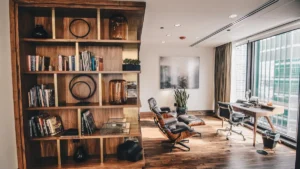
A luxury library is not the room with the most books in it. It is the room where reading feels inevitable — where the chair is waiting, the light falls on the page, and every spine earns its place. That feeling is not reserved for grand houses. It comes from decisions in the right order: collection, room, shelving, chair, light and climate.
This guide works through each layer in turn, in the spirit of 2027 interiors: warm wood, built-in joinery, layered warm light, collections edited like a gallery. A library is the most personal room in a house — nobody else’s collection would look like yours. The kitchen feeds the household and the living room hosts it, but the library belongs to the reader.
Before you buy a single shelf, be honest about how the room will be used. Some libraries are working rooms, with a desk and reference books within reach. Some are evening rooms, built around one deep chair and a lamp. Some are family rooms, where children pull picture books off low shelves. Each can be luxurious, but each needs different shelving, seating and light. What they share is discipline: a plan for the books, a chair worth sitting in for two hours, good light, and air that treats paper kindly.
Key takeaways
- Count the collection first: measure your books, leave a fifth of the shelving empty, and plan for new arrivals.
- Build shelves 25 to 30 centimetres deep, adjustable, with spans under 90 centimetres so they never sag.
- Put the reading chair first: a deep seat, a warm lamp, and a small table within reach decide whether the room gets used.
- Protect books from sun, damp and dust, with UV-filtered glazing and humidity near 40 to 50 percent.
- Style shelves like a collector: group by subject, leave breathing room, and let a few objects do the talking.
Start With the Collection, Not the Shelves
Every luxury library is built around an inventory, not a shopping list. Before you draw a shelf, count what you own and sort it honestly. Gather them all and lay them into piles by subject: fiction, history, art, cookbooks, children’s books, reference. You will be surprised twice: first by how many you have, then by how many you will never read again. A luxury library is a curated room, and curation means letting go of duplicates, damaged paperbacks and gifts kept out of politeness.
Once the keepers are counted, measure them. Most novels sit comfortably on shelves 25 to 30 centimetres deep with the same clear height. Art books and atlases need 35 to 40 centimetres of depth and taller bays — measure your largest volumes first. A 90-centimetre shelf holds roughly 25 to 30 medium books. Add room to grow: leave about a fifth of every run empty.
Choose the Spot — Quiet, Stable, Out of the Sun
The best room for a library is the quietest in the house, and the most stable. Books are organic: paper, leather and cloth react to heat, damp and light, and age fastest where conditions swing. Avoid basements, which risk damp and flooding, and attics, where summer heat and winter cold punish bindings. The ideal spot is an interior room with a shaded aspect and steady heating — a spare bedroom, a wide landing or a study.
If the library must share a room, give it architecture, not just furniture. A wall of built-in shelving, a change in paint colour and a rug can turn one end of a room into a library that feels deliberate. Our guide to creating a luxury living room follows the same thinking — the room is zoned before it is furnished. Books absorb sound, so shelves wrapping two walls hush the room.
Design the Shelving Like Architecture
The great libraries are built of joinery, not furniture. Shelving should be drawn as part of the room — cornices, pilasters, a plinth at the base and a rhythm of bays that suits the wall. Oak, walnut and mahogany age gracefully and carry the weight, while painted joinery in deep green, oxblood or ink blue gives a modern library its drama. Whatever the finish, shelves must be stiff enough not to bow. Keep spans under 90 centimetres, use shelves at least 18 millimetres thick, and make them adjustable.
Height is a design decision, not an accident. Floor-to-ceiling shelving, 240 to 270 centimetres tall, makes the most of a small room and gives a library its grandeur, but it needs a way to reach the top: a rolling ladder on a brass rail is the classic answer. Either way, anchor every tall unit to the wall with straps fixed into studs — a loaded bookcase is heavy and can tip. Plan bays around the books: tall bays for art books, short runs for paperbacks.

Library Decisions at a Glance
| Decision | What works best | Why it matters |
|---|---|---|
| Shelf depth | 25 to 30 cm; 35 to 40 cm for art books | Books sit flush |
| Shelf height | 25 to 30 cm clear; taller bays for folios | One large book sets bay height |
| Shelf span | Under 90 cm; shelves at least 18 mm thick | Long shelves sag under hardcovers |
| Daily reach zone | 75 to 150 cm off the floor | Everyday reads stay in reach |
| Reading light | 300 to 500 lux; lamps at 2700K to 3000K | Bright enough to read by, warm enough to relax |
| Humidity | 40 to 50 percent relative humidity | Damp breeds mould; dry air makes paper brittle |
| Temperature | 18 to 22 degrees Celsius, steady | Stability slows ageing |
| Growth space | A fifth of the shelving left empty | No empty shelf, no room to grow |
Build the Reading Corner — the Chair Decides Everything
A library without a good chair is a bookshop. The chair is where the room is actually used, so it deserves the same attention as the shelving. Choose a deep, upright armchair rather than a sprawling sofa: you need to sit up to read, with your back supported. Leather ages beautifully; velvet reads rich and warm; bouclé softens a modern room. Sit in it properly before you buy, book in hand, for longer than feels polite.
Place the chair where the light is kindest. A window to the side gives daylight without glare; a window behind the chair throws your shadow across the book. Sit at an angle to the shelves, close enough to reach for a book without standing, with a small table beside you. The same comfort-first thinking shapes our guide to creating a luxury bedroom — the room is designed around rest — and the library chair earns the same care. If it is also a working room, add a desk near the window.
Light It in Layers, and Guard the Books From It
Light is the library’s great contradiction: readers need plenty of it, and books need protection from it. Daylight fades spines and yellows pages, and the damage is cumulative — a summer of afternoon sun does more harm than a decade of lamplight. So control the daylight first. UV-filtering film, lined curtains and blinds protect the collection while the room still feels bright. If the room has a large window, let it light the chair, not the shelves.
Then layer the artificial light in threes. A floor or table lamp at 2700K to 3000K, positioned over your shoulder so light falls on the page rather than into your eyes, gives roughly 300 to 500 lux on the book. Shelf lighting comes next — slim LED strips or small picture lights, warm and low in heat, so you can read spines at night. The third layer is ambient: a dimmable ceiling light or sconces.
Protect the Books — Climate, Dust and Time
A luxury library is a preservation project as much as a design project. Hold the room at 40 to 50 percent relative humidity and 18 to 22 degrees Celsius, steady through the seasons, and most books will age gracefully for decades. A small hygrometer tells you the truth — above 60 percent, use a dehumidifier; below 30 percent, a humidifier keeps bindings from cracking.
Dust is the slow enemy, and the cure is access. Design the room so every shelf can be reached, and dust the tops of the books with a soft brush a few times a year. Store books upright, not leaning, and use bookends that actually hold.
Style It Like a Collector, Not a Warehouse
Once the shelves are built and the books are in, styling turns a storage wall into a luxury library. Group books by subject or by mood rather than by height alone — travel writing, poetry, cookbooks. Colour can guide the eye: some collectors arrange by colour, others prefer mixed spines. Either works if it is deliberate. What does not work is randomness that looks accidental.
Objects earn their place by meaning something. A brass telescope, a leather-bound atlas, a vase from a trip: one or two per bay, each with space around it. Our guide to creating a luxury kitchen makes the same point about restraint in another room — the work disappears into the design — and the library rewards the same discipline: edit ruthlessly, and the room feels collected rather than cluttered.
Your Luxury Library Checklist
- Inventory counted and sorted by subject; books you will never read again let go; a fifth of the shelving left empty.
- Room chosen for quiet, stable conditions, out of direct sun and away from damp.
- Shelving built as joinery, 25 to 30 centimetres deep, spans under 90 centimetres, every tall unit anchored.
- Reading chair tested with a book in hand, lamp over the shoulder, small table and footstool within reach.
- Climate checked — humidity 40 to 50 percent, temperature 18 to 22 degrees — rare volumes behind glass.
- Shelves styled like a collector: grouped by subject, a few meaningful objects, breathing room between the bays.
Frequently Asked Questions
How deep should luxury library shelves be?
Most books need shelves 25 to 30 centimetres deep, which fits novels and standard hardcovers. Art books and folios need deeper bays of 35 to 40 centimetres and taller heights, so measure your largest volumes first.
How much does it cost to create a luxury library?
A modest library — painted built-ins along one wall, a good second-hand armchair and a proper lamp — can come together for the price of a single piece of statement furniture. Bespoke hardwood joinery with a rolling ladder runs into the price of a small kitchen. Spend on the joinery and the seat.
Can I create a luxury library in a small room or apartment?
Yes — a small library is often the most luxurious, because every decision has to earn its place. One wall of built-ins, a single deep chair, a floor lamp and a rug is a complete library. Use the height and keep the palette warm and restrained.
How do I stop books from fading in sunlight?
Keep shelves out of direct sun, fit UV-filtering film to the glass, and use lined curtains or blinds on the sunniest windows. Sun damage is cumulative, so a book in afternoon light for one summer will already show it.
What is the best lighting for reading in a library?
A dedicated reading lamp beside the chair, warm white at 2700K to 3000K, aiming for roughly 300 to 500 lux on the book. Add slim LED shelf lighting so spines can be read at night, and a dimmable ambient layer for evenings.
How do I organise books in a home library?
Sort by subject first, then by author within each subject, and keep the books you reach for most between knee and shoulder height. Leave a fifth of the shelving empty for growth.
The Bottom Line
A luxury library is not bought; it is built, book by book, decision by decision. Count the collection, choose a quiet room, build shelving like architecture, put a good chair at the centre, and keep the air kind to paper. Do those things in that order and the room will feel luxurious at any budget.
Note: Measurements and climate ranges in this guide are general starting points for a home library; check the needs of rare volumes with a conservator, and have tall shelving professionally anchored.