

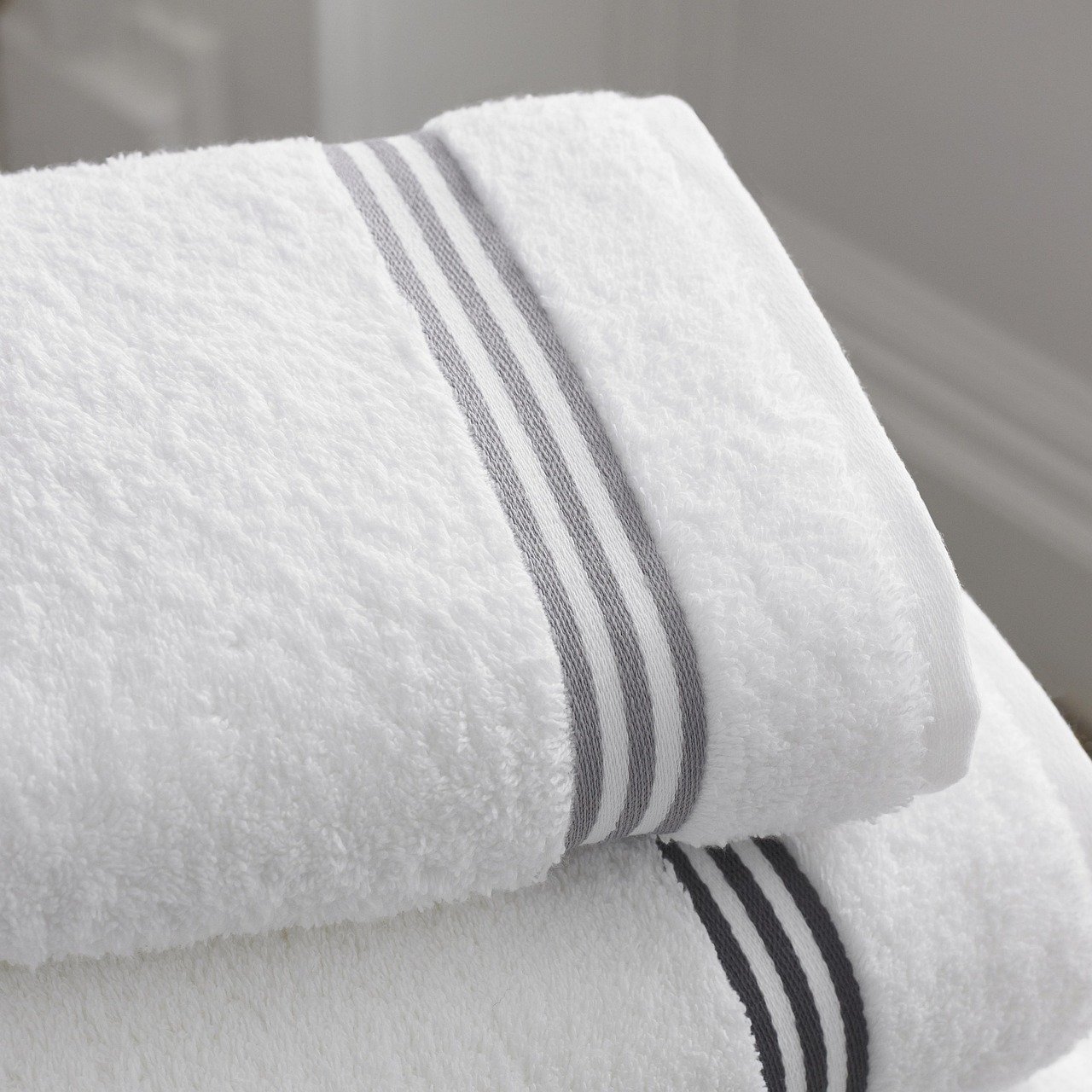

What makes a bath towel good? It is not the price tag, the fluffy feel in the store, or even the word “luxury” printed on the label. The best bath towels balance absorbency, drying speed, durability, and how they feel against your skin after a shower. Get that balance right and a towel can last years. Get it wrong and you end up with a heavy, scratchy rectangle that milks the dryer and still leaves you damp.
This guide breaks down what actually matters: weight, cotton type, weave, certifications, and the care habits that separate a towel that lasts five years from one that turns stiff in six months. There is no single “best” towel for everyone, but there is a best towel for how you live.
Start With Weight, the Number That Tells You the Most
GSM stands for grams per square metre, and it is the standard weight measure for terry towelling. Most everyday towels sit somewhere between 400 and 600 GSM. Anything at 600 GSM or above gets marketed as “hotel” or “plush.”
Here is the trade-off nobody puts on the hang tag: heavier towels absorb more but dry more slowly. A 700 GSM towel feels wonderful on the first use and can still be damp twelve hours later in a steamy bathroom. That lingering moisture is what makes towels smell musty. So the highest number is not automatically the best number.
| GSM range | Feel | Absorbency | Drying speed | Best for |
|---|---|---|---|---|
| 300–400 | Light, slightly crisp | Moderate | Fast | Gym bags, guest baths, humid climates |
| 400–500 | Soft but substantial | Good | Moderate | Most households, year-round use |
| 500–600 | Plush, spa-like | High | Slower | People who love a thick towel |
| 600+ | Very dense and heavy | Very high | Slowest | Cool, dry climates with good ventilation |
For most people, 450–550 GSM is the sweet spot. It feels generous without turning bath time into a drying-time problem. If your bathroom has no window and the fan is decorative, lean lighter.
Absorbency Depends on More Than Weight

It is tempting to assume a heavier towel absorbs more, full stop. Textile reality is messier. Loop density, yarn twist, and fibre type all shape how fast a towel drinks up water.
Loosely twisted, low-twist yarns absorb quickly but shed more lint over their lifetime. Tightly twisted yarns feel smoother and last longer but take a few washes to reach full absorbency. This is why a brand-new towel often performs worse than the same towel after five laundry cycles. The fibres need to relax and the manufacturing finishes need to wash out.
Zero twist towels use untwisted loops and are marketed for softness and quick drying. They feel cloud-like out of the box. The trade-off is durability: those loose loops can snag and flatten faster than twisted pile. If you buy zero twist, treat it gently and skip the fabric softener entirely.
Combed cotton has short fibres removed before spinning, which makes the yarn smoother and less prone to pilling. Ring-spun yarn is smoother and stronger than open-end yarn. Neither term is regulated marketing fluff; both describe real processing steps. They are worth paying a little extra for.
Cotton Labels: What They Promise and What They Don’t
Walk down any towel aisle and you will see Egyptian cotton, Turkish cotton, and Supima cotton. These are origin and variety labels, not performance guarantees.
- Egyptian cotton refers to Gossypium barbadense grown in Egypt.
- Turkish cotton refers to long-staple cotton grown in Turkey.
- Supima is a licensed US trademark for American Pima cotton, administered by the Supima organisation.
Long-staple cottons can spin into finer, stronger yarns, which is genuinely nice. But a careless manufacturer can turn great fibre into a mediocre towel. The label tells you where the cotton came from, not how well the towel was made. Treat it as one signal among several, not a certificate of quality.
The same caution applies to “hotel quality.” It is not a regulated term. There is no standard definition and no one checking. A towel can be called hotel quality at 350 GSM or 800 GSM. Ignore the phrase and read the specs.
Certifications Worth Checking
Two certification schemes are genuinely useful when you are comparing towels, especially for sensitive skin or for children.
OEKO-TEX Standard 100 tests textiles for harmful substances. GOTS, the Global Organic Textile Standard, certifies organic fibre content and processing. Both schemes publish searchable certificate databases, so you can check a claim rather than trust it. If a brand claims OEKO-TEX certification and you cannot find the certificate, that is a useful data point on its own.
Colourfastness and shrinkage are also testable. Standard test methods exist for colourfastness to washing and for dimensional change after laundering. You will not run these tests at home, but you can ask a retailer for test reports, and a brand that has them ready is usually a brand that takes quality control seriously.
Weave, Pile, and the Feel Test
Terry cloth is the default for bath towels because the loops create surface area that traps water. Within terry, you will meet a few constructions:
- Standard terry. Looped pile on both sides. The reliable all-rounder.
- Zero twist. Untwisted loops, very soft, faster drying, less durable.
- Waffle weave. Flat, textured, quick-drying, less absorbent per gram. Great for humid bathrooms and travel.
- Velour or sheared terry. Loops cut flat on one side for a smooth finish. Feels silky, absorbs a little less than looped terry.
A practical in-store test: scrunch the towel in your hand. It should feel substantial but spring back, not stay crushed. Rub the surface gently; if fibres come away on your hand, expect lint for months. Hold it up to the light; a very thin, see-through towel will not last.
Matching the Towel to Your Bathroom, Not the Other Way Around
The most common mistake people make is buying a heavy, plush towel set for a small bathroom with poor airflow. Two weeks later, the towels smell like a basement and get blamed for being low quality. They were not low quality. They were wrong for the room.
Practical rules that actually work:
- Small bathroom, no window: choose 400–500 GSM or a waffle weave. Buy two sets and rotate so each towel fully dries between uses.
- Large bathroom with ventilation: 550–650 GSM is comfortable and will dry fine.
- Shared household: buy identical towels in one colour family so nobody argues about whose towel is whose, and so a lost towel does not orphan a set.
- Guest bathroom: lighter towels that dry fast between occasional visits.
And a small detail that pays off: hang towels spread out, not bunched on a hook. Airflow does more for freshness than any spray.
Care Habits That Decide How Long Towels Last
A well-chosen towel can still fail in the laundry. Three habits matter most.
Skip fabric softener. Softener coats fibres and reduces absorbency. It makes towels feel nice for one wash and progressively worse for fifty. If your towels feel stiff, the fix is usually less product, not more.
Do not over-dry. High heat for long cycles breaks down cotton fibres and accelerates shedding. Pull towels out slightly damp or use a lower heat setting.
Wash before first use. New towels carry manufacturing finishes and loose lint. One wash without softener gets them ready.
Also, resist the urge to wash towels after every single use if they are hung to dry properly. Two or three uses between washes is normal for most adults, and it dramatically extends the life of the fabric.
A Note on the Ritual Around Bathing
The towel is only part of the experience, and the way people talk about baths reveals how much the small stuff matters. Some people treat a long soak as a reset button, complete with scented products and a specific routine. If that is your household, it is worth knowing that detox bath recipes get more credit than the evidence supports — a warm soak is pleasant and relaxing, but it is not pulling toxins out of your body. There is also a genuinely strange corner of the internet devoted to the question of whether people actually eat bath products, which is a good reminder that marketing language around bathing is best read with a raised eyebrow.
Even the vocabulary gets complicated. If you have ever wondered whether a bathtray and a bath tray are the same thing, the confusion is common; spelling variants trip up shoppers constantly. Bathing aesthetics have also spilled over into beauty trends, including the milky pink manicure known as bubble bath nails, which borrows the exact shade of a soft, creamy towel set. Brands notice these trends too; bath-product retailing has shifted considerably, as this look at how Bath & Body Works changed after its 2021 spin-off shows.
None of that changes how a towel performs, but it does explain why the bath aisle is so crowded with promises.
How to Compare Towels Before You Buy
When two towels look identical online, these are the details that separate them:
| What to check | Why it matters |
|---|---|
| GSM figure | Sets expectations for weight, absorbency, and drying time |
| Cotton type and staple length | Long-staple spins into stronger, smoother yarn |
| Pile construction | Zero twist, combed, ring-spun all behave differently |
| Certification (OEKO-TEX, GOTS) | Verifiable safety and organic claims |
| Care instructions | A towel demanding hot washes and high heat will age fast |
| Return policy | You cannot judge absorbency until you have used it |
| Reviews mentioning shedding and shrinkage | Real-world durability signals |
If a product page lists no GSM and no fibre details, that silence is information. Move on.
Common Mistakes That Waste Money
Buying a full matching set before testing one towel is the classic error. Buy a single towel, wash it three times, and see how it behaves. Then commit.
Other frequent missteps:
- Paying a premium for “Egyptian cotton” on a towel with no weight or construction details.
- Choosing the heaviest towel available for a damp bathroom.
- Using fabric softener and then blaming the towel for feeling waxy.
- Washing at high heat every time and wondering why the edges fray.
- Assuming a high price guarantees quality when the label is vague.
Conclusion
The best bath towels are not the heaviest or the most expensive. They are the ones matched to your bathroom, your climate, and your laundry habits. Aim for 450–550 GSM for everyday use, favour long-staple cotton with combed or ring-spun yarn, check for verifiable certifications, and treat fabric softener as the enemy. Buy one towel first, test it through several washes, and only then build your set. Do that, and the towel hanging on your rail will still feel good years from now, which is a far better measure of quality than anything printed on the tag.
Frequently Asked Questions
What GSM is best for bath towels?
For most households, 450–550 GSM offers the best balance of absorbency, softness, and drying speed. Lighter towels around 400 GSM suit humid bathrooms and gym bags. Heavier towels above 600 GSM feel plush but dry slowly and can develop musty smells in poorly ventilated rooms.
Is Egyptian cotton actually better for towels?
Not automatically. Egyptian cotton is a variety grown in Egypt, and it can spin into excellent yarn, but the label says nothing about how the towel was woven or finished. A well-made towel from another long-staple cotton can outperform a poorly made Egyptian cotton towel. Look at GSM, pile type, and certifications alongside the fibre name.
How often should bath towels be washed?
Most adults can use a towel two or three times before washing, provided it is hung to dry fully between uses. Households with skin conditions, shared towels, or damp bathrooms should wash more often. Washing after every use wears towels out faster without a meaningful hygiene benefit if the towel dries properly.
Why do my towels stop absorbing water?
Fabric softener and dryer sheets are the usual culprits. They coat fibres with a waxy film that repels water. Detergent overload and over-drying compound the problem. Wash towels without softener, use less detergent, and try a lower heat setting; absorbency usually returns within a couple of cycles.
Does a higher price mean a better towel?
Not reliably. Price often reflects branding, retail margins, and packaging more than construction. A mid-priced towel with a stated GSM, long-staple cotton, and a recognised certification is frequently a better buy than a premium towel with vague labelling. Check the specs before the price tag.
What is zero twist in towels?
Zero twist means the cotton loops are left untwisted, which makes towels very soft and quick-drying. The downside is durability: untwisted loops snag and flatten more easily than twisted pile. Zero twist towels are a good choice if softness matters most, but expect a shorter lifespan than combed or ring-spun terry.














