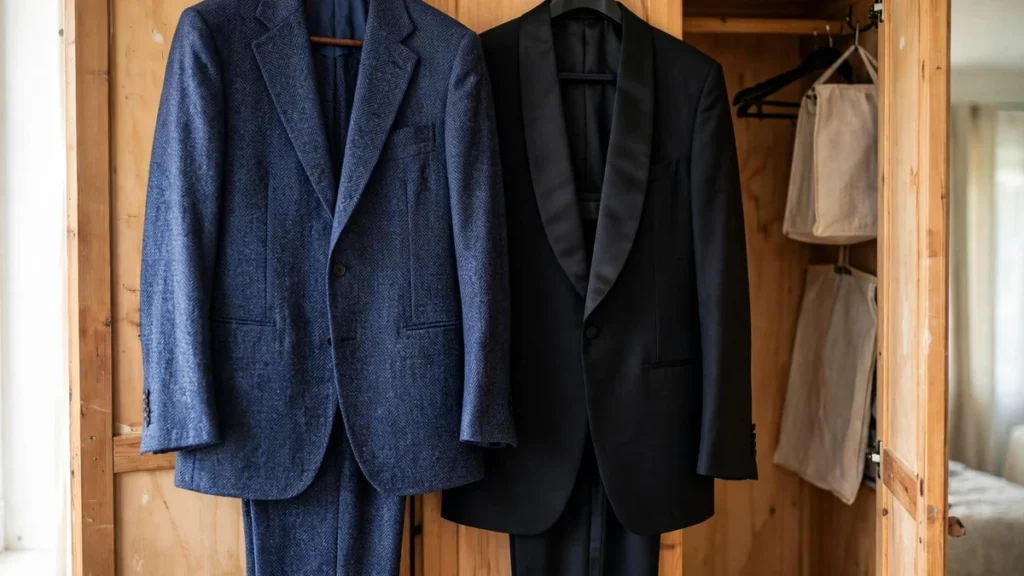
A designer suit and a tuxedo can look almost identical from across a room, and that is exactly where most men go wrong. The two are built for different evenings, different rules, and different kinds of confidence. A suit is the most versatile tailored garment you can own, while a tuxedo is a specialist made for one kind of night.
The confusion is understandable. Both have a jacket and trousers, both can be beautifully cut, and both can cost a great deal of money. The differences are in the details: the lapel, the buttons, the shirt, the shoes, and the occasion written on the invitation.
Below are nine comparisons that settle the designer suit vs tuxedo question in 2027, from fabric and lapels to price and when each one is the right choice. Each one covers what each option does well, what to watch for, and who it suits best.
Key takeaways
- A designer suit is the versatile choice: it works for weddings, work, dinners, and most formal occasions, and the jacket and trousers can be worn separately.
- A tuxedo is the specialist: satin lapels, a bow tie, and patent shoes make it unmistakably black-tie, and it should only be worn where black tie is expected.
- Fabric is the first giveaway: suits use plain wool and textured weaves, while tuxedos use satin or grosgrain on the lapels, buttons, and trouser stripe.
- Fit matters more than the label: a well-fitted mid-priced suit beats an expensive one that pulls, sags, or needs constant adjusting.
- No suit or tuxedo is a guaranteed investment, and a tuxedo bought for one wedding may sit unworn for years if your calendar has no black-tie events.
What a designer suit and a tuxedo actually are
A designer suit is a matched jacket and trousers cut from the same cloth, made by a fashion house or a respected tailor, and designed to be worn in many settings. The jacket has a notched or peaked lapel in the same fabric as the body, buttons that match the cloth, . It pairs with a dress shirt, a tie or an open collar, and leather shoes in black, brown, or oxblood.
A tuxedo, also called black tie or a dinner suit, is a more formal version of the same idea, with one clear purpose: evening events that call for black tie. Its lapels are faced in satin or grosgrain, its buttons are covered in the same shiny fabric, its trousers carry a satin stripe down the side, and it is traditionally worn with a white pleated or piqué shirt, a bow tie, a cummerbund or waistcoat, and patent leather shoes.
The practical difference is simple. A suit adapts to the occasion, and a tuxedo defines it. If it says formal, semi-formal, cocktail, or nothing at all, the suit is almost always the safer and smarter choice.
How we chose these comparisons and what to look for
Look first at the event, not the garment. The dress code on the invitation decides the question before you open your wardrobe. Black tie means a tuxedo. Everything else, from a wedding to a smart dinner to a business event, is a suit’s territory.
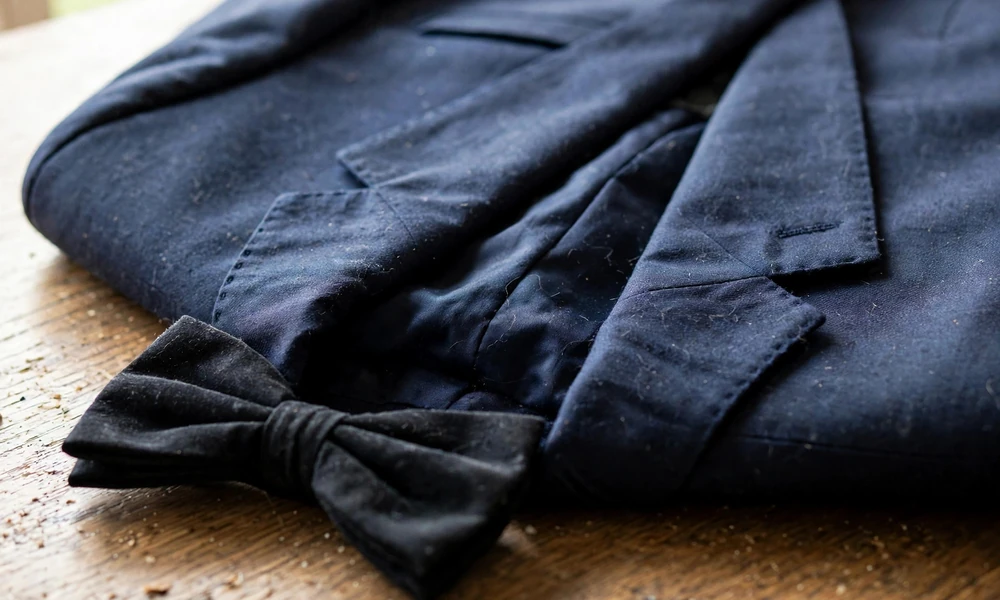
Look next at the lapel and the buttons, because those are the fastest way to tell the two apart. A suit lapel is the same cloth as the jacket, and its buttons are plain horn or corozo. A tuxedo lapel is faced in satin or grosgrain, and its buttons are covered in the same shiny material. Our guide to how to wear a necktie is useful here too, because the tie choice follows the same rule: a suit takes a tie or an open collar, while a tuxedo takes a bow tie.
Finally, look at the fit and the fabric before you look at the label. A designer name does not fix a jacket that is too long, trousers that pool at the ankle, or shoulders that extend past your own. Check that the jacket shoulder ends at your shoulder, that the trousers break once at the shoe, and that you can button the jacket without it pulling.
The 9 comparisons that matter in designer suit vs tuxedo 2027
1. Fabric and weave
What we like: A designer suit offers a wide range of fabrics, from smooth worsted wool to flannel, linen, and textured hopsack, so you can choose the weight and feel for the season. A tuxedo’s wool is usually finer and smoother, with satin or grosgrain trim that gives it a formal sheen. What to consider: Tuxedo fabric shows marks more easily, while a textured suit weave hides wear better. Best for: Suits for year-round wear; tuxedos for evening events. Fabric: Worsted wool, flannel, or linen for suits; fine barathea wool with satin trim for tuxedos. Price range: Mid-range to luxury for both. Standout feature: The satin trim is the tuxedo’s signature, and it is what makes it read as black tie.
Choose the fabric for the season: lightweight wool for spring to autumn, flannel for winter, and barathea wool with satin lapels for evening only.
2. Lapel shape
What we like: A suit’s notched lapel is the most versatile shape there is, while a peaked lapel adds formality without leaving suit territory. A tuxedo’s peaked or shawl lapel, faced in satin, is instantly recognisable and gives the outfit its evening character. What to consider: A shawl lapel is the most formal and least flexible. Best for: Notched lapels for everyday formal wear; peaked or shawl lapels for black tie. Fabric: Self-fabric for suit lapels; satin or grosgrain facing for tuxedo lapels. Price range: No price difference for the shape itself. Standout feature: The satin facing is the single clearest visual difference between the two.
The peaked lapel is the safe middle ground for a suit, and the shawl lapel is the classic choice for a tuxedo.
3. Buttons and closure
What we like: Suit buttons are plain and practical, in horn or corozo, and they let the cloth do the talking. Tuxedo buttons are covered in satin or grosgrain, which ties the whole outfit together and adds a subtle shine. What to consider: Covered buttons are more delicate and harder to replace. Best for: Plain buttons for suits; covered buttons for tuxedos. Fabric: Horn or corozo for suits; satin-covered for tuxedos. Price range: No meaningful price difference. Standout feature: Covered buttons are a small detail that quietly confirms black tie.
A single-button jacket is the most formal choice for both, while a two-button suit is the most versatile.
4. Shirt and collar
What we like: A suit takes almost any dress shirt, from plain white to pale blue to a subtle pattern, with a standard or spread collar. A tuxedo shirt is a specialist piece, usually white with a pleated or piqué front, a wing collar, and studs instead of buttons. What to consider: Wearing a normal dress shirt with a tuxedo weakens the whole outfit. Best for: Standard dress shirts with suits; pleated or piqué shirts with tuxedos. Fabric: Cotton poplin or twill for suits; cotton piqué or marcella for tuxedos. Price range: Mid-range for both. Standout feature: The wing collar and studs are what make a tuxedo shirt unmistakably formal.
A good white dress shirt works with almost every suit, while a tuxedo shirt earns its place only when black tie is on the calendar.
5. Bow tie vs necktie
What we like: A necktie gives a suit its personality, with endless options in colour, pattern, and texture. A bow tie is the tuxedo’s defining accessory, and a self-tie bow in black silk is the classic black-tie choice. What to consider: A pre-tied bow tie looks less considered, and a necktie with a tuxedo breaks the black-tie code. Best for: Neckties with suits; self-tie bow ties with tuxedos. Fabric: Silk, wool, or linen for neckties; black silk for bow ties. Price range: Mid-range for both. Standout feature: The bow tie is the tuxedo’s most recognisable detail.
Learn to tie a bow tie properly: it takes a few minutes and makes the whole outfit look intentional rather than rented.
6. Shoes
What we like: A suit works with polished leather oxfords or derbies in black, dark brown, or oxblood, and the shoe colour can follow the suit. A tuxedo calls for patent leather oxfords, which reflect the evening light and complete the black-tie look. What to consider: Patent leather looks out of place with a suit and needs regular care to avoid scuffs. Best for: Leather oxfords with suits; patent leather oxfords with tuxedos. Fabric: Calf leather for suits; patent leather for tuxedos. Price range: Mid-range to luxury for both. Standout feature: Patent leather is the shoe equivalent of the satin lapel.
Black socks with a tuxedo, socks that match the trousers with a suit, and never white socks with either one.
7. Occasion and dress code
What we like: A suit covers almost every formal occasion: weddings, dinners, work events, and smart evenings. A tuxedo is unmatched at black-tie events, galas, and formal evening weddings, where it is exactly what is expected. What to consider: A tuxedo outside black tie looks overdressed, and a suit at a black-tie event looks underdressed, so the invitation decides. Best for: Suits for weddings, work, and dinners; tuxedos for black tie only. Fabric: Any suit cloth for suits; barathea wool for tuxedos. Price range: Mid-range to luxury for both. Standout feature: The dress code on the invitation is the only rule that matters here.
When in doubt, ask the host: it is better to ask once than to spend an evening feeling like the only person who misread the room.
8. Fit and silhouette
What we like: Both a suit and a tuxedo look their best in a clean, tailored fit, with shoulders that end at your own, a jacket that buttons without pulling, and trousers that break once at the shoe. What to consider: A tuxedo is less forgiving of a poor fit, because the satin details draw the eye to every flaw. Best for: Tailored, modern fits for both; a slimmer cut for tuxedos. Fabric: Any cloth, as long as the cut is right. Price range: Mid-range to luxury, plus tailoring. Standout feature: Fit is the one thing that matters more than the label on either garment.
Budget for tailoring on top of the purchase price: a good tailor can make a mid-priced suit or tuxedo look made for you.
9. Price and value
What we like: A designer suit earns its price through versatility, since the jacket and trousers can be worn separately and the suit works for many occasions. A tuxedo earns its price through occasion, since nothing else does black tie as well. What to consider: A tuxedo is poor value if you attend one black-tie event a year, so renting is often smarter. Best for: Suits as a wardrobe investment; tuxedos for regular black-tie wearers. Fabric: Wool for both, with satin trim on the tuxedo. Price range: Mid-range to luxury for suits; luxury for tuxedos. Standout feature: Cost per wear is the honest way to judge either purchase.
A suit worn twenty times a year is good value at almost any price; a tuxedo worn once a year is not, however beautiful it is.
Which one is right for you
Start with your calendar. If you attend black-tie events at least twice a year, a tuxedo is worth owning. If black tie is a rare event, rent the tuxedo and spend your money on a better suit instead.
Next, think about your wardrobe. A navy or charcoal suit in a good wool is the single most useful tailored garment you can own. Add a second suit in a different colour or texture before you add a tuxedo. Our roundup of the best luxury fashion brands is a useful place to compare the houses that make both well, because the brands that cut a good suit usually cut a good tuxedo too.
Finally, think about comfort. A suit you can sit, eat, and dance in is worth more than a tuxedo you spend the evening adjusting. The right one feels like it was made for you, and the wrong one tells you within a minute.
The caveats that matter
Neither a suit nor a tuxedo is a guaranteed investment, and neither one fixes a bad fit, a wrong dress code, or poor grooming. A tuxedo does not make an ordinary evening formal, and a suit does not make a black-tie event less formal.
| Detail | What is known |
|---|---|
| Best for most occasions | A designer suit, which works for weddings, work, dinners, and smart evenings |
| Best for black tie | A tuxedo, with satin lapels, covered buttons, and a bow tie |
| Fastest way to tell them apart | The lapel: satin or grosgrain facing means a tuxedo |
| Shirt | Standard dress shirt with a suit; pleated or piqué shirt with a tuxedo |
| Tie | Necktie or open collar with a suit; self-tie bow tie with a tuxedo |
| Shoes | Leather oxfords with a suit; patent leather oxfords with a tuxedo |
| When to rent, not buy | A tuxedo, if you attend black tie less than twice a year |
| What matters most | Fit and the dress code on the invitation, more than the label or the price |
If you are between sizes, size up and tailor down, and if you are buying online, check the return policy before you order. A suit or tuxedo that cannot be returned is a risk, however good the price looks.
Checklist: choosing between a designer suit and a tuxedo
Use these checks before you buy, and again before the event.
- Check the invitation: black tie means a tuxedo, everything else usually means a suit.
- Check the lapel: satin or grosgrain facing is the clearest sign of a tuxedo.
- Check the fit: shoulders end at your shoulders, the jacket buttons without pulling, trousers break once at the shoe.
- Check the shirt and tie: a tuxedo needs a pleated shirt and a bow tie, not a standard shirt and necktie.
- Check the shoes: patent leather for a tuxedo, polished leather oxfords for a suit.
- Check the cost per wear: a suit worn often is good value, a tuxedo worn once a year is usually better rented.
Frequently asked questions
Can I wear a tuxedo to a wedding that is not black tie?
A tuxedo at a non-black-tie wedding looks overdressed and can make the groom’s party uncomfortable. A well-cut suit in navy or charcoal is the right choice for most weddings.
Can I wear a suit to a black-tie event?
You will look underdressed next to men in tuxedos. A very dark suit with a white shirt and a black bow tie is the closest compromise, but renting a tuxedo is the better option.
What is the difference between a tuxedo and a dinner jacket?
A dinner jacket is the jacket part of a tuxedo, often in ivory or white for warm weather, worn with black tuxedo trousers. The terms are often used interchangeably, but the dinner jacket is the warm-weather version.
Do I need a cummerbund or waistcoat with a tuxedo?
One of the two is traditional, because it covers the waistband of the trousers and the bottom of the shirt. A cummerbund is the classic choice, while a low-cut waistcoat is slightly more formal.
Can I wear a bow tie with a suit?
Yes, a bow tie with a suit is a stylish choice for a party or a creative event, but it does not turn a suit into a tuxedo. The satin lapels and covered buttons are what make a tuxedo, not the tie alone.
Should I buy or rent a tuxedo?
Buy if you attend black tie at least twice a year, because rental fees add up quickly, or rent if black tie is rare and spend the money you save on a better suit instead. A guide to power suits for women shows the same logic on the other side of the wardrobe: the versatile piece earns its price first.
The bottom line
The suit is the versatile workhorse, and the tuxedo is the black-tie specialist. Buy the suit first, buy it well, and get it tailored. Add the tuxedo when black tie becomes a regular part of your life, or rent it until then.
Choose by the invitation, not by the label, and let fit decide the final call. A well-fitted suit at a wedding and a well-fitted tuxedo at a black-tie gala both do the same thing: they let you forget about what you are wearing and enjoy the evening. That is the honest test of either one.