Who actually made the shirt you are wearing right now, and what did that person get paid for it?
Most people never think about that question. They buy the shirt, wear it, and move on. But fashion jobs are one of the largest employment categories on the planet, and the work ranges from a design studio in Milan to a sewing floor in Dhaka to a shop counter in a suburban mall. Understanding how these jobs fit together matters, whether you are hunting for a career, curious about where your clothes come from, or trying to make sense of headlines about factory safety and fair pay.
The Scale of the Fashion Workforce
The numbers are enormous and, honestly, a little slippery. The International Labour Organization estimated in 2014 that roughly 60 million people worked in the textile, clothing, leather and footwear sector worldwide, with about 40 million of them in apparel alone. Treat that as an order of magnitude rather than a precise count. Later estimates vary widely, and there is a good reason for the fuzziness: much garment work is informal and home-based, especially in South Asia, so official statistics almost certainly undercount it.
That matters for anyone researching fashion jobs. If you search for employment figures, you will find wildly different totals depending on who is counting and what they include. A home-based stitcher paid by the piece may never appear in a national labour survey at all. So when you see a headline number, ask what it leaves out.
Two Halves of the Same Industry
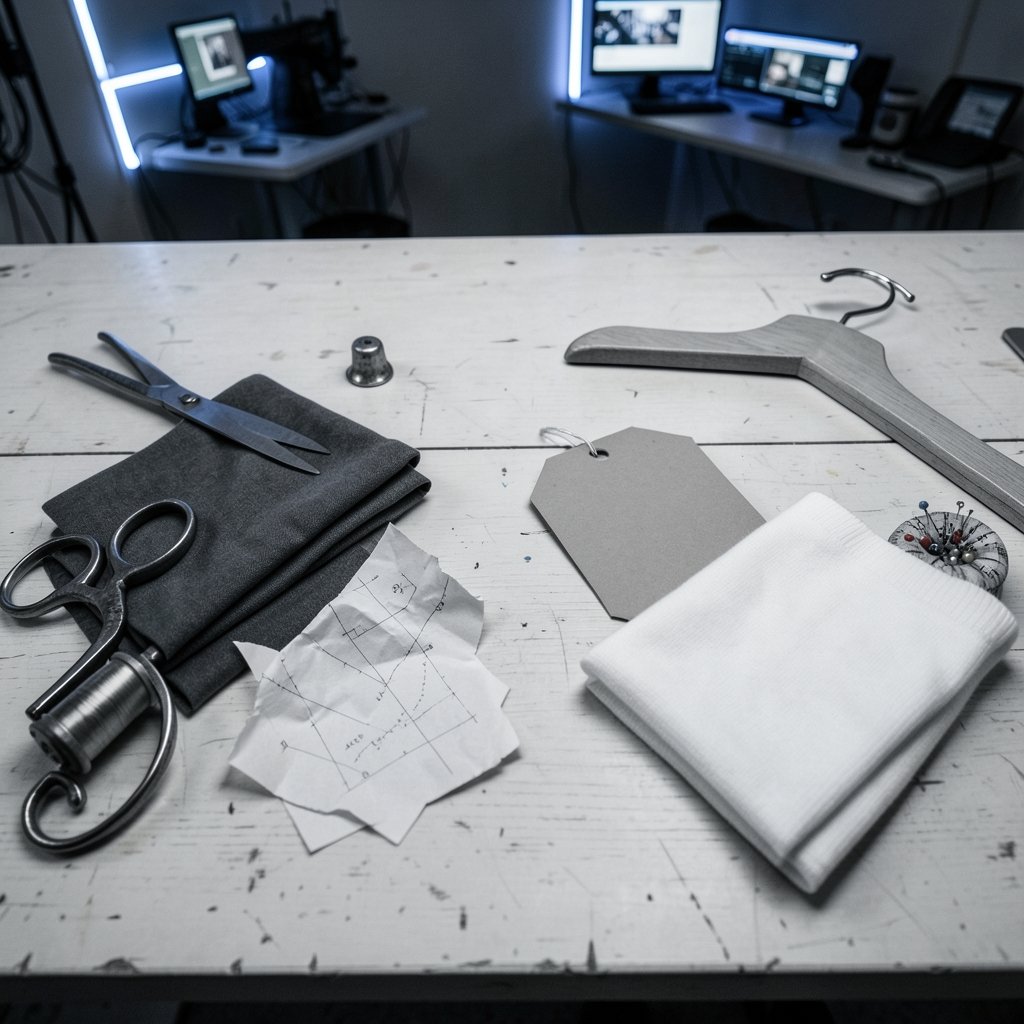
Fashion employment splits into two very different worlds, and they rarely meet.
Production jobs happen where the clothes are made. These include machine operators, cutters, pattern makers, quality checkers, pressers, and warehouse staff. The work is physical, often repetitive, and concentrated in countries with lower labour costs.
Retail and creative jobs happen closer to the customer. These include store associates, visual merchandisers, buyers, merchandisers, designers, and marketing staff. Retail is a large employer in high-income countries, though reliable current figures for fashion retail specifically are hard to pin down.
The gap between the two halves is where most of the industry’s ethical tension lives. A designer sketching in a studio and a seamstress working an overtime shift may technically be in the same business, but their day-to-day realities have almost nothing in common.
| Feature | Production roles | Retail and creative roles |
|---|---|---|
| Typical location | Factory floors, often lower-cost countries | Stores, studios, head offices |
| Pay pattern | Low relative to national averages, overtime common | Varies widely, often commission-based in stores |
| Main pressure | Speed, quotas, safety | Sales targets, seasonal peaks |
| Union presence | Variable, sometimes heavily restricted | Modest in most markets |
| Visibility to consumers | Low | High |
What Production Work Actually Pays
Wages in textiles, clothing, leather and footwear are typically low compared with national averages, and overtime is common. That finding comes from the ILO’s 2014 report on wages and working hours in these industries, and the pattern has proven stubbornly durable. Exact figures swing enormously by country, so any single global average is close to meaningless.
Here is a practical tip for anyone reading wage claims about fashion jobs: check whether the figure is a legal minimum, an actual average, or a “living wage” benchmark. Those are three different things, and campaigners, brands, and governments routinely quote whichever one suits their argument. A factory can legally comply with a minimum wage and still pay less than workers need to cover rent and food.
The other thing to watch is hours. A low hourly rate combined with heavy overtime can look like a survivable monthly income on paper while hiding brutal working conditions. When you see a monthly pay figure, ask how many hours produced it.
The Rana Plaza Turning Point
No discussion of garment work is complete without the Rana Plaza collapse. On 24 April 2013, a building housing garment factories in Bangladesh collapsed, killing more than 1,100 workers. It remains the deadliest accident in the history of the garment industry.
The disaster changed the conversation. In May 2013, the Bangladesh Accord on Fire and Building Safety was signed, a legally binding agreement between brands, retailers, unions and NGOs covering factory inspections and remediation. It was later succeeded by the International Accord, though its current scope and signatory list are worth checking directly rather than trusting a secondhand summary.
What did this actually change on the ground? Factory inspections became routine where they had not been before. Remediation—actually fixing the problems found—became a contractual obligation rather than a suggestion. For workers, the practical effect was fewer death traps and more accountability. For brands, supply chain risk became a legal matter as well as a public relations concern.
The lesson for anyone interested in fashion jobs is uncomfortable but useful: safety improvements came from binding agreements with consequences, not from voluntary pledges. That distinction shows up again and again in labour history.
How Tangled Supply Chains Hide the Truth
A single garment can cross several countries before it reaches a hanger. Fibre might come from one place, yarn from another, fabric from a third, cut-make-trim from a fourth, and finishing somewhere else entirely. The OECD has documented this fragmentation in its due diligence guidance for the garment and footwear sector, first published in 2017 and endorsed by OECD adhering countries.
That guidance sets out a five-step due diligence framework for companies. In plain terms, it asks businesses to identify where their materials come from, spot the risks, act on them, track whether the action worked, and report honestly.
Why should a job seeker or a shopper care? Because fragmentation makes tracing employment conditions genuinely difficult. A brand can honestly say it does not know who made the fabric, and that statement can be technically true and completely unacceptable at the same time. The practical advice here is to be skeptical of any claim that a supply chain is “fully transparent.” Ask instead: transparent about which tier? Most brands know their final assembly factories well and know almost nothing about the farms and mills further back.
Organising, Rights, and the Decent Work Framework
Two foundational labour conventions underpin the right to organise in garment factories: freedom of association, adopted in 1948, and the right to collective bargaining, adopted in 1949. Ratification and enforcement vary enormously by country. In practice, a worker’s legal right to form a union means little if doing so puts their job at risk.
Most labour-rights groups assess garment jobs through the lens of decent work, a framework set out in a 1999 report by the ILO’s Director-General Juan Somavia. Decent work covers more than pay. It includes safety, security, fair treatment, and a voice at work. It is a useful checklist because it forces the question past “are they employed?” to “is this a job worth having?”
For readers thinking about careers, this cuts both ways. Entry-level fashion jobs in retail and logistics in wealthy countries can also fall short on decent work criteria: unpredictable schedules, pressure to work unpaid overtime, and contracts that offer few hours but demand full availability. The problems are not confined to one part of the world.
What Careers in Fashion Actually Look Like
If you are considering a fashion career, the practical reality is that the industry is competitive, seasonal, and built on portfolios and contacts more than credentials. A few things that genuinely help:
- Pick a lane early. Design, buying, merchandising, production management, marketing, and retail operations are different career tracks with different entry routes. Trying to prepare for all of them at once wastes time.
- Learn the numbers. Even creative roles now sit next to spreadsheets. Understanding margins, sell-through, and lead times makes you far more employable than a beautiful sketchbook alone.
- Get floor experience. A few months in a store teaches you what customers actually do, which is knowledge head-office staff often lack.
- Understand the supply chain as well as the product. People who can talk credibly about factories, compliance, and sourcing are increasingly valuable as regulation tightens.
A common mistake is assuming the industry is all runway and photoshoots. It is mostly logistics, negotiation, and problem-solving. The glamorous end exists, but it is a small slice of the employment pie. For a wider view of where the industry is heading, it helps to follow how 2026 fashion trends are reshaping what brands actually hire for, from sustainability specialists to resale operators.
The Creative Side Still Matters
None of this is meant to suggest fashion is only a labour story. The creative engine is real, and it drives demand for jobs in illustration, styling, photography, and content. Runway moments get translated into sketches, campaigns, and products that employ thousands of people downstream. If you want a sense of how that translation works, this piece on how Angelica Hicks turns runway moments into illustrations shows the craft behind a job many people do not even know exists.
The industry’s cultural reach also shapes which jobs grow. Movements in Italian luxury fashion sustain entire regional economies of artisans, cutters, and finishers whose skills take years to learn. Meanwhile, the shift toward casual dressing and online selling, which began reshaping the business in the 2010s, created whole categories of roles in e-commerce, influencer marketing, and warehouse operations. That story is well told in this look at how athleisure, streetwear and Instagram rewrote the rules.
For a broader structural overview, the 2026 fashion trends guide is a reasonable starting point for understanding which parts of the industry are expanding and which are contracting.
Conclusion
Fashion jobs are not one thing. They are tens of millions of jobs spread across farms, mills, factories, studios, warehouses, and shop floors, held together by supply chains so tangled that even the brands at the top struggle to see the whole picture. The work can be creative and rewarding at one end and low-paid and dangerous at the other, sometimes within the same company.
What actually helps, whether you are job hunting or just trying to shop more thoughtfully, is asking better questions. Who made this? How many hours did it take? Was the factory inspected, and did anyone fix what the inspection found? Those questions are not cynical. They are the difference between admiring fashion and understanding it.
Frequently Asked Questions
How many people work in fashion jobs worldwide?
The most widely cited figure is roughly 60 million people in the textile, clothing, leather and footwear sector, with about 40 million in apparel. That estimate dates from 2014 and should be treated as an order of magnitude. Because so much garment work is informal and home-based, official counts likely undercount the real total.
Are fashion factory jobs badly paid?
Generally, yes. Wages in these industries tend to sit below national averages, and overtime is common. But the picture varies enormously by country and by employer. When you see a pay figure, check whether it refers to a legal minimum, an actual average, or a living wage benchmark, because those are very different numbers.
What was the Rana Plaza collapse and why does it matter?
It was the 2013 collapse of a building housing garment factories in Bangladesh, which killed more than 1,100 workers. It is the deadliest accident in garment industry history. It led directly to the Bangladesh Accord, a legally binding safety agreement covering factory inspections and remediation, later succeeded by the International Accord.
What is decent work in the fashion industry?
Decent work is a framework introduced in a 1999 report by the ILO’s Director-General Juan Somavia. It goes beyond pay to include safety, security, fair treatment, and the ability to have a voice at work. Labour-rights groups use it to assess whether a job is genuinely worth having, not merely whether someone is employed.
Why is it so hard to trace where clothes come from?
A single garment can involve several countries for fibre, yarn, fabric, assembly, and finishing. This fragmentation means brands often know their final assembly factories well but have little visibility into the mills and farms further back. Due diligence frameworks exist to close that gap, but full transparency remains rare.
Do I need a degree to get a job in fashion?
Not necessarily. Retail, production, and operations roles often reward experience and practical skills over formal qualifications. Design and buying roles tend to be more competitive and portfolio-driven. Learning the commercial side, such as margins and lead times, tends to improve your chances more than another qualification.