What if a shopping mall came with its own catwalk? Not a pop-up stage rolled out for a weekend promotion, but a permanent, retractable runway built into the roof of the central atrium. That is exactly what visitors find at Fashion Show, the super-regional mall on the Las Vegas Strip. It opened in 1981, and its name is not a marketing flourish. The building was designed around live fashion presentations, and that single idea has shaped how people shop, eat, and wander through it for more than four decades. This guide covers what the mall actually is, how it works for different kinds of visitors, where first-timers go wrong, and how it fits into a city built on spectacle.
What Is Fashion Show Mall, Exactly?
Fashion Show is a large enclosed shopping center in Paradise, Nevada, an unincorporated part of Clark County that sits directly adjacent to Las Vegas. It anchors a stretch of the Strip’s retail corridor and is owned and managed by Brookfield Properties, which absorbed the property when it acquired General Growth Properties in 2018.
By scale, it belongs to the super-regional mall category, a classification used across the retail industry for centers that typically exceed 800,000 square feet and carry three or more anchor department stores. Published size figures for Fashion Show commonly land in the range of roughly 1.9 to 2.0 million square feet with around 250 stores, though numbers shift with renovations, tenant changes, and how a given source counts common area. Treat any single square-footage figure as approximate rather than gospel.
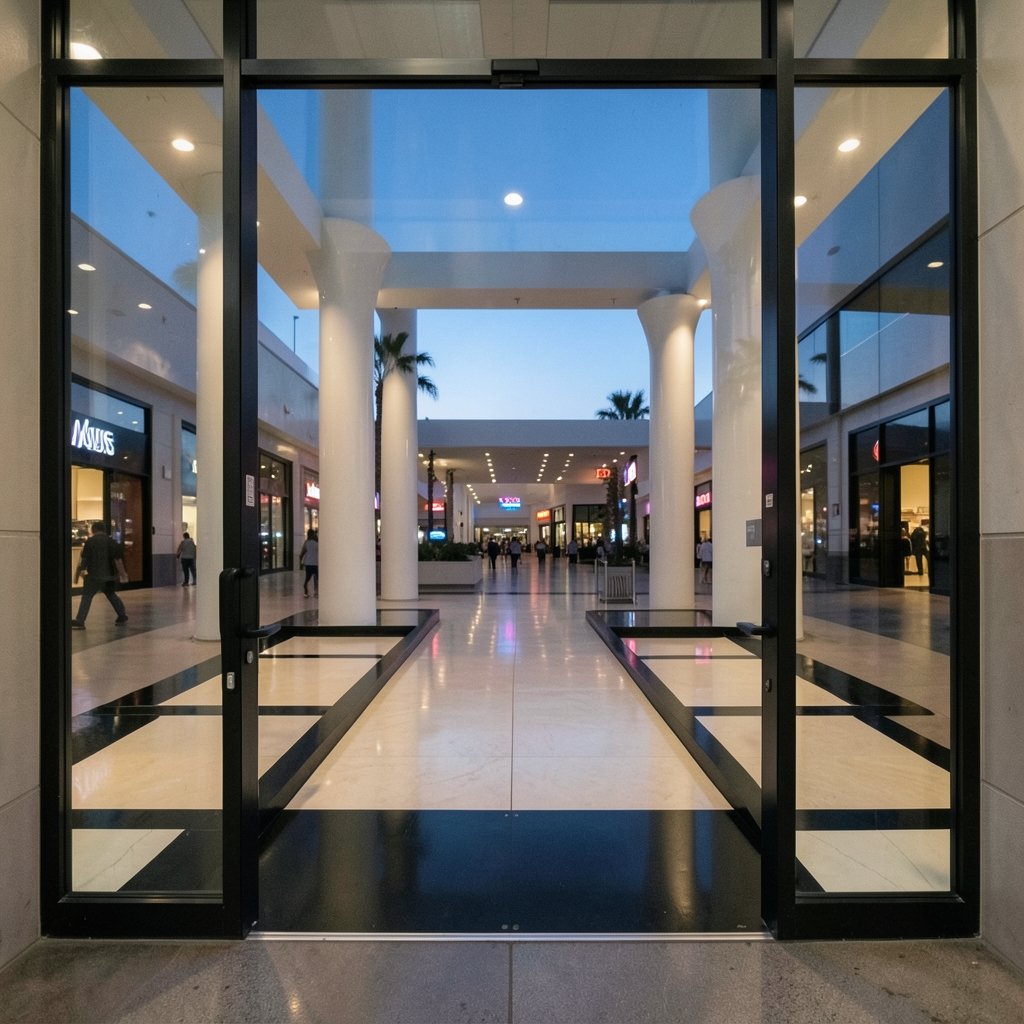
The location matters as much as the size. Most American malls of this scale sit in suburbs and depend on local drive traffic. Fashion Show sits in the heart of a resort corridor, which means its customer base is a blend of Clark County residents and visitors from everywhere else. That mix changes everything about how the mall operates, from hours to tenant selection to the amount of foot traffic on a random Tuesday.
The Runway That Gave the Mall Its Name
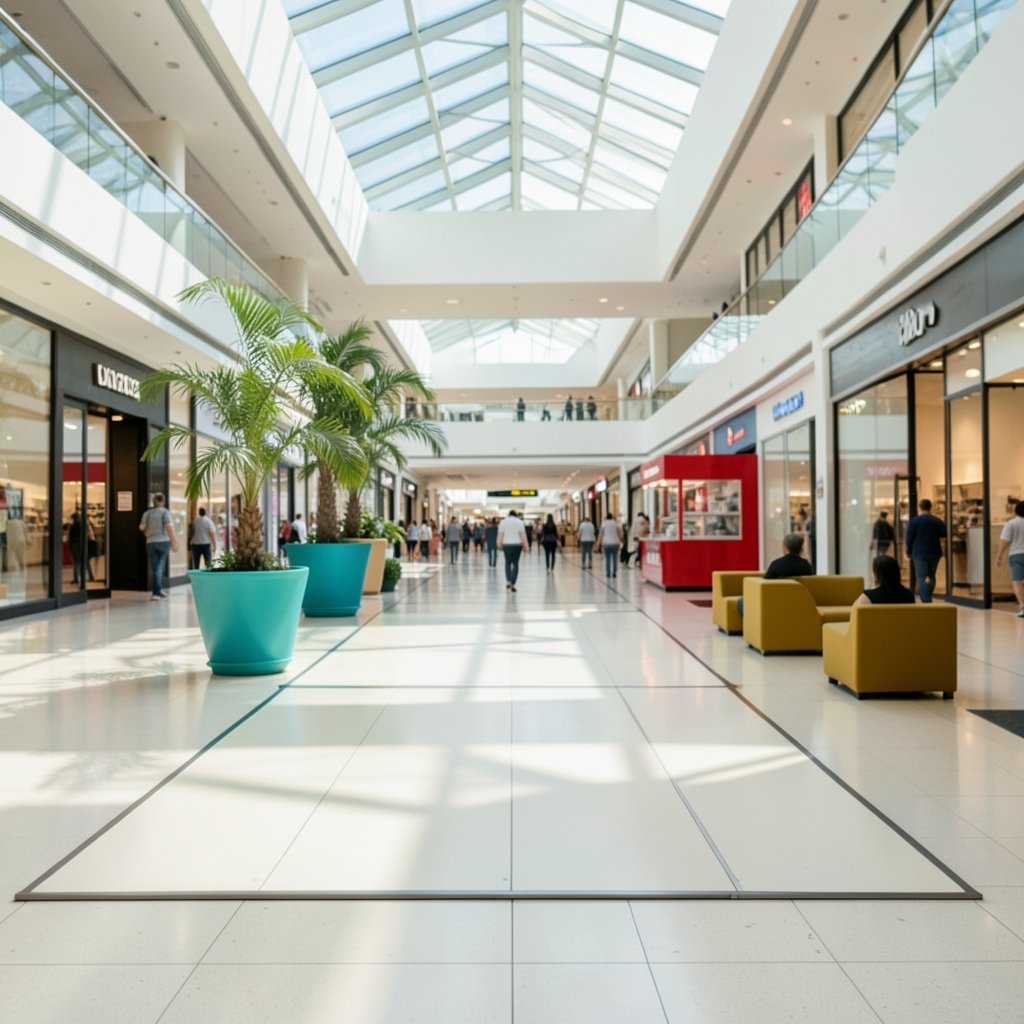
The signature feature is a retractable runway stage in the central atrium. It rises and lowers as needed, converting an ordinary mall concourse into an event venue for live fashion shows, product launches, and seasonal programming. When it is not in use, the floor reads as open circulation space.
That design choice was unusual when the mall opened and remains unusual now. Most retail developers treat events as an afterthought, something squeezed into a parking lot or a vacant storefront. Fashion Show built the event into the architecture. The practical result is that the mall can host a full production without disrupting the stores around it, and shoppers who came for a pair of shoes can stumble into a runway presentation they did not plan on.
For anyone who follows how runway moments translate into mainstream retail, the setup is a live case study. The same dynamic, where a staged presentation shapes what people actually buy, is what makes fashion illustrator work that turns runway moments into editorial images so influential in shaping consumer taste.
Who Actually Shops Here?
Fashion Show serves two audiences that behave very differently, and understanding the split is the single most useful thing a first-time visitor can do.
| Visitor type | Typical behavior | What works best |
|---|---|---|
| Las Vegas tourists | Short visits, often mid-day, carrying bags from other stops | Anchor stores, quick-service dining, one or two targeted purchases |
| Local residents | Longer visits, parking-conscious, repeat trips | Department store anchors, seasonal sales, full-service restaurants |
| Convention attendees | Time-boxed, often evening visits | Compact loops through the central atrium and nearby anchors |
| Fashion and retail professionals | Research, trend observation, event attendance | Runway programming, anchor assortments, tenant mix analysis |
Tourists tend to underestimate how much walking a 2-million-square-foot property involves. Locals tend to overestimate how quiet it will be on a weekend. Both groups benefit from picking a small number of targets before arriving rather than treating the mall as a place to browse aimlessly.
The Anchor Stores and How the Tenant Mix Works
Long-standing anchors have historically included Neiman Marcus, Saks Fifth Avenue, Nordstrom, Macy’s, and Dillard’s, with a large Forever 21 flagship among the notable specialty tenants. Tenant rosters in retail change constantly, so any list should be checked against the mall’s current directory before a visit. What has stayed consistent is the tiering: luxury at one end, mainstream department stores in the middle, and a broad band of specialty, beauty, athletic, and entertainment tenants filling the space between.
That tiering is deliberate. A super-regional mall needs enough price points to serve a tourist buying a single splurge item and a local family shopping a back-to-school list on the same afternoon. The luxury anchors give the property its positioning, but the mid-tier and specialty tenants do the volume.
For readers tracking how the broader luxury market is shifting, the tenant mix here is a useful barometer. The same forces reshaping Italian luxury fashion houses, from heritage branding to younger customer acquisition, show up in how American malls allocate floor space to premium labels.
Practical Tips That Actually Help
First-hand experience with large destination malls produces a short list of habits that separate a smooth visit from a frustrating one.
Pick your entrance deliberately. A mall this size has multiple entry points, and the one nearest your target store can save fifteen minutes of walking. Check the directory before you park, not after.
Go early on weekends. Tourist traffic builds through the late morning and peaks in the afternoon. Locals who arrive at opening get the parking structure, the anchors, and the coffee without a line.
Wear the right shoes. This sounds trivial until you have walked a full loop of a two-million-square-foot property in new boots. The distance is real.
Do not plan a tight connection. If you have a show, a flight, or a reservation, leave a buffer. The mall is easy to enter and surprisingly hard to exit quickly when you are deep in a wing.
Check event schedules. The runway programming is the reason the property exists in its current form. A visit that overlaps with a show is a different experience from one that does not.
Common Mistakes Visitors Make
The most common error is treating Fashion Show as a quick stop between casino visits. It is not a corridor. People who allocate forty minutes and expect to cover it end up seeing one anchor and leaving.
The second mistake is assuming the mall is purely a tourist trap. The presence of mainstream anchors, grocery-adjacent services, and everyday retail means locals genuinely use it, and the pricing reflects a mixed audience rather than pure resort markup.
The third is ignoring the food. Dining has become a major part of the super-regional mall model, and treating restaurants as an afterthought means missing some of the better options in the corridor.
The fourth is showing up without checking hours. Resort-corridor retail does not always follow suburban mall patterns, and holiday hours in particular can surprise people.
How Fashion Show Fits the Wider Retail Picture
The American mall has been pronounced dead so many times that the obituary has become a genre. The reality is more selective. Weak centers in declining trade areas have closed. Strong centers in high-traffic, high-income, or high-tourism locations have reinvested and, in many cases, thrived. Fashion Show sits firmly in the second group, and its location is the reason.
A mall that draws on visitor traffic has a buffer that a suburban center does not. When local discretionary spending tightens, tourism can partially offset it. When tourism dips, the local base remains. That dual demand structure is why resort-corridor retail has proven more resilient than the national average.
The property has also gone through multiple renovations and expansions since opening, including a significant remodel in the 2000s. Reinvestment is the tell. Owners do not pour capital into centers they expect to wind down.
There is a cultural dimension too. Malls have become content. Theatrical retail experiences, from themed pop-ups to immersive brand activations, are now standard programming, and the runway stage was an early version of that instinct. The same appetite for spectacle shows up in how brands stage seasonal events, a pattern visible in Halloween fashion show runway ideas and costume trends that turn retail spaces into performance venues.
What to Expect in 2026 and Beyond
Retail forecasting for the next few years points toward fewer, better-funded destination centers and more experiential programming inside them. The 2026 fashion trends guide makes a related point from the merchandising side: customers are responding to fewer, more deliberate purchases rather than volume browsing. That favors malls that can make a visit feel like an event.
For anyone watching the fashion trends 2026 cycle, destination malls function as a real-time read on what is actually selling rather than what is being photographed. The runway stage, the anchor mix, and the specialty tenants together form a live dashboard. Readers who prefer their trend analysis in smaller doses might look at where to find the best fashion substacks without wasting your inbox, but the physical mall still provides something a newsletter cannot: a count of what people are carrying out of the store.
The broader shift toward 2026 fashion trends for women also plays out in floor space allocation. Categories that grow get more square footage; categories that stall get consolidated. Walking the mall is a crude but honest form of market research.
Conclusion
Fashion Show is a mall with a clever name. It is also a super-regional center built around a runway, owned by a major institutional landlord, and located in one of the highest-traffic tourism corridors in the United States. It opened in 1981, has been renovated repeatedly, and carries roughly 250 stores across a footprint commonly cited near two million square feet. Department stores anchor the center, the tenant mix spans luxury and everyday retail, and the central runway remains the feature that makes the property legible at a glance.
For visitors, the takeaways are practical. Pick your entrance, go early, wear comfortable shoes, and check the event calendar. For anyone interested in retail as an industry, the mall is a useful bellwether: a case study in how location, reinvestment, and a single architectural idea can keep a forty-year-old property relevant in a market that keeps predicting its own collapse.
Frequently Asked Questions
Where is Fashion Show mall located?
It sits on the Las Vegas Strip in Paradise, Nevada, an unincorporated area of Clark County next to Las Vegas. The location puts it inside the resort corridor rather than in a suburban trade area, which shapes both its tenant mix and its visitor traffic.
Who owns Fashion Show mall?
Brookfield Properties owns and manages the property. It came into the portfolio when Brookfield acquired General Growth Properties in 2018. Ownership details are worth confirming against current corporate information, since retail real estate changes hands.
How big is Fashion Show mall?
Published figures commonly cite roughly 1.9 to 2.0 million square feet of gross leasable area with around 250 stores. Size counts vary by source and year, so treat any single number as approximate. It comfortably qualifies as a super-regional mall, a category generally defined as 800,000 square feet or more with three or more anchors.
What is the runway at Fashion Show mall used for?
The central atrium contains a retractable runway stage used for live fashion shows, product launches, and seasonal events. It is the feature that gave the mall its name. When not in use, the stage retracts and the space returns to ordinary pedestrian circulation.
Which stores anchor the mall?
Long-standing anchors have included Neiman Marcus, Saks Fifth Avenue, Nordstrom, Macy’s, and Dillard’s, with a large Forever 21 flagship among the notable specialty tenants historically. Tenant rosters change frequently, so check the current directory before making a trip for a specific store.
Is Fashion Show mall worth visiting for non-shoppers?
Yes, for the right reasons. The architecture, the runway programming, and the dining make it a legitimate stop even without a shopping list. Visitors who treat it as a five-minute walk-through tend to be disappointed; those who budget an hour or two and check the event schedule usually are not.