A tweed dress is one of the most rewarding purchases in a wardrobe, and one of the easiest to get wrong. It must hold its own shape, keep you warm, and look polished for years, with no forgiveness of a stretch fabric. Buy the right one and you will reach for it for years; buy the wrong one and it itches, sags, or sits unworn.
The difference is rarely the price tag. It is the fabric, the fit, the lining, and the construction, and all four can be checked before you pay. A densely woven pure wool tweed behaves nothing like a loose synthetic imitation, and a lined dress outlasts an unlined one by years.
This guide shows how to judge the fabric, read the label, check the fit, inspect the lining and construction, and decide what a dress is worth at each price.
Key takeaways
- Choose wool-rich tweed: at least 70 percent wool, and treat more than 20 percent synthetic fibre as a warning sign.
- Check the weave and weight: a tight, even weave at 300 to 450 grams per square metre suits most buyers.
- Insist on a full lining in a breathable fabric such as cupro or silk, so the dress slides on and never itches.
- Fit is unforgiving: the shoulder seam, waist seam, and hem must sit correctly, because tweed will not stretch to compensate.
- Inspect the inside: clean seams, secure buttons, and a smooth zip matter more than a designer label.
Start with the fabric: what tweed actually is
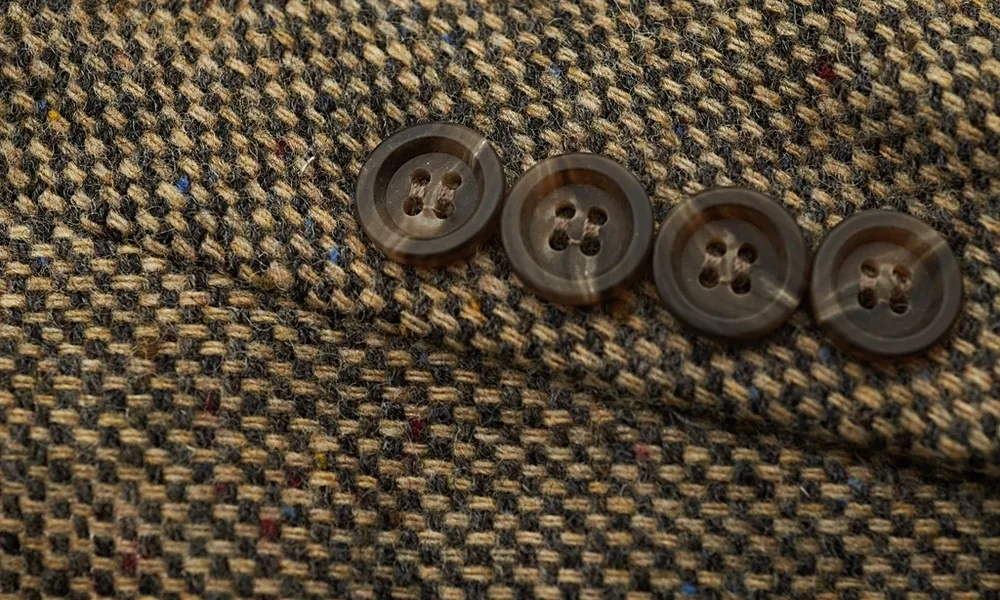
Tweed is a rough-surfaced woollen cloth woven from flecked yarns, giving it a nubby texture and depth of colour. It began in Scotland and Ireland as coarse, water-resistant wool for outdoor wear, and the best modern tweeds keep that heritage: they hold their shape, resist wind, and keep you warm. The flecks come from mixing dyed yarns before spinning, giving the colour a richness no printed fabric can match.
Not everything sold as tweed deserves the name. Some dresses use loosely woven acrylic or polyester with a tweed-like pattern on the surface. They look convincing on a hanger, but they pill quickly, trap heat, and lose their shape. Test by hand: real wool tweed feels textured and slightly rough, with visible variation in the yarn, while an imitation often feels smooth, plasticky, or stiff. If the pattern looks painted on, walk away.
Read the label: wool content and blends
The composition label is the most useful information on any tweed dress, and it takes ten seconds to read. Aim for 80 to 100 percent wool, and accept nothing below 70 percent for a dress you expect to last. Wool breathes, drapes well, resists creasing, and ages gracefully. Up to 20 percent viscose, cotton, silk, or elastane can improve drape, but past a fifth, synthetics cut breathability and durability.
Be wary of labels that hide the details. A dress described only as a wool blend, with no percentages, deserves a closer look, and one listing acrylic or polyester first is mostly synthetic whatever the marketing says. When comparing the best tweed dresses for women, check labels across several options, because two dresses at the same price can differ greatly in fibre content. Provenance helps too: tweeds from Scotland, Ireland, England, Italy, or France usually come from experienced mills, and Harris Tweed and Donegal are names with real meaning.
Weave, pattern, and weight: matching the cloth to your life
Tweed comes in several classic weaves. Herringbone has a fine V-shaped pattern and a refined look that suits work dresses. Houndstooth is bolder and more graphic, a strong choice when the dress is the centrepiece. Plain weave is the quietest option, with an even texture that flatters most figures and hides wear well. Match the pattern to how often you will wear it: a loud check limits repeats, while a quiet weave can be worn weekly.
Weight matters as much as fibre. A very heavy tweed over 500 grams per square metre can be cumbersome and hot indoors, while a very light one may drape poorly. A medium weight is the safest choice for most buyers. Colour deserves the same practical thought: neutrals such as navy, charcoal, brown, and black are the most versatile and forgive a higher price, while a bright fleck can look far louder in daylight.
Tweed types at a glance
| Tweed type | Look and feel | Best for | Watch out for |
|---|---|---|---|
| Harris Tweed | Dense, handwoven, flecked | Investment dresses | Heavy; check the fit |
| Donegal tweed | Colourful flecks, soft base | Everyday dresses | Flecks can dominate |
| Herringbone tweed | Fine V-pattern, refined | Work and formal wear | Check seam alignment |
| Houndstooth tweed | Bold broken checks | Statement dresses | Hard to wear often |
| Plain weave tweed | Even, quiet texture | A first tweed dress | Cheap ones feel flat |
| Boucle tweed | Loopy, soft, lightweight | Spring wear | Loops can snag |
| Wool-blend tweed | Softer drape, lighter feel | Comfort, easier care | Synthetics under 20 percent |
| Synthetic imitation | Printed tweed look | Short-term buy only | Pills fast, loses its shape |
Fit: the checks that matter before you pay
Fit is where most tweed dress purchases succeed or fail, because tweed has almost no stretch. A jersey dress follows the body; a tweed dress holds the shape it was cut in, so it must fit at the shoulders, bust, waist, and hips from the start. Check the shoulder seam first: it should sit on the edge of your shoulder, not drooping down the arm or pulling toward the neck. A sheath should skim the body and end at or just above the knee, with the waist seam at your natural waist. An A-line dress, with a fitted bodice and flared skirt, gives waist definition without tailoring and flatters a fuller hip.
Try the dress in motion: sit, walk, and raise your arms. It should let you move without pulling across the bust or riding up at the hem. If it binds anywhere, try another size or cut rather than hoping it will ease, because tweed does not ease. A midi length, ending between knee and ankle, is the most versatile choice in 2027. When choosing between sizes, favour the one that fits your widest point, since taking a dress in is far easier than letting it out. Online, compare the seller’s garment measurements with your own; sizing varies widely.
Lining and construction: look inside the dress
The inside reveals quality more honestly than the outside. Turn the dress inside out and check whether it is fully lined. A full lining in cupro, silk, or acetate lets the dress slide on, stops the wool itching, and prevents static against tights. A partial lining, or none at all, is a false economy: the dress will cling, chafe, and wear out faster. If the lining feels plasticky or crackles, it is cheap polyester.
Check the seams next: clean, even stitching with no loose threads, and double-stitched or bar-tacked seams at the shoulders, side seams, waist, and armholes. Pull gently at a side seam: if you can see daylight through the stitches, it will split. On a checked or herringbone tweed, the pattern should meet neatly at the side seams and centre back. Finally, check the hem: deep enough to hang cleanly, usually at least three centimetres, and hand-finished or blind-stitched rather than topstitched.
Closures, buttons, and finishing details
Small hardware tells a large story. The zip should glide smoothly without catching and sit flat when closed, with no puckering along the seam. A metal zip is usually more durable than a plastic one, and an invisible zip should be truly invisible. Test it three or four times in the shop: a zip that sticks on the first try will only get worse. Buttons should be securely sewn and align evenly without pulling the fabric, a spare should be included, and buttonholes should be bound or neatly finished. The same standard applies to the matching tailored pieces in a wardrobe, and the construction on luxury tweed jacket brands shows what good finishing looks like.
Price: what your money buys at each level
Budget dresses, roughly 40 to 120 pounds or dollars, are usually synthetic blends with partial linings and simple construction. They can look good for a season, but expect one to three years, and check them extra carefully. Mid-range dresses, roughly 120 to 400, are where most buyers find the best value: wool-rich fabrics, full linings, and proper finishing are realistic here, and a well-chosen dress can last five years or more.
Premium and designer dresses, from around 400 to 3,000 and beyond, buy finer cloth from named mills, hand-finished details, and more precise cutting, and should last a decade or more. But price alone proves nothing: run the same checks on an expensive dress as on a cheap one. Most wool tweed dresses also need dry cleaning, so factor that annual cost in before buying.
Your before-you-buy checklist
- Read the label: at least 70 percent wool, synthetics below 20 percent, care you can live with.
- Feel the weave: tight, even, and textured, the pattern woven in, not printed on.
- Check the fit standing and sitting: shoulder and waist seams in place, no pulling anywhere.
- Look inside: full breathable lining, clean seams, bar tacks, matched pattern.
- Test the closures: smooth zip, secure buttons plus a spare, pockets that lie flat.
- Weigh price against real use: how often will you wear it, and what will cleaning cost?
Frequently asked questions
How much wool should a good tweed dress contain?
Aim for 80 to 100 percent wool, and accept nothing below 70 percent for a dress you expect to last. Up to 20 percent viscose, cotton, silk, or elastane can improve drape, but more synthetics cut breathability and durability. Read the label, not the product name.
Is a lined tweed dress worth the extra money?
Yes, almost always. A full lining in cupro, silk, or acetate stops the wool itching, lets the dress slide on over tights, and protects the seams. An unlined or partly lined dress will cling, chafe, and look tired far sooner, so treat a full lining as essential.
What weight of tweed is best for a dress?
A medium weight of around 300 to 450 grams per square metre suits most buyers: warm enough for autumn and winter, structured enough to hold its shape, and comfortable all day. Heavy tweeds above 500 grams feel cumbersome, while very light ones drape poorly.
Can a tweed dress be altered?
Yes, within limits. Taking a dress in or shortening the hem is straightforward for a good tailor, which is why buying to fit your widest point is sound. Letting one out is much harder, since tweed has little seam allowance and the pattern must still match. Budget for a small alteration.
How do I tell real tweed from a synthetic imitation?
Feel the surface and look at the weave: real wool tweed is textured and slightly rough, with visible yarn variation and a pattern woven into the cloth. Imitations feel smooth or plasticky, with a pattern that looks printed on, and a uniform backing on the reverse. The label is the final check.
How should I care for a tweed dress after buying it?
Most wool tweed dresses need dry cleaning, so check the label before the first wear and follow it. Between cleans, air it, brush it lightly, and steam out creases rather than ironing. Store it on a wide padded hanger in a breathable bag, and never hang it damp, since the weight pulls it out of shape.
The bottom line
The perfect tweed dress is not the most expensive one, nor the one that looks best on a hanger. It is the dress whose fabric is wool-rich and tightly woven, whose fit is right at the shoulders, waist, and hem, whose lining is full and breathable, and whose seams, zip, and buttons pass a close inspection. Run those checks before you pay, and you will buy a dress that holds its shape for years. Once you have chosen well, our guide to how to style a tweed dress shows you how to wear it.
Note: Tweed quality varies widely between makers, so use this guide as a checklist rather than a guarantee: always inspect the individual dress, check the label and lining, and try it on. Prices and fibre contents change between seasons, so trust these checks over any brand name.