Planning an allspice farm escape is simpler than planning most farm holidays, because the crop sets the calendar. The berries ripen once a year, the picking takes a few weeks, and the farm is at its best while the crews are in the trees. Get the dates right and everything else falls into place; get them wrong and you will have a quiet house in a pretty grove with nothing happening in the yard.
The nine steps below take you from the first question to the last morning, in the order you should do them. They cover the picking week, the berry itself, the drying yard, the kitchen, the packing and the buying, and they are written for a first visit. If you have been to a spice farm before, the shape will feel familiar, but allspice has its own habits: tall trees, green berries, sun drying, and a kitchen that uses the spice in almost everything.
Budget a week. Three nights is enough to see the grove and the yard, but a week lets you watch a batch of berries dry from green to brown and eat through the kitchen’s repertoire. The farms on this list charge $65 to $380 a night for two, so a week runs from under $500 to around $2,600 before flights.
Key takeaways
- The picking weeks run from late summer into autumn, and the farm sets its dates each year.
- Book only after the farm confirms its picking dates in writing.
- Berries come off the trees green and unripe, and the sun turns them dark brown and hard.
- The kitchen is half the holiday: ask what it cooks with allspice during your stay.
- Allspice is gluten-free, but farm bread and dumplings are wheat, so warn the kitchen ahead.
What an allspice farm escape involves
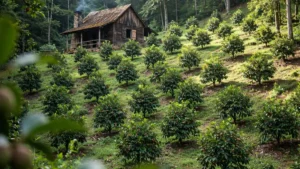
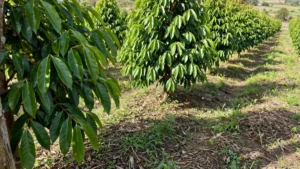
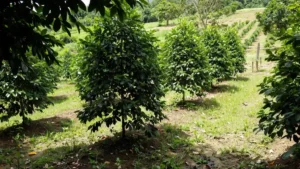
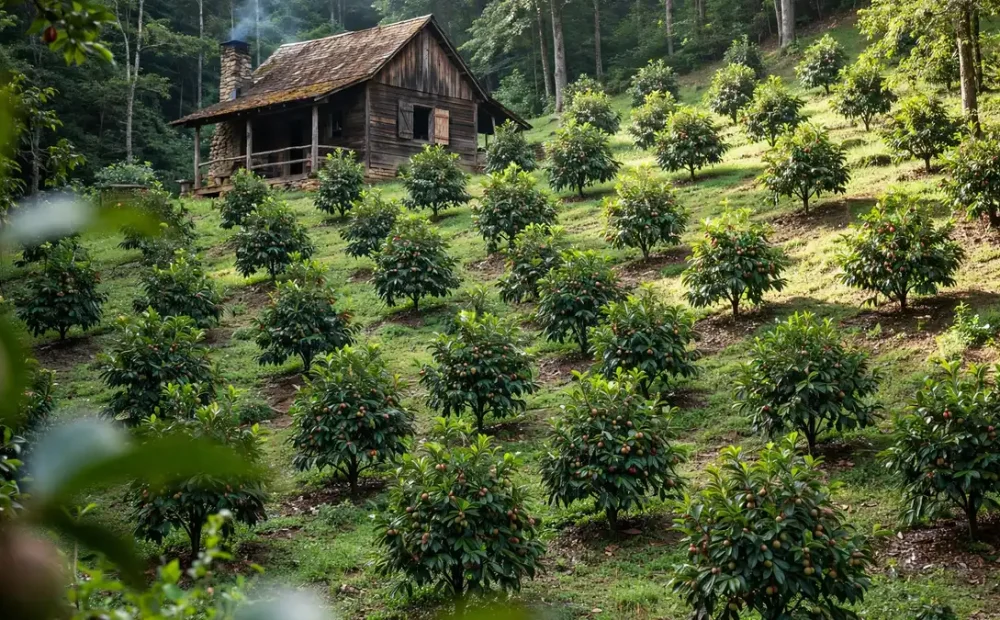
An allspice farm escape is a week on a working tropical farm, sleeping in a farmhouse or a small lodge at the edge of a grove of evergreen trees. The days start early, when the picking crew goes into the trees, and the afternoons are for the drying yard, the kitchen and a walk.
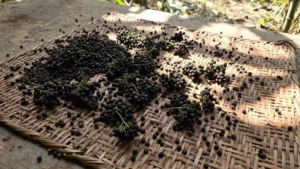
The work you join is simple. You pick berries from the low branches into a basket, spread them on the drying yard in the sun, and turn them with a rake as they shrink and darken. In the kitchen you taste the berry green, dried and ground, and eat food seasoned with it at every meal.
What you need from the trip is a farm that welcomes guests into the work, a kitchen that cooks with its own spice, and dates that fall inside the picking weeks. Everything else — the room, the view, the price — is secondary.
How to plan it, and what to ask first
Start with the farm, not the flight. Write to two or three farms from the roundup and ask for their picking dates, their guest policy in the grove, and their kitchen menu for the week you want. The farm that answers clearly and quickly usually runs a tight operation.
Ask the three questions that matter. First, whether the picking weeks fall inside your dates, and get the answer in writing. Second, whether guests can pick with the crew, since some farms keep visitors on the paths. Third, what the kitchen cooks with allspice while you are there, and whether it can feed a gluten-free guest. Those three answers will narrow your list to one or two farms.
Then book the room, then the flight, then the bag. The farms on this list are small, with three to a dozen rooms, and the picking weeks sell out first. Flights to Kingston, Belize City or Havana are easier to change than a farm room in season.
The 9 steps to plan an allspice farm escape
Start by asking the farm when the picking starts
The picking week is the holiday, and it moves every year with the rain. Write to the farm, ask for its dates, and wait for the reply before you spend anything.
What to Do: Ask for the picking dates in writing, and book your room inside them.
What to Avoid: Booking flights before the farm confirms its week.
Best For: Travellers who want to see the work, not just the grove.
Time Needed: A week of emails before you pay anything.
Standout Tip: The farm that answers fastest usually runs the tightest operation.
Know why one berry tastes like three spices before the tasting
Allspice tastes of cinnamon, nutmeg and clove at once, and knowing that before you taste it changes the tasting. Read up on the tree, the berry and the drying before you go, so the farm walk is a recognition, not a lecture.
What to Do: Taste shop-bought allspice at home, whole and ground, before you travel.
What to Avoid: Arriving with no idea what the berry is, and missing the point of the tasting.
Best For: First-timers who want the farm walk to make sense.
Time Needed: An evening of reading and one tasting at home.
Standout Tip: Chew one whole dried berry at home, then compare it with the farm’s fresh one.
Be in the drying yard at sunrise, while the berries are still green
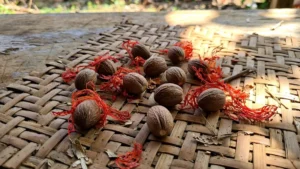
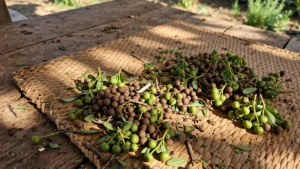
The drying yard is where the spice is made, and the first morning is the best time to see it. Berries arrive green and cool from the trees, are spread thin on the slab, and begin to shrink in the sun within hours.
What to Do: Get to the yard early, while the berries are still green and the air is cool.
What to Avoid: Sleeping in and missing the morning spread, which is the liveliest hour of the day.
Best For: Early risers who want the farm at its busiest.
Time Needed: A single morning hour, before the sun gets high.
Standout Tip: Handle a green berry and a brown one side by side to feel the change.
Chew a green berry and a brown one back to back
The berry changes completely as it dries, and the only way to understand it is to taste both ends of the process. Ask the farm for a green berry from the morning’s picking and a dried berry from last season, and chew them one after the other.
What to Do: Ask the farm for both berries, and taste them in that order.
What to Avoid: Tasting only the ground spice, which hides the change the drying makes.
Best For: Anyone who cooks and wants to understand the spice properly.
Time Needed: Twenty minutes with the farm’s cook or picker.
Standout Tip: Smell the berry before you chew it; the aroma changes first.
Ask which trees the farm picks from, and how old they are
An allspice tree takes years to fruit, and the age of the trees tells you how serious the farm is. Old trees give the most aromatic berries, young trees give the most berries, and a farm that knows its trees by age is a farm that knows its crop.
What to Do: Ask the guide the age of the oldest tree and the youngest in the grove.
What to Avoid: Assuming every tree in the grove is the same age, or the same quality.
Best For: Travellers who like to know how a farm actually works.
Time Needed: Ten minutes on the grove walk.
Standout Tip: The oldest tree on the farm is usually the one the guide is proudest of.
Ask the cook to show you the spice shelf before you book
The kitchen is half the holiday, and you should know what it cooks before you commit to a room. Ask for the week’s menu, and ask which dishes use allspice and how. A kitchen that grinds its berries fresh every morning is a different place from one that reaches for a jar.
What to Do: Ask for the menu, and ask whether the berries are ground fresh each day.
What to Avoid: Booking a farm whose kitchen buys its spice in, and cooks with it as an afterthought.
Best For: Food lovers who want the kitchen to be the point of the stay.
Time Needed: One email before you book.
Standout Tip: Ask the cook what dish uses the most allspice, and eat it on your first night.
Bring boots and a rain jacket for the grove paths
The tropics give you sun and rain in the same day, and the paths to the grove turn to mud within minutes of a shower. Pack sturdy shoes with grip, a light rain jacket, and clothes you do not mind getting dirty.
What to Do: Pack grippy shoes, a rain jacket, and a hat, and keep them by the door.
What to Avoid: Sandals on the grove paths, which are slick and uneven after rain.
Best For: Walkers who want to get into the grove, not just look at it.
Time Needed: An evening of packing, the night before you fly.
Standout Tip: A small dry bag for your camera is worth more than a second lens.
Leave room in the bag for berries, not the jar
The best souvenir is a bag of whole dried berries from the farm gate, not a jar of ground spice from the airport. Whole berries keep their aroma for a year, ground spice loses it in weeks, and the farm’s berries are cheaper and fresher than anything in the shop.
What to Do: Pack a spare cloth bag and leave space for a kilo of whole berries.
What to Avoid: Buying ground spice at the airport, which is dear and stale.
Best For: Cooks who want the farm’s berries in their own kitchen.
Time Needed: Five minutes while packing.
Standout Tip: Whole berries, not ground, keep their smell for a year in a sealed jar.
Leave the berry buying until checkout day
Buy your berries on the last morning, at the farm gate, from the person who dried them. The price is lower, the berries are fresher, and the farm keeps the whole amount instead of a shop’s cut.
What to Do: Buy whole berries at the farm gate on the last morning.
What to Avoid: Leaving the buying to the airport, where the same berries cost twice as much.
Best For: Anyone who wants the freshest berries and the fairest price.
Time Needed: Half an hour on the last morning.
Standout Tip: Ask for the batch you watched dry; the farm will usually set some aside.
Picking the right season and region
The season comes first. The picking weeks run from late summer into autumn, and the exact dates move with the rain and the altitude, so the farm’s answer is the only one that counts. A farm in season beats a dearer farm out of season, and a week in the picking season is worth more than a fortnight outside it.
The region comes second. Jamaica is the best first stop, and St. Elizabeth is the cheapest way in, with a big drying yard and a simple farmhouse. Manchester suits food lovers, Trelawny suits walkers, and Portland suits travellers who do not mind rain. Beyond Jamaica, Toledo is for a wild grove, Copán is for ruins, Petén is for jungle and lake, Veracruz is for a grand estate, and Viñales is for a small family stay.
Book the room as soon as the farm confirms its dates. The farms are small, the picking weeks are short, and the rooms go first. Flights can wait; the room cannot.
The caveats that matter
An allspice farm is a working farm in the tropics, and the caveats are practical. The sun is strong, the rain is sudden, the paths are muddy, and the trees are tall. The table below sets out what is known, so you can plan with your eyes open.
| Detail | What is known |
|---|---|
| Picking season | Late summer into autumn; the farm sets its dates each year. |
| What you pick | Green unripe berries, by hand, from the low branches. |
| Drying | Sun-dried for days until dark brown and hard. |
| Trees | Evergreen trees grown from seed; a tree takes years to bear. |
| Gluten | Allspice is gluten-free; farm bread and dumplings are wheat. |
| Footwear | Grippy shoes, not sandals; paths turn slick after rain. |
| Weather | Sun and sudden rain in the same day; pack a rain jacket. |
| Buying berries | Whole berries at the farm gate, on the last morning. |
Checklist: before you book an allspice farm escape
Run through this list before you pay a deposit. It takes ten minutes and saves a disappointing week.
- Get the picking dates in writing from the farm before you book anything.
- Ask whether guests can pick with the crew, or only watch from the paths.
- Ask for the week’s menu, and warn the kitchen about gluten before you arrive.
- Check the walk to the grove: distance, slope, and how muddy it gets after rain.
- Pack grippy shoes, a rain jacket, a hat, and a spare cloth bag for berries.
- Leave a corner of the suitcase empty for a kilo of whole berries from the farm gate.
Frequently asked questions
Can someone gluten-free eat well on an allspice farm?
Yes, if you warn the farm before you arrive. Allspice itself is gluten-free, and the kitchens cook rice, peas, fish and stewed fruit every day. The risk is bread, dumplings and thickened sauces, which are wheat, so the kitchen needs notice to keep them separate and to cook a gluten-free version of the same dishes.
How early do I need to book an allspice farm stay?
As soon as the farm names its picking dates, which is usually a few months before the season. The farms are small, the picking weeks are short, and the rooms go first. If you want the picking weeks, book the room the week the dates are announced, and sort the flights after.
What should I pack for a week among the allspice trees?
Grippy shoes, a light rain jacket, a hat, clothes you do not mind getting dirty, sun cream, and a spare cloth bag for berries. Leave the white linen and the sandals at home. A small dry bag for your camera is worth packing too, because the rain arrives suddenly and the paths are muddy.
Are children welcome on an allspice farm?
Most of these farms welcome children, and the picking is a good job for a child old enough to carry a basket. The trees are tall and the paths are uneven, so small children stay on the paths with an adult. Ask the farm before you book, because a few of the smallest casas take adults only.
What is the best thing to bring home from an allspice farm?
A bag of whole dried berries from the farm gate, bought on the last morning. Whole berries keep their aroma for a year in a sealed jar, and they are cheaper and fresher than anything in the airport shop. Ground spice loses its smell in weeks, so buy whole and grind it at home.
What does a week on an allspice farm cost?
From under $500 to around $2,600 for two, before flights, depending on the farm. The cheapest stays on this list charge $65 a night, the dearest $380, and a week at either end includes breakfast and a guided farm walk. Flights to Kingston, Belize City or Havana are the biggest extra, and the berries at the farm gate are the cheapest souvenir you will buy.
The bottom line
An allspice farm escape is a week set by the picking calendar, and the whole plan hangs on getting the dates right. Write to the farm first, get the picking week in writing, book the room inside it, and let the flights follow. The grove, the drying yard and the kitchen will do the rest.
Go for the work, not the room. Pick berries in the morning, watch them dry in the sun, eat them in the kitchen at night, and buy a bag of whole berries at the farm gate on the last morning. That is the escape, and it is worth the flight. If you want to compare another spice farm before you book, the cardamom farm escape follows a similar season in India and Guatemala, the saffron farm escape is the dearest spice trip on the site, and the ginger farm escape is the closest cousin to allspice country.