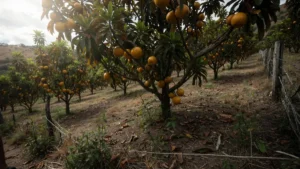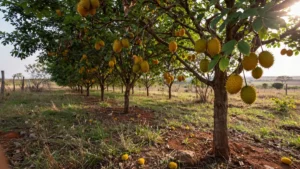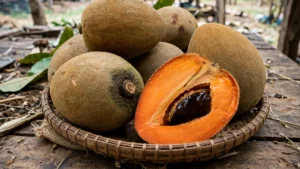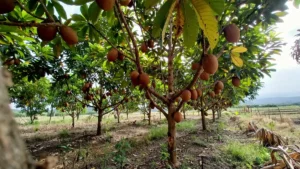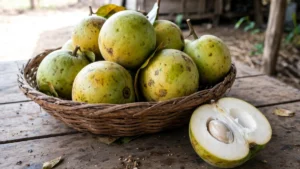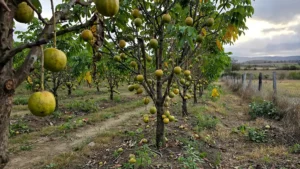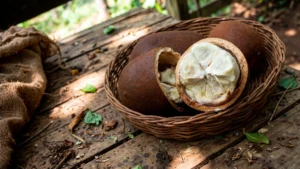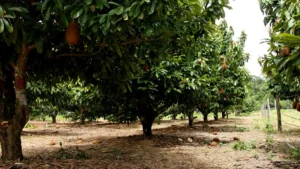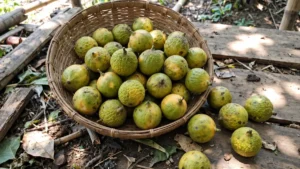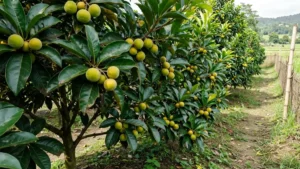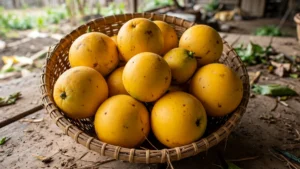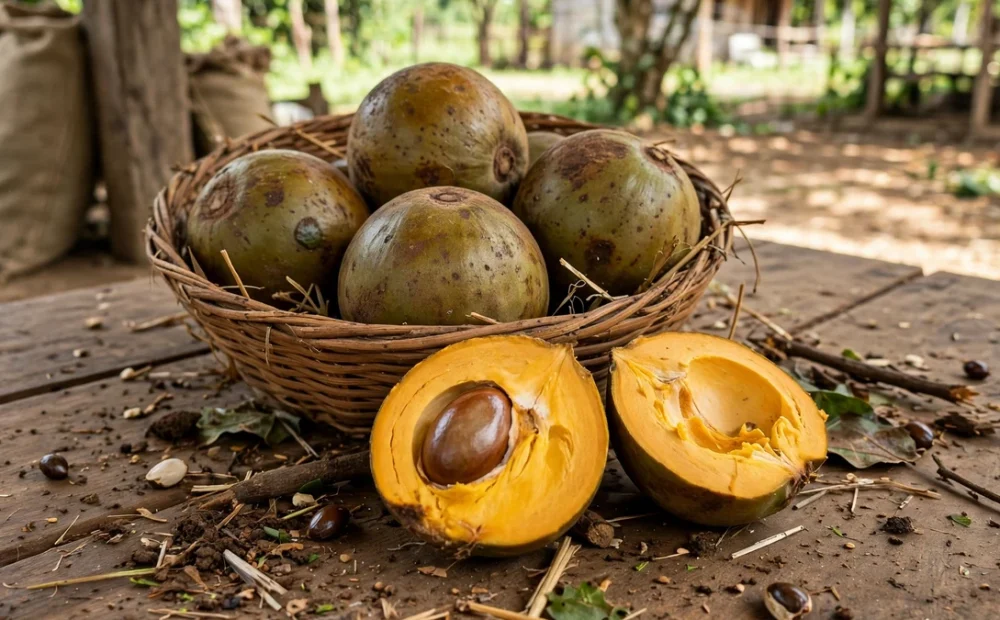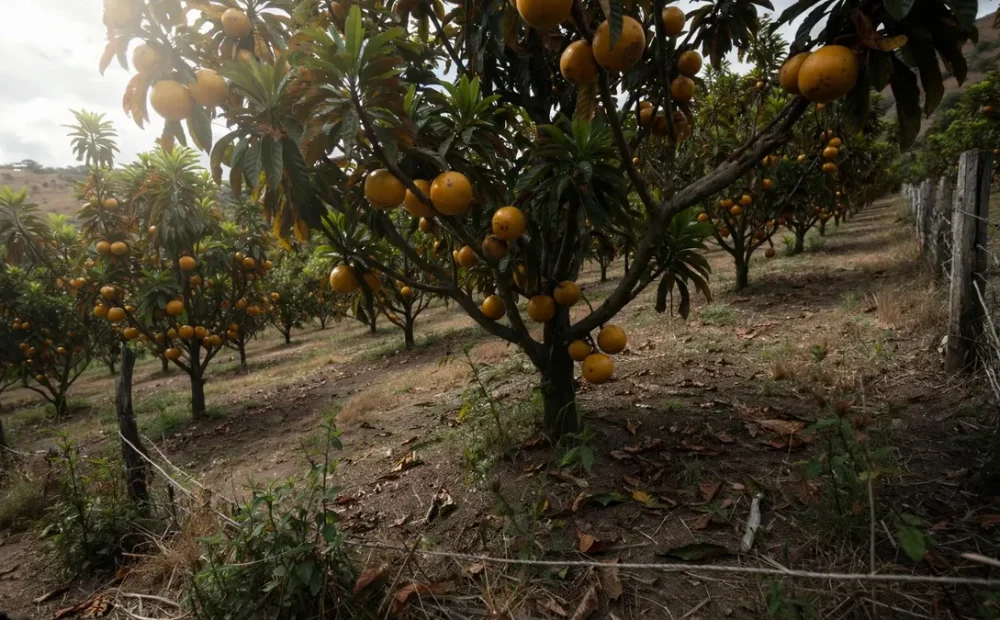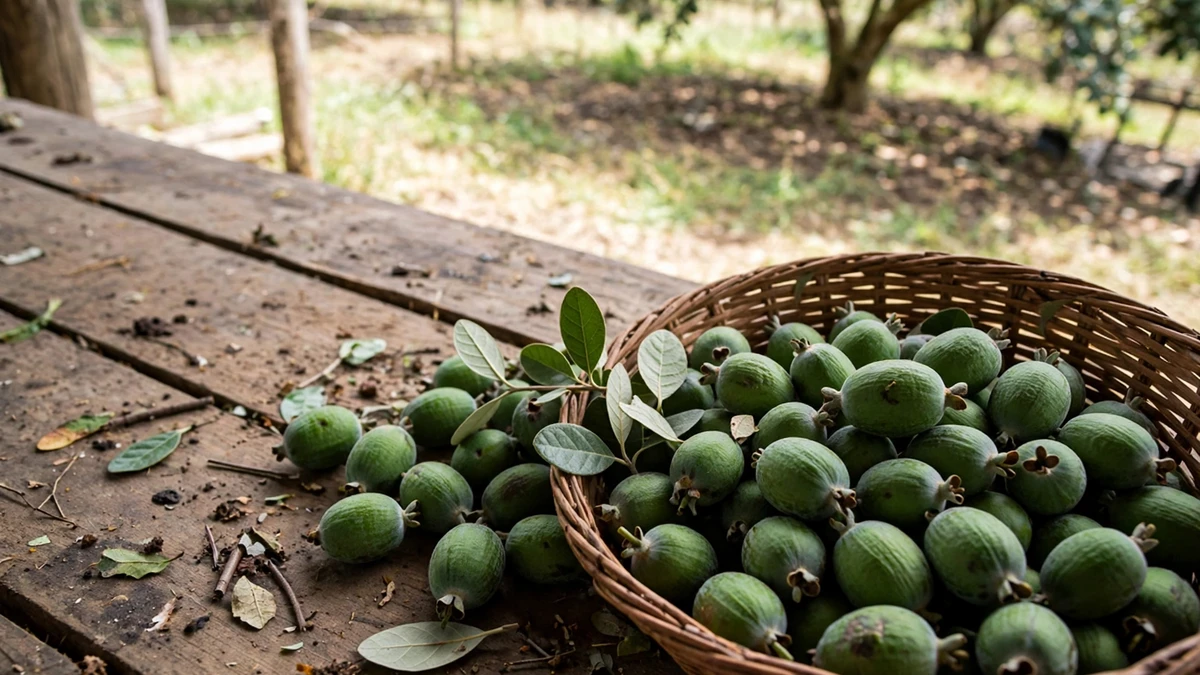
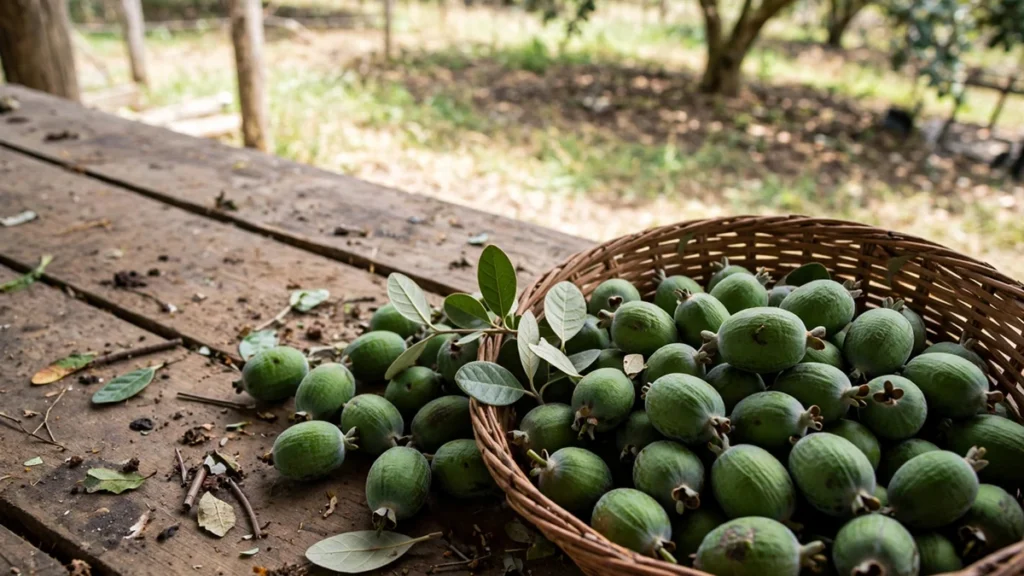
The feijoa season announces itself on the ground. Walk an orchard in late March and you will find small green fruit scattered through the grass, each one smelling of pineapple and guava, and by the time you have filled a basket the farm kitchen will already be peeling the next batch for a crumble. It is a short season, a few weeks in autumn, and it rewards travellers who plan around it.
This is a trip for people who like their food close to where it grew. You stay in a cottage beside the trees, spend the mornings gathering what fell overnight, and eat the fruit at every meal until the season ends. The steps below take you from your first taste of a feijoa to the jam jars you carry home.
None of it is complicated, but the order matters: the dates come before the flights, the farm’s baking matters more than its photographs, and the wheat warning goes in your very first message.
Key takeaways
- Feijoas drop when ripe, so fix the drop dates first and only then book travel.
- A ready feijoa feels soft under a gentle squeeze and smells strongly of pineapple and guava; a hard, scentless fruit needs more time on the tree.
- New Zealand grows most of the world’s feijoas, and the region you pick decides whether you arrive early or late in the drop.
- The room usually covers a walk and a tasting, while meals, lifts, and baking lessons often cost extra.
- Warn the farm about wheat in your first message, because the kitchen bakes feijoa crumbles and cakes every morning and flour gets everywhere.
What a feijoa farm escape involves
A feijoa farm escape is a few nights on a working feijoa orchard, sleeping in a cottage beside the trees. The orchard is the point of the stay rather than the view: the rows are tended by hand, the fruit is gathered from the grass each morning, and the kitchen cooks with whatever fell that day.
The day bends to the fruit. Breakfast is halved feijoas with yoghurt, lunch is a crumble from the morning’s basket, and dinner ends with jam over cream. Rooms tend to be plain, the host tends to be the grower, and the weather decides more than any timetable does.
The drop itself is the entertainment. Each morning the grass is checked for fresh fruit, and the baskets fill fast while the fruit is still cool from the night. Children love the hunt, and older travellers like the slow pace: there is no rush, no queue, and no timetable beyond the trees. By midday the kitchen has sorted the haul into fruit for eating, fruit for baking, and fruit for jam, and the afternoon is yours to spend however you like — walking the lanes, reading on the veranda, or watching the cook work. It is a quiet holiday, and that is exactly the point of it.
Rates differ more than the photographs suggest, so read what yours covers before you pay. A few of these escapes are orchards first and guesthouses second, with simple rooms and a host out pruning before dawn. Others are comfortable lodges among the trees, with more ease and less farm work on show. Both can be lovely, yet they are different holidays, and the price usually shows which one you are buying. Our guide to planning a guava farm escape makes the same argument: get the inclusions in writing before the pictures win you over.
How to plan it, and what to ask first
Pick stays where the feijoa trees are the main crop rather than a garnish. A strong feijoa escape grows its own fruit, lets guests walk the rows or taste the crop as part of the stay, and says plainly what happens once the season ends.
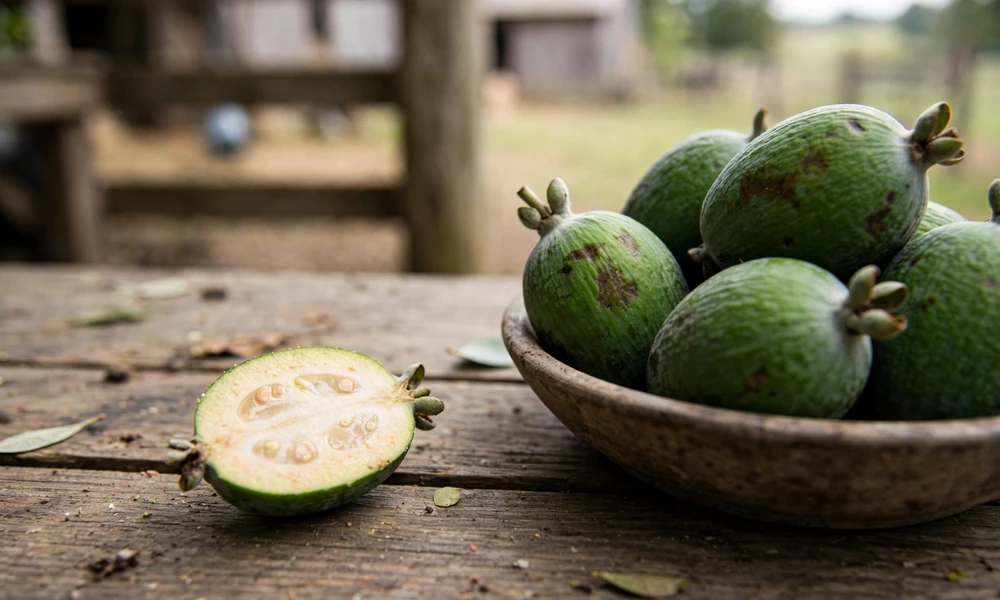
Start with the season. Feijoas fruit in autumn, and the peak moves between countries. New Zealand gathers from late March to June, starting in the north and finishing in the south. Australia gathers in the southern autumn, and California gathers while the southern farms rest.
Then ask what the nightly rate buys. The walk, the tasting, and the baking lesson are three separate things, and some farms bill each one on its own. Ask if breakfast comes with the room, whether the garden is shared, and whether the host speaks your language. A farm that replies to those questions without fuss is usually one worth booking. The passion fruit escape guide we wrote earlier is the same kind of trip: small, hands-on places where the small print matters more than any star rating.
The 9 steps to plan a feijoa farm escape
Let a market tasting decide your region
What to do: Pick up a few fresh feijoas at a market and eat them there, paying attention to whether you like them sweet or sharp. A small bag costs little and tells you more about the fruit than any photograph. The flavour you enjoy most points to the region: cooler places give sharper fruit, warmer ones give sweeter. What to avoid: Picking a region from pictures alone, without knowing whether you like the fruit sharp or sweet. Best for: Travellers who have never tasted a farm feijoa. Time needed: An afternoon at a market. Standout tip: Try named varieties and seedling fruit side by side if the stall carries both, because they drop weeks apart.
Get the farm’s drop dates in writing first
What to do: Write to the farm and ask which week the fruit will be falling, then look at travel only once the answer is in writing. Feijoas drop for a few weeks and then stop, so the dates matter more than the fare. A farm that replies plainly is usually one run with care. What to avoid: Booking flights first and hoping the fruit will be there when you land. Best for: Travellers whose calendar can bend. Time needed: An hour with the farm’s calendar. Standout tip: Aim for the middle of the drop, when the grass is fullest and the kitchen is at its busiest.
Rate the farm by its baking, not its brochure
What to do: Ask what the kitchen makes with the fruit, and choose the farm whose baking sounds best. Crumbles, cakes, and chutneys are three different skills, and a farm that bakes well will feed you better than one with a prettier garden. What to avoid: Choosing a farm for the view and finding the kitchen serves the fruit only at breakfast. Best for: Food lovers who want to cook as well as gather. Time needed: A morning tasting the baking. Standout tip: Ask if guests may join the baking session, because the crumble is the part you will remember.
Check whether visitors can collect fruit from the grass
What to do: Ask in your first message whether guests may gather the fallen fruit themselves. Some farms give guests a basket for the morning drop, while others leave the gathering to the crew because the trees are wide and easy to damage. What to avoid: Assuming the rows are open to guests, and finding the orchard closed when you arrive. Best for: Travellers who want to work for their breakfast. Time needed: Ten minutes in your booking message. Standout tip: Gather early, before the sun warms the fruit and the wasps find it.
Wake up looking at the trees, not a wall
What to do: Ask the host which bedroom faces the orchard, and book that one. Waking to the trees is half the trip, and a room at the back of the house misses it entirely. What to avoid: Accepting the last room available and waking to a plain wall. Best for: Slow travellers who linger over breakfast. Time needed: An evening choosing the room. Standout tip: Ask for a room with a shaded veranda, because the autumn sun is strong by midday.
Mention wheat before you hand over any money
What to do: Mention wheat in the first message you send, and ask how the kitchen keeps flour off your plate. Farm kitchens bake crumbles and cakes each morning, so the farm needs time to plan around you. What to avoid: Raising the allergy at check-in, when the kitchen has already baked for the day. Best for: Gluten-free travellers and anyone with a wheat allergy. Time needed: Five minutes on your first email. Standout tip: Ask about the rice dishes as well, because they are usually the safest thing on the table.
Dress for damp grass and cool autumn mornings
What to do: Bring a warm layer, a rain jacket, and soft shoes that grip wet grass. Autumn mornings run cool and the grass stays damp, and the orchard paths turn uneven after rain. What to avoid: Bringing only summer clothes and spending the mornings cold and wet. Best for: Travellers who walk the rows each morning. Time needed: Half an hour packing. Standout tip: Carry a light basket or a cloth bag, because the fruit bruises in a hard bag.
Rise early and buy the day’s fruit with the cook
What to do: Go with the cook when the market opens at dawn, and watch what goes into the day’s baking. A market morning shows you the region’s food better than any restaurant, and the cook will point out the fruit worth buying. What to avoid: Sleeping past the market and missing the best part of the day. Best for: Food lovers after the region as well as the farm. Time needed: A morning at the market. Standout tip: Buy a jar of the farm’s own jam at the stall, because it costs less there than at the farm shop.
Pack jam for the journey and leave fresh fruit behind
What to do: Buy sealed jars of jam at the farm shop, and leave the fresh fruit where it grew. Feijoas bruise at a touch and spoil fast, so a jar travels better than a punnet and keeps for months. What to avoid: Packing fresh fruit in your luggage and finding it crushed and leaking when you arrive. Best for: Travellers who want the flavour to stay with them. Time needed: A short stop at the farm shop. Standout tip: Wrap each jar in a sock, because the glass is the part that breaks.
Picking the right season and region
The Bay of Plenty gives you the most traditional fruit, with orchards that work the crop hard and a basket at every meal. Rio Grande do Sul gives you the wildest setting, where the fruit grows native as well as planted. Hawke’s Bay gives you the strongest flavours, with fierce sun and a heavy harvest. The fruit falls in waves, so one week a farm looks generous and the next it looks bare. The Bay of Plenty also suits a first trip, because the farms know guests well and the fruiting window runs long.
For a first trip, the Bay of Plenty is the easiest choice: the farm is used to guests, the season runs long, and the kitchen cooks with the fruit every day. Ask the host directly when the fruit will be dropping, and book the room that faces the rows. Our kiwi farm escape guide says the same: pick the farm that cooks with its crop daily, and the rest follows.
The caveats that matter
Feijoa farm escapes are lovely, but they suit some travellers better than others. The fruit follows its own season, the farms lie far from town, and the honest stays say plainly what is dropping and what is not.
| Detail | What is known |
|---|---|
| Best time to visit | Autumn, while the fruit is falling; the dates shift by country |
| The two main kinds | Apollo and Unique grow big and sweet; seedlings bear smaller, sharper fruit |
| How ripe fruit looks | Green skin, soft to a gentle squeeze, strongly scented, with no hard patches |
| What is usually included | Room and breakfast plus a walk or tasting; baking lessons and lifts often cost more |
| Who should go | Unhurried travellers, food lovers, and families with older children |
| Who should think twice | Anyone after nightlife, quick service, or a packed daily schedule |
| Transfers | Usually an hour or more from the closest airport; book the lift ahead of arrival |
| What is not guaranteed | Fruit on your dates; the crop rests on weather, season, and the tree |
Feijoas contain no gluten, yet the farm kitchen bakes crumbles and cakes each morning, so ask how it keeps flour off your plate. The fruit is soft and bruises easily, so eat it the day it drops and bring jam home rather than fresh fruit. Before you book, ask about the practical side if you have a health condition, are expecting, or travel with small children: how far the nearest clinic sits, when the farm last sprayed, and whether the paths suit little feet.
Checklist: before you book a feijoa farm escape
Work through these checks before you pay, then again in the week before you travel.
- Check the drop: is fruit falling on your dates, or is the farm simply open?
- Check the rate: what does it cover, and which extras cost more?
- Ask about getting there: how long is the airport drive, and will the farm send a car?
- Check the room: orchard view or garden view, and is there shade, a fan, or air conditioning?
- Check the orchard: its size, whether it is organic, and when it was last sprayed?
- Read recent reviews: find guests who visited in the same season you plan to travel.
Frequently asked questions
How long should a feijoa farm escape last?
Three or four nights is enough. The fruit drops for a few weeks, so a short stay puts you in the middle of it, with time for an orchard walk, a baking session, and a market morning. A week is generous, and two nights barely lets you settle in.
Do you need a hire car for a feijoa farm?
Yes, at most farms, because the orchards sit an hour or more from the nearest town and buses are rare. Some farms send a car from the airport if you ask in advance, but a hire car lets you visit the markets as well.
Are guests allowed to gather fruit on the walk?
Yes, at most farms, if a guide comes with you and you ask first. Some farms lend guests a basket for the fallen fruit, while others keep the work to the crew because the trees are wide and easy to damage. Say so when you book, and bring soft shoes, because the grass is often damp.
What is the difference between named varieties and seedling feijoas?
Named varieties like Apollo and Unique are large, sweet, and reliable, while seedling trees give smaller, sharper fruit that changes from tree to tree. The named kinds suit eating fresh, and the seedling kinds suit jam and chutney.
Is a feijoa farm escape suitable for children?
Yes, for older children who enjoy gathering fruit and eating outdoors. The orchard paths are uneven and the mornings run cool, so younger children may tire quickly. Ask the farm about the paths before you book, and bring soft shoes.
How do wheat-free travellers eat safely at a feijoa farm?
Flag it when you book. Gluten is absent from the fruit itself, and the rice dishes are usually safe. The risk lies in the crumbles and cakes baked each morning, so ask the farm how it keeps flour off your plate.
The bottom line
A feijoa farm escape suits travellers who like their food to come from the tree beside them, and who are content to let the fall of the fruit set the day. The fruit smells wonderful, the season is kind, and the best stays gather it, serve it fresh, and bake the rest into crumbles without fuss.
Choose your region by what you want most: Bay of Plenty orchards, the wild trees of Rio Grande do Sul, or the green hills of Victoria — and carry the jam home sealed, not the fruit. A jar of it will outlast any photograph.