A cashmere throw is the easiest luxury in a home to get wrong. It is soft and expensive, so it gets tossed over the nearest sofa arm and left there. A week later it has slid to the floor and looks like laundry.
Styling one is not about buying the right throw. It is about giving the throw a job: a line of colour across a plain sofa, a soft edge on a leather chair, a warm layer at the foot of a bed. Once you decide what the throw is doing, the drape, the colour, and the place all follow.
This guide covers draping, layering, rooms, seasons, and colour, with the five folds that work in almost any living room. No product picks here, only styling rules.
Key takeaways
- Give the throw one job in the room, a line of colour, a soft edge, or a warm layer.
- Five drapes cover almost every sofa and chair: the arm fold, the back drape, the diagonal, the basket roll, and the bed fold.
- One throw colour should echo something already in the room.
- Layer by texture, not by number: one smooth throw and one rough cushion is enough.
- A cashmere throw is a styling piece, not a daily blanket: heavy use is how it pills and loses its shape.
Start with the room, not the throw
Before you drape anything, look at the room the way a guest would on first walking in. Find the heaviest thing in view, usually the sofa, and the emptiest stretch, usually the wall above it. A throw works best when it sits between those two points, softening the heavy thing or warming the empty one.
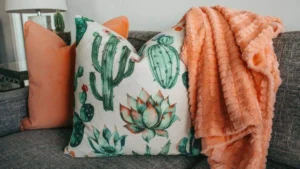
Colour comes next. Pick out the three colours that already dominate the room, the sofa, the rug, and the largest piece of art or the curtains, and choose a throw that matches one of them or sits one step warmer or cooler than it. A cream throw on a cream sofa disappears; a rust throw on a cream sofa reads as a deliberate accent. Do not introduce a fourth colour that appears nowhere else.
Scale matters as much as colour. A standard throw is roughly 50 by 60 inches, made for one person on a sofa. If it is so big that it pools on the floor on both sides, fold it in half lengthways first, and let the fold, not the floor, take the extra length. See our guide to how to choose a luxury sofa: a throw can only flatter a sofa whose proportions already work.
The five drapes that always work
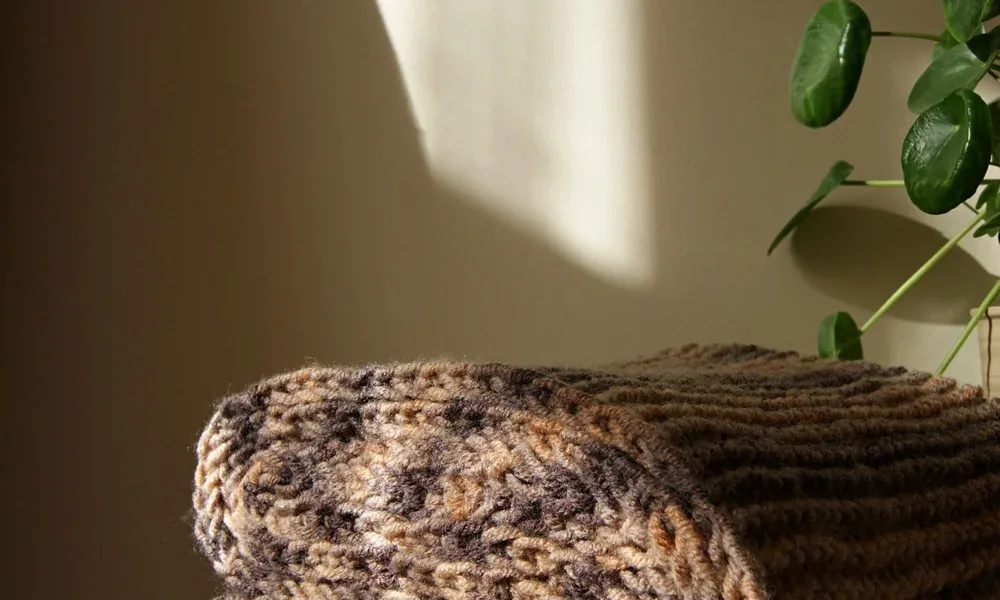
Five drapes cover almost every room, each taking under a minute.
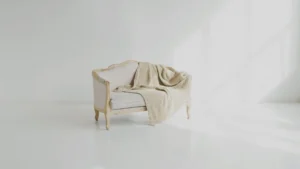
The arm fold is the workhorse. Fold the throw in thirds lengthways, lay it over one sofa arm so the fold sits on top and the ends hang evenly, one down the front and one down the back. It stays put, and it puts the softest thing in the room where a hand reaches for it. Use the arm nearest the door or lamp, and keep the other arm bare.
The back drape is the most relaxed of the five. Spread the throw across the top third of the sofa back, letting it fall a little unevenly, with one corner slightly lower than the other. It suits a throw you actually use in the evenings.
The diagonal is the one for a plain room that needs a line. Lay the throw across one corner of the sofa at roughly forty-five degrees, so it crosses the seat cushion and the arm in a single band of colour. Keep everything else on that sofa plain.
The basket roll is for throws that are not in use. Roll the throw loosely, not tightly, and stand it upright in a basket beside the sofa or at the foot of the bed, with the fringed end showing at the top. Choose a basket tall enough that the roll does not flop over.
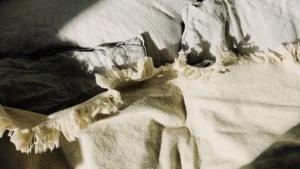
The bed fold is the simplest of all. Fold it in half lengthways, then in half again, and lay it across the foot of the bed, fold facing the pillows. On a made bed it reads as a finishing layer.
Colour: choose a shade that earns its place
Cashmere throws come in every colour, and the temptation is to buy the one you love in the shop and work the room around it afterwards. Do it the other way round. A throw is a small area of colour, so it looks best repeating a colour the room already owns.
Cream, oatmeal, and pale grey read as a light note on dark sofas, and vanish on pale ones. Charcoal and dark brown do the opposite. In a neutral room, pick a throw one or two shades off the sofa, not the same shade.
Colour is where a throw earns its keep in a plain room. A rust, forest green, or burgundy throw on a grey or cream sofa is often the only strong colour the room needs. The rule is one strong colour, used twice: the throw and one other thing, a cushion, a vase, or a book spine on the coffee table. Used once, a strong colour looks like an accident; used twice, it looks like a plan. Let a patterned throw be the room’s only pattern, and keep the sofa, cushions, and rug quiet.
Layering with cushions, rugs and other textiles
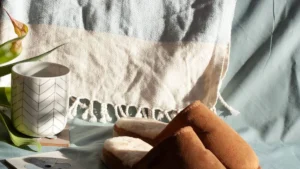
A throw never sits alone in a finished room, and the things it sits next to decide whether it looks layered or cluttered. The rule is to vary the texture, not the number of pieces. A smooth throw, a rough linen cushion, and a flat woven rug give the eye three surfaces to read.
Cushions are the throw’s closest neighbours, so treat them as a pair. If the throw is over the left arm, put the largest cushion at the right end, so the two ends balance. Match one thing, the colour or the tone, and let the rest differ. Matching cushion sets make a living room look like a showroom.
Rugs set the temperature of the whole arrangement. A throw on a sofa above a bare wooden floor looks cold, however soft the throw is, because the eye reads the hard floor first. A rug underneath warms the scene and gives the throw somewhere to belong. The rug does not need to match the throw; it needs to be quieter than it. Our roundup of the best luxury wool throws shows how wool, alpaca, and cashmere each sit against cushions and rugs.
Styling room by room
The living room is where a throw does its most visible work, and it is also where it is most often overdone. One throw per sofa, and usually one per room, is enough. A second throw on the opposite armchair works only in a different colour or drape. Keep the throw out of the dining half: it collects crumbs.
The bedroom is the throw’s second home, and the rules are simpler there. At the foot of the bed, folded flat, it is a finishing layer that makes a plain duvet look dressed. Draped over a bedroom chair or a bench, it is a soft note in a room that is mostly flat bedding and hard furniture. Keep it off the pillows, where it competes with the bedding, and away from the side of the bed you get in and out of, where it will be kicked to the floor by morning.
Reading corners and window seats are where a throw stops being decoration and starts being used. Fold it over the arm of the reading chair, within reach, with a cushion behind it. On a window seat, fold it in half and lay it along the seat like a runner. Test it: sit down and pull it over your knees without standing up.
Outdoor rooms need a different kind of thinking. A cashmere throw looks beautiful on a terrace for an evening, and will not survive a damp night left out there. Use it outdoors only when you are sitting there, and bring it in when you go inside. The same goes for a conservatory: sun fades a dark throw fast, so keep it folded in the shade.
Styling through the seasons
A throw is not a seasonal purchase, but its styling should change with the year: a working layer in winter, a visual one in summer.
| Season | What changes |
|---|---|
| Deep winter | Out on the sofa every evening, within easy reach. |
| Late winter | Keep the winter drape; swap a dark cushion for a paler one. |
| Spring | Fold it smaller, so the room feels lighter. |
| Early summer | Move it to the bedroom or the basket; leave the sofa bare. |
| High summer | Folded and stored, or used only on cool evenings outdoors. |
| Early autumn | Back on the sofa arm, with one warm-toned cushion. |
| Late autumn | Back to the full winter drape; add a rug if the floor feels cold. |
| Festive season | One deeper colour, burgundy or forest green, as the accent. |
Do not leave a winter drape in place all summer, or hide the throw away all winter: a throw that moves with the seasons looks intentional all year. Our guide to the best luxury throw blankets covers the different weights and weaves.
Checklist: styling a cashmere throw honestly
Run through these checks after you drape the throw, and again the next morning.
- Check the job: the throw has one clear role, a line of colour, a soft edge, or a warm layer.
- Check the colour: it repeats a colour already in the room.
- Check the drape: the fold is even and nothing pools on the floor.
- Check the neighbours: the cushions and rug differ from the throw in texture, and none matches it exactly.
- Check the balance: the other side of the sofa has something of similar weight.
- Check the use: reachable from the seat, and back in shape with one shake.
Frequently asked questions
Where is the best place to put a cashmere throw in a living room?
Over one arm, or across the top third of the sofa back, nearest the door or the reading lamp, within reach of the seat.
Should a throw match the sofa or contrast with it?
Contrast by one or two shades, not a leap: one step darker or lighter reads as deliberate, an exact match disappears.
Can I use a cashmere throw on a leather sofa?
Yes: the soft throw warms cool, smooth leather. Fold it over the arm or the back, and keep it off the seat, where it slides.
How do I stop a throw sliding off the sofa?
Fold it in thirds lengthways so the fold grips the arm, and tuck the inner end between the seat cushion and the arm.
Can I style a cashmere throw in a small room?
Yes: a soft throw makes a small room feel warmer, not smaller. Use one throw, folded small, in a pale or mid-tone colour.
Should a cashmere throw be on display all year?
Yes, but change the drape with the season: out in autumn and winter, folded small or basketed in spring and summer.
The bottom line
Styling a cashmere throw comes down to three decisions: its job in the room, the colour it repeats, and which of the five drapes suits the sofa. Get those right and the throw looks like it belongs.
Start with the arm fold on the side you use most, check the colour against the cushions and rug, and live with it for a week. A throw used every evening that still looks neat in the morning is styled correctly.
Note: This guide is about styling a cashmere throw you already own, not about choosing or buying a new one. Cashmere is a delicate fibre, so keep the throw away from rough surfaces that snag it, and follow the care label rather than general advice when it comes to cleaning.
Meet Our Experts
Our home and interiors editors style and live with the pieces they write about, and this guide was reviewed by our senior interiors editor for accuracy and practicality.
Why Trust BrassSmile
BrassSmile covers luxury living, homes, and design with hands-on, room-first advice. We recommend styling that works in real homes, not showrooms, and we update our guides when rooms, seasons, and reader feedback show us something better.
Sources
BrassSmile editorial guides on sofas, wool throws, and throw blankets; Pexels photography by SlipcoverKAS and Dilara Hazıroğlu.