A velvet scarf is the fastest way to make a winter outfit deliberate. One loop of deep, light-catching pile adds warmth and occasion to jeans, a coat or an evening dress. Done badly, though, velvet is unforgiving: a thin, shiny scarf with a flattened pile looks tired within weeks, while a well-made one keeps its softness and colour for years.
The difference is rarely the price tag. Some of the most expensive velvet scarves are the hardest to live with, because silk velvet marks easily and needs dry cleaning, while a mid-priced cotton velvet scarf can be brushed, steamed and worn every day.
Below are nine luxury velvet scarves worth considering in 2027, chosen by style and purpose rather than by label, from a silk-velvet evening wrap to a wide, blanket-style scarf.
- Key takeaways: Silk velvet is the softest and most formal choice, while cotton velvet is the most practical for everyday wear.
- A good velvet scarf feels substantial, with a pile that springs back when pressed.
- Dark colours hide pile marks best; pale velvet shows every crease.
- Length matters most: a scarf of at least 180 cm wraps twice and still hangs neatly.
- No velvet scarf is truly low-maintenance; one that sheds pile or loses its nap after a few wears is not worth keeping.
What a Luxury Velvet Scarf Actually Is
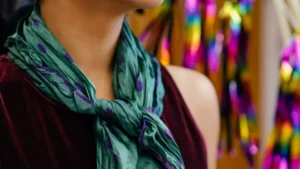
Velvet is a woven fabric with a short, dense pile cut from fine fibres and brushed upright, which gives it that soft, almost liquid surface. Light catches the pile unevenly, so the colour seems to shift as the fabric moves, and the scarf warms up quickly against the skin. Most luxury velvet scarves are silk, cotton or a blend, and the best ones feel heavy in the hand.
The pile is what separates a luxury scarf from a cheap one. On a good scarf it is even across the whole length and recovers when you press it with a fingertip. On a poor one the pile is uneven, the backing shows through at the folds, and the edges fray. Velvet also picks up lint and pet hair, and it crushes where a bag strap rubs.
Velvet scarves belong to the colder half of the year: over a winter coat, with an evening dress, or wrapped over knitwear. Indoors, a heavy scarf can be too warm, so the lighter silk-velvet styles below suit dinners and parties. Our guide to the best luxury silk scarves covers the lighter end of the wardrobe.
How We Chose These Scarves and What to Look For

Look first at the fibre and the weight. A silk-velvet scarf should feel fluid and cool at first touch, then warm quickly, with a fine pile and a graceful drape. A cotton-velvet scarf should feel heavier and sturdier, holding its shape and coping better with rain. A thin, papery scarf, or a stiff, scratchy pile, is a poor example of its type.
Look next at the length, the width and the edges. A scarf of at least 180 cm by 30 cm wraps twice around the neck and hangs neatly over a coat, while a shorter scarf slips constantly. Good edges are neatly finished, with a rolled hem or a fine fringe.
Finally, check the colour in natural light. Deep green, navy, burgundy and black show the pile at its richest and hide marks best, while pale velvet shows every crease. A scarf in a colour you already wear is worth more than a dramatic shade that stays in the drawer. Our comparison of velvet versus satin scarves explains where each fabric wins.
The 9 Best Luxury Velvet Scarves of 2027
1. The Classic Silk-Velvet Evening Wrap
What we like: A long, fluid wrap in deep burgundy silk velvet, with a fine pile and a soft sheen. It drapes in heavy folds and lifts a plain black dress.
What to consider: Silk velvet marks where it is touched and needs dry cleaning, so it is an occasion piece, not an everyday scarf.
Best For: Evening occasions. Material: Silk velvet. Price Range: £120–£220. Standout Feature: The fluid drape.
2. The Everyday Cotton-Velvet Scarf
What we like: A mid-weight cotton velvet scarf in dark navy, sturdy enough for daily wear and easy to brush clean. It holds its shape, copes with light rain, and looks good over a wool coat.
What to consider: Cotton velvet is heavier and less fluid than silk, so it suits a looser loop rather than a tight knot.
Best For: Daily winter wear. Material: Cotton velvet. Price Range: £60–£110. Standout Feature: The hard-wearing pile.
3. The Wide Blanket-Style Velvet Scarf
What we like: A generously wide scarf, almost a small shawl, in soft forest green, that wraps twice and still covers the shoulders. It is the warmest style here.
What to consider: The width makes it bulky under a fitted coat, so it works best over outerwear or with loose knitwear.
Best For: The coldest days. Material: Cotton-blend velvet. Price Range: £80–£140. Standout Feature: The oversized width.
4. The Fringed Velvet Scarf
What we like: A classic rectangular scarf in deep teal with a neat, hand-finished fringe. The fringe adds movement, and the colour sits well against grey, camel and black coats.
What to consider: Fringe tangles if it is stuffed into a pocket or a crowded bag, so fold the scarf rather than scrunching it.
Best For: Relaxed daytime outfits. Material: Silk-blend velvet. Price Range: £70–£130. Standout Feature: The hand-finished fringe.
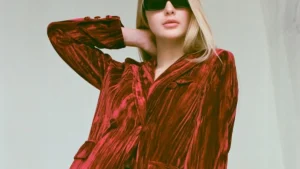
5. The Crushed-Velvet Statement Scarf
What we like: A crushed-velvet scarf in rich plum, with an uneven, marbled surface that hides creases better than smooth velvet. It is the most forgiving style here.
What to consider: The crushed texture is a strong look, so it suits plain outfits best and can fight with patterned coats.
Best For: Plain outfits. Material: Crushed velvet, silk blend. Price Range: £65–£120. Standout Feature: The marbled texture.
6. The Long Skinny Velvet Scarf
What we like: A slim, extra-long scarf in black velvet that loops three times around the neck or hangs in a single long line. It is the most versatile shape here.
What to consider: The narrow width gives less warmth than a wide scarf, so it is a style piece first and a warm layer second.
Best For: Layering over tailored coats. Material: Silk velvet. Price Range: £75–£140. Standout Feature: The extra length.
7. The Pale Blush Velvet Scarf
What we like: A soft blush-pink velvet scarf with a gentle sheen, light enough for indoor wear and pretty against cream and navy.
What to consider: Pale velvet shows every mark and crease, so it needs careful storage and a soft brush after each wear.
Best For: Indoor occasions. Material: Silk velvet. Price Range: £90–£160. Standout Feature: The soft blush tone.
8. The Reversible Velvet Scarf
What we like: A clever two-in-one scarf, deep emerald velvet on one side and a smooth, matte wool-blend on the other, covering both an evening look and a daytime one.
What to consider: Reversible scarves are slightly stiffer than single-sided ones, and the wool side can pill where it rubs against a coat collar.
Best For: Travellers. Material: Velvet and wool blend. Price Range: £95–£170. Standout Feature: The two-sided design.
9. The Embroidered Velvet Scarf
What we like: A deep navy velvet scarf with a fine, tonal embroidered border, the most detailed style here. The embroidery is subtle in daylight and catches the light at night.
What to consider: Embroidery needs gentle handling, so this scarf should be dry cleaned and never machine washed.
Best For: Special occasions and gifting. Material: Silk velvet with embroidery. Price Range: £110–£200. Standout Feature: The tonal embroidered border.
Velvet Types, Explained Simply
Silk velvet is the most luxurious of the velvets, with the finest pile, the softest hand and the most fluid drape, but it is also the most delicate: it marks easily, it usually needs dry cleaning, and water can damage it. Cotton velvet is heavier and sturdier, with a shorter pile and a more matte surface.
Crushed velvet is velvet pressed while wet, so the pile lies in different directions and the surface looks marbled. It hides creases better than smooth velvet, which makes it a good choice if you worry about upkeep, although the look is bolder and suits plain outfits best. Devoré, or burnout velvet, has parts of the pile removed to leave a sheer pattern; it is delicate, so keep it for occasion scarves.
Choose by how you will wear the scarf: silk velvet for dinners and parties, cotton velvet for the daily commute, crushed velvet if you want the look without the fuss. A velvet scarf also pairs naturally with a velvet dress, and our guide to how to style a velvet dress for autumn shows how to wear the two together.
The Caveats That Matter at a Glance
| Detail | What is known |
|---|---|
| Pile crushing | Velvet crushes where it is pressed or rubbed by a bag strap. Brushing restores the pile if caught early. |
| Cleaning | Silk velvet usually needs dry cleaning. Cotton velvet can often be steamed and spot-cleaned. |
| Shedding | New velvet scarves shed a little pile at first. Brushing before the first wear reduces it. |
| Lint and pet hair | Velvet attracts lint and pet hair. A soft brush or lint roller keeps it clean. |
| Water marks | Water can mark silk velvet. Keep it out of rain, and never rub a wet spot. |
| Pale colours | Pale velvet shows creases and dye transfer from dark coats. Store it folded in tissue, away from dark fabrics. |
| Storage | Fold velvet scarves loosely or roll them. Hanging can stretch a heavy scarf, and tight folding crushes the pile. |
| Who should avoid velvet | Anyone needing a washable everyday scarf may prefer wool or cashmere. |
Checklist Before You Buy
- Press the pile and check that it springs back, with no bald or shiny patches.
- Hold the scarf up to the light and check the pile looks even across the whole length.
- Measure it: at least 180 cm long and 30 cm wide, so it wraps twice and hangs neatly.
- Read the fibre and care labels, and be honest about whether you will dry clean it.
- Check the edges and any fringe for neat finishing, with no fraying.
- Try the colour in natural light, against the coat you will wear it with most.
Frequently Asked Questions
Are velvet scarves warm?
Yes. The dense pile traps air, so a velvet scarf wrapped twice holds heat like a thin wool scarf. Wide, blanket-style scarves are warmest; slim silk-velvet styles suit indoor or evening wear.
How do you clean a velvet scarf?
Silk velvet should be dry cleaned, and water kept away from it, because it can leave marks. Cotton velvet can usually be steamed and spot-cleaned. Never machine wash one unless the care label says you can.
Can you wear a velvet scarf every day?
You can, if you choose cotton velvet rather than silk. Cotton velvet copes with daily wear and light rain, while silk velvet marks easily and is better kept for occasions. Crushed velvet is also a good everyday choice.
What colours suit velvet best?
Deep colours show velvet at its richest: burgundy, forest green, navy, plum and black catch the light and hide pile marks. Pale colours such as blush pink and cream look soft but show every crease.
How do you stop a velvet scarf from crushing?
Store it loosely folded or rolled, never tightly packed, and keep bag straps off it. A soft brush lifts the pile after wear, and gentle steam restores crushed areas.
Are luxury velvet scarves worth the money?
They are, if the scarf is well made and you will wear it often. A good velvet scarf keeps its pile, colour and shape for years, while a cheap one looks tired within weeks.
The Bottom Line
The best luxury velvet scarf matches how you actually live: silk velvet for evenings, cotton velvet for everyday winter wear, and a crushed or reversible style if you want the look without the fuss. The silk-velvet evening wrap is the most beautiful piece here, but the cotton-velvet scarf is the one you will reach for most often.
Whichever style you choose, buy the colour you already wear, check the pile and the edges before you pay, and treat the scarf kindly between wears. A velvet scarf bought well is worn for years.
Note: Prices are approximate, based on late-2026 boutique listings, and vary by country and season. Check the official boutique for the current price.
Meet Our Experts
Our fashion editors cover luxury accessories, fabrics and seasonal styling, and review each guide against current boutique listings and published fabric guidance before it is published.
Why Trust BrassSmile
We describe fabrics, fits and care from verifiable specifications and published reviews, and we flag the caveats that matter, such as cleaning needs and pile care, rather than only the selling points. We do not accept payment for placement in our guides.
Sources
Byrdie, Vogue, Harper’s Bazaar, and published fabric and care guidance from luxury fashion houses.