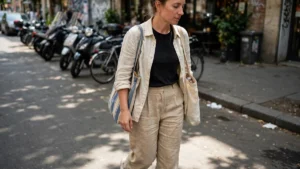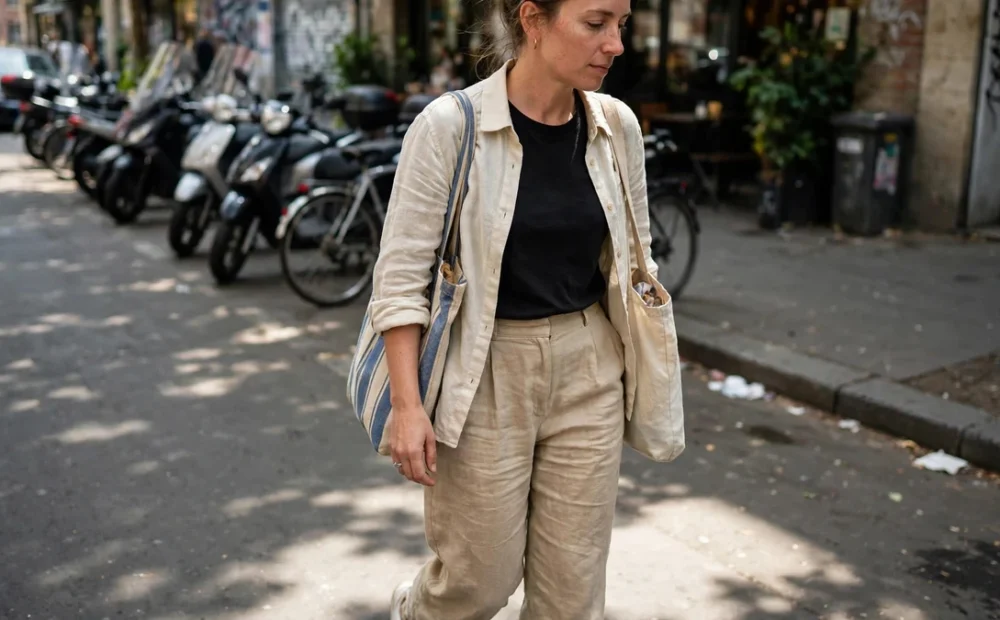
A linen shirt is one of the simplest garments to own and one of the easiest to get wrong. It breathes better than almost any other shirt, it looks relaxed without trying, and it suits warm weather in a way that cotton and synthetics rarely match. Yet many linen shirts end up unworn, because they were styled badly, paired with the wrong trousers, or worn in a way that made the wearer look untidy rather than effortless.
The truth is that linen rewards a little thought. The fabric creases, the drape is softer than cotton, and the colour can look different in daylight than it did in a shop.
Below are nine steps for styling a linen shirt in 2027, from choosing the right fit to pairing it with trousers, shoes and layers. Each step is practical, and each one is designed to help you wear linen with confidence, not just own it.
Key takeaways
- Fit comes first: a linen shirt should skim the body, with the shoulder seam on the shoulder and the sleeve ending around mid-bicep or at the wrist.
- Linen creases, and that is normal; a cotton-linen blend creases less, while a light steam softens the worst of it without removing the character of the fabric.
- Plain linen pairs with almost anything, while a bold linen print needs quiet, plain companions to work.
- Tucking in looks smarter and more deliberate, while untucked looks relaxed; both work, but the shirt needs to be the right length for the choice you make.
- A linen shirt is a warm-weather and smart-casual garment, not a formal one, so it should not be worn with a tie or under a formal suit.
What styling a linen shirt actually involves
Styling a linen shirt is less about rules and more about balance. Linen is a soft, textured, slightly informal fabric, so the rest of the outfit needs to give it structure. That usually means clean trousers, tidy shoes, and a simple belt, rather than anything fussy.
The fabric itself sets the tone. Linen is made from flax fibres, which are strong, breathable and naturally textured. It absorbs moisture and dries quickly, which is why it feels cool in heat. It also creases, because the fibres are stiff and do not spring back the way cotton does. That creasing is not a flaw. It is the signature of the fabric, and people who wear linen well treat it as texture rather than as a problem to solve.
Colour matters too. White, natural stone, navy and sage are the most useful linen colours, because they pair easily and suit most skin tones. Brighter colours and bold prints can look wonderful, but they need more care in pairing. If you are styling your first linen shirt, start with a plain colour, learn the fit and the drape, and add pattern later.
How to approach a linen shirt and what to look for
Start with the fit, because no amount of styling rescues a shirt that does not fit. The shoulder seam should sit on your shoulder. The body should skim the torso with room to move, not billow when you sit down. The sleeve should end around mid-bicep for a short sleeve, or at the wrist bone for a long sleeve. If you are between sizes, take the smaller one, because linen softens and relaxes with wear.

Look next at the fabric weight. A very thin linen can look transparent in bright sun and show sweat quickly, while a heavier linen holds its shape better and looks smarter. Hold the shirt up to the light before you buy: if you can see straight through it, it is probably too thin for everyday wear. Our guide to linen vs cotton shirts explains how the two fabrics behave differently in heat, in the wash, and over time, which helps you decide which one suits your climate.
Finally, look at the details. Check the buttons, the stitching at the placket and the hem, and the collar. A collar that lies flat and keeps its shape will look smarter all day than one that flops. A well-finished hem that sits evenly is a sign of decent construction. These are small things, but they are the difference between a shirt that looks considered and one that looks careless.
9 steps to style a linen shirt well in 2027
1. Get the fit right before anything else
What to do: Choose your true size, check the shoulder seam in a mirror, and sit down in the shirt before you decide. What to avoid: Buying a size up for comfort, because the extra fabric will billow and make you look larger than you are.
Best for: Everyone, and especially anyone buying their first linen shirt. Time needed: Ten minutes in a fitting room. Standout tip: If the shirt pulls at the chest buttons when you sit, it is too small; if the shoulders droop, it is too big.
Fit is the foundation of every other step. A linen shirt that fits well needs very little else to look good, while a shirt that fits badly cannot be saved by good trousers or good shoes.
2. Choose plain colours first
What to do: Start with white, stone, navy or sage, which pair with almost everything you already own. What to avoid: Buying a bold print or a bright colour as your first linen shirt, because it limits what you can pair it with.
Best for: Building a wardrobe that works hard. Time needed: No extra time, just a calmer choice. Standout tip: A white linen shirt is the hardest-working shirt in a warm-weather wardrobe.
Plain colours are not boring. They are the reason a linen shirt gets worn ten times a season instead of twice, because they do not compete with the rest of the outfit.
3. Pair it with clean, structured trousers
What to do: Wear chinos, linen trousers or tailored shorts in a solid colour, with a clean line and a proper waistband. What to avoid: Pairing a linen shirt with baggy, faded or heavily distressed bottoms, which makes the whole outfit look unfinished.
Best for: Smart-casual days, lunches, and holidays. Time needed: Two minutes to choose. Standout tip: Navy trousers with a white linen shirt is the simplest smart combination there is.
Because linen is soft, the trousers need to give the outfit its structure. A clean, well-fitting pair of chinos does that without any effort, and it is why the combination works so reliably.
4. Decide whether to tuck it in
What to do: Tuck the shirt in for a smarter look, or leave it untucked for a relaxed one, and make the choice deliberately. What to avoid: A half-tuck that looks accidental, or a shirt that is too long to stay tucked and too short to look right untucked.
Best for: Anyone who wants to control how smart the outfit reads. Time needed: One minute. Standout tip: A French tuck, with just the front tucked in, works well with a linen shirt and relaxed trousers.
Tucking in is the fastest way to make a linen shirt look deliberate. It defines the waist, it shows the trousers properly, and it turns a casual shirt into a considered outfit.
5. Keep the layers light and simple
What to do: Layer with an unlined blazer, a light overshirt, or nothing at all, and keep the colours quiet. What to avoid: Heavy jackets, bulky knitwear, or a formal suit jacket, which fight against the lightness of the linen.
Best for: Cooler evenings and smarter occasions. Time needed: Two minutes. Standout tip: An unlined linen or cotton blazer over a linen shirt is the most natural pairing.
Linen is a warm-weather fabric, so its layers should be light too. A heavy layer on top of a light shirt looks unbalanced, while a light layer looks like it belongs.
6. Choose shoes that match the occasion
What to do: Wear clean leather shoes or loafers for a smart look, and clean white trainers or leather sandals for a relaxed one. What to avoid: Worn-out trainers, heavy boots, or anything that looks like it belongs to a different outfit entirely.
Best for: Finishing the outfit properly. Time needed: One minute. Standout tip: Suede loafers in a neutral tone work with almost every linen shirt.
Shoes set the tone of the outfit more than most people realise. The same linen shirt looks smart with loafers and casual with trainers, so choose the shoes for the occasion you are actually going to.
7. Add one simple accessory, not five
What to do: Add a single clean accessory, such as a leather belt, a simple watch, or a pair of sunglasses. What to avoid: Piling on a belt, a bracelet, a necklace, a hat and a bag all at once, which crowds the outfit.
Best for: Anyone who wants the shirt to stay the focus. Time needed: One minute. Standout tip: A brown leather belt with a white linen shirt and navy trousers is a classic for a reason.
Linen already has texture and character, so it does not need much help. One good accessory adds polish. Several accessories compete with the shirt and with each other.
8. Work with the creases, not against them
What to do: Accept that linen creases, give the shirt a light steam or a quick iron if you want it smoother, and wear it with confidence. What to avoid: Ironing linen flat and stiff, which removes its character, or apologising for the creases, which draws attention to them.
Best for: Anyone who has avoided linen because of the creasing. Time needed: Three minutes with a steamer. Standout tip: A cotton-linen blend creases noticeably less than pure linen, if the creases genuinely bother you.
Creases are the reason some people avoid linen, and they are also the reason it looks so good when worn well. A shirt that has softened through the day looks lived-in, not untidy, and that is exactly the point of the fabric. Our guide to why linen keeps you cool explains the fibre behind that texture, and why the creasing is tied to the very thing that makes linen comfortable.
9. Know when a linen shirt is the wrong choice
What to do: Save linen for warm weather, smart-casual and casual settings, and choose a cotton or wool shirt for formal occasions and cold days. What to avoid: Wearing linen under a formal suit, with a tie, or to an event that calls for a dress shirt.
Best for: Protecting your reputation and your shirt. Time needed: A moment of honest judgement. Standout tip: If the invitation says formal, wear a dress shirt; if it says smart-casual, linen is usually perfect.
Knowing when not to wear linen is as important as knowing how to wear it. A linen shirt at the wrong event looks out of place no matter how well it is styled, while the right shirt at the right event looks effortless.
Which linen shirt styling suits you
Your build and your habits should shape how you style linen. A slimmer person can wear a closer fit and a bolder print without being overwhelmed. A broader person usually looks better in a plain colour and a straight, skimming cut, because the fabric does not add bulk where it is not wanted. Taller people can wear a longer shirt untucked, while shorter people usually look better with a shirt that ends at mid-hip and is tucked in.
Your lifestyle matters too. If you spend your days in an office, a linen shirt with chinos and loafers is a practical warm-weather uniform. If you spend your days outdoors, a linen shirt with tailored shorts and clean trainers is more useful. A denim shirt can be styled in a similar way, but it is heavier and warmer, so linen is the better choice when the temperature rises.
Finally, think about your colour palette. Linen looks best in colours that suit your skin tone, and the simplest test is to hold the shirt up to your face in daylight. If your skin looks healthy and your eyes look bright, the colour works. If your skin looks washed out or tired, try a different shade. White suits most people, navy suits most people, and stone suits most people, which is why those three colours are the safest starting point.
The caveats that matter
Linen is not a fabric for every occasion, and it is not a fabric that stays looking new. It softens, it fades slightly, and it creases, and all of that is normal. What it does not do is hold a sharp press, stay perfectly smooth, or look formal. If you need a shirt that stays crisp all day, choose cotton poplin instead. If you need a shirt for a formal event, choose a dress shirt.
| Detail | What is known |
|---|---|
| Best fit | Skimming the body, shoulder seam on the shoulder, sleeve ending at mid-bicep or wrist |
| Best first colours | White, stone, navy and sage, because they pair with almost everything |
| Best trousers | Chinos, linen trousers and tailored shorts in solid colours |
| Tucked or untucked | Both work; tucked is smarter, untucked is more relaxed, and a French tuck sits in between |
| Best layers | Unlined blazers and light overshirts; avoid heavy jackets and formal suit jackets |
| Creases | Normal for linen; a light steam softens them, and a cotton-linen blend creases less |
| When not to wear it | Formal events, with a tie, under a formal suit, or in cold weather |
| What it does not do | It does not stay crisp all day, and it does not replace a formal dress shirt |
If you are buying online, check the measurements rather than the size label, and read the fabric composition. A shirt labelled linen may be a blend, and a blend may suit you better, so it is worth knowing what you are actually buying.
Checklist: styling a linen shirt honestly
Use these checks before you leave the house.
- Check the fit: shoulders on the shoulder, body skimming, sleeves ending in the right place.
- Check the colour: hold the shirt near your face in daylight and make sure it suits your skin.
- Check the trousers: clean, structured, and in a solid colour that does not compete with the shirt.
- Check the tuck: decide deliberately whether to tuck in, leave untucked, or French tuck.
- Check the shoes: clean, and matched to the occasion, not to a different outfit.
- Check the creases: give the shirt a light steam if you want it smoother, then stop worrying about it.
Frequently asked questions
Should a linen shirt be tight or loose?
Neither. It should skim the body with room to move, not cling and not billow. The shoulder seam should sit on your shoulder, and the body should not pull at the buttons when you sit down.
Can I wear a linen shirt with jeans?
Yes, with clean, dark jeans in a straight or slim cut. Avoid very faded, ripped or baggy jeans, because they make the outfit look unfinished rather than relaxed.
How do I stop a linen shirt from creasing so much?
You cannot stop it completely. A light steam before wearing helps, and a cotton-linen blend creases less than pure linen.
Can I wear a linen shirt to work?
Yes, if your workplace is smart-casual. Pair a plain linen shirt with chinos and clean shoes, and tuck it in. If your workplace is formal, choose a cotton dress shirt instead.
What is the best colour for a first linen shirt?
White is the most versatile, followed by navy and stone. White pairs with almost everything, it looks smart, and it shows the texture of the linen at its best.
Can I iron a linen shirt?
Yes, on a medium to high heat with steam, while the shirt is slightly damp. Avoid pressing it completely flat and stiff, because that removes the natural texture that makes linen look good.
The bottom line
Styling a linen shirt well comes down to three things: a fit that sits properly on your shoulders, trousers that give the outfit structure, and the confidence to let the fabric crease a little. Get those three right, and a linen shirt will look considered and calm, whether you are at lunch, on holiday, or at a smart-casual evening.
Start with a plain colour, pair it with clean chinos and tidy shoes, and wear it often enough to learn how it behaves.