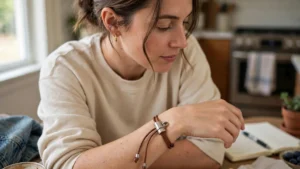

A wrap bracelet is a long strand that winds around the wrist two, three or four times, and it is one of the most forgiving pieces of jewellery you can own. It does not need an exact size, it does not need a clasp you cannot manage one-handed, and it works with almost any outfit, from denim and a white shirt to a silk dress. The problem is rarely finding a wrap bracelet. It is styling one so it looks deliberate rather than accidental.
The difference between a wrap that looks effortless and one that looks messy is usually small: the right length for your wrist, a sleeve that ends where the wrap begins, and one clear focal point instead of three competing ones. Get those three things right and a wrap bracelet adds texture, colour and movement to an outfit without any effort at all. Get them wrong and it slides, tangles, or disappears under a cuff.
Below are nine steps to style a wrap bracelet well in 2027, from choosing the right length to taking a wrap from day to evening. Each step explains what to do, what to avoid, and how long it takes, so you can build the habit in minutes rather than rethinking it every morning.
Key takeaways
- A wrap bracelet should wind snugly around the wrist without cutting in, and the tail should sit flat rather than dangling.
- Match the wrap’s material to the occasion: leather and beads for casual days, fine metal and pearls for evening.
- Let one wrap be the focal point, and keep the rest of the wrist calm, especially when wearing a watch.
- Sleeve length matters: a wrap works best with sleeves that end at or above the wrist bone.
- No styling rule suits every wrist or outfit, and a wrap that constantly slides, snags or irritates should be re-sized or set aside rather than forced.
What a wrap bracelet actually is
A wrap bracelet is a single long strand, usually leather, cord, beads or a fine chain, that coils around the wrist several times instead of fastening once. Some wraps close with a button, a toggle or a magnetic clasp. Others simply tie, or use a sliding knot that adjusts to the wrist. The defining feature is the wrap itself: two or more loops that sit together as one piece.
The style became popular as a casual, bohemian accessory, but it has since moved into everyday and even formal wardrobes. Leather wraps suit denim and workwear. Beaded wraps add colour to plain outfits. Fine metal and pearl wraps work for evening, especially when they are kept slim. The same bracelet can look completely different depending on how many times it is wrapped and what it is worn with, which is part of its appeal and part of the challenge.
A wrap is not the same as a stack of separate bangles. A stack is several independent pieces that can slide, clink and separate. A wrap is one piece that holds together, which makes it easier to put on and harder to lose, but also means the whole look depends on that one strand. If the strand is too long, it bunches. If it is too short, it pulls. Getting the length right is the first step, and it is the one most people skip. A wrap bracelet in the right length should feel secure without feeling tight, and it should sit on the wrist rather than sliding down to the hand.
How to style wrap bracelets and what to look for
Look first at the length. A wrap bracelet is usually sold by total length, not by wrist size, so check how many times it winds around your wrist. A double wrap suits most wrists and most outfits. A triple or quadruple wrap makes more of a statement but needs a slimmer strand, or it will look bulky. Hold the bracelet against your wrist before buying if you can, and count the loops.
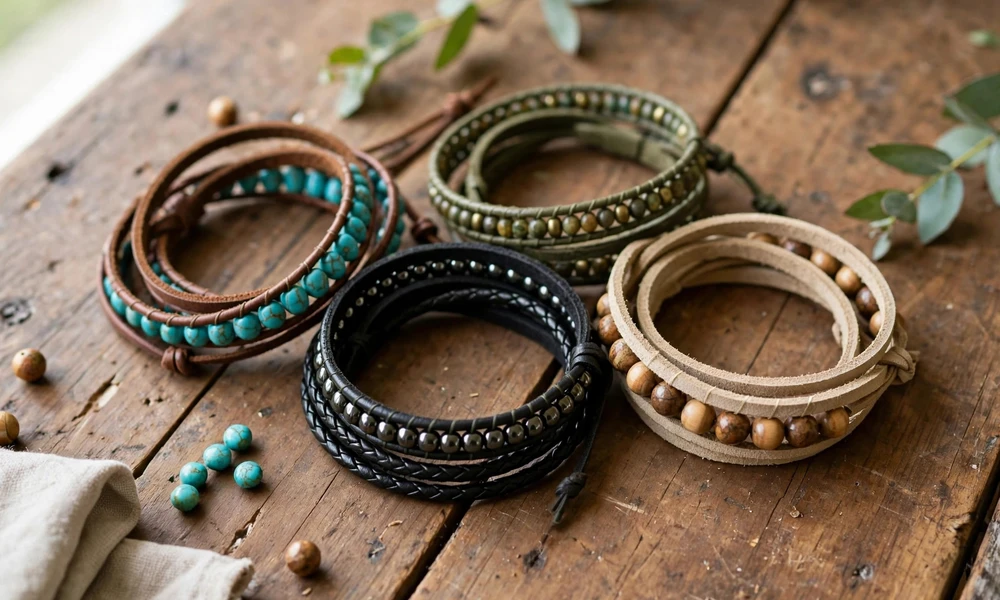
Look next at the material and the closure. Leather should feel supple and smell clean, not stiff or chemical. Beads should be evenly sized and strung on a strong cord, with knots between them so one break does not scatter the strand. A magnetic clasp is convenient but can pop open if it catches on a sleeve, while a button or toggle is more secure but takes two hands to fasten. Choose the closure you can manage on your own, because a bracelet you cannot put on without help is a bracelet you will stop wearing.
Finally, look at the colour and the weight. A wrap bracelet covers more of the wrist than a single bangle, so its colour has more impact. A neutral leather or metal wrap is the easiest starting point. A brightly coloured beaded wrap is a statement piece and should be the only loud thing on the wrist. If the wrap feels heavy, it will slide down through the day, so lighter strands are better for all-day wear. Our guide to measuring your bracelet size helps here, because knowing your wrist measurement makes it easier to judge whether a wrap will sit where you want it.
9 steps to style a wrap bracelet well
Start with the right wrap length for your wrist
What to do: Measure your wrist, then choose a wrap that coils snugly two or three times with a small tail left over. What to avoid: Buying by total length alone, without checking how many loops it makes on your wrist. Best for: Every wrap bracelet, before anything else. Time needed: Two minutes with a tape measure. Standout tip: If the wrap bunches at the wrist bone, it is too long; if it pulls when you bend your hand, it is too short.
Match the material to the occasion
What to do: Wear leather and beaded wraps for casual days, and fine metal, pearl or crystal wraps for evening and formal occasions. What to avoid: Wearing a chunky leather wrap with a silk evening dress, or a delicate pearl wrap to the gym. Best for: Building a small collection that covers the week. Time needed: One minute of thought before you dress. Standout tip: If you own one wrap, make it a neutral leather or slim metal one, because it covers the most occasions.
Material sets the tone of the whole outfit. Leather reads relaxed, beads read playful, metal reads polished, and pearls read formal. Matching the material to the occasion is the fastest way to make a wrap look intentional.
Layer a wrap with a watch, not against it
What to do: Wear the wrap on the opposite wrist from your watch, or keep it slim and on the same wrist with a clear gap. What to avoid: Stacking a thick wrap directly against a watch face, where it scratches the case and hides the dial. Best for: People who wear a watch every day. Time needed: Seconds, once it becomes a habit. Standout tip: Match the wrap’s metal to the watch case for a calm, coordinated look.
Balance the wrap with your sleeve length
What to do: Wear wraps with sleeves that end at or above the wrist bone, or push longer sleeves up to the elbow. What to avoid: Hiding a wrap under a full-length cuff, where it bunches, snags and disappears. Best for: Three-quarter sleeves, rolled sleeves and sleeveless tops. Time needed: Seconds to push a sleeve up. Standout tip: A wrap peeking from under a cuff looks accidental; a wrap worn with a pushed-up sleeve looks deliberate.
Sleeves and wraps compete for the same space. When the sleeve wins, the wrap is wasted. When the wrap is visible, it becomes part of the outfit rather than a hidden layer.
Mix textures, keep the palette calm
What to do: Pair a leather wrap with a metal bangle, or a beaded wrap with a plain chain, in colours that sit together quietly. What to avoid: Mixing three loud textures and three bright colours on one wrist. Best for: Layered looks and bohemian outfits. Time needed: A minute in front of the mirror. Standout tip: If two textures clash, remove one; a calm wrist always looks more polished than a busy one.
Let one wrap be the focal point
What to do: Choose one wrap with colour, pattern or a charm, and keep everything else on that wrist plain. What to avoid: Wearing two statement wraps side by side, where neither gets noticed. Best for: Statement wraps and charm wraps. Time needed: Seconds, once you know which piece is the star. Standout tip: If you cannot decide which wrap is the focal point, wear only one.
Style a wrap for work without overdoing it
What to do: Choose a slim leather or fine metal wrap in a neutral colour, worn on one wrist only. What to avoid: Chunky beaded wraps, jingling charms, or multiple wraps in a formal office. Best for: Office days and client meetings. Time needed: No extra time, once you have a work-appropriate wrap. Standout tip: If your wrap makes a sound when you type, it is too noisy for work.
Work styling is about restraint. A slim wrap adds personality without distracting you or anyone else, while a loud wrap can be a problem in meetings, at a keyboard, or when shaking hands.
Take a wrap from day to evening
What to do: Keep the same wrap, but add a slim metal bangle beside it and switch to a darker, more polished top. What to avoid: Changing the whole wrist for the evening, which takes time and often looks overdone. Best for: Days that run from office to dinner. Time needed: One minute to add a bangle. Standout tip: A leather wrap with a gold bangle beside it reads evening instantly, without a full jewellery change.
Store and care for your wraps after wearing
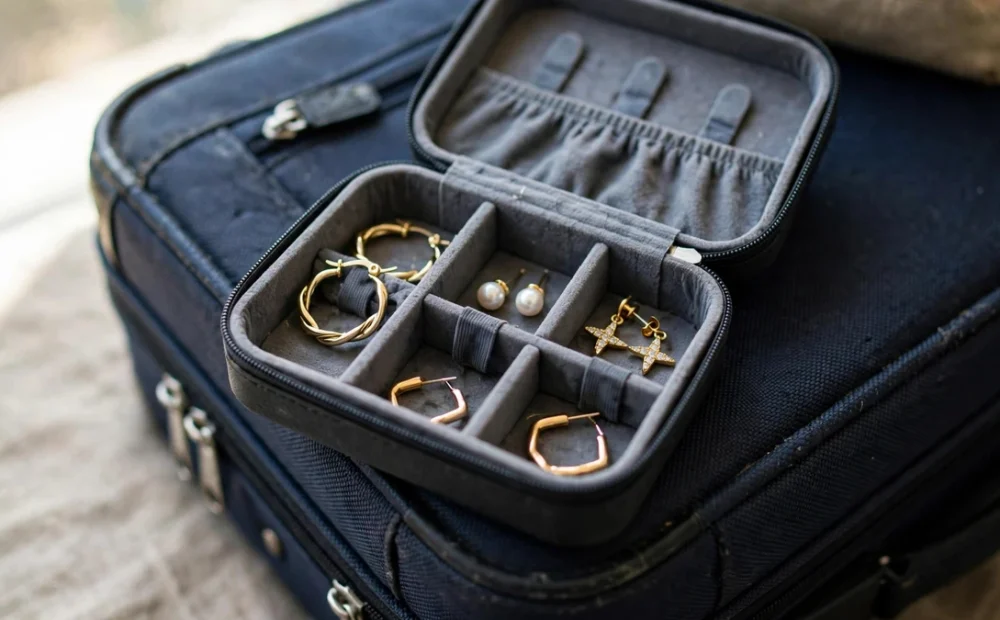
What to do: Coil each wrap loosely, fasten the clasp, and store it flat in a pouch or a jewellery box compartment. What to avoid: Tossing wraps into a drawer loose, where they tangle, kink and scratch each other. Best for: Keeping wraps in good condition for years. Time needed: Thirty seconds after taking it off. Standout tip: Fastening the clasp before storage stops the strand from tangling with other jewellery.
Wrap bracelets tangle more easily than most jewellery, because they are long and flexible. Thirty seconds of care after wearing saves ten minutes of untangling later, and it keeps the cord and clasp in good condition.
Which styling suits which occasion
For everyday wear, a double leather wrap in brown or black is hard to beat. It works with denim, cotton and linen, it suits most skin tones, and it does not need any other jewellery to look complete. Add a slim metal bangle if you want a little more polish, but do not feel you must. Everyday styling should be quick, comfortable and easy to repeat.
For work, keep it slim and neutral. A single leather or fine metal wrap on one wrist, with a watch on the other, is professional without being plain. Avoid charms that jingle, beads that catch on sleeves, and anything that slides down to your hand when you type. Our guide to layering bracelets covers the same balance in more detail, and the principle is identical: one considered layer beats three careless ones.
For evening, let the wrap be finer and the rest of the wrist quieter. A slim metal or pearl wrap, worn alone or with one thin bangle, suits a silk dress or a tailored jumpsuit. For holidays and weekends, the rules relax: beaded wraps, bright colours and multiple loops all work, because the outfit is casual and the wrap is part of the fun rather than a finishing touch.
The caveats that matter
Wrap bracelets are easy to wear, but they have real limits. A long strand can catch on door handles, bag straps and chair arms, and a caught wrap can snap or pull the wrist sharply. Leather wraps absorb sweat and perfume, which shortens their life if they are never cleaned. Magnetic clasps can pop open, and sliding knots can loosen through the day. None of these are reasons to avoid wraps, but they are reasons to check the fit and the closure before leaving the house.
| Detail | What is known |
|---|---|
| Best starting length | A double or triple wrap that coils snugly without bunching or pulling |
| Best everyday material | Leather or slim metal, in a neutral colour that suits most outfits |
| Wearing with a watch | Opposite wrist, or same wrist with a clear gap and matching metal |
| Best sleeve length | Three-quarter, rolled or sleeveless, so the full wrap is visible |
| Layering rule | One focal wrap, with plain pieces beside it, and a calm colour palette |
| Work styling | Slim, neutral, one wrist only, and quiet enough to type in |
| What to avoid | Hiding wraps under cuffs, stacking two statement wraps, or wearing noisy charms at work |
| What it does not do | It does not suit every outfit, and a wrap that slides, snags or irritates should be re-sized or set aside |
If you have sensitive skin, check the materials before buying. Leather wraps can contain dyes and finishes that irritate some skin, and metal clasps and sliders can contain nickel. Look for hypoallergenic closures and vegetable-tanned leather if your skin reacts easily, and stop wearing a wrap that leaves a rash or persistent redness.
Checklist: styling a wrap bracelet honestly
Use these checks before you leave the house, and again at the end of the day.
- Check the length: the wrap should coil snugly without bunching at the wrist bone or pulling when you bend your hand.
- Check the closure: the clasp, button or knot should be secure, and the tail should sit flat.
- Check the sleeve: push it up or choose a shorter sleeve so the full wrap is visible.
- Check the focal point: one wrap should lead, and everything else on the wrist should be plain.
- Check the watch: keep a clear gap between the wrap and the watch, or wear them on opposite wrists.
- Check the care: coil the wrap loosely, fasten the clasp, and store it flat in a pouch or compartment.
Frequently asked questions
How many times should a wrap bracelet go around the wrist?
Two or three times suits most wrists and most outfits. A double wrap is the easiest daily choice. A triple or quadruple wrap makes more of a statement but needs a slimmer strand, or it will look bulky and slide down.
Can I wear a wrap bracelet with a watch?
Yes. Wear the wrap on the opposite wrist, or keep it slim and on the same wrist with a clear gap. Match the wrap’s metal to the watch case, and avoid stacking a thick wrap directly against the watch face.
Do wrap bracelets suit formal occasions?
Slim metal and pearl wraps do, especially when worn alone or with one thin bangle. Chunky leather and brightly coloured beaded wraps are better for casual and holiday outfits than for formal events.
How do I stop a wrap bracelet from sliding down?
Check the length first: a wrap that slides is usually too long or too heavy. Tighten a sliding knot, or choose a lighter strand. If it still slides, the wrap may not suit your wrist shape, and a shorter or slimmer design will work better.
Can I layer a wrap bracelet with bangles?
Yes, if the wrap is the focal point and the bangles are plain and slim. One wrap with one or two thin bangles works well. Avoid layering a thick wrap with wide bangles, which makes the wrist look crowded.
How do I clean a leather wrap bracelet?
Wipe it with a soft, dry cloth after wearing, and occasionally with a cloth very lightly dampened with water. Do not soak leather, and keep it away from perfume, sunscreen and harsh cleaners, which dry and stain it.
The bottom line
Styling a wrap bracelet well comes down to three things: the right length, a visible wrist, and one clear focal point. Get those right and a wrap adds texture and personality to almost any outfit, from denim to silk. Get them wrong and it slides, tangles or disappears under a sleeve.
Start with a neutral leather or slim metal wrap, learn how it sits on your wrist, and build from there. A wrap bracelet rewards a little attention in the morning and almost none for the rest of the day, which is exactly what everyday jewellery should do.