Multiple piercings change the way earrings work. A single pair only has to look good on its own. A stack of three or four has to look good together, sit comfortably in piercings that heal at different speeds, and stay put all day. The earrings that do that well are not the biggest or the sparkliest. They are the small, light, well-made pieces that sit close to the ear and do not fight each other for space.
The mistake most people make is buying earrings for multiple piercings the way they buy earrings for one piercing: by falling for a single beautiful piece and hoping it will work everywhere. A long drop that is lovely in a lobe is a liability in a helix. The right pieces are chosen for the piercing they will live in, not just for how they look in the box.
Below are nine earrings worth considering in 2027 for ears with more than one piercing, from flat-back studs that heal kindly to threaders and cuffs that fill a stack without a needle. Each one is described by what it is good at, what to watch for, and who it suits best.
Key takeaways
- Flat-back studs and huggie hoops are the best bases for multiple piercings, because they sit close to the ear, do not snag, and suit both lobes and cartilage.
- Keep the heaviest piece at the lobe and the lightest pieces higher up; cartilage piercings carry far less weight comfortably than lobes do.
- One metal through the stack makes different shapes look like a set, even when the pieces were bought years apart.
- Cuffs and climbers fill gaps in a stack without a new piercing, which makes them the easiest way to try a layered look.
- No earring is worth a sore ear: a stack should never go on a fresh, hot, or swollen piercing, and any piece that pulls or aches should come out.
What multiple piercings change about earrings
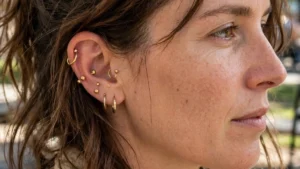
A second or third piercing changes three things at once: the space available, the weight each piercing can carry, and the way the pieces interact. Space is the obvious one. A lobe is a wide, soft canvas. A helix is a narrow curve of cartilage. A piece that fits the lobe easily may crowd the helix, pressing against its neighbour and looking cramped.
Weight matters more than most people expect. The lobe is soft, well supplied with blood, and used to carrying weight. Cartilage is firmer, slower to heal, and quicker to complain. A drop that feels light in your hand can feel heavy after eight hours in a helix. The rule is simple: the higher the piercing, the lighter the piece.
Interaction is the part people forget. Earrings in neighbouring piercings touch each other, catch on each other, and tangle with hair in ways a single pair never does. That is why the best earrings for multiple piercings are short, close-fitting, and smooth-edged. They leave room for their neighbours, and they do not snag.
How we chose these earrings and what to look for
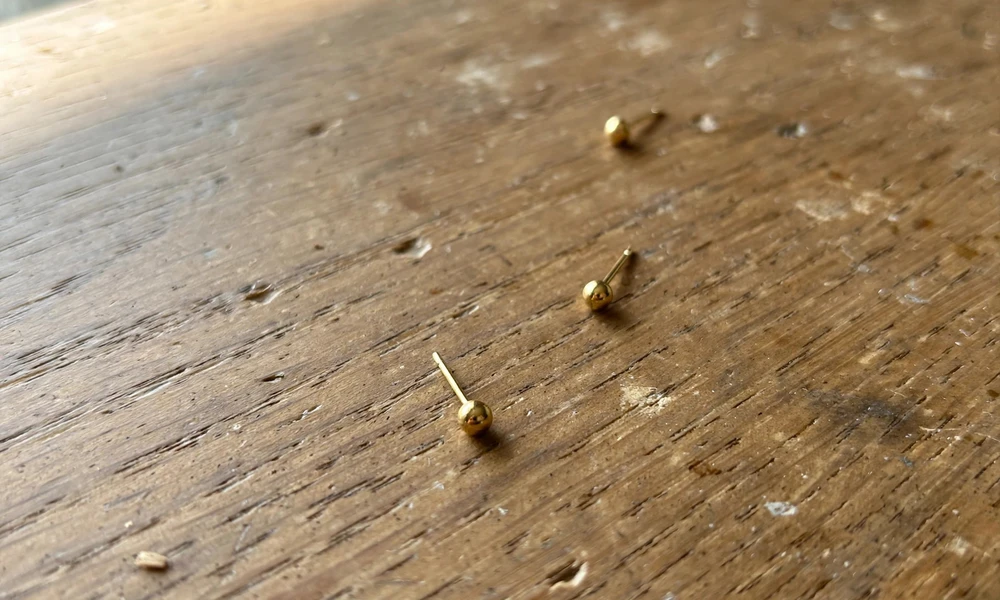
Look first at the back. A flat-back stud — a post with a small flat disc on the inside — is the most comfortable base for a layered stack, because it does not poke, catch, or press into the skin behind the ear. Butterfly backs are fine for a single lobe stud, but in a stack they add bulk and snag on hair. Threaded or push-pin flat backs are the standard piercers use, and they are worth asking for by name.
Look next at the weight and the profile. Hold the earring in your hand and ask whether you would notice it after eight hours. If it feels substantial, it will feel heavy in cartilage. Look at how far it sticks out from the ear, too. A low profile — a stud that sits close, a huggie that hugs the lobe — is what keeps a stack tidy and comfortable. Our guide to the best climber earrings shows how a single piece can climb the ear and fill a stack on its own, which is a useful trick when you have fewer piercings than the look you want.
Finally, look at the metal. Hypoallergenic posts matter more in a stack than in a single pair, because more metal touches more skin. Implant-grade titanium and 14k gold are the safest choices for sensitive ears. If one piece in the stack irritates your ear, the whole stack comes out, so every piece needs to be skin-friendly, not just the one at the lobe.
The 9 best earrings for multiple piercings of 2027
The Classic Gold Vermeil Stud
What We Like: Simple, comfortable, and endlessly reusable across stacks. The vermeil finish looks like solid gold at a fraction of the price, and the low profile means it never catches on hair or clothing. What to Consider: Vermeil wears over time, especially with daily wear and water, so expect to replate or replace it after a year or two of constant use. Best For: First and second lobe piercings, and healed helix piercings. Material: Gold vermeil over sterling silver. Price Range: $25 to $60. Standout Feature: The quiet anchor that makes every other piece in the stack look deliberate.
The Slim Gold Huggie Hoop
What We Like: Light, secure, and hard to lose. The hinged closure clicks shut, so there is no butterfly back to slip off, and the close fit means it rarely catches on anything. What to Consider: The hinge is the weak point: a cheap huggie can loosen over time, so check the click every few weeks and replace any hoop that no longer snaps shut firmly. Best For: Second lobe and helix piercings. Material: 14k gold or gold vermeil. Price Range: $30 to $90. Standout Feature: Hoop shape, stud comfort, and a closure that stays shut.
The Flat-Back Labret Stud
What We Like: The most comfortable stud for cartilage, and the easiest to sleep in. The flat back also means the stud stays straight, so the decorative end always faces forward. What to Consider: Threaded ends need a firm twist to stay secure, and a loose end can unscrew itself during the day. Check it in the morning, the way you would check a watch clasp. Best For: Helix, tragus, and conch piercings. Material: Implant-grade titanium or 14k gold. Price Range: $20 to $70. Standout Feature: The piercer’s first choice, and the most comfortable stud in a stack.
The Lightweight Threader
What We Like: Beautiful movement, almost no weight, and a look that reads as deliberate rather than accidental. A threader in the first lobe, with studs above it, is one of the easiest good-looking stacks there is. What to Consider: Threaders tangle. Keep them away from hoops and long hair, and do not wear one next to another chain earring, or the two will wrap around each other by midday. Best For: First lobe piercings in a healed ear. Material: 14k gold or sterling silver chain. Price Range: $35 to $95. Standout Feature: Length and movement without the weight of a drop.
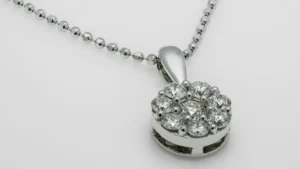
The Small Crystal Cluster Stud
What We Like: Big sparkle in a small footprint, and a cluster suits both daytime and evening. It is also the easiest way to add glamour to a stack that is otherwise plain metal. What to Consider: Crystals need cleaning, and a cluster has more crevices than a single stone. A soft brush and warm soapy water keep it bright; a dirty cluster looks dull, not sparkly. Best For: Lobe and helix piercings, day to evening. Material: Gold vermeil with cubic zirconia. Price Range: $40 to $110. Standout Feature: The most sparkle per millimetre of any piece in this list.
The Mini Bar Earring
What We Like: A clean, modern line that breaks up a stack of curves. The bar sits close to the ear, so it does not catch, and it looks equally good in gold and silver. What to Consider: Bars are unforgiving about placement: if the piercing is even slightly angled, the bar will sit crooked. Check it in the mirror from the front, not just from the side. Best For: Second lobe and helix piercings. Material: 14k gold or sterling silver. Price Range: $30 to $85. Standout Feature: The straight line that gives a curvy stack its structure.
The Sculptural Gold Ear Cuff
What We Like: No needle, no healing time, and instant height for a stack. A good cuff stays put all day and comes off at night, which makes it the lowest-commitment way to try layering. What to Consider: Cuffs rely on tension to stay on, and a loose cuff will slide off without warning. Test the fit before you leave the house, and carry a spare if the cuff is new. Best For: Upper ear, no piercing needed. Material: 14k gold vermeil or solid gold. Price Range: $35 to $120. Standout Feature: A full stack look with no extra piercing.
The Pearl Drop for the Lobe
What We Like: Timeless, light, and flattering on every skin tone. The pearl’s soft lustre contrasts with polished metal, so the stack has depth without needing colour. What to Consider: Pearls are soft and need care: no perfume, no hairspray, and no rough handling. A pearl drop is an evening piece, not an everyday workhorse. Best For: First lobe piercings, evening and occasion wear. Material: Freshwater pearl with gold vermeil. Price Range: $45 to $130. Standout Feature: The soft focal point that makes a stack feel finished.
The Everyday Cubic Zirconia Stud
What We Like: The best value in this list, and the most forgiving piece to lose. A cubic zirconia stud looks like a diamond from arm’s length, and it is light enough to wear in cartilage all day. What to Consider: Cubic zirconia clouds over time, especially with lotion and hairspray, so clean it regularly and expect to replace it every year or two if you wear it daily. Best For: Every piercing, every day. Material: Sterling silver or gold vermeil with cubic zirconia. Price Range: $15 to $45. Standout Feature: Diamond-like sparkle at a price that lets you own three.
Which earring is right for your piercing map
Start by counting what you have. Two lobe piercings and a helix is the most common map, and it suits a simple gradient: a drop or a stud at the first lobe, a huggie at the second, and a flat-back stud at the helix. Three lobe piercings give you a gradient up the lobe itself, which is the most comfortable stack of all. A single lobe piercing plus a cuff gives you the layered look with no new holes, and it is the best place to start if you are not sure layering is for you.
Then think about which piercings are healed. A piercing that is less than a year old, or one that has ever been troublesome, should carry the lightest piece you own — a small flat-back stud — or nothing at all. Give new piercings the plainest, lightest jewellery you have, and save the interesting pieces for the piercings that have earned them.
Finally, match the earring to the day. A work stack should be quiet: studs, one huggie, nothing that moves when you turn your head. An evening stack can carry a drop or a threader at the lobe. A stack for a wedding or a party can go further, with a pearl drop or a crystal cluster as the anchor. Our guide to how to layer earrings explains the planning step in full, including how to lay a stack out before you put it on.
The caveats that matter
Multiple piercings are safe for most people, but a stack multiplies the small risks of a single pair. More metal means more chances of an allergic reaction, more posts to catch on clothing, and more weight on piercings that were each designed for one light piece. The most common problem is a sore helix by mid-afternoon, usually because the piece there is too heavy. The fix is simple: take the stack out, let the ear rest, and rebuild it lighter tomorrow.
| Detail | What is known |
|---|---|
| Best base pieces | Flat-back studs and huggie hoops, which sit close and do not snag |
| Weight rule | Heaviest at the lobe, lightest at the top; cartilage carries little weight well |
| Metal rule | One metal through the stack; hypoallergenic posts for every piece |
| Safest metals | Implant-grade titanium and 14k gold for sensitive or new piercings |
| No-piercing options | Cuffs and climbers fill a stack without a needle or healing time |
| Fresh piercings | Lightest piece only, or nothing; never stack on an unhealed piercing |
| Tangling | Keep threaders away from hoops and long hair; short pieces tangle less |
| When to stop | Remove the stack if an ear feels hot, tender, or swollen, and let it rest |
If you have a metal allergy, every piece in the stack needs to be hypoallergenic, not just the one at the lobe. And if you are planning a new piercing to complete a stack, talk to your piercer about placement first: a millimetre in the wrong direction can make a bar sit crooked or a hoop press against its neighbour for a year.
Checklist: choosing earrings for multiple piercings
Run through this list before you buy, and again before you wear a new stack.
- Check the back: flat backs for cartilage, hinged huggies for the lobe, and no loose butterfly backs.
- Check the weight: hold the piece in your hand and ask whether you would notice it after eight hours.
- Check the metal: one metal through the stack, and hypoallergenic posts for every piece.
- Check the size step: biggest at the lobe, smallest at the top, with a clear difference between each.
- Check the neighbours: no threader next to a hoop, and no two pieces that can hook each other.
- Check the mirror from arm’s length: if the stack looks crowded, take one piece out.
Frequently asked questions
What earrings are best for multiple piercings?
Flat-back studs and huggie hoops are the best starting point, because they sit close to the ear, suit both lobes and cartilage, and rarely snag. Add a threader or a drop at the lobe for movement, and a cuff at the top for height without another piercing.
Can I wear different metals in a multiple piercing stack?
Yes, if it is deliberate. A two-tone stack works when the mix is repeated on both ears, so it reads as a pattern. A single piece in a different metal usually reads as a mistake, so commit to the mix or keep one metal.
How do I stop earrings from tangling in a stack?
Keep the pieces short and close to the ear, and avoid wearing a threader next to a hoop. Put your earrings in before your scarf or high collar, and take them out in the reverse order. Flat-back studs cannot tangle; long chains can.
Are huggie earrings good for multiple piercings?
Yes, they are one of the best choices. A huggie sits close to the ear, adds the shape of a hoop without the weight, and works in the lobe, the second lobe, and a healed helix. Our explainer on what a huggie earring is covers the style in detail.
Can I wear a cuff if I only have one piercing?
Yes. A cuff clips onto the upper ear and needs no piercing at all, so a single lobe piercing plus a cuff gives you a layered look immediately. Test the fit before you leave the house, because a loose cuff can slide off.
What should I wear to work with multiple piercings?
Keep it quiet: small studs, one slim huggie, and nothing that moves or jingles when you turn your head. Save drops, threaders, and crystal clusters for the evening, and check your workplace dress code before wearing anything bold.
The bottom line
The best earrings for multiple piercings are not the biggest or the most dramatic. They are the small, light, well-made pieces that sit close to the ear, share one metal, and leave room for their neighbours. A flat-back stud, a slim huggie, and one piece with a little movement is a stack that looks deliberate and feels comfortable from morning to night.
Start with the pieces you already own and build the stack one piece at a time. The goal is not to fill every piercing. It is to make the piercings you have look like they were always meant to be worn together.