
Learning how to clean gold earrings properly is simpler than most people expect, because gold itself does not tarnish the way silver does. What makes gold earrings look dull is not the metal changing — it is the film that builds up on it. Skin oils, lotion, foundation, hairspray and dust settle into the setting and over the surface, and after a few weeks of daily wear even a solid gold pair can look tired and flat.
The fix is gentle and cheap: warm water, a drop of mild soap, and a soft cloth. Gold is a soft metal, so the same rule applies as with any fine jewellery — use the gentlest method that works, and never reach for an abrasive cleaner. Toothpaste, baking soda paste and vinegar are all too harsh for gold earrings, and they are especially risky on gold-plated and gold vermeil pairs, where the gold layer is thin.
Below are nine steps that work for solid gold studs, hoops, drops and huggies, with notes on when to change the method for gold-plated, gold-filled and gold vermeil pairs, and for earrings set with diamonds, pearls or other stones. The whole routine takes about twenty minutes, and most of that is the soak.
Key takeaways
- Gold does not tarnish like silver — dullness is usually a film of oils, lotion and dust, which warm soapy water removes easily.
- Warm water with a drop of mild dish soap and a soft cloth is the safest everyday method for gold earrings.
- Toothpaste, baking soda paste, vinegar and chlorine are too harsh for gold, and they can wear away plating and damage stones.
- Gold-plated, gold-filled and gold vermeil earrings need a lighter touch than solid gold, because the gold layer is thin.
- No home method can fix a loose stone, a bent post or plating that has worn through — those need a jeweller, and scrubbing harder will only make them worse.
What dulls gold earrings
Gold is one of the least reactive metals, which is why it has been used for jewellery for thousands of years. Pure gold does not tarnish, rust, or react with air. What you see on a dull pair of gold earrings is almost always a build-up on the surface: skin oils, moisturiser, foundation, hairspray, sweat and dust. The film is thin, but it scatters light, which is why the shine disappears even though the metal underneath is fine.
The alloy matters too. Most gold earrings are not pure gold — they are 14k or 18k, which means the gold is mixed with other metals for strength. Those other metals can react very slowly with air and moisture, especially in humid climates, so a lower-karat pair can develop a faint dullness over time. It is still surface build-up rather than deep tarnish, and it still comes off with gentle cleaning.
The setting is where dullness hides. Dirt collects behind stones, inside engraving, and around the post and the back, where a cloth cannot easily reach. That is why a soak and a soft brush matter more than a wipe: the water reaches the places your fingers cannot, and the brush lifts out what the water loosens.
What you need before you start
You need a small bowl, lukewarm water, a drop of mild, fragrance-free dish soap, two soft lint-free cloths, and a soft-bristled brush such as a baby toothbrush or a clean makeup brush. A jewellery polishing cloth is useful for the final buff, but a plain microfibre cloth works for most pairs. Have everything ready before you begin, because wet earrings should not sit around while you look for a towel.

Check the pair before it touches water. Look at the posts and backs, nudge each stone gently to make sure it is secure, and check the hallmark — 14k, 18k, 585 or 750 — stamped on the post or the back of the setting. If the earrings are gold-plated, the cleaning is the same but the buffing must be much lighter, because the gold layer is thin. If a stone moves or a post is bent, take the pair to a jeweller instead.
How to clean gold earrings, step by step
Work through these nine steps in order. The whole routine takes about twenty minutes, and most of that is the soak. Clean one pair at a time, and keep the backs with their earrings.
Check the clasp, post, and setting first
What to do: Hold each earring up to the light and check the post, the clasp or back, and the setting. Gently nudge each stone to make sure it is secure, and look for a karat hallmark. What to avoid: Do not soak earrings with loose stones, bent posts, or cracked settings — water and brushing can make the damage worse. Best for: Every pair, every time. Time needed: One minute. Standout tip: If you cannot find a hallmark, treat the pair as gold-plated and buff it very lightly.
Wipe away surface oils with a dry, lint-free cloth
What to do: Wipe each earring with a dry, soft cloth to remove oils, foundation and dust before any water touches it, paying attention to the back of the setting. What to avoid: Do not use a paper towel or a tissue, which can leave fine scratches on soft gold. Best for: Lightly worn earrings and quick weekly care. Time needed: Two minutes. Standout tip: A dry wipe after every few wears keeps the film from building up in the first place.
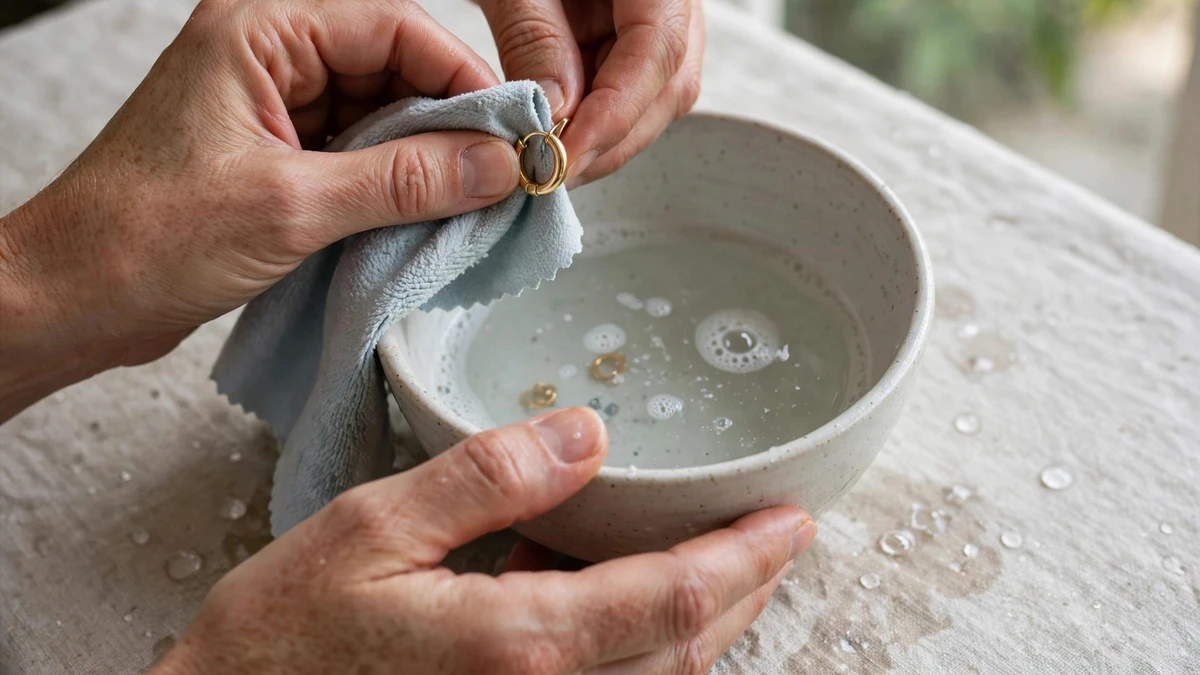
Mix a gentle lukewarm soapy soak
What to do: Fill a small bowl with lukewarm water and add one drop of mild, fragrance-free dish soap. Stir gently until the water is just cloudy. What to avoid: Do not use hot water, which can loosen glued stones, and do not use soap with bleach, antibacterial agents, or added moisturisers. Best for: Solid gold studs, hoops, drops and huggies. Time needed: One minute. Standout tip: Lukewarm means comfortable on your wrist — if it feels hot, let it cool before the earrings go in.
Mild dish soap is the right choice because it cuts through skin oils without affecting the metal. Specialist gold dips exist, but they are stronger than most earrings need, and they can damage stones and plating.
Soak for fifteen minutes, no longer
What to do: Place the earrings in the bowl, posts and backs included, and leave them for fifteen minutes so the soapy water can loosen oils and dirt. What to avoid: Do not leave them soaking for an hour or overnight, especially if they have glued-in stones or a plated finish. Best for: Gold earrings that look dull even after a dry wipe. Time needed: Fifteen minutes. Standout tip: Set a timer — fifteen minutes is enough, and longer soaking does not clean better.
While they soak, do not stir or swish the bowl. Let the water do the work, and keep the earrings from knocking against each other.
Brush the setting gently with a soft brush
What to do: Lift one earring out and brush it gently with a soft-bristled brush, working around the setting, the back of the stone, and the post, with light, short strokes. What to avoid: Do not press hard or use a stiff brush, which can scratch gold and loosen prongs. Best for: Earrings with settings, engraving, or textured detail where dirt hides. Time needed: Two minutes per pair. Standout tip: Brush under lukewarm running water if the setting is very dirty, so loosened dirt washes away instead of being pushed back in.
Rinse under lukewarm running water
What to do: Rinse each earring under a gentle stream of lukewarm water, turning it so the water reaches the back of the setting and the post. What to avoid: Do not rinse over an open drain — put the plug in or rinse over the bowl. Best for: Every pair after soaking and brushing. Time needed: One minute. Standout tip: If your tap water is very hard, finish with a rinse in a bowl of distilled water to avoid water spots.
Soap left on gold dries into a dull film, which defeats the point of cleaning. Rinse until the metal feels squeaky rather than slippery.
Dry them flat on a lint-free cloth
What to do: Lay the earrings flat on a clean, lint-free cloth and pat them dry, then leave them to air-dry for a few minutes. What to avoid: Do not use a hairdryer, which can heat glued stones, and do not put damp earrings straight back into a closed box. Best for: Every pair, every time. Time needed: Five minutes. Standout tip: Drying flat stops water from pooling inside the setting, where it leaves spots.
Water trapped behind a stone leaves spots and can loosen glue over time. Give the pair a few minutes on the cloth, then check the setting is fully dry.
Buff with a jewellery cloth for shine
What to do: Buff each earring gently with a jewellery polishing cloth, using long, even strokes on the flat surfaces until the shine returns. What to avoid: Do not use a paper towel, a rough cloth, or a polishing paste on plated earrings or pairs with soft stones. Best for: Solid gold that still looks flat after washing. Time needed: Two minutes per pair. Standout tip: Buff lightly and stop when the shine returns — over-buffing wears plating and softens engraving over time.
A jewellery cloth does most of the work with very little pressure. If the shine comes back quickly, the earrings only needed a light clean, which is good news.
Store them separately in a lined box or pouch
What to do: Put each pair in its own soft pouch or a lined compartment, with the backs on, away from harder gemstones that can scratch gold. What to avoid: Do not toss gold earrings loose into a jewellery box with everything else, and do not store them in a damp bathroom. Best for: Every pair, after every clean. Time needed: One minute. Standout tip: A lined box keeps earrings from scratching each other, which is the most common cause of dullness on gold. Our guide to how to store earrings covers pouches, boxes and travel cases in detail.
Which cleaning method is right for your gold earrings
Solid gold can take the full routine above, including a gentle buff with a jewellery cloth. Gold-plated earrings are different: the gold layer is very thin, sometimes only a fraction of a micron, and hard buffing or long soaking can wear it through to the base metal. For plated pairs, keep the soak short, skip the polishing cloth, and dry them carefully with a soft, untreated cloth. Gold-filled earrings have a thicker gold layer than plated ones and can take the full routine, but still deserve a light touch.
Gold vermeil is gold over sterling silver, and it sits between solid gold and plating: the gold layer is thicker than standard plating, but it is still a coating, so it should never be polished hard. Our guide to cleaning gold vermeil earrings covers the gentler method those pairs need. Earrings with diamonds can usually take a short soak and a gentle brush, but pearls, opals and other soft stones should only be wiped with a damp cloth, never soaked.
Karat matters less than the coating: a solid 14k pair and a solid 18k pair can both take the same routine, because both are solid gold through and through. What matters is whether the gold is solid or a layer over something else. When in doubt, look for the hallmark, and if there is none, treat the pair as plated. For pairs you wear every day, our roundup of the best earrings for everyday wear is a good place to find styles that hold up to daily cleaning.
The caveats that matter
Gold cleaning is safe and simple, but there are limits. Home cleaning removes surface film and dirt; it does not repair damage, restore worn plating, or fix a stone that has come loose. It also cannot help if the dullness is not dirt at all — for example, if a plated pair has worn through to a darker base metal, no amount of buffing will bring the gold back. Knowing when to stop is part of doing it well.
| Detail | What is known |
|---|---|
| Why gold dulls | A film of skin oils, lotion, foundation and dust, not tarnish |
| Best everyday method | Lukewarm soapy water, a soft brush, and a lint-free cloth |
| What to avoid | Toothpaste, baking soda paste, vinegar, chlorine, and abrasive cloths |
| Gold-plated earrings | Very thin gold layer — gentle wash only, no hard buffing |
| Gold vermeil earrings | Gold over sterling silver — clean gently, never polish hard |
| Earrings with soft stones | Pearls and opals should be wiped only, never soaked |
| How often to clean | Monthly if worn often; after swimming or heavy sweating |
| When to see a jeweller | Loose stones, bent posts, worn plating, or deep scratches |
Chlorine deserves a special mention. Swimming pools and hot tubs can damage gold alloys and loosen settings over time, so take gold earrings out before swimming. If your ears are sensitive or newly pierced, let the earrings dry fully before wearing them — damp metal against healing skin is a common cause of irritation.
Checklist: cleaning gold earrings honestly
Run through these checks before you start, and again before you put the earrings away.
- Check the hallmark: 14k or 18k means solid gold; no hallmark usually means plated, so buff lightly.
- Check every stone and post before water touches the pair — loose stones go to a jeweller, not into a bowl.
- Use lukewarm water and one drop of mild soap, never hot water, bleach, or antibacterial soap.
- Soak for fifteen minutes only, then brush gently, rinse well, and dry the pair flat.
- Buff with a jewellery cloth, not a paper towel, and stop as soon as the shine returns.
- Store each pair separately in a dry pouch or lined box, away from harder gemstones.
Frequently asked questions
Can I use toothpaste on gold earrings?
No. Toothpaste is mildly abrasive by design, and it leaves fine scratches on soft gold that dull the shine faster next time. It can also leave a residue in settings that is hard to rinse out. Warm soapy water cleans just as well without the damage.
Can I clean gold earrings with vinegar?
No. Vinegar is acidic and can damage some stones and finishes, and it does nothing that soapy water cannot do better. It is sometimes suggested for plain gold, but for earrings — with posts, settings and stones — mild soap and water is safer.
How often should I clean gold earrings?
About once a month if you wear them often, and straight away after swimming, heavy sweating, or a day of hairspray and perfume. A quick dry wipe after every few wears stretches the time between full cleans.
Will water damage gold earrings?
No, plain water does not damage solid gold. Hot water can loosen glued stones, and chlorine in pools can damage gold alloys over time, but a short soak in lukewarm water is safe for solid gold, gold-filled and most stone-set pairs.
Can I wear gold earrings in the shower or pool?
It is best not to. Chlorine, shampoo and hot water speed up dulling and can loosen settings, and soap film builds up faster on wet earrings. Take them out before swimming or showering, and dry them if they do get wet.
How do I clean gold earrings with diamonds or gemstones?
Diamonds can take a short soapy soak and a gentle brush, which is the best way to restore their sparkle. Softer stones such as pearls, opals and turquoise should only be wiped with a damp cloth, never soaked or brushed. When in doubt, wipe only.
The bottom line
Cleaning gold earrings is a twenty-minute routine, not a project. Warm soapy water, a soft brush, a lint-free cloth and a dry pouch will keep a solid gold pair bright for years, and the same gentle method works for most plated, filled and vermeil pairs if you skip the hard buffing. The only real rule is to use the gentlest method that works, and to stop when the shine is back.
Start with the dry wipe, move to the soak only when you need it, and store each pair separately when you are done. Do that once a month and your gold earrings will stay bright, clean easily, and last far longer than a pair that is scrubbed hard once a year.