
A cashmere scarf is one of the smallest luxuries you can buy, and one of the easiest to get wrong. On the rail, it looks simple. The difference between the scarf you reach for every winter and the one that ends up at the back of a drawer is invisible in a photograph. It lives in the fibre, ply, weave, and finish.
Cashmere is the soft undercoat of the cashmere goat, combed out each spring when the animal sheds its winter coat. Each goat yields only a small amount of usable fibre a year. That scarcity makes it costly — and invites imitations. Scarves labelled “cashmere feel” may contain no cashmere at all.
This guide explains how to choose a cashmere scarf in 2027, from grades and micron counts to the feel test and care. It will not tell you how to tie the scarf, only whether the one in your hands is worth its price and how long it is likely to last.
Key takeaways
- Look for 100 percent cashmere, and be wary of vague wording such as “cashmere feel”, which usually means very little cashmere is inside.
- Grade A (14–15.5 microns, 36mm+ fibres) is softest and pills least; Grade B is a good middle ground; avoid Grade C for everyday wear.
- Two-ply or higher is safer: twisted yarns hold their shape, resist pilling, and keep you warmer than single-ply of the same weight.
- Test it with your wrist and your eyes: smooth, not prickly; springs back when stretched; no loose threads or uneven edges.
- A well-made pure cashmere scarf costs from around $100 up; far below that is a warning sign.
What cashmere actually is
Cashmere comes from the fine, downy undercoat of goats raised in the high, cold regions of Mongolia, Inner Mongolia, northern China, and parts of Central Asia. Harsh winters produce a dense undercoat far finer than sheep’s wool: premium cashmere measures 14 to 16 microns.
The fibre is collected by combing, not shearing. Herders comb each goat by hand as it sheds, separating the soft undercoat from the coarse guard hairs, and the fibre is then dehaired. Only the longest, finest fibres become Grade A; the rest becomes lower grades or blends.
Cashmere grades A, B, and C explained
Cashmere is graded by fineness, length, and purity. Grade A is the premium tier, Grade B is the mid-market tier, and Grade C is the entry tier.
Grade A cashmere has a fibre diameter of about 14 to 15.5 microns and a staple length of 36 millimetres or more, with over 98 percent pure down fibre. It is the softest grade and pills least.
Grade B cashmere measures roughly 15.5 to 16.5 microns with fibres of 30 to 36 millimetres, and purity above 95 percent. For many buyers it is the sensible choice: cheaper, durable, and warm.
Grade C cashmere is coarser, at 16.5 to 19 microns or more, with shorter fibres under 30 millimetres and a higher share of guard hair. It can feel scratchy, and its short fibres work loose easily, so it pills quickly. Only buy Grade C at a low price, for occasional wear.
Micron count and fibre length
Two numbers matter most: the micron count and the fibre length. The micron count is the diameter of each fibre in micrometres, and lower is softer. Premium is 14–15.5 microns, good quality 15.5–16, and standard 16–19.
Fibre length, also called staple length, decides how much a scarf will pill. Longer fibres hold together better during spinning, so the fabric stays smooth. Premium fibres are 36–42 millimetres, mid-market 30–36, and fibres under 28 millimetres break loose easily. Short-fibre scarves pill within weeks.
Ply, weave, and weight
Ply is the number of individual yarns twisted together to make the yarn that is woven or knitted into the scarf. Choose two-ply or higher: twisted yarns are stronger, hold their shape, resist pilling, and keep you warmer. Single-ply feels soft at first but stretches and pills faster.
Most cashmere scarves are knitted — stretchy and soft — while woven cashmere is more structured and holds its shape better. Within knits, a tight, even knit is the sign of quality: it resists pilling, keeps its shape, and feels substantial in the hand.
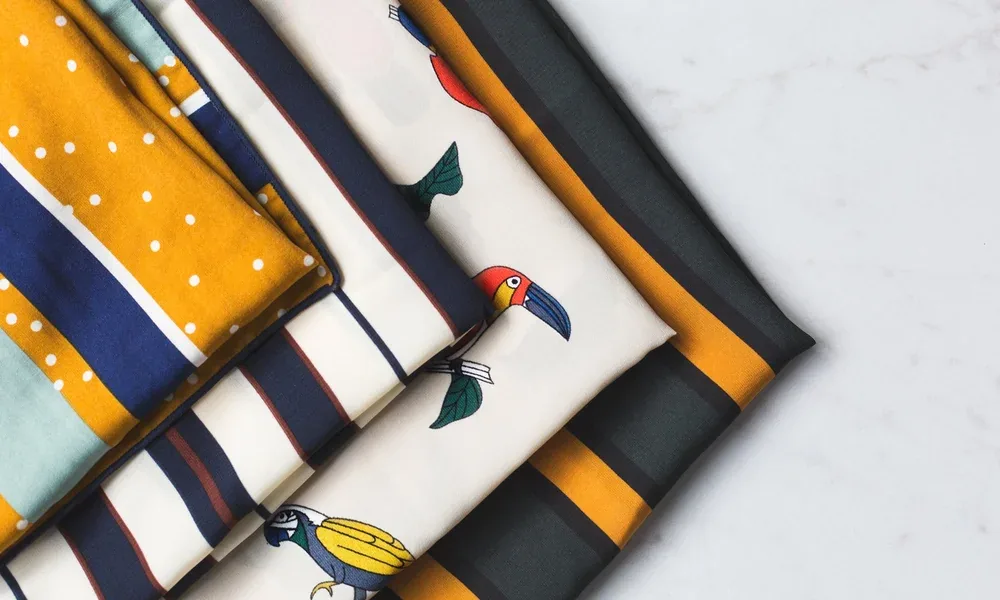
Weight is measured in grams per square metre, or GSM. Lightweight (100–150 GSM) suits layering. Midweight (150–200 GSM) suits autumn and spring. Heavyweight (above 200 GSM) is warmest for deep winter.
Cashmere scarf types compared
Each type suits a different wardrobe and climate. Compare the main types below.
| Scarf type | Best for | Warmth | Feel | Pilling risk | Typical price | Care | Watch out for |
|---|---|---|---|---|---|---|---|
| Classic two-ply rectangle | Everyday winter wear | High | Soft, substantial | Low | $100–$250 | Hand wash, dry flat | Thin single-ply copies |
| Lightweight single-ply | Layering, mild days | Medium | Feather-light, silky | Higher | $80–$180 | Hand wash gently | Stretching out of shape |
| Oversized wrap or stole | Evenings, travel | High | Soft, draped | Medium | $150–$350 | Hand wash, dry flat | Too bulky under a coat |
| Cashmere-silk blend | Smart occasions, sheen | Medium | Smooth, light sheen | Low | $120–$300 | Hand wash or dry clean | Unstated blend percentages |
| Cashmere-wool blend | Daily wear, cold weather | High | Warm, slightly firmer | Medium | $70–$180 | Hand wash, dry flat | Low cashmere content |
| Pashmina-style woven | Formal looks, gifting | Medium | Fine, fluid drape | Low | $150–$400 | Dry clean preferred | “Pashmina” with no cashmere |
| Chunky ribbed knit | Very cold days, casual coats | Very high | Cosy, textured | Medium | $100–$250 | Hand wash, dry flat | Snagging on jewellery |
| Travel or pocket scarf | Flights, handbags, spring | Low to medium | Fine, compact | Low | $60–$150 | Hand wash, roll to store | Too thin for real cold |
The feel test: five checks before you pay
Hold the scarf against the inside of your wrist or your cheek, where the skin is sensitive. Good cashmere feels smooth and warm, never prickly or scratchy. If it prickles, the fibre is coarse or contains guard hair.
Next, look at the scarf in good light. The surface should be even, not shiny or greasy. Check edges and fringe: neat finishing, no loose threads, fraying, or uneven hems.
Then stretch the scarf gently, pulling a small section and letting it go. A well-made cashmere scarf springs back to its shape quickly. If it stays stretched or looks baggy, the knit is loose or the yarn is single-ply and weak.
Finally, read the label properly. It should state the fibre content in percentages, the country of origin, and the care instructions. “100% cashmere” is the standard to aim for, and “cashmere blend” should come with numbers. A label vague about all three is a warning sign.
Size, colour, and shape
Size decides how a scarf can be worn. A classic rectangle of around 180 by 30 centimetres is the most versatile size: long enough to loop twice around the neck, and narrow enough to tuck under a coat.
Colour is a matter of taste, but it is also a matter of value. Neutral colours such as camel, charcoal, navy, cream, and grey go with the most outfits and are the safest choice for a first good cashmere scarf. A bold colour or a pattern is a better second scarf than a first one.
Price signals
Price is a poor guide on its own, but it is a useful warning sign. A pure cashmere scarf from a reputable maker usually starts at around $100, and a good one often costs $150 to $300. A scarf far below $100 labelled pure cashmere should make you suspicious.
At the other end of the scale, a very high price does not guarantee better fibre. Luxury houses charge for design, branding, and retail overhead as well as for the cashmere itself, and a $600 scarf from a famous name may match a $200 scarf from a specialist maker.
How to care for a cashmere scarf
Cashmere asks for gentle care, but it is not as fragile as its reputation suggests. Hand wash it in cool water with a mild detergent made for wool or cashmere, and never wring it out. Press the water out gently, roll the scarf in a clean towel, then reshape it and dry it flat.
Pilling is normal for cashmere, even for good cashmere, because the fine fibres work loose with friction. The difference is how much and how quickly. A Grade A scarf pills far less than a Grade C one, and its pills can be removed with a cashmere comb or fabric shaver.
Store it folded, not hung, in a cool, dry place, and protect it from moths with cedar or lavender rather than chemical mothballs. With this care, a good cashmere scarf can last ten years or more.
Checklist: choosing the perfect cashmere scarf
- Label says 100% cashmere, or states blend percentages, origin, and care.
- Micron count 14 to 16; fibre length 36 millimetres or more where stated.
- Two-ply or higher yarn, with a tight, even knit or weave and no loose threads or uneven edges.
- Passes the wrist test: smooth and warm, with no prickle, and springs back when gently stretched.
- Size and weight suit your use: around 180 by 30 cm, midweight, for everyday winter wear.
- Price is realistic for pure cashmere, from around $100 upwards, and the fibre facts justify the tag.
Frequently asked questions
How can I tell if a cashmere scarf is real?
Check the label first: it should say 100 percent cashmere, with percentages if it is a blend. Then feel it against your wrist. Real cashmere feels warm, soft, and slightly dry, never slippery or plasticky. A very low price, a vague label, and a slippery feel together are strong signs that the scarf is not pure cashmere.
Is two-ply cashmere always better than single-ply?
For a scarf you will wear often, yes. Two-ply yarn is stronger, holds its shape better, resists pilling, and keeps you warmer than single-ply of the same weight. Single-ply is lighter and more delicate, and it suits layering and milder weather.
Why does my cashmere scarf pill?
Pilling happens when short fibres work loose from the yarn and tangle into small balls, usually where the scarf rubs against a coat collar or a bag strap. Short fibres pill more than long ones, so a Grade A scarf will pill far less than a Grade C one. Remove pills with a cashmere comb.
How much should a good cashmere scarf cost in 2027?
A good pure cashmere scarf usually costs from around $100 to $300. Below $100, be cautious: the scarf is likely a blend or a lower grade. Above $300, you may be paying for the brand name as much as for better fibre.
Can I machine wash a cashmere scarf?
It is safer not to. Hand washing in cool water with a mild detergent, then drying flat, is the method that keeps cashmere soft and in shape for longest. Never tumble dry cashmere, and never wring it out.
What is the difference between cashmere and pashmina?
Pashmina is a fine woven fabric traditionally made from the undercoat of Himalayan goats, and the word is often used to describe a very fine, lightweight cashmere wrap or stole. In practice, many “pashmina” scarves contain no cashmere at all, so judge one by the same checks as any cashmere scarf.
The bottom line
The perfect cashmere scarf is not the most expensive one, and it is not the softest one in the shop on the first touch. It is the one whose fibre, ply, and finishing match the way you will wear it, and whose price is justified by the facts on the label rather than by the name on it. Choose Grade A or good Grade B fibre, two-ply or higher, sized for your winters.
For a first good cashmere scarf, a classic two-ply rectangle in a neutral colour is the safest buy, and it pairs with almost everything in a winter wardrobe. Our guide to the best cashmere sweaters covers the matching knitwear, and the best luxury fashion brands guide helps if you are comparing makers. Our best winter coats for women guide covers the outerwear to wear it under.
Buy once, buy well, and look after it. A cashmere scarf chosen this way will not just survive one winter. It will still be the scarf you reach for in ten winters’ time.
Note: prices vary by maker and season; check the label and current price before you buy.