What happens between the moment a celebrity posts a photo in a $40 dress and the moment that dress lands on a customer’s doorstep? The answer lives in a sprawling fulfillment center in the City of Industry, California, and the story of the Fashion Nova warehouse is far more complicated than the glossy Instagram feed that feeds it. The facility has been praised for its speed, criticized for its labor record, and investigated by regulators on both the workplace-safety and consumer-protection fronts. For shoppers, workers, and anyone curious about how fast fashion actually moves, understanding this warehouse explains a lot about the modern clothing business.
Why the Fashion Nova Warehouse Matters More Than Most
Fashion Nova is a Los Angeles–based fast-fashion e-commerce retailer founded in 2006 by Richard Saghian. Unlike traditional retailers that design seasons in advance and ship to hundreds of stores, Fashion Nova sells almost entirely online and builds its reputation on speed — dropping new styles constantly and tying many of them to celebrity and influencer posts.
That model puts unusual pressure on one link in the chain: fulfillment. When a single Instagram photo can trigger thousands of orders in a day, the warehouse becomes the brand’s most important physical asset. It also becomes its biggest vulnerability. Every promise of “fast shipping” is really a promise about what happens inside that building in Los Angeles County.
The warehouse sits at the center of three overlapping stories: how fast fashion logistics works, how regulators have responded to conditions inside the facility, and what all of this means for the people who order from the site.
How the Fulfillment Model Actually Works
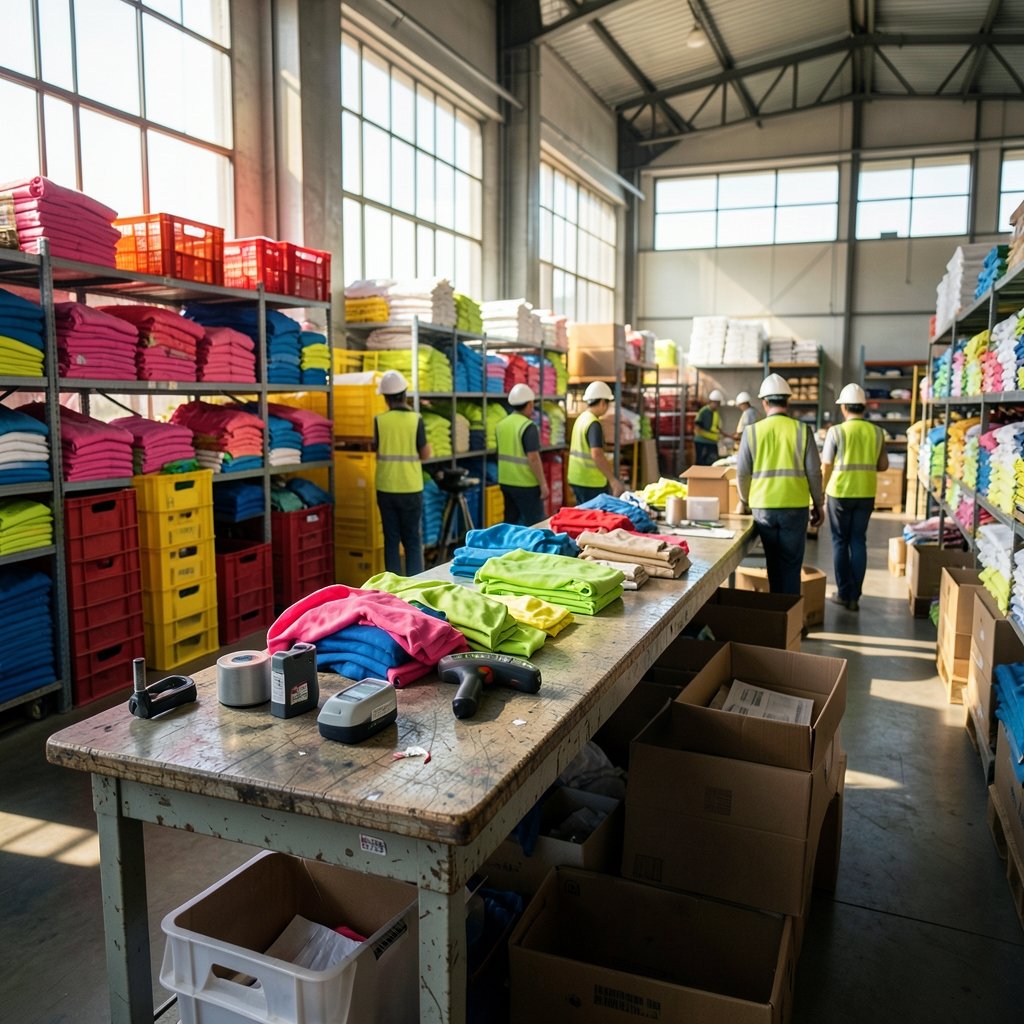
The Fashion Nova warehouse operates on a drop model. Instead of stocking deep inventory of a few styles for months, the company releases many new items in rapid succession and leans on celebrity posts to create demand spikes. That approach has real consequences for how a warehouse must run.
| Traditional retail warehouse | Drop-driven e-commerce warehouse |
|---|---|
| Predictable seasonal volumes | Sudden, post-triggered order surges |
| Deep stock of fewer SKUs | Broad, shallow stock of many SKUs |
| Replenishment planned months ahead | Replenishment reacts to viral demand |
| Store deliveries on fixed schedules | Individual parcels shipped daily to homes |
| Labor scheduled around seasons | Labor scheduled around unpredictable spikes |
In practice, this means pickers and packers may face quiet mornings followed by frantic afternoons. It means inventory systems must track hundreds of styles that may sell out in hours. And it means the warehouse’s performance is judged not by steady efficiency but by how well it absorbs shocks.
For shoppers, the practical takeaway is simple: shipping speed varies enormously depending on whether an item is in stock at the moment of a viral spike. A style that is available Tuesday morning can be back-ordered by Tuesday night. Reading the current shipping estimate before checkout, rather than assuming a fixed delivery window, is the single most useful habit a customer can build.
A Timeline of Scrutiny
The Fashion Nova warehouse has drawn regulatory attention repeatedly. Here is what is documented, with the caveat that penalty figures and exact dates vary across secondary reports and should be checked against primary agency records.
2020: Pandemic Pressure
In 2020, the company was reported to have continued shipping orders from its warehouse during California’s COVID-19 stay-at-home order. That drew scrutiny over whether e-commerce fulfillment counted as essential work and how worker safety was being protected while much of the state was shut down. The same year, the company faced public criticism and a California Labor Commissioner’s Office citation over warehouse working conditions and alleged underpayment of garment workers in its supply chain. The exact citation date and amount are not reliably confirmed in secondary sources.
December 2021: Cal/OSHA Citation
In December 2021, the California Division of Occupational Safety and Health cited the City of Industry warehouse for COVID-19 safety violations, including failing to properly notify workers of potential exposure and failing to follow quarantine guidance. The reported penalty was roughly $27,000. That figure is moderate-confidence; anyone citing it should verify against the agency’s own records rather than repeating a news summary.
January 2022: The FTC Review Settlement
In January 2022, the U.S. Federal Trade Commission ordered Fashion Nova to pay $4.2 million to settle charges that it blocked negative reviews. This is the highest-confidence item in the timeline. The case mattered well beyond the company: it signaled that suppressing unfavorable customer reviews carries real financial consequences, and it pushed review transparency into the broader conversation about how online fashion brands market themselves.
The Pattern Behind the Headlines
Step back and a pattern emerges. Each of these episodes traces back to the same underlying tension: a business built on maximum speed and maximum hype will always be tempted to cut corners on worker notification, supply-chain oversight, or honest customer feedback. Regulators have repeatedly pushed back on that temptation.
What It Is Actually Like to Work There
Public reporting on warehouse work at Fashion Nova describes the familiar contours of e-commerce fulfillment: high pick rates, long shifts on concrete floors, and performance metrics that track every scan. The 2020 and 2021 citations focused specifically on exposure notification and quarantine practices during the pandemic, which suggests that communication between management and the workforce was a weak point at a critical moment.
For anyone considering a warehouse job in this sector, a few practical points are worth knowing before applying:
- Ask directly about the productivity metric you will be measured against and how it is calculated.
- Confirm the break schedule in writing, including paid rest breaks under California rules.
- Ask how injury reporting works and who the safety contact is on your shift.
- Request the written policy on illness notification and quarantine, not just a verbal summary.
- Check whether the site has had recent citations by searching state agency records before you accept an offer.
None of this is unique to one company. Warehouses across the sector share these pressures. But the documented citation history here makes it especially worth asking careful questions.
The Supply Chain Behind the Warehouse
One detail that often gets lost: the Fashion Nova warehouse is a distribution point, not a manufacturing site. The garments themselves come from a network of suppliers, and California’s garment industry has its own long history of wage enforcement. The 2020 scrutiny over alleged underpayment of garment workers in the supply chain pointed at exactly this gap between a polished brand image and the conditions upstream.
For shoppers who care about this, the practical move is to treat “made in” labels and brand statements with healthy skepticism until they are backed by specific, verifiable disclosures. Broad claims about ethical sourcing are easy to make and hard to check. Specific factory lists and third-party audits are harder to fake.
This is also where the broader conversation about Italian luxury fashion and its slower, more traceable production model becomes a useful contrast. Fast fashion’s whole advantage is speed; traceability is usually the thing sacrificed to get it.
How the Warehouse Shapes What You See on the Site
The fulfillment model does not just affect shipping. It shapes merchandising. Because the company releases so many styles so quickly, the site functions almost like a live feed. New arrivals dominate, sell-through is fast, and the catalog churns constantly. That is why the brand’s aesthetic tracks so closely with whatever is trending on social platforms in a given week.
If you follow the 2026 fashion trends female conversation, you will notice how quickly drop-driven retailers absorb a look — often within weeks of it appearing on a runway or a red carpet. Illustrators and analysts who track this translation, like the work covered in Angelica Hicks fashion illustrator turns runway moments into, show how a single image can cascade into mass-market production. The warehouse is where that cascade becomes cardboard boxes.
For a structured overview of where style is heading, the 2026 fashion trends guide is a useful reference point, and the running fashion trends 2026 coverage tracks how quickly those trends reach fast-fashion shelves. The pattern is consistent: runway to social feed to warehouse pick line, compressed into a matter of weeks.
What Shoppers Should Actually Do
Given everything above, here is a practical playbook rather than a lecture.
Check the shipping estimate, not the marketing copy. The banner promising fast delivery is generic. The estimate at checkout reflects actual inventory position.
Read reviews with the settlement in mind. The $4.2 million FTC settlement over blocked negative reviews is a reminder that review sections are not always neutral territory. Look for reviews that mention fit, fabric, and sizing specifics rather than star ratings alone.
Size up when in doubt. Fast-fashion sizing tends to run small and inconsistent across styles. Ordering two sizes and returning one is often more reliable than guessing.
Watch for restock patterns. Drop-driven inventory means popular items return unpredictably. A sold-out style may reappear weeks later, or never.
Keep expectations realistic during viral moments. If a style is everywhere on social media, the warehouse is under peak load. Delivery will be slower than the site suggests.
The Bigger Picture
The Fashion Nova warehouse is a useful case study because it concentrates so many tensions of modern retail into one building. Speed versus safety. Hype versus honesty. Growth versus accountability. The company built a massive business on the insight that social media could replace the storefront — and the warehouse is where that insight meets physics, labor law, and the limits of human endurance.
The regulatory record matters because it shows what happens when those limits get tested. The 2021 Cal/OSHA citation, the 2020 labor scrutiny, and the 2022 FTC settlement are not isolated incidents so much as symptoms of a business model that rewards velocity above nearly everything else. Whether the company has changed its practices in the years since is not something the public record currently answers with confidence, and anyone making claims about current conditions should say so carefully.
What is clear is that the warehouse is not a background detail. It is the engine of the brand, and understanding it changes how you read every “shop now” button on the site.
Conclusion
The story of the Fashion Nova warehouse is a story about speed and its costs. A Los Angeles fulfillment center built to serve a social-media-driven drop model has delivered remarkable convenience to shoppers and remarkable pressure to workers. Along the way, state safety regulators and federal consumer regulators have both intervened, and the resulting record — a 2021 Cal/OSHA citation, 2020 labor scrutiny, and a $4.2 million FTC settlement in 2022 — is part of the public story of the brand whether or not it appears in the marketing.
For shoppers, the lesson is not to boycott or to celebrate, but to buy informed: check real shipping estimates, read reviews critically, and stay skeptical of sourcing claims that lack specifics. For workers, it is to ask hard questions before signing on. And for anyone watching the fashion industry, the warehouse is where the promises made on a phone screen get tested against what a building full of people can actually do in a day.
Frequently Asked Questions
Where is the Fashion Nova warehouse located?
Its main distribution center is in the City of Industry, California, in Los Angeles County. The company itself is headquartered in Los Angeles and was founded there in 2006 by Richard Saghian.
What did Cal/OSHA cite the warehouse for?
In December 2021, the California Division of Occupational Safety and Health cited the City of Industry facility for COVID-19 safety violations, including failing to properly notify workers of potential exposure and failing to follow quarantine guidance. The reported penalty was roughly $27,000, though exact figures vary across secondary reports and should be checked against agency records.
Why did Fashion Nova have to pay $4.2 million?
In January 2022, the U.S. Federal Trade Commission ordered the company to pay $4.2 million to settle charges that it blocked negative customer reviews. The case became a widely cited example of regulators treating review suppression as a consumer-protection violation.
Does the warehouse affect how fast orders arrive?
Yes, significantly. Because the company uses a drop model with frequent releases tied to celebrity and influencer posts, order volume can spike unpredictably. Shipping speed depends heavily on whether an item is in stock at the moment of a viral surge, so the checkout estimate is more reliable than general marketing claims.
Is the warehouse the same as where the clothes are made?
No. The warehouse is a distribution and fulfillment center. The garments are produced by a network of suppliers, and California’s garment industry has its own separate history of wage enforcement. In 2020, the company faced scrutiny over alleged underpayment of garment workers in its supply chain.
What should I check before ordering?
Look at the shipping estimate at checkout rather than the site banner, read reviews for specifics on fit and fabric rather than star ratings alone, and consider ordering two sizes when sizing is uncertain. During viral moments, expect delays beyond what the site promises.