

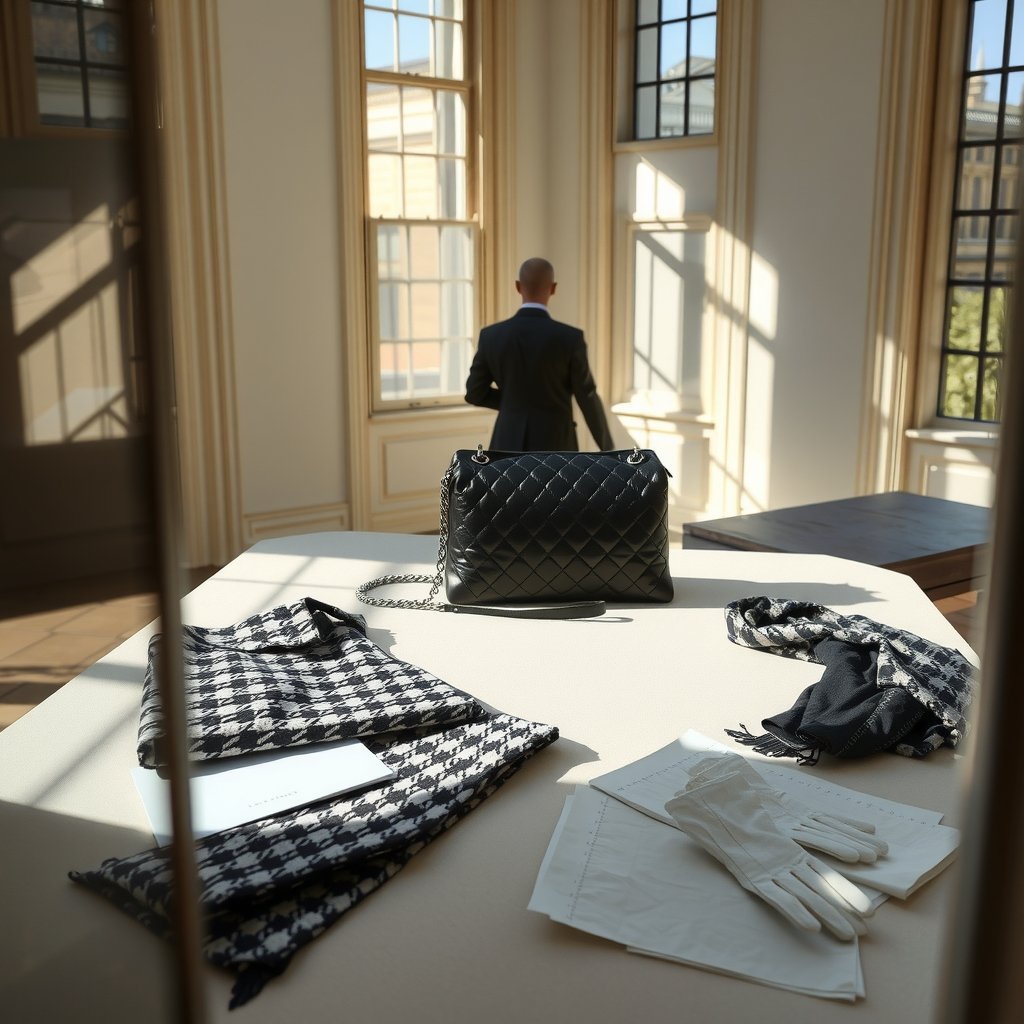
What if the vintage jacket hanging in your closet could behave less like a piece of clothing and more like a stock? That question is no longer a thought experiment. Over the past decade, fashion has quietly crossed a line that used to separate it from real estate, art, and watches. Carefully chosen pieces now get auctioned, re-auctioned at higher prices, and collected the way investors collect assets. The shift has created a new vocabulary around fashion as an asset class, and it has also created plenty of confusion about what that phrase actually means. (Harajuku fashion tokyos street style really looks like)
Here is the honest version: fashion investing works, but only for a small slice of the market, and only when the buyer understands what they are actually holding. This guide walks through how the market works, where the money really is, and the mistakes that quietly eat returns.
Why fashion became an investment story
The clearest evidence comes from the auction floor. In July 2025, Martin Margiela released pieces from his personal archive through two auction houses, Maurice Auction in Paris and Kerry Taylor Auctions in London. Among the lots was a pair of Tabi boots from a 1991 exhibition at the Palais Galliera, covered in graffiti left by visitors. The auction house estimated them at 30,000 euros. They sold for 364,000 euros, a world record, after a few frantic minutes of bidding.
That kind of result is not a one-off curiosity anymore. Kerry Taylor, who runs the London auction house bearing her name, has described how the ceiling keeps moving. A decade ago, a piece selling above 100,000 pounds was exceptional. Today it is not especially rare. A John Galliano suit from the Fall/Winter 1986 “Forgotten Innocents” collection that sold for 800 pounds in 2010 would, in her assessment, fetch somewhere between 30,000 and 50,000 pounds if it came to auction now.
What changed? Three things, mostly. Fashion history matured into a discipline with its own scholarship and collector base. Online resale platforms made price discovery possible. And a generation of buyers who grew up treating sneakers and handbags as tradable goods started applying the same logic to couture.
The four ways to put money into fashion

Most people assume there is one path into this market. There are actually four, and they behave very differently.
| Route | What you buy | Liquidity | Effort level |
|---|---|---|---|
| Public equities | Shares in listed luxury groups or funds | High | Low |
| Funds and certificates | Pooled luxury exposure or structured products | Medium | Low |
| Physical collectibles | Archive pieces, handbags, watches | Low | High |
| Brand-adjacent businesses | Boutiques, resale, services | Low | Very high |
Public equities and funds
The simplest entry point is buying shares in companies that design, produce, and sell luxury goods. This is not really “fashion investing” in the romantic sense. It is equity investing in a sector with premium margins and global customers. That distinction matters, because a stock can fall even while handbag prices rise.
The sector is also cyclical. One market analysis noted that the S&P Global Luxury index lost almost 4% in euro terms over a year, squeezed between weaker Chinese consumption and softer discretionary spending in Western markets. Despite that, some portfolio managers treat luxury as a long-term holding, closer to a megatrend bet than a trade.
Structured products exist too. One issuer built a certificate tied to a basket of three fashion and luxury stocks, offering conditional monthly premiums with a memory effect, capital protection at 60% of initial values, and an autocall feature starting in the third month. These instruments are complex. Anyone considering one should read the terms carefully rather than assume the coupon is guaranteed.
Dedicated funds and pooled vehicles
This is where fashion investing gets genuinely novel. A wealth tech company called LUXUS, founded by former Blackstone executive Dana Auslander and backed by Christie’s, launched a USD 2 million fund focused specifically on Hermès Birkin and Kelly bags. Before the fund, Auslander ran a pilot: raising USD 1 million, buying 36 bags, and selling nine of them through resale platforms. Reports put early returns at around 34%, and investors reportedly receive priority purchase rights.
Auslander’s framing is worth sitting with: “the investor and the collector are the same person.” That single sentence explains both the appeal and the risk. When the same person wants to own the object and profit from it, emotional attachment can override discipline.
Physical collectibles
This is the route most people picture. Archive fashion, rare handbags, limited sneakers, and vintage watches. The returns can be extraordinary, but they are also lumpy, illiquid, and heavily dependent on provenance.
The practical reality is that condition and documentation drive value more than hype. A piece with original tags, receipts, runway documentation, and a clear ownership history sells for multiples of an identical piece without them. Storage matters too. Textiles degrade with light, humidity, and improper folding. A collector who stores a silk gown on a wire hanger in a sunny room is watching value evaporate.
Brand-adjacent businesses
Some people invest in fashion by owning a piece of the infrastructure: a boutique, a resale operation, a tailoring service, a mobile styling business. Returns here depend on operational skill rather than taste. The economics of running a shop are unforgiving, and the work is far less glamorous than the runway suggests. For a grounded look at what the day-to-day actually involves, it helps to understand how fashion jobs work behind the clothes, because the gap between the fantasy and the invoice is wide. (2000s fashion men y2k era actually looked like)
What actually drives value in a garment
Not every expensive item appreciates. In fact, most do not. The pieces that hold or gain value tend to share a handful of traits.
Designer significance. A piece from a designer’s defining era outperforms a piece from a commercial diffusion line. Margiela’s Tabi boots were not valuable because they were boots. They were valuable because they were a specific artifact from a specific moment.
Scarcity with a story. Limited production helps, but narrative matters more. A garment worn in a landmark show, photographed by a major image-maker, or tied to a cultural shift carries a premium that plain rarity cannot match.
Condition and completeness. Original buttons, belts, dust bags, and boxes all count. Restoration almost always reduces value rather than increasing it.
Documentation. Auction records, certificates, and provenance files turn an object into an asset. Without them, buyers discount heavily.
Timing. Fashion runs in cycles, and those cycles now move faster than ever. Aesthetics that felt dated five years ago can return with force. Anyone watching how the 2000s fashion men y2k era actually looked can see how quickly a once-mocked look becomes collectible. The same rhythm applies to subcultures today. The Acubi fashion Korean subculture look rewriting street style shows how a niche aesthetic can build a collector base almost overnight.
The mistakes that quietly destroy returns
First-hand experience in any collecting market surfaces the same errors again and again.
Buying what you love and calling it a portfolio. Emotional purchases are fine. Just do not confuse them with allocation decisions. A collection of pieces you adore is a collection, not a diversified position.
Ignoring the cost of selling. Auction commissions, authentication fees, shipping, insurance, and storage all eat into gross returns. A piece that rises 20% in value can produce a much smaller net gain once the full cost stack is counted.
Skipping authentication. Counterfeits are sophisticated, and the resale market is full of them. Professional authentication is not optional for anything above entry-level value.
Overpaying at peak hype. The most dangerous moment to buy is when everyone is talking about a category. Prices at auction can run well past estimate when two determined bidders collide, and the winner often pays more than the piece is worth on the open market a year later.
Neglecting storage and insurance. A collection without proper climate control and coverage is a liability, not an asset. This is the least glamorous part of the hobby and the one that matters most over a decade.
Treating trends as permanent. Streetwear taught a generation that sneakers always go up. They do not. Any category can cool.
How to build a position sensibly
A disciplined approach looks less like shopping and more like portfolio construction.
- Define the goal. Are you collecting for pleasure, for capital growth, or both? The answer changes everything about what you buy.
- Set a budget you can lock up. Physical fashion assets are illiquid. Money placed there should be money you do not need for years.
- Pick a lane. Archive couture, handbags, watches, and vintage streetwear behave like different markets. Depth in one area beats scattered buying across five.
- Buy the best example you can afford. One exceptional piece usually outperforms three mediocre ones.
- Keep every document. Receipts, certificates, provenance notes, and condition reports. Build a simple file for each acquisition.
- Insure and store properly. Climate-controlled, dark, and properly hung or boxed.
- Track real prices. Follow auction results, not asking prices. Sold prices tell the truth; listings often do not.
- Plan your exit before you buy. Know which auction house, platform, or dealer you would sell through, and what their fees are.
For those who want exposure without the storage problem, the equity and fund routes remain the most practical. It also helps to know what the people running these businesses actually earn and how the industry structures itself, which is why a clear look at fashion designer salary numbers really look like 2026 gives useful context on where value sits in the chain.
The styling side nobody mentions
There is an underrated skill in this market: presentation. A piece photographed well, styled thoughtfully, and documented clearly sells for more than the same piece shot badly on a bedroom floor. Collectors who learn basic styling and photography protect their returns.
The same applies to wearing the pieces. Archive garments are often fragile, and small interventions make a difference. A double-sided body tape that keeps outfits in place can prevent the pulling and stress that damages delicate seams. So can knowing how eyebrow shaping before after results actually look like, because the overall presentation of a look affects how a piece reads in photographs and in person. None of this is investing in the strict sense, but in a market built on desirability, presentation is part of the asset.
Conclusion
Fashion has genuinely become an asset class, but a narrow one. The headline numbers are real: a pair of boots estimated at 30,000 euros selling for 364,000, a Galliano suit multiplying its value many times over in fifteen years, a dedicated fund built entirely around two handbag models. What those numbers hide is the discipline required to capture them.
The people who do well in this market tend to share traits. They buy depth over breadth. They document everything. They treat storage, insurance, and exit costs as part of the investment rather than afterthoughts. And they resist the urge to chase whatever category is loudest that season.
For most people, the sensible structure is a core of liquid luxury equity exposure and a smaller, carefully chosen physical collection built on genuine knowledge. That combination captures the upside of a market that rewards expertise while keeping the illiquid portion at a size that will not hurt if a trend turns. Fashion as an asset class rewards patience and homework far more than it rewards enthusiasm.
Frequently Asked Questions
Is fashion a good asset class for beginners?
It can be, but the entry point matters. Beginners are usually better served by liquid exposure through luxury equities or pooled funds than by buying physical pieces, because physical fashion requires knowledge of authentication, storage, insurance, and resale channels. Building that expertise takes time, and mistakes in the physical market are expensive.
How much money do you need to start investing in fashion?
There is no fixed minimum, but practical thresholds exist. Public equities and funds can be entered with small amounts. Physical collectibles generally require enough capital to buy one strong example rather than several weak ones, plus budget for insurance, storage, and authentication. The bigger constraint is liquidity: money placed in physical pieces should be money you can leave alone for years.
Do designer handbags really hold their value?
Some do, and the Hermès Birkin and Kelly are the clearest examples, which is why a dedicated fund was built around them. But “handbags hold value” is too broad a claim. Value depends on model, material, color, condition, and completeness. Many bags lose value steadily after purchase. Treat the category as selective, not uniform.
What is the biggest risk in fashion investing?
Illiquidity combined with concentration. Physical fashion assets can take months to sell and may need to move through auction houses that charge commissions. If a collection is concentrated in one designer or one era, a shift in taste can hit the entire position at once. Diversification across categories and a clear exit plan reduce that risk.
How should archive clothing be stored?
Away from direct light, in stable humidity, and on padded hangers or folded with acid-free tissue. Textiles degrade through UV exposure, moisture, and stress on seams. Original packaging, tags, and documentation should be kept with the piece, since completeness directly affects resale value.
Can you invest in fashion through ETFs?
Yes. Luxury-focused ETFs and funds give diversified exposure to listed fashion and luxury companies without buying individual stocks. They are convenient and liquid, but they track public markets rather than the collectible market, so they behave differently from owning physical pieces. They also carry sector concentration risk, since luxury moves with consumer spending cycles.











