What do a slip dress, a silver baby tee, and a pair of low-rise flared jeans have in common? They all tell the story of late 90s fashion, a strange, exciting moment when minimalism and maximalism lived side by side. The last three years of the decade did not look like the flannel-soaked grunge era that came before them, and they did not yet look like the celebrity-driven 2000s. They sat in between, and that in-between quality is exactly what makes the period so interesting.
This guide breaks down what people actually wore from roughly 1997 to 1999, why the mood shifted so fast, and how to borrow the look today without dressing like a costume.
Why the Late 90s Felt Like a Reset
The early 1990s were defined by grunge, and by the time the middle of the decade arrived, that moment had mostly burned out. The grunge collection Marc Jacobs showed for Perry Ellis in 1992 had already become a fashion footnote. What replaced it was a cleaner, sharper, more polished idea of dressing.
Two forces pulled in opposite directions. On one side sat minimalism: slip dresses, bias-cut skirts, plain tank tops, and calm neutral palettes. On the other sat a growing appetite for logos, shine, and futuristic fun. Most people mixed the two. A woman might wear a plain bias-cut dress with a logo bag. A teenager might pair a metallic top with plain boot-cut jeans. The tension between restraint and excess is the signature of the era.
There was also a darker thread. The heroin chic look, with pale skin, dark under-eye shadows, and a very thin frame, dominated editorial pages in the mid-1990s. It drew heavy criticism, and the backlash grew after the 1997 death of photographer Davide Sorrenti. In May 1997, President Bill Clinton publicly criticized the trend. That pushback helped nudge the industry toward healthier, brighter, more energetic imagery as the decade closed.
The Minimalist Uniform
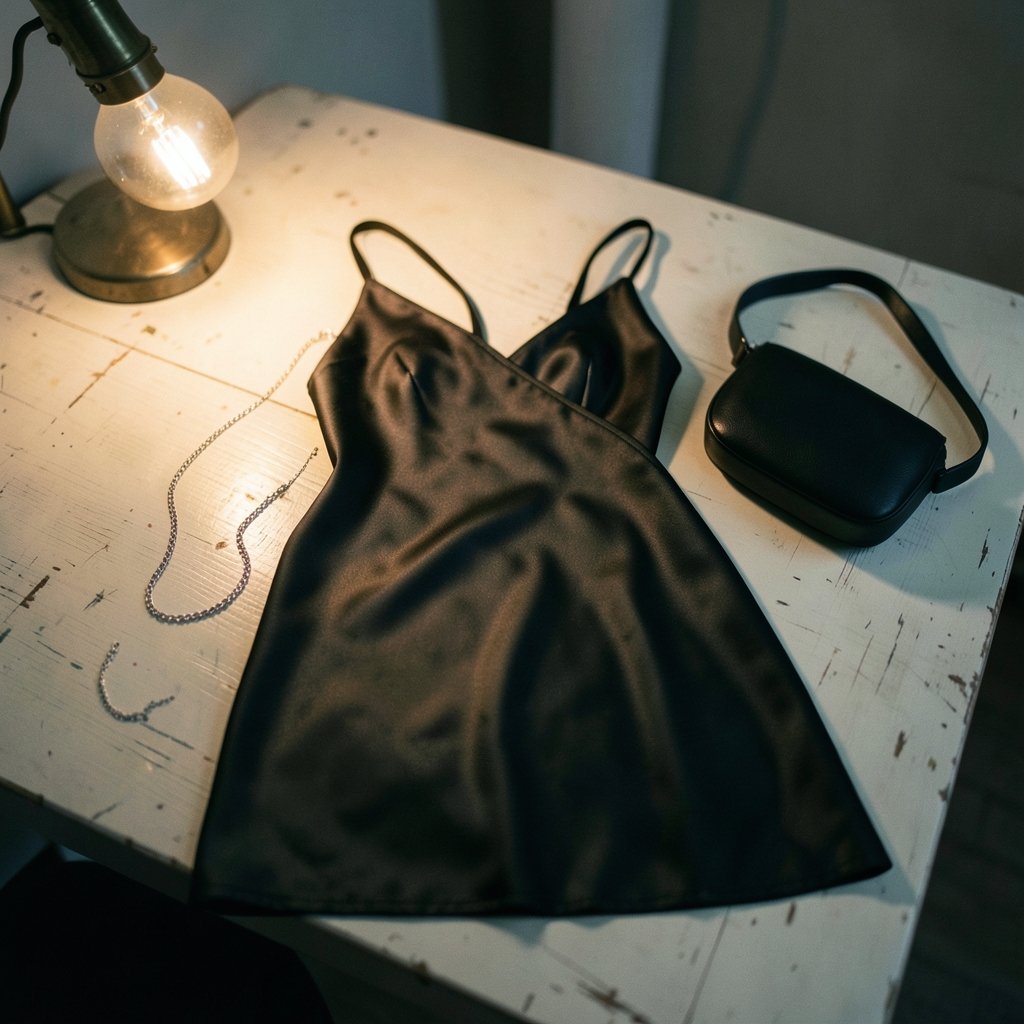
If you remember one silhouette from this period, make it the slip dress. Cut on the bias so it skimmed the body, often in satin or a simple matte fabric, it was the uniform of the late 90s. Calvin Klein and Donna Karan built much of their reputation on this kind of quiet, body-skimming design, and the high street copied it within weeks.
The rules of the look were simple:
- Choose one clean shape, then stop. A slip dress needs no belt, no jacket, no extra layer.
- Keep the palette tight. Black, gray, cream, white, and muted earth tones did most of the work.
- Let fabric do the talking. Satin, fine knit, and matte jersey carried the look without prints or embellishment.
- Keep accessories small. A thin chain, a simple shoulder bag, a plain sandal.
The most common mistake people make when recreating this look today is over-accessorizing. The original was almost aggressively plain. If you add a statement belt, chunky jewelry, and a bold bag, you have built a modern outfit, not a late 90s one.
Logomania and the Luxury Boom
While minimalism ruled the runway, the street went the other way. Visible branding became a status marker. Gucci, revitalized under Tom Ford from 1994, put its logo front and center. Louis Vuitton’s monogram appeared on more bags than ever. The Fendi Baguette, launched in 1997, became the era’s most cited It bag, worn close under the arm and photographed constantly.
This was the moment when logomania went mainstream. A logo belt was not subtle. A monogram bag was not quiet. The point was recognition, and it worked because luxury houses had spent years building that recognition. If you want to understand how this period shaped the way luxury fashion still sells itself, the broader story of Italian luxury fashion is a useful place to start, since so much of the logomania era ran through Milan.
The Y2K Aesthetic Takes Shape
The term Y2K came later, but the look arrived in the final years of the decade. Metallic and iridescent fabrics, silver and chrome accessories, futuristic wraparound sunglasses, baby tees, low-rise trousers, and cargo pants all belong to this moment. It was playful, a little tacky on purpose, and completely unafraid of shine.
Contemporaries did not walk around calling their outfits Y2K. The label is a retrospective one, applied by later generations looking back. That gap matters. What felt like normal dressing in 1999 now reads as a distinct aesthetic, which is why so many people get the revival wrong by making it too literal.
The trick to wearing it now is to pick one element and let it lead. A metallic top with plain black trousers works. A silver bag with a simple white tee works. A full chrome outfit with matching sunglasses and platform boots reads as fancy dress. The era was bold, but it was rarely that coordinated.
Denim, Low-Rise Trousers, and the Waistline Drop
Denim changed shape in the late 90s. The high-waisted styles of the early decade gave way to low-rise, boot-cut, and flared jeans. The waistline dropped, the leg widened, and the look became casual and slightly slouchy. This shift did not happen overnight, and it varied by market, but by 1999 low-rise denim was everywhere.
This is also where a lot of modern discomfort comes from. Low-rise jeans were not especially forgiving, and the silhouette depended on a very specific body type being treated as the default. Anyone trying the trend today should treat it as a shape, not a standard. A mid-rise boot-cut gives most people the same leg line with far less fuss.
A quick comparison of the two denim moods
| Feature | Minimalist denim | Y2K denim |
|---|---|---|
| Rise | Mid to high, clean | Low, often very low |
| Leg | Straight or slim | Boot-cut or flared |
| Wash | Dark, uniform | Faded, whiskered, sometimes shiny |
| Styling | Plain tank, simple sandal | Baby tee, metallic belt, chunky shoe |
Sportswear Leaves the Gym
Tracksuits, sneakers as everyday shoes, and branded sportswear from Nike, Adidas, and Puma moved from the gym to the street across the late 1990s. The word athleisure did not really exist yet, but the behavior did. People wore athletic clothes for ordinary days, and the high street responded fast.
This is one of the era’s most lasting legacies. The idea that comfortable clothing could be fashionable, and that a sneaker could be the centerpiece of an outfit, started to take hold here. Everything from today’s sneaker culture to the dressed-down office traces back to this shift.
Teen Retail and Pop Culture
The late 90s were loud about youth. Teen-oriented retail expanded, catalogs like dELiA*s became a cultural reference point, and accessory chains sold plastic jewelry by the handful. Pop stars shaped high-street trends in real time. The Spice Girls from 1996 and Britney Spears in 1998 and 1999 gave teenagers a visual vocabulary that shops could copy within a season.
The result was a split wardrobe. A teenager might own a minimalist slip dress for a school dance and a rack of baby tees for the weekend. That split is worth remembering, because it explains why the decade resists a single summary. There was no one late 90s look. There were several, worn by different people on different days.
Fast Fashion Shortens the Cycle
Chains like Zara and H&M expanded through the 1990s and shortened the distance between runway and shop floor. A trend could go from a designer show to a cheap rack in weeks rather than months. That speed changed how people consumed fashion, and it made the late 90s feel more trend-churning than any decade before it.
The practical downside is familiar to anyone who has bought a fast trend: the clothes rarely last. A bias-cut satin dress from 1998 that survived was probably well made. A cheap copy was not. If you are shopping for vintage from this era now, check the seams, the fabric weight, and the label before you fall for the silhouette. Thin, shiny polyester that has gone stiff is a warning sign.
How to Wear Late 90s Style Today
The most common mistake is treating the decade as a single costume. It was not. Here is what actually works in practice:
- Pick one era lane. Choose minimalism or Y2K shine, not both at full volume.
- Anchor with plain basics. A white tee, dark jeans, or a simple black dress gives the loud pieces somewhere to land.
- Keep the silhouette honest. A bias-cut dress should skim, not squeeze. A boot-cut jean should break just above the shoe.
- Use one metallic accent. A bag, a shoe, or a top. Not all three.
- Skip the ironic accessories. Tiny sunglasses and plastic chokers photograph well and wear badly.
If you want a wider view of how these ideas have been reinterpreted, the 2026 fashion trends guide shows how much of the late 90s vocabulary is still circulating, and the 2026 fashion trends female tag collects the current versions of low-rise denim, slip dresses, and metallic accents. For a broader sweep of what is in and out right now, the fashion trends 2026 archive is a good companion read.
For a practical walkthrough of one specific slice, the breakdown of 90s summer outfits that get the look without looking costumed is worth your time, because summer dressing is where the decade’s ease shows up most clearly. And if you like seeing how runway moments get translated into something more personal, Angelica Hicks’ fashion illustrations capture exactly the playful energy this era ran on. For deeper reading on the culture around the clothes, the Barbie world tour book and a guide to finding the best fashion substacks both show how fashion storytelling has evolved since the magazine-dominated 90s.
What the Late 90s Left Behind
Look closely and you can trace most of today’s wardrobe back to these three years. The slip dress never really left. Low-rise denim keeps returning in cycles. Logos are still the fastest way to signal status. Sneakers are still everyday shoes. Even the minimalist uniform, plain and calm and unbothered, reappears every few seasons under a new name.
What makes the late 90s worth studying is the honesty of the contrast. It was a decade closing out, and people were dressing for two futures at once: one clean and quiet, one shiny and loud. Both happened. Both are still happening.
Conclusion
Late 90s fashion was never one thing. It was a slip dress and a logo bag. It was a plain tank top and a silver baby tee. It was a reaction against the darkness of heroin chic and a rush toward the optimism of a new millennium. The era’s real lesson is not a shopping list. It is that style works best when you pick a lane, keep the basics strong, and let one bold piece carry the rest. Wear the silhouette, not the costume, and the look holds up far better than the decade it came from.
Frequently Asked Questions
What years count as late 90s fashion?
Most people mean roughly 1997 to 1999. That window covers the shift away from grunge, the peak of minimalism, the rise of logomania, and the first appearance of what later got called the Y2K aesthetic.
What is the difference between 90s minimalism and Y2K style?
Minimalism was quiet: slip dresses, bias cuts, neutral colors, and almost no accessories. Y2K style was loud: metallics, chrome, baby tees, low-rise trousers, and futuristic sunglasses. Most people in the late 90s mixed a little of both.
Why was heroin chic so controversial?
The look promoted pale, extremely thin bodies as an ideal. Criticism grew after the 1997 death of photographer Davide Sorrenti, and President Bill Clinton publicly criticized the trend in May 1997. The backlash pushed the industry toward healthier imagery.
Was the term Y2K used at the time?
No. People in the late 90s did not call their clothes Y2K. The label was applied later by people looking back at the metallic, futuristic styles of roughly 1998 to 2000.
How can I wear late 90s style without looking like I’m in costume?
Choose one lane and anchor it with plain basics. Wear a single metallic accent rather than three. Keep the silhouette honest to your body, and skip the ironic accessories that only work in photographs.
Which late 90s pieces are easiest to wear today?
A bias-cut slip dress, dark boot-cut jeans, a plain ribbed tank, and one good logo-free shoulder bag cover most of the era’s mood. Add a single metallic piece if you want the Y2K edge without going full shine.