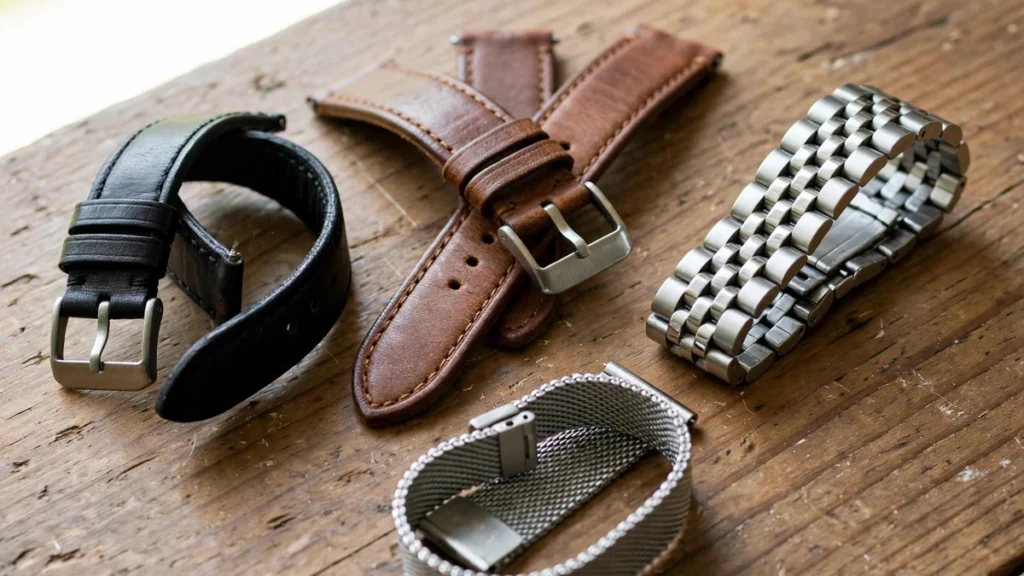
The strap is the part of a watch you actually feel, and it changes the watch more than almost anything else. The same case on a leather strap and on a steel bracelet looks like two different watches, wears like two different watches, and suits two different days.
Leather is warm, light and comfortable from the first day. It moulds to your wrist, it suits formal and smart occasions, and it ages in a way that tells a story. Metal is cool, solid and nearly indestructible. It suits heat, water and hard wear, and it will look much the same in ten years as it does today. Neither is better in every way, and the right choice depends on your skin, your climate, your wardrobe and how you spend your days.
Below are nine comparisons that matter in 2027, from comfort and durability to water, weight, style and cost. Each one is described plainly, with what each side does well, what to watch for, and who it suits best, so you can choose a strap you will actually enjoy wearing, not just one that looks good in a photograph.
Key takeaways
- Leather is lighter, warmer and more comfortable from day one, and it suits formal and smart occasions best.
- Metal is more durable, handles water and sweat easily, and needs almost no maintenance beyond a rinse.
- Leather absorbs sweat and water, so it wears out faster in hot climates and needs replacing every one to three years.
- Metal is heavier, can pull arm hair, and costs more to replace or repair, but it can last the life of the watch.
- Neither strap is a financial investment, and the best strap is the one that fits your wrist, your climate and your daily routine.
What leather and metal watch straps actually are
A leather watch strap is usually made from calfskin, alligator, ostrich or suede, lined on the underside and stitched at the edges. Good leather is supple, breathable and comfortable, and it darkens and softens with wear. Cheap leather can feel stiff, crack at the holes, and smell unpleasant in heat. The quality of the leather matters more than the brand on the buckle, and a well-made strap from a good tannery can transform a modest watch.
A metal strap, usually called a bracelet, is made from linked steel, titanium or gold, held together with pins or screws. It is heavier than leather, cooler to the touch, and far harder to damage. A good bracelet has solid links, a secure clasp and a comfortable taper, while a cheap one can pinch, rattle and pull hair. The bracelet is often the most expensive part of a watch to make well, which is why a good one feels so different from a poor one.
A dress watch on leather and a steel bracelet for everyday wear is a common, sensible pairing. Our roundup of the best luxury dress watch brands shows how the great dress watches are almost always presented on leather, which tells you something about where each strap belongs.
How we chose these comparisons and what to look for
Look first at your climate and your skin. If you live somewhere hot and humid, or your wrist sweats easily, leather will absorb moisture, darken, and wear out quickly, while metal will stay comfortable and clean. If you live somewhere cool and dry, leather is comfortable all year, and metal can feel cold against the skin in winter. Your wrist, not the catalogue, decides this one.

Look next at how the strap is made. Good leather should feel supple, not stiff, with neat stitching and a lining that will not irritate your skin. A good bracelet should have solid end links, no sharp edges, and a clasp that closes with a satisfying click. Both should fit snugly enough to stay put, with room for one finger underneath. A strap that is too loose will slide and annoy you all day.
Finally, look at the cost of replacement. A good leather strap costs far less than a metal bracelet, and replacing it every couple of years is part of normal ownership. A metal bracelet costs much more to replace, but you may never need to. Our roundup of the best luxury watches of 2027 shows both strap types across the price range, which helps if you want to see what the same money buys on each side.
The 9 comparisons that matter in 2027
Comfort on the wrist
What we like: Leather is soft, warm and light, and it moulds to your wrist within days. Metal is smooth and cool, and once sized properly it distributes its weight evenly. What to consider: Leather can feel sticky in heat, while metal can pull arm hair and feel cold in winter. Best for: All-day comfort in a cool climate, where leather is hard to beat. Material: Calfskin or alligator grain leather. Price range: Good leather from around £40; steel bracelet from around £150. Standout feature: Leather disappears on the wrist after a week of wear.
Durability and ageing
What we like: Metal barely ages. It can be scratched, but scratches can be polished out, and the bracelet will still be working in twenty years. Leather ages visibly, darkening and softening, which many owners love. What to consider: Leather wears out. Sweat, water and sun break it down, and most leather straps need replacing every one to three years. Best for: A watch you want to keep for decades, where metal is the practical choice. Material: Stainless steel or titanium. Price range: Steel bracelet from around £150; leather from around £40. Standout feature: A steel bracelet can outlast the watch it came with.
Water and weather
What we like: Metal does not care about water. You can swim, shower and wash your hands without thinking about it. Leather hates water, and every soaking shortens its life. What to consider: Even water-resistant leather is only resistant, not waterproof, and salt water is worse than fresh. Best for: Holidays, swimming and rainy days, where metal is the only sensible choice. Material: Stainless steel. Price range: Steel bracelet from around £150. Standout feature: Metal goes from the sea to dinner without a second thought.
Weight on the wrist
What we like: Leather is light, which matters on a small wrist or a long day. Metal is heavier, which some people find reassuring and others find tiring. What to consider: A heavy watch on a metal bracelet can feel top-heavy by evening, especially if the case is large. Best for: Small wrists and long days, where leather keeps the watch feeling light. Material: Calfskin leather or titanium bracelet. Price range: Leather from around £40; titanium bracelet from around £250. Standout feature: A leather strap can make a large watch feel half its weight.
Style and versatility
What we like: Leather suits formal, smart and vintage looks, and changing the colour changes the whole watch. Metal suits sporty, modern and everyday looks, and it goes with almost anything. What to consider: A leather strap in the wrong colour can clash with your shoes and belt, while a steel bracelet rarely clashes with anything. Best for: Formal occasions and evening wear, where leather looks the part. Material: Dark brown or black calfskin. Price range: Leather from around £40; steel bracelet from around £150. Standout feature: A leather strap can dress a watch up or down in a minute.
Maintenance and cleaning
What we like: Metal needs almost nothing. Rinse it under warm water with a little soap, dry it, and it is clean. Leather needs care: keep it dry, clean it gently, and condition it occasionally. What to consider: Leather that is never cleaned absorbs sweat and smells, and conditioning the wrong leather can stain it. Best for: Low-maintenance ownership, where metal wins without trying. Material: Stainless steel. Price range: Steel bracelet from around £150. Standout feature: A steel bracelet cleans up like new in two minutes.
Cleaning a bracelet properly means getting between the links, where dirt and skin collect. A soft toothbrush and warm soapy water does the job, and it is worth doing every few months. A leather strap needs a damp cloth, never a soaking, and should dry naturally, away from heat.
How it handles heat and sweat
What we like: Metal stays cool and clean in heat, and sweat rinses off easily. Leather feels warm and comfortable in cool weather, and breathes better than a solid bracelet. What to consider: In a hot summer, a leather strap will absorb sweat, darken at the edges, and wear out far faster than in winter. Best for: Hot climates and active days, where metal stays comfortable and hygienic. Material: Stainless steel or titanium. Price range: Steel bracelet from around £150. Standout feature: Metal never holds a smell.
Many owners switch straps with the seasons, leather in winter and metal in summer, which is the most practical answer of all. If you live somewhere hot all year, leather is a special-occasion choice, not a daily one, and there is no point pretending otherwise.
Price and value
What we like: Leather is cheap to buy and cheap to replace, so you can own several colours for the price of one bracelet. Metal costs more up front, but you may never replace it. What to consider: A cheap leather strap will look cheap quickly, while a good one costs more than you expect. A replacement bracelet from the maker can cost a surprising amount. Best for: A tight budget or a collection of straps, where leather gives the most choice for the least money. Material: Calfskin leather. Price range: Good leather from around £40; steel bracelet from around £150. Standout feature: Three leather straps cost less than one steel bracelet.
Value over time favours metal, because you buy it once. Value in variety favours leather, because you can change the look of a watch for the price of a dinner. Both are honest answers, and the right one depends on whether you want one watch that lasts or one watch that changes.
Which strap suits which occasion
What we like: Leather is the natural choice for weddings, formal dinners and the office, where it looks considered and elegant. Metal is the natural choice for travel, sport and everyday wear, where it is tough and easy. What to consider: There are no strict rules any more, and a steel bracelet at a wedding is perfectly fine, just as leather at the beach is not. Best for: A formal occasion, where a dark leather strap completes the outfit. Material: Black or dark brown calfskin. Price range: Leather from around £40; steel bracelet from around £150. Standout feature: Gold and leather together are a classic pairing, and our guide to gold jewellery for everyday wear shows how warm metals sit beautifully with leather tones.
The occasion rule that still holds is about water and sweat, not about formality. Leather at a wedding is elegant. Leather in the sea is a mistake. Metal at a wedding is fine. Metal on a hike is ideal. Choose by what you will actually be doing, and the style will follow.
Which strap is right for you
If you wear a watch mainly in an office, in a cool climate, and you like changing the look, choose leather, and buy two colours. If you wear a watch everywhere, in heat, in water, and on active days, choose metal, and have it sized properly. If you want both, buy the watch on a bracelet and add a leather strap later, which is usually cheaper than the other way round, and gives you the durable option first.
A leather strap that is too loose will slide and crease. A bracelet that is too tight will pinch. A bracelet that is too loose will clatter. Get the fit right, wear the watch for a full day before you judge it, and remember that a strap can always be changed, while the watch itself cannot.
The caveats that matter
Cheap straps are a false economy on either side. A stiff, cracking leather strap makes a good watch feel cheap, and a rattling bracelet with sharp edges makes a good watch feel worse. Check the spring bars too, because a worn spring bar is the most common reason a watch falls off a wrist, and it costs almost nothing to replace.
| Detail | What is known |
|---|---|
| Comfort | Leather: light, warm, moulds to the wrist. Metal: cool, solid, needs proper sizing |
| Durability | Metal: lasts decades. Leather: usually replaced every 1 to 3 years |
| Water | Metal: unaffected. Leather: damaged by soaking, especially salt water |
| Weight | Leather: light. Metal: heavier, except titanium, which is close to leather |
| Maintenance | Metal: rinse with soap and water. Leather: keep dry, clean gently, condition occasionally |
| Heat and sweat | Metal: stays clean. Leather: absorbs sweat, darkens and wears faster |
| Cost | Leather: from around £40. Steel bracelet: from around £150, rarely replaced |
| What neither does | Neither makes up for a poor fit, and neither is a financial investment |
If your skin is sensitive, test before you commit. Some people react to nickel in steel, in which case titanium or leather is the answer. Some people react to the dyes or lining in cheap leather, in which case a better strap, or a metal bracelet, solves it. A rash on your wrist is a sign to change the strap, not to keep wearing it.
Checklist: choosing between leather and metal honestly
Use these checks before you buy, and again before you replace a strap.
- Check your climate: hot and humid suits metal; cool and dry suits leather.
- Check your skin: sweat, sensitivity and nickel reactions all point to a different strap.
- Check the fit: snug with room for one finger, whether leather or metal.
- Check the quality: supple leather with neat stitching, or solid links with a secure clasp.
- Check the water: if you swim with the watch, leather is the wrong choice.
- Check the replacement cost: leather is cheap to replace, metal is expensive but rarely needed.
Frequently asked questions
Can I wear a leather strap in summer?
Yes, but it will wear out faster. Sweat and heat darken leather and break it down, so expect a shorter life. Many owners switch to metal in summer and save leather for cooler months, which keeps both straps in good condition.
How long does a leather watch strap last?
Usually one to three years with daily wear, longer if it is worn occasionally or in a cool, dry climate. Replace it when it cracks, smells, or the holes stretch, rather than waiting for it to fail on your wrist.
Can I put a metal bracelet on a watch that came on leather?
Often yes, if the maker sells a matching bracelet, or a third-party bracelet fits the lug width. Check the lug width in millimetres and the shape of the case, because curved end links need to match the case. A watchmaker can fit it for you.
Does a metal bracelet scratch easily?
Polished links show scratches more than brushed ones, and daily wear will mark any bracelet eventually. Light scratches can be polished out, and brushed finishes hide them well. A bracelet that is scratched from honest wear is not damaged, it is used.
Is leather or metal better for a dress watch?
Leather, traditionally. A slim dress watch on a dark leather strap is the classic formal pairing, and it sits flatter under a cuff than a bracelet. A slim steel bracelet can work too, but leather is the safer, more elegant choice for formal occasions.
How do I clean a metal watch bracelet?
Warm water, a little soap and a soft brush, then rinse and dry thoroughly. Do this every few months, or more often in summer. If the watch is not water resistant, clean the bracelet with a damp cloth instead, and keep the case dry.
The bottom line
The honest answer to leather versus metal in 2027 is that leather wins on comfort, warmth and style, while metal wins on durability, water and maintenance. Most people who wear a watch in an office, in a cool climate, and like changing the look will be happiest with leather. Most people who wear a watch everywhere, in heat and water, will be happiest with metal.
Choose the strap that fits your wrist, your climate and your days, and remember that a strap is the easiest part of a watch to change. The best choice is often both: leather for the occasions that suit it, metal for the days that do not, and a watch you enjoy wearing either way.