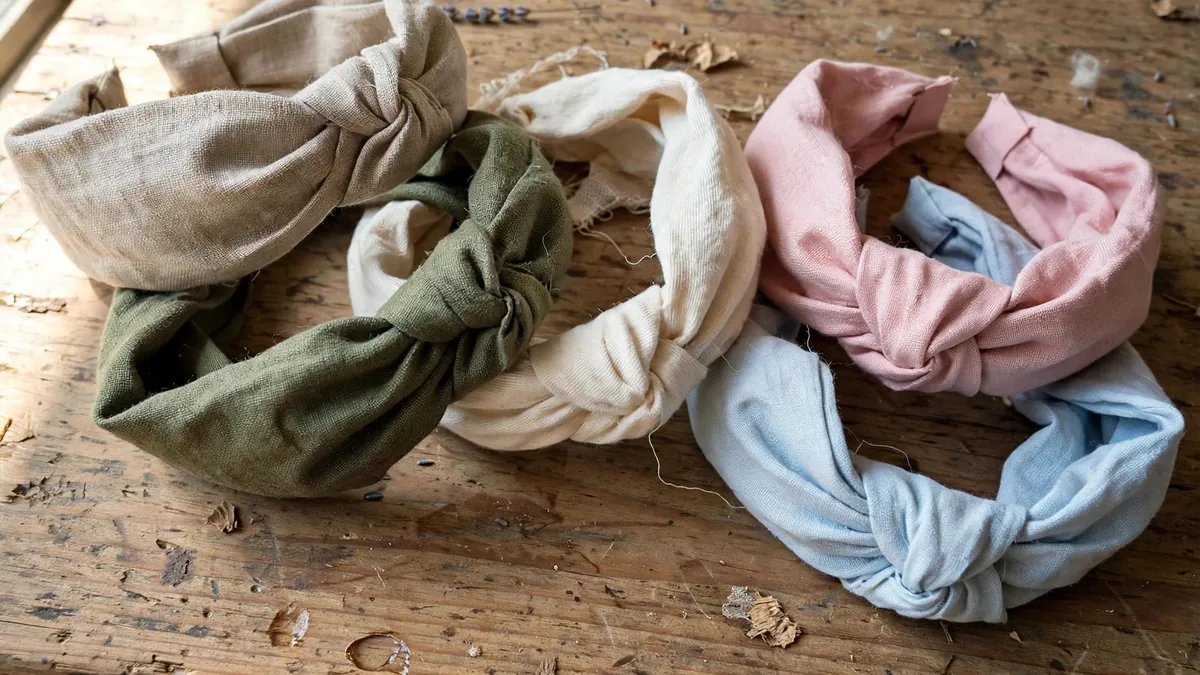

A headband looks like the simplest accessory you own, until you wear the wrong one. A stiff cotton band can press behind your ears by lunchtime. A linen band can feel wonderfully cool on a warm day and then crease into a soft fold the moment you take it off. The fabric decides almost everything about how a headband feels, how long it stays comfortable, and how often you will actually reach for it.
Linen and cotton are the two natural fabrics most headbands are made from, and they behave very differently on the head. Linen is made from flax fibres, which are long, strong, and naturally textured. Cotton comes from the cotton plant, and its fibres are shorter, softer, and smoother. Both are breathable and both are easy to find, but they suit different hair, different weather, and different days.
Below are nine comparisons that matter in 2027, from softness and grip to washing and price. Each one is judged on what the fabric actually does when you wear it for a full day, so you can choose the headband that suits your hair and your routine, not just the one that looks best on the shelf.
Key takeaways
- Linen feels cooler and drier in warm weather, while cotton feels softer and smoother against the skin from the first wear.
- Cotton usually grips better and stays put longer, while linen can slip on very fine or very smooth hair.
- Linen creases easily and looks relaxed rather than crisp, while cotton holds its shape and looks neater for longer.
- Both fabrics wash well, but linen gets softer with every wash and cotton can thin out over time.
- No headband fabric suits everyone, and a band that is too tight will cause headaches whatever it is made from.
What linen and cotton headbands actually are
A linen headband is made from flax, one of the oldest textile fibres in the world. The fibres are long and slightly uneven, which gives linen its characteristic texture: a dry, slightly crisp feel with tiny natural slubs in the weave. Most linen headbands are unlined or lined with a thin cotton backing, and they are often sold in muted, natural colours that suit the relaxed look of the fabric. Our roundup of the best headbands for women includes several linen styles, and they are usually the ones described as cool, light, and easy to wear in summer.
A cotton headband is made from cotton fibres, which are soft, smooth, and naturally absorbent. Cotton headbands come in far more colours and prints than linen ones, from plain jersey bands to wide, padded styles, and they are often blended with a little elastane so they stretch and grip. Cotton is the fabric most people think of first for a headband, because it feels familiar, washes easily, and rarely causes irritation.
The difference that matters most is not how the fabrics look in a photograph. It is how they behave against your scalp and your hair over several hours. Linen stays cool and dry, but it can feel dry and slightly rough at first. Cotton feels soft straight away, but it can hold sweat and feel damp on a hot day. Knowing which trade-off you prefer is the quickest way to choose well.
How we chose these comparisons and what to look for
Look first at the weave and the lining. A loosely woven linen band breathes better but can feel scratchy if it is unlined, while a tightly woven cotton band feels smoother but can trap heat. A thin cotton lining inside a linen band often gives you the best of both: the coolness of linen with the softness of cotton against your skin.

Look next at the width and the grip. A narrow band suits fine hair and short styles, while a wide band suits thick hair and holds more hair back. Check whether the band has a non-slip lining, a bit of stretch, or teeth along the inner edge, because grip matters more than fabric when it comes to staying put. Our guide to natural fibres in clothing explains how linen and cotton behave more generally, and the same principles apply here: linen is stronger and cooler, cotton is softer and more forgiving.
Finally, look at the care label before you buy. Both fabrics are washable, but linen likes a cool wash and air drying, while cotton tolerates a warmer wash and the tumble dryer. A headband you can wash easily is a headband you will actually wear, so choose one that fits your laundry routine, not just your wardrobe.
The 9 comparisons that matter in 2027
Softness against the skin
What we like: Cotton feels soft and smooth from the first wear, with no breaking-in period, and it rarely irritates sensitive skin. What to consider: Linen can feel dry and slightly textured at first, and unlined linen may rub behind the ears. Best for: Sensitive skin and anyone who wants instant comfort. Fabric: Cotton, usually jersey or poplin. Price range: About £8 to £25. Standout feature: Softness you notice straight away.
Cotton wins this one clearly. Linen does soften with washing, but it never becomes as smooth as cotton, and if your skin is easily irritated, that matters more than anything else.
Breathability and heat
What we like: Linen lets air through easily and wicks moisture away from the scalp, so it feels noticeably cooler on warm days. What to consider: Cotton absorbs sweat and can feel damp and heavy once it is wet. Best for: Summer, warm climates, and anyone who gets hot easily. Fabric: Linen, ideally a loose weave. Price range: About £12 to £30. Standout feature: A cool, dry feeling that lasts all day.
Linen is the clear winner in heat. On a warm day, a cotton band can feel like a damp cloth by the afternoon, while linen stays light and dry.
Grip and how well it stays put
What we like: Cotton, especially jersey cotton with a little stretch, grips the hair gently and stays in place for hours. What to consider: Linen is smoother and less stretchy, so it can slide forward on fine or freshly washed hair. Best for: Busy days, workouts, and thick hair that needs holding. Fabric: Cotton jersey with elastane. Price range: About £8 to £20. Standout feature: Reliable grip without pinching.
Cotton holds better. If your headband keeps slipping, the fabric is often the reason, and a cotton band with a non-slip lining will usually solve it.
Weight and comfort over a long day
What we like: Linen is light and airy, and you can forget you are wearing it on a warm day. What to consider: A thick cotton band can feel heavy and warm by the evening, especially in a wide style. Best for: All-day wear in warm weather. Fabric: Lightweight linen. Price range: About £12 to £28. Standout feature: Barely-there comfort.
Linen feels lighter, but only if the band is well made. A narrow linen band with a soft lining is the most comfortable option for a long day in the heat.
Wrinkling and creasing
What we like: Cotton holds its shape and looks neat for hours, with far less creasing than linen. What to consider: Linen creases the moment it is folded or pressed, and it will look relaxed rather than crisp within an hour. Best for: Work, events, and anyone who wants a tidy finish. Fabric: Cotton poplin or jersey. Price range: About £10 to £25. Standout feature: A neat look that lasts.
Cotton wins on neatness. Linen creases are not a flaw, exactly, but they are part of the look, and if you want a polished finish, cotton is the safer choice.
Washing and care
What we like: Both fabrics wash well, but linen gets softer and more comfortable with every wash, which is rare for a natural fabric. What to consider: Cotton can thin and fade over many washes, and bright cotton colours may run in a hot wash. Best for: Anyone who washes accessories often. Fabric: Linen, washed cool and air-dried. Price range: About £12 to £30. Standout feature: It improves with age.
Linen rewards care. Wash it cool, dry it flat or on the line, and it will feel better in a year than it did on day one.
Durability and ageing
What we like: Linen fibres are longer and stronger than cotton, so a linen band resists tearing and holds its structure for years. What to consider: Cotton is softer but weaker, and thin cotton bands can stretch out of shape and lose their grip. Best for: A headband you want to keep for years. Fabric: Linen with a sturdy weave. Price range: About £15 to £35. Standout feature: Strength that outlasts cotton.
Linen lasts longer. A good linen headband is a slow purchase, while cotton bands are easier to replace and easier to find in new colours each season.
Colour and pattern
What we like: Cotton takes dye easily, so it comes in every colour and print you can imagine, from plain black to bold florals. What to consider: Linen takes dye less evenly, so its colours are usually muted, natural, and slightly uneven. Best for: Bold colours, prints, and matching an outfit. Fabric: Cotton, in any print. Price range: About £8 to £25. Standout feature: Endless choice.
Cotton offers far more choice. If you want a headband in an exact colour or a busy print, cotton is almost always the fabric you will find it in.
Price and value
What we like: Cotton headbands are usually cheaper, widely available, and easy to replace, so you can own several for the price of one linen band. What to consider: Linen costs more because flax is harder to grow and process, and a cheap linen band may be blended with synthetics. Best for: Building a small collection on a budget. Fabric: Cotton, from any reliable maker. Price range: About £6 to £20. Standout feature: Good value, bought often.
Cotton is better value upfront, but linen is better value over time, because it lasts longer and gets softer instead of wearing thin.
Which headband is right for you
If your skin is sensitive, or you want a headband that feels soft the moment you put it on, choose cotton. It is the safer first buy, it comes in more colours, and it grips well enough for most hair. A cotton jersey band with a little stretch is the most forgiving option there is, and it suits almost everyone.
If you run hot, live somewhere warm, or wear a headband mostly in summer, choose linen. It will feel cooler and drier, it will last longer, and it will get softer with every wash. Just accept the creases and choose a lined style if your skin is sensitive. Our roundup of the best silk headbands is worth a look too, because silk sits between the two: smoother than linen, cooler than cotton, though it needs gentler care.
Thick hair usually suits cotton, because grip matters more than coolness when there is a lot of hair to hold. Fine hair usually suits linen, because a light band puts less pressure on the scalp, though you may need a non-slip lining to stop it sliding. The honest answer is that most people end up owning both, and reaching for linen in summer and cotton the rest of the year.
The caveats that matter
Neither fabric fixes a bad fit. A headband that is too tight will press behind your ears and cause a headache within an hour, whatever it is made from, and a headband that is too loose will slide forward no matter how grippy the fabric is. Try the band on, wear it for ten minutes, and pay attention to the pressure points before you decide it is the right one.
Blends are common and worth checking. Many headbands sold as linen are actually a linen and cotton blend, or linen mixed with viscose, and many cotton bands contain polyester or elastane. A blend is not a problem, but it changes how the band behaves, so read the label rather than trusting the name on the front.
| Detail | What is known |
|---|---|
| Softest from the first wear | Cotton, especially jersey cotton, feels smooth straight away |
| Coolest in warm weather | Linen, which breathes better and wicks moisture away |
| Best grip | Cotton with stretch, which holds hair in place for longer |
| Neatest look | Cotton, which creases far less than linen |
| Longest lasting | Linen, whose longer fibres resist wear and tearing |
| Easiest to wash | Both wash well, but linen prefers a cool wash and air drying |
| Most colours and prints | Cotton, which takes dye more evenly and in more shades |
| Best value over time | Linen, which softens with washing instead of wearing thin |
If you have a skin condition, a sensitive scalp, or hair that breaks easily, choose a soft, lined band and avoid anything with a hard edge or exposed elastic. A headband should hold your hair, not pull it, and if you notice breakage or soreness, the band is too tight or too rough for your hair.
Checklist: choosing a headband honestly
Use these checks before you buy, and again after a full day of wearing it.
- Check the fabric label: pure linen, pure cotton, or a blend, and how much stretch it has.
- Check the lining: a soft cotton lining makes linen comfortable and stops cotton from slipping.
- Check the fit: it should sit snugly without pressing behind your ears or leaving a mark.
- Check the width: narrow for fine hair, wide for thick hair and for holding more hair back.
- Check the care label: cool wash and air dry for linen, a gentler cycle for bright cotton colours.
- Check it after a day: no headache, no sore spots, no slipping, and no broken hairs along the hairline.
Frequently asked questions
Is linen or cotton better for a headband?
It depends on what you need. Linen is cooler, lighter, and longer lasting, while cotton is softer, grippier, and available in far more colours. Most people prefer cotton for everyday wear and linen for warm weather.
Does a linen headband slip more than cotton?
Often, yes. Linen is smoother and less stretchy than cotton, so it can slide on fine or freshly washed hair. A non-slip lining or a linen and cotton blend usually solves the problem.
Will a linen headband soften over time?
Yes. Linen gets softer with every wash, which is one of its best qualities. It will never feel as smooth as cotton, but after a few washes it feels much more comfortable against the skin.
Can I wash a linen headband in the washing machine?
Yes, on a cool, gentle cycle, and air dry it rather than using the tumble dryer. Hot water and high heat can shrink linen and make it feel stiffer rather than softer.
Which fabric is better for thick hair?
Cotton, usually. A cotton jersey band with a little stretch grips thick hair better and holds it in place for longer, while a linen band may slide or feel too light to hold the weight.
Are linen headbands worth the higher price?
Often, yes, if you wear them a lot in warm weather. They last longer, stay cooler, and improve with washing. If you only wear a headband occasionally, a cheaper cotton band is better value.
The bottom line
The best headband fabric in 2027 is not linen or cotton in general. It is the one that suits your hair, your skin, and your weather. Cotton is the softer, grippier, more forgiving choice, and it is the right first buy for most people. Linen is the cooler, lighter, longer-lasting choice, and it is the right buy if you run hot or wear a headband every day in summer.
Choose one band in each fabric, wear each for a full day, and pay attention to what your scalp and your hair tell you. Comfort, grip, and how the band looks after an hour matter more than the label, and the right headband is the one you reach for without thinking.