A headband is the smallest change that can make the biggest difference to an outfit. It pulls hair back from the face, adds colour or texture where a look feels flat, and turns a plain ponytail or a simple blow-dry into something finished.
The problem is not a lack of choice. In 2027 headbands come in every width, fabric and price, from slim metal bands that disappear into the hair to wide padded velvet styles that are the whole outfit. Choosing well means thinking about your hair type, your head shape, and where you will actually wear it, not just about which one looks prettiest in the photograph.
Below are nine headbands worth considering in 2027, from a classic padded velvet style to a sporty knit band for active days. Each one is described by what it is good at, what to watch for, and who it suits best.
Key takeaways
- A good headband stays put without pinching: comfort after four hours matters more than how it looks in the first five minutes.
- Width changes the whole effect — slim bands suit fine hair and formal looks, wide bands suit thick hair and statement styling.
- Velvet, satin and silk are kind to hair and reduce frizz, while metal and plastic bands grip better but can snag fine hair.
- Match the headband to the occasion: padded and embellished styles for evenings and events, fabric and knit for everyday and sport.
- No headband suits every head shape or hair type, and a band that slides on straight hair may grip perfectly on wavy or curly hair.
What a headband actually does for your look
A headband does three jobs at once. It keeps hair out of your face, it frames the face, and it adds a finishing detail that can pull an outfit together. A slim gold band can make a simple black dress look considered. A patterned fabric band can add the one bit of colour a neutral outfit needs.
It also solves practical problems. On second-day hair, a headband hides a flat crown and buys you a day before washing. On a windy day, it keeps a fringe in place. In summer, a fabric band absorbs sweat at the hairline.
What a headband does not do is replace a hairstyle. It works best on hair that has already been brushed, blow-dried or left in its natural texture. If your hair is very fine and slippery, you will need a band with grip, such as velvet on the inside or small teeth.
How we chose these headbands and what to look for
Look first at the fit. A headband should sit comfortably behind the ears and stay in place when you move your head, without leaving a mark or a headache. Metal bands with a little spring adjust to your head shape, while fabric bands rely on elastic, which can stretch out over time.
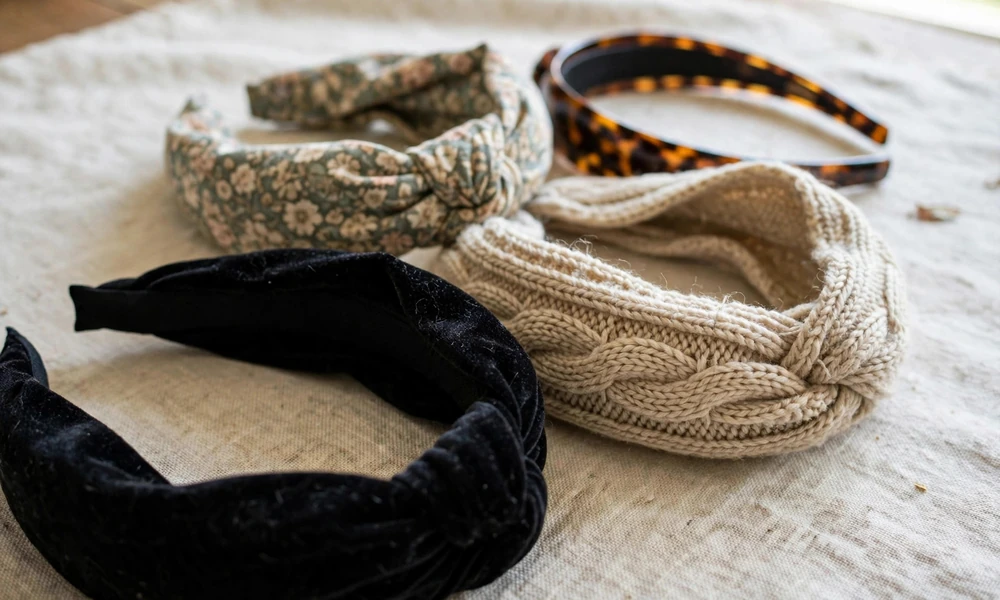
Look next at the fabric and the finish. Velvet and satin are gentle on hair and rarely cause breakage, which is why they suit fine or damaged hair. Silk is even kinder, and it adds a soft shine that suits evening looks. Leather and braided styles are sturdier and suit a more structured outfit, while embellished bands need checking for loose stones and sharp settings that can catch on hair.
Finally, look at the width and the occasion. A slim band is the most versatile, because it works with a ponytail, a bun, or loose hair, and it suits a formal event as well as a workday. A wide band makes a stronger statement and is best when it is the main accessory, paired with simple earrings and a plain neckline. Our guide to the season’s spring accessory trends is a useful place to see how headbands sit alongside other accessories, because the right balance is usually one statement piece, not three.
The 9 best headbands for women of 2027
The Classic Padded Velvet Headband
What we like: Soft, comfortable padding that stays put for hours, a rich velvet finish that suits both day and evening, and a shape that flatters most face shapes. What to consider: Velvet shows dust and lint, so it needs a quick brush before wearing. Best for: Everyday wear, work, and evenings out. Fabric: Velvet over a padded band. Price range: Mid-range. Standout feature: All-day comfort with no pinching behind the ears.
This is the headband to buy first if you own none. It works with loose hair, a low ponytail, or a bun, it does not slide on most hair types, and the velvet texture adds warmth to a plain outfit without any effort.
The Slim Metal Headband
What we like: A thin, elegant line that disappears into the hair, a gentle spring that holds its shape, and a finish that suits formal and bridal looks. What to consider: It can slide on very straight, fine hair, and it can snag if the ends are not finished smoothly. Best for: Weddings, formal events, and fine hair. Fabric: Metal with a polished or brushed finish. Price range: Affordable to mid-range. Standout feature: A barely-there look that still keeps hair neatly back.
For occasions when you want the headband to be felt rather than seen, a slim metal band is hard to beat. It frames the face without competing with earrings or a necklace.
The Knotted Fabric Headband
What we like: A knot at the top adds shape and personality, the fabric is soft against the skin, and it comes in endless patterns, from gingham to floral. What to consider: The knot can sit too high or slip sideways if the band is loose, and bold patterns can clash with a busy outfit. Best for: Casual days, holidays, and adding colour to a plain outfit. Fabric: Cotton, linen, or a cotton blend. Price range: Affordable. Standout feature: The knot detail turns a simple band into a style statement.
A knotted headband is the most playful of the nine, and it is the one to reach for when an outfit needs a lift. Keep the rest of the look simple, and let the knot do the talking.
The Wide Satin Headband
What we like: Smooth satin that glides over hair without frizz, a wide shape that holds back thick hair, and a soft shine that looks polished rather than flashy. What to consider: Satin can slip on straight hair, and it marks easily if it gets wet. Best for: Thick hair, evening looks, and special occasions. Fabric: Satin over a flexible band. Price range: Mid-range. Standout feature: A glossy, polished finish that flatters thick and wavy hair.
If your hair is thick enough to push a slim band out of place, a wide satin band is the answer. It holds its position, it looks deliberate rather than practical, and it pairs well with a silk blouse or a satin dress.
The Pearl-Embellished Headband
What we like: Pearls add instant occasion dressing, the band is usually padded for comfort, and it suits brides, bridesmaids, and evening guests alike. What to consider: Pearls can loosen over time, so check the setting before buying, and the style is too formal for everyday wear. Best for: Weddings, parties, and formal evenings. Fabric: Velvet or satin base with pearl embellishment. Price range: Mid-range to premium. Standout feature: Pearl detail that elevates a simple hairstyle into an occasion look.
A pearl headband is a shortcut to looking dressed up. It works best with hair worn down or in a soft low bun, and with small pearl or gold earrings rather than anything large that competes with it.
The Braided Leather Headband
What we like: Braided leather is sturdy, it ages well, and it adds a structured, slightly bohemian edge to jeans, linen, and tailored outfits. What to consider: Leather is less forgiving than fabric if the fit is wrong, and it can feel firm at first until it softens. Best for: Everyday wear, autumn outfits, and structured looks. Fabric: Braided leather over a flexible core. Price range: Mid-range. Standout feature: A braided texture that adds interest without colour or sparkle.
This is the headband for people who like their accessories to feel made, not decorated. It suits straight and wavy hair, it holds well, and it looks better the more you wear it.
The Floral Silk Headband
What we like: Silk is the kindest fabric for hair, the floral print adds colour without effort, and the band is light enough to wear all day. What to consider: Silk needs gentle cleaning, and a busy floral can overwhelm a patterned outfit. Best for: Spring and summer, garden parties, and holidays. Fabric: Silk or a silk blend. Price range: Mid-range. Standout feature: A soft floral print on silk that is gentle on hair and easy to wear.
For warm weather, a silk floral band is the comfortable choice. It keeps hair off the neck, it does not cause frizz, and it adds the one pattern a plain summer dress needs. Our roundup of floral headbands covers the best prints in more detail, from small sprigs to bold blooms.
The Crystal-Encrusted Headband
What we like: Crystals catch the light beautifully, the band is designed for evenings and photographs, and it turns a simple hairstyle into a party look. What to consider: It is heavy for all-day wear, crystals can catch on fine hair, and it is strictly an occasion piece. Best for: Evening parties, New Year, and formal celebrations. Fabric: Metal or fabric base with crystal embellishment. Price range: Mid-range to premium. Standout feature: Crystal sparkle that photographs well and suits evening light.
Save this one for after dark. For a party or a celebration it does more than any other accessory at the same price, and it needs nothing else with it.
The Sporty Ribbed Knit Headband
What we like: Stretchy, washable, and genuinely comfortable, it absorbs sweat, stays put during movement, and suits cold mornings as well as workouts. What to consider: It is casual by design, so it does not suit formal outfits, and it can flatten volume at the crown. Best for: Workouts, cold weather, and relaxed weekends. Fabric: Ribbed knit, often with a fleece lining. Price range: Affordable. Standout feature: Warmth and grip that work during exercise and in cold weather.
The knit headband is the practical one. It is the band to wear on a run, a walk, or a cold morning, and it washes easily, which the embellished styles do not.
Which headband is right for you
Fine, straight hair needs grip. Look for velvet on the inside of the band, small teeth, or a metal band with a spring, and avoid smooth satin, which will slide. Thick hair needs width and flex, so a wide satin or padded velvet band will hold better than a slim metal one.
Curly and wavy hair usually suits a wide band, because it holds volume at the crown while letting the curls fall. A slim band can disappear into curls, and a tight band can flatten them, so try the band on with your hair in its natural state. Short hair suits a slim or medium band worn close to the hairline, while long hair can carry a wide band further back on the head.
Face shape matters too, though less than comfort. A wide band suits a longer face by breaking up the forehead, while a slim band suits a round face by adding height without width. The honest test is simple: wear it for an hour at home before you wear it out.
The caveats that matter
Headbands are low risk, but they are not foolproof. A band that is too tight can cause a headache and, over time, breakage at the hairline if it rubs in the same place every day. A band with sharp metal ends or loose crystals can snag and pull hair out. And a band worn every day in the same position can leave a dent in styled hair and a faint line on the forehead, which is worth knowing if you are heading to a photograph or an event.
| Detail | What is known |
|---|---|
| Best for fine hair | Velvet-lined or toothed bands, or a slim metal band with spring |
| Best for thick hair | Wide satin or padded velvet bands with flex |
| Best for curly hair | Wide fabric bands that hold volume without flattening curls |
| Most comfortable all day | Padded velvet and soft fabric bands |
| Kindest to hair | Silk and satin, which reduce friction and frizz |
| Most formal | Pearl and crystal embellished bands |
| What to avoid | Sharp metal ends, loose stones, and bands that pinch behind the ears |
| What it does not do | It does not replace a hairstyle, and it will not stay put if the fit is wrong |
If you have a sensitive scalp, or you get headaches easily, choose a soft fabric band and avoid rigid metal for long wear. If you wear a headband daily, rotate between two or three, so no single band rubs the same spot every day.
Checklist: choosing a headband honestly
Use these checks before you buy, and again after an hour of wear.
- Check the fit: it should stay put when you shake your head, without pinching behind the ears.
- Check the width: slim for fine hair and formal looks, wide for thick hair and statement styling.
- Check the inside: velvet lining or small teeth help grip, smooth satin slips on straight hair.
- Check the finish: no sharp ends, no loose pearls or crystals, no rough seams against the skin.
- Check the occasion: embellished for evenings, fabric and knit for everyday and sport.
- Wear it for an hour at home first: if it hurts, slides, or leaves a mark, it is the wrong band.
Frequently asked questions
Do headbands damage hair?
Usually not, if the fit is right. A band that is too tight, or one with sharp edges, can cause breakage at the hairline over time. Choose a soft, well-finished band, avoid wearing the same tight band every day, and take it off gently rather than pulling it through your hair.
How do I stop a headband from slipping?
Choose a band with grip, such as velvet lining or small teeth, and make sure it sits behind the ears rather than on top of them. A little texture in the hair helps too: a light spray of dry shampoo at the roots gives a smooth band something to hold on to.
Can I wear a headband with short hair?
Yes. A slim or medium band worn close to the hairline works well with a bob or a pixie cut, and it can add shape to hair that is too short to tie back. Avoid very wide bands, which can overwhelm a short style.
Are headbands suitable for curly hair?
Yes, and they are often better than clips for curly hair, because a wide band holds volume at the crown without breaking up the curl pattern. Choose a wide fabric band, wear it a little further back than you would on straight hair, and let the curls fall freely in front.
What headband should I wear to a wedding?
A pearl or slim metal band is the safest choice for a guest, and a pearl or crystal band suits a bride. Keep the rest of your jewellery simple, so the headband is the one statement piece. A silk headband is a softer alternative if you prefer fabric to sparkle, and it suits a daytime or garden wedding particularly well.
How do I clean a headband?
Fabric and knit bands can usually be hand-washed in cool water with a mild detergent and left to air dry. Velvet and satin should be spot-cleaned, and embellished bands should be wiped with a damp cloth rather than soaked, because water can loosen glue and settings.
The bottom line
The best headband in 2027 is not the most expensive or the most decorated. It is the one that fits your head, suits your hair type, and matches the occasion you will actually wear it to. For most people, that is a padded velvet band for everyday, a slim metal band for formal occasions, and a fabric or knit band for active days.
Buy one good band in each of those three styles, wear each one for an hour at home before you trust it, and choose the one that disappears on your head. A headband you forget you are wearing is a headband that is doing its job, and it will do more for your outfit than a drawer full of bands that pinch, slide, or sit unworn.