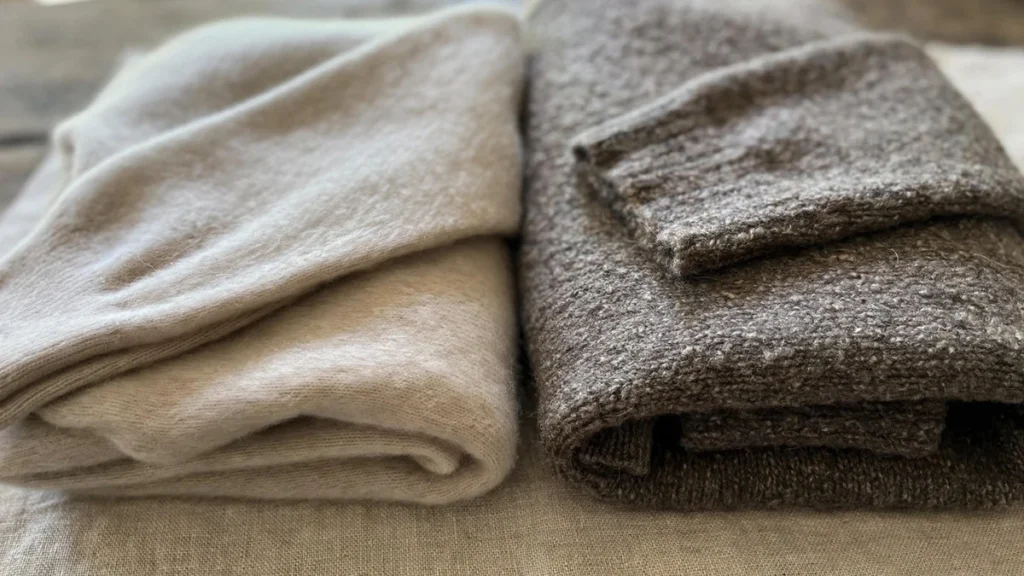
Cashmere and merino wool are the two fibres every knitwear lover ends up choosing between. Both are soft, warm, and far more comfortable than ordinary wool, yet they behave very differently once you wear them, wash them, and live in them for a season. Cashmere feels lighter and more luxurious against the skin. Merino is tougher, stretchier, and far easier to look after. The wrong choice is not a disaster, but it is an expensive one, because a good cashmere sweater costs several times more than a good merino one.
The confusion comes from the way both fibres are sold. Cashmere is marketed as the ultimate luxury, and merino is marketed as the practical performance fibre, but neither label tells the whole story. Cashmere pills, thins, and needs careful handling. Merino can feel less special, and cheap merino can be scratchy. The quality of the individual garment matters at least as much as the fibre on the label, and a well-made merino sweater will outlast a poorly made cashmere one by years.
Below are nine comparisons that matter in 2027, from warmth and softness to care, price, and sustainability, so you can decide which fibre suits your wardrobe, your budget, and the way you actually wear your clothes.
Key takeaways
- Cashmere is warmer for its weight and softer against bare skin, while merino is stronger, stretchier, and more resistant to pilling.
- Merino regulates temperature better and handles moisture well, which makes it the better choice for layering and active days.
- Cashmere needs hand washing or dry cleaning and gentle handling; most merino can be machine washed on a wool cycle.
- Good cashmere costs far more than good merino, and cheap cashmere is usually a false economy that pills and thins quickly.
- Neither fibre is perfect for everyone, and the quality of the yarn, the knit, and the finishing matters at least as much as the fibre on the label.
What cashmere and merino wool actually are
Cashmere comes from the soft undercoat of cashmere goats, mostly raised in Mongolia, Inner Mongolia, and northern China. Each goat produces only a small amount of usable fibre a year, which is why genuine cashmere is scarce and expensive. The fibres are very fine, usually 14 to 19 microns across, and very short, which gives cashmere its famous softness and its tendency to pill.
Merino wool comes from merino sheep, mostly raised in Australia and New Zealand. Merino fibres are also fine, typically 17 to 23 microns, but they are longer and springier than cashmere. That springiness is the key difference. Merino fibres bend and recover, which is why merino garments hold their shape, resist creasing, and survive regular wear far better than cashmere.
Both fibres are natural, breathable, and biodegradable, and both are a large step up from ordinary wool in comfort. The difference is not about good versus bad. It is about what you want the garment to do: feel weightless and indulgent, or work hard and last.
How we chose these comparisons and what to look for
Look first at the fibre itself. For cashmere, check the grade: long fibres pill less and last longer, and a ply count of two or more usually means a sturdier knit. For merino, check the micron count: extra-fine merino under 19.5 microns feels soft against bare skin, while coarser merino is better suited to outer layers. Our guide to the best cashmere sweaters explains how to spot a well-made cashmere knit before you buy.
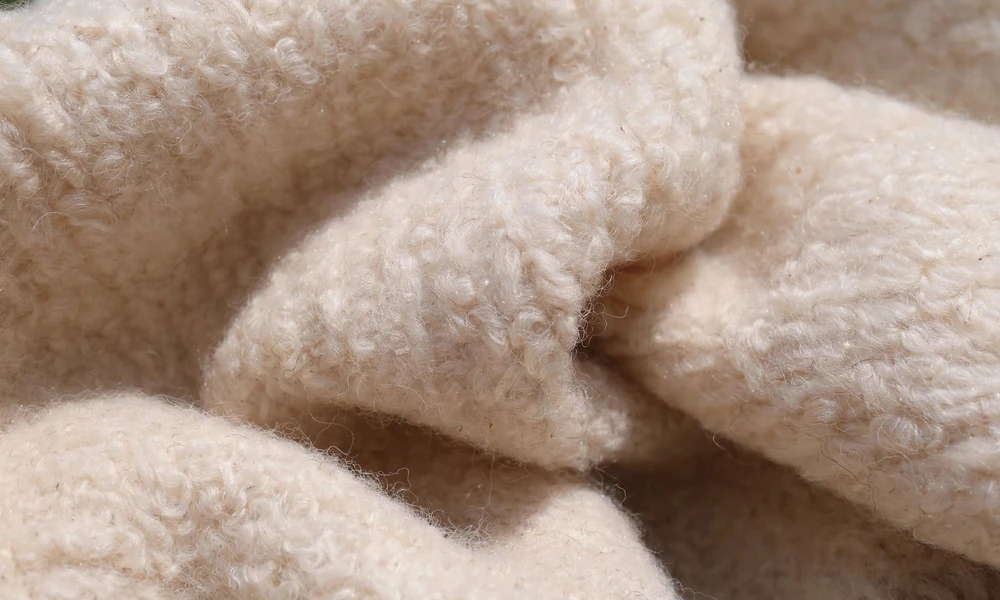
Look next at the knit and the finishing. A dense, even knit holds up better than a loose, airy one, in either fibre. Seams should be smooth and flat, not bulky. Ribbed cuffs and hems should spring back when you stretch them gently. These small details tell you more about how a sweater will age than the price tag does.
Finally, look at the care label and be honest about your habits. If you will not hand wash, cashmere will disappoint you. If you want a sweater you can wear three times a week and wash in the machine, merino is the sensible choice. A fibre you look after properly will always outlast a fibre you neglect.
The 9 comparisons that matter in 2027
1. Warmth
What we like: Cashmere is warmer for its weight than almost any other natural fibre, because its fine, hollow fibres trap air efficiently. Merino is warm too, but you need a heavier knit to match the same insulation. What to consider: Cashmere warmth depends on a dense knit; a thin, cheap cashmere sweater can be colder than a chunky merino one. Best for: Cold days when you want warmth without bulk. Fabric: Cashmere, 100 percent or blended. Price range: Mid to luxury. Standout feature: Remarkable warmth at a very light weight.
Cashmere wins on warmth per gram, which is why it feels so good under a coat. Merino wins when the knit is thick, because its fibres hold their loft and keep insulating even when damp.
2. Softness against skin
What we like: Good cashmere is the softest of the two, with almost no prickle, even on bare skin. Extra-fine merino comes close and feels smooth and comfortable for most people. What to consider: Cheap cashmere can feel rough once the short fibres break, and coarser merino above 22 microns can itch. Best for: Anyone with sensitive skin or anyone who wears knitwear without a layer underneath. Fabric: Cashmere or extra-fine merino under 19.5 microns. Price range: Mid to luxury. Standout feature: Cashmere has the edge on pure softness.
If softness is your top priority, cashmere is hard to beat. If you want softness with more resilience, extra-fine merino is the better compromise.
3. Durability and pilling
What we like: Merino is the clear winner here. Its longer, springier fibres resist pilling and hold their shape through regular wear and washing. What to consider: Cashmere pills, especially under the arms and where a bag strap rubs. Pilling is normal for cashmere, but it needs regular de-pilling and gentle handling. Best for: Everyday wear, commuting, and garments you reach for several times a week. Fabric: Merino wool, ideally two-ply or more. Price range: Affordable to mid. Standout feature: Merino keeps looking new far longer.
This is the comparison that changes most buying decisions. A cashmere sweater is a treat. A merino sweater is a workhorse.
4. Breathability and temperature regulation
What we like: Merino regulates temperature better than cashmere. It wicks moisture away from the skin, stays comfortable when you move between cold streets and warm rooms, and does not overheat as easily. What to consider: Cashmere can feel too warm indoors, and it dries slowly if it gets wet. Best for: Layering, travel, and days with big temperature changes. Fabric: Merino wool, lightweight or midweight knit. Price range: Affordable to mid. Standout feature: Merino stays comfortable across a wider range of temperatures.
Merino was developed for exactly this job, which is why it is the fibre of choice for base layers and travel knitwear.
5. Care and washing
What we like: Most merino can be machine washed on a cold wool cycle and dried flat, which makes it realistic for everyday life. What to consider: Cashmere should be hand washed in cool water or dry cleaned, and it must be dried flat, away from heat. Machine washing cashmere, even on a gentle cycle, shortens its life. Best for: Anyone who wants low-maintenance knitwear. Fabric: Machine-washable merino. Price range: Affordable to mid. Standout feature: Merino fits a normal laundry routine.
Be honest about this one. A cashmere sweater you never wash because the care feels like a chore will not last either.
6. Weight and drape
What we like: Cashmere drapes beautifully. It falls in soft folds, layers without bulk, and looks elegant under a coat or blazer. Merino is slightly stiffer and holds a more structured shape. What to consider: Cashmere can stretch out of shape if it is hung rather than folded, and heavy merino can feel bulky under a tailored jacket. Best for: Smart layering and outfits where the knitwear needs to look refined. Fabric: Cashmere for drape, merino for structure. Price range: Mid to luxury. Standout feature: Cashmere has the more luxurious fall.
If the sweater is the star of the outfit, cashmere usually looks better. If it is a layer under something else, merino holds up better.
7. Price and value
What we like: Good merino offers far better value. A well-made merino sweater can cost a third of an equivalent cashmere one and last longer. What to consider: Cheap cashmere, often under fifty dollars, is usually made from short, low-grade fibres that pill and thin within a season. It is a false economy. Best for: Building a wardrobe of reliable knitwear without a luxury budget. Fabric: Merino wool from a reputable mill. Price range: Affordable to mid for merino, mid to luxury for good cashmere. Standout feature: Merino wins on cost per wear.
Price per wear is the honest measure. A merino sweater worn a hundred times beats a cashmere sweater worn ten times, however soft it felt in the shop.
8. Sustainability and sourcing
What we like: Both fibres are natural and biodegradable, and both have responsible sourcing schemes. Merino from certified farms in Australia and New Zealand is widely traceable, and recycled cashmere is growing as an option. What to consider: Cashmere goat herding has put pressure on grasslands in Mongolia and Inner Mongolia, and overgrazing is a real concern. Look for certified or recycled cashmere if this matters to you. Best for: Anyone who wants a natural fibre with a clear supply chain. Fabric: Certified merino or recycled cashmere. Price range: Mid to luxury. Standout feature: Merino generally has the more transparent supply chain.
Neither fibre is perfectly sustainable, but merino is easier to trace, and recycled cashmere is the most responsible way to buy cashmere.
9. Best uses
What we like: Cashmere is best for special pieces: a beautiful crewneck, a soft scarf, a sweater you wear for evenings and weekends. Merino is best for everyday pieces: base layers, work sweaters, travel knitwear, and anything you wear hard. What to consider: Buying cashmere for daily commuting or merino for a formal evening is a mismatch. Match the fibre to the job. Best for: Cashmere for indulgence, merino for reliability. Fabric: Both, in different parts of your wardrobe. Price range: Affordable to luxury, depending on the piece. Standout feature: The two fibres complement each other rather than competing.
The best wardrobes have both. Cashmere for the pieces you love, merino for the pieces you live in.
Which fibre is right for you
If you want the softest, lightest, most luxurious feel and you are happy to hand wash and store your knitwear carefully, cashmere is the right choice. Choose a two-ply knit from a reputable maker, expect to pay a fair price, and treat it gently. It will reward you for years.
If you want a sweater you can wear often, wash in the machine, and rely on through a whole winter, merino is the better buy. Extra-fine merino is soft enough for most people to wear against bare skin, and it will hold its shape and colour far longer than cashmere. Our guide to natural fibres in clothing explains how merino sits alongside cotton, linen, and silk in a balanced wardrobe.
Many people end up with both, and that is the sensible answer. Merino for weekdays and travel, cashmere for weekends and evenings. The mistake is buying cheap cashmere instead of good merino, because the cheap cashmere will not last, and the good merino would have.
The caveats that matter
Both fibres have limits. Cashmere pills, stretches, and suffers if it is washed badly or stored with moths. Merino can felt if it is washed too hot, and coarse merino can irritate sensitive skin. Neither fibre is a good choice for very hot weather, and neither should be tumble dried.
| Detail | What is known |
|---|---|
| Warmth for weight | Cashmere is warmer per gram; merino needs a heavier knit to match it |
| Softness | Cashmere is softer; extra-fine merino under 19.5 microns comes close |
| Durability | Merino resists pilling and holds shape far better than cashmere |
| Temperature regulation | Merino wicks moisture and adapts better to changing temperatures |
| Care | Cashmere needs hand washing; most merino can be machine washed cold |
| Price | Good cashmere costs several times more than good merino |
| Best use | Cashmere for special pieces, merino for everyday and travel wear |
| What neither does well | Neither suits hot weather, tumble drying, or rough handling |
Watch out for misleading labels. A sweater described as cashmere blend may contain only a small percentage of cashmere, with the rest acrylic or ordinary wool. Check the fibre content on the label, not just the name on the tag. The same applies to merino: a merino blend with a high percentage of acrylic will not perform like pure merino.
Checklist: choosing between cashmere and merino honestly
Use these checks before you buy, and again after a season of wear.
- Check the label: fibre content, ply, and micron count matter more than the brand name.
- Check the knit: dense and even, with smooth seams and cuffs that spring back.
- Check the care routine: if you will not hand wash, choose merino over cashmere.
- Check the price: very cheap cashmere is usually low-grade fibre that pills fast.
- Check the job: cashmere for special pieces, merino for everyday and travel wear.
- Check the storage: fold knitwear, never hang it, and protect it from moths with cedar or lavender.
Frequently asked questions
Is cashmere warmer than merino wool?
Yes, for the same weight. Cashmere fibres trap air more efficiently, so a light cashmere sweater can be as warm as a heavier merino one. In a thick knit, though, merino can match cashmere for warmth and holds its insulation better when damp.
Which is better for sensitive skin?
Cashmere is usually the softest option and rarely irritates. Extra-fine merino under 19.5 microns is also comfortable for most people. Avoid coarse merino above 22 microns if your skin is sensitive, and always try a garment against your neck before buying.
Does cashmere pill more than merino?
Yes, noticeably more. Cashmere fibres are short, so they work loose and form pills, especially where there is friction. Merino fibres are longer and springier, so they resist pilling far better. Pilling on cashmere is normal and can be removed with a comb or de-pilling tool.
Can I machine wash merino wool?
Most modern merino can be machine washed on a cold wool cycle with a gentle detergent, then dried flat. Check the label first, because some fine merino still needs hand washing. Never use hot water or a tumble dryer, as both can felt the wool. Our guide to the best winter sweaters includes care notes for the knits it recommends.
Is cheap cashmere worth buying?
Usually not. Cheap cashmere is made from short, low-grade fibres that pill quickly, thin out, and lose their shape within a season. A good merino sweater at the same price will last longer and look better. If your budget is limited, buy good merino rather than poor cashmere.
Which fibre is more sustainable?
Both are natural and biodegradable. Merino generally has a more traceable supply chain, with certification schemes in Australia and New Zealand. Cashmere herding has put pressure on grasslands in Mongolia, so look for certified or recycled cashmere if sustainability matters to you.
The bottom line
Cashmere and merino wool are not really rivals. Cashmere is the softer, lighter, more luxurious fibre, best for special pieces you treat gently. Merino is the tougher, more practical fibre, best for everyday wear, layering, and travel. The right choice depends on how you will wear the garment, how you will wash it, and how much you are willing to spend.
If you can only buy one sweater this winter, buy good merino. If you want one beautiful piece to love and look after, buy good cashmere. And whatever you choose, check the label, the knit, and the care instructions before you pay, because quality matters more than the fibre name on the tag.