

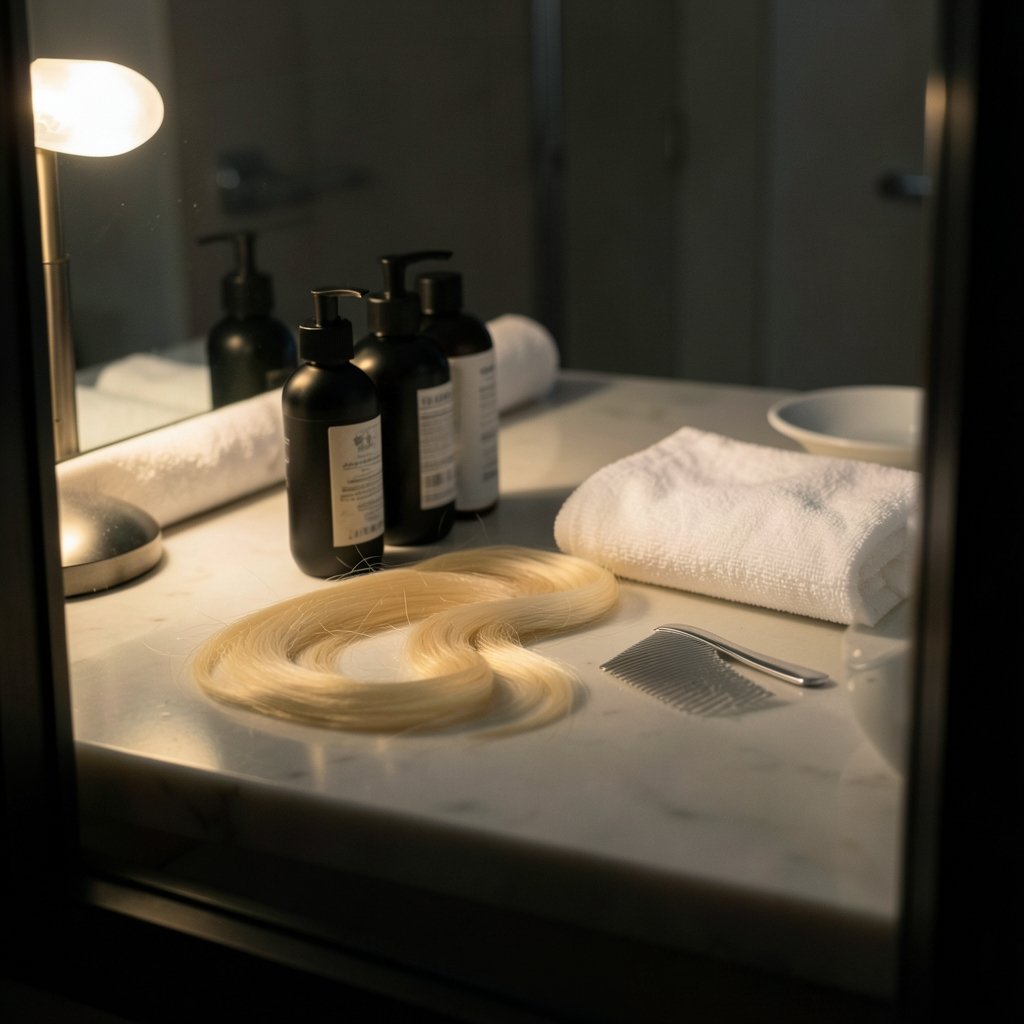
What does it really take to keep blonde hair looking like you just left the salon, even weeks after your last appointment? More than a purple shampoo and hope. Blonde is the most demanding color to hold, whether it came from a bottle or from genetics, and the difference between dull, brassy, brittle strands and that lit-from-within shine comes down to a routine. This guide walks through that routine step by step, in the order you would actually do it, with the mistakes to avoid and the fixes that work when things go sideways.
What You Need Before You Start
Before touching a single product, understand why blonde hair requires more care. Natural blonde hair contains little melanin, the pigment that gives hair its color and protects it. That leaves the fiber more exposed to oxidizing aggressors like UV rays, chlorine and heavy metals, which makes it more porous and dulls its shine. Bleached blonde adds another layer of stress: the process breaks down pigment inside each strand, changing the hair’s structure as well as its color.
That single fact explains almost everything else. Blonde hair loses moisture faster, grabs unwanted warm tones faster, and shows damage faster than darker hair. So the routine below is built around three jobs: replace moisture, control tone, and block damage before it starts.
Here is what to have on hand:
| Product | Job | How often |
|---|---|---|
| Sulfate-free or blonde-specific shampoo | Cleans without stripping | Every wash |
| Bond-building or moisturizing conditioner | Restores softness and strength | Every wash |
| Purple or violet shampoo | Neutralizes yellow and orange | Once or twice a week |
| Leave-in heat protectant | Shields from styling tools | Every heat styling session |
| Weekly mask or treatment | Deep repair and nourishment | Once a week |
| UV protection (spray or hat) | Prevents sun-driven fading | Sunny days, swimming |
If you are still deciding on a shade before building the routine, a look at the full range of blonde hair shades helps you match products to your specific tone, since platinum, honey and sandy blondes have slightly different needs.
Step 1: Wash Less Often, and Wash Gently

Expected result: less dryness, slower color fade, and hair that holds its shine between washes.
Start by stretching time between washes. Every wash opens the cuticle and sends moisture and toner down the drain, so daily shampooing is the fastest way to dull blonde. Two or three washes a week suits most blondes. On off days, dry shampoo at the roots handles oil without touching the mid-lengths and ends, where blonde is most fragile.
When you do wash, use lukewarm water, not hot. Hot water lifts the cuticle and accelerates fading. Focus shampoo on the scalp, let the suds rinse through the ends, and follow with conditioner from mid-shaft down. Choose a blonde-specific line rather than a generic one; formulas built for blonde hair address both the moisture deficit and the tone problem in one step. A solid blonde hair care routine starts here, because everything else builds on clean hair that has not been stripped.
Step 2: Condition Every Time, and Mask Once a Week
Expected result: softer strands, less breakage when brushing, and a fiber that holds color longer.
Conditioner is not optional for blonde hair. Coloring and lightening cost the hair much of its natural oil, and skipping conditioner lets that deficit compound. Rinse-out conditioner closes the cuticle after washing; a weekly mask goes deeper. Look for ingredients that rebuild from the inside, such as bond-building actives, ceramides, or nourishing oils.
Apply the mask to damp, towel-dried hair, comb it through, and leave it on longer than the label’s minimum. Ten to twenty minutes makes a measurable difference. If your hair feels mushy or stretchy when wet, that is a sign of over-processing rather than under-conditioning, and a bond builder is the better tool than a heavier mask. Those who lightened aggressively should read up on how to bleach hair platinum blonde without destroying it before adding more chemical services on top.
Step 3: Tone Once or Twice a Week, Not Every Wash
Expected result: cool, clean blonde without the lilac cast that comes from overuse.
Purple shampoo works because violet pigment sits opposite yellow on the color wheel and cancels it out. That is also why it is easy to overdo. Used every wash, it can leave hair ashy, gray or faintly lavender, especially on porous, lightened strands that soak up pigment fast.
The practical approach: use purple shampoo once or twice a week, leave it on for three to five minutes, and watch the result. If your hair turns cool quickly, dilute the frequency. If brass returns within days, your issue may be water quality or heat styling rather than insufficient toning. Hard water minerals and hot tools both push warmth back into blonde, and no amount of purple shampoo fixes either one.
Step 4: Protect Before Every Heat Styling Session
Expected result: fewer split ends, stronger strands, and color that stays true.
Heat protectant is the cheapest insurance in a blonde routine. Apply a leave-in spray or cream to damp hair before blow-drying, and again lightly before flat irons or curling wands. Keep tools at moderate heat and never press a hot iron onto hair that is still damp. Air-drying whenever possible gives the fiber a break, and rough-drying with a towel is another quiet saboteur; squeeze water out with a cotton T-shirt or microfiber towel instead of rubbing.
Step 5: Shield Hair From Sun, Chlorine and Salt
Expected result: no green tint, no sun-bleached patches, and slower fading through summer.
UV rays and chlorine are two of the biggest enemies of a fresh blonde. Sun exposure oxidizes both natural and artificial pigment, which is why blonde often looks lighter and warmer by late summer. Chlorine binds to lightened hair and can leave a greenish cast, and salt water strips moisture fast.
Before swimming, wet hair with fresh water and apply a leave-in conditioner so the strand absorbs clean water first. Wear a hat in strong sun, or use a UV-protective spray. After swimming, rinse immediately and follow with a moisturizing conditioner. A little planning here saves a corrective salon visit later.
Step 6: Book Maintenance Appointments Before Tone Drifts
Expected result: a color that never has a bad week.
The smartest maintenance move is timing. Book your next appointment before the current tone starts to fade, usually every six to eight weeks depending on how fast your hair grows and how light the shade is. Waiting until roots and brass are obvious means more corrective work, and more corrective work means more stress on the fiber. Between visits, the right at-home lineup does most of the heavy lifting; keeping color fresh and bright does not require constant salon trips, just the correct products used consistently.
Common Mistakes That Undo Good Blonde Care
Most blonde problems trace back to a handful of habits. Watch for these:
- Purple shampoo as a daily wash. Over-toning creates a dull, gray cast that is harder to fix than brass.
- Hot water and hot tools on high. Both lift the cuticle, and lifted cuticles lose color and moisture fast.
- Skipping heat protectant “just this once.” Damage is cumulative, and blonde has less margin for error.
- Brushing wet hair from the roots down. Start at the ends and work upward with a wide-tooth comb.
- Layering chemical services too close together. Lightening, then perming, then glossing within weeks compounds damage. Build lightness over time instead.
- Ignoring water quality. Mineral buildup from hard water dulls blonde and interferes with toner. A clarifying wash once a month helps.
Troubleshooting When Things Go Wrong
Hair feels dry and straw-like. Step up the weekly mask and add a bond builder. Cut back on heat until softness returns.
Brass keeps coming back within days. Check your water and your styling heat before increasing purple shampoo. A shower filter and lower iron temperature often solve it.
Color looks flat rather than bright. Product buildup is a common culprit. A clarifying shampoo once a month resets the canvas so toner and conditioner can actually reach the fiber.
Ends look thin and split. Trimming is not a failure; it is maintenance. A small trim every eight to twelve weeks keeps the overall look fuller and stops splits from traveling upward.
Green tint after swimming. Rinse immediately after the pool and use a chelating or clarifying treatment. Prevention with pre-swim conditioning works better than correction.
Building a Routine Around Your Specific Blonde
Not every blonde needs the same plan. Platinum and double-processed hair needs the deepest conditioning and the most careful heat habits. Highlights and balayage can often go longer between toning sessions. Natural blonde, which is more fragile from birth, benefits from UV protection and gentle cleansing even without color services. If you are curious how a specific shade behaves in real life, seeing how a blonde shade from Euphoria, Cassie’s Sydney Sweeney hair, is maintained on screen is a useful reality check on how much styling and upkeep sits behind a polished look.
Texture matters too. Fine blonde hair tolerates fewer products before looking weighed down, so light layers beat heavy creams. Curly and coily blonde hair, meanwhile, needs extra moisture at every step; readers with tighter textures may find the principles in this 4c hair care guidance useful alongside a blonde-specific routine. And if you are considering a warmer direction, auburn hair care covers how red-based tones differ in their maintenance demands.
A broader look at shades, levels and care helps you fine-tune the details, and the blonde hair guide breaks down how each level behaves. For a bit of fun context on how carefully managed blonde can look, the story behind the Pitch Perfect Bellas’ hair colors shows how much tone control goes into a consistent on-camera blonde.
Conclusion
Maintaining blonde hair is less about one miracle product and more about rhythm: gentle washing, consistent conditioning, restrained toning, and protection before heat or sun ever touches the strand. Do those four things in order, week after week, and blonde stops being a part-time job. The fiber stays strong, the tone stays cool, and the shine lasts long past the salon door. Start with the steps above, adjust based on what your hair tells you, and treat the troubleshooting list as your early-warning system rather than a rescue plan.
How often should blonde hair be washed?
Two or three times a week suits most blondes. Every wash opens the cuticle and releases moisture and toner, so stretching the interval and using dry shampoo at the roots on off days keeps color brighter for longer. Very fine or oily hair may need slightly more frequent washing, but always with a gentle, blonde-specific formula.
Does purple shampoo damage blonde hair?
Not when used correctly. The risk is overuse, which leaves hair ashy, gray or faintly lavender, particularly on porous lightened strands. Once or twice a week with a three-to-five-minute dwell time is the standard approach. If brass returns within days, the cause is usually water quality or heat styling rather than too little toning.
Can natural blonde hair go brassy?
Yes. Natural blonde contains little melanin, so it is more exposed to UV rays, pollution and other oxidizing agents that shift tone and dull shine. Sun protection, gentle cleansing and regular conditioning keep natural blonde clear, even without any color service.
Why does blonde hair feel dry all the time?
Lightening breaks down pigment inside the strand and changes its structure, which leaves the fiber more porous and less able to hold moisture. Conditioner after every wash, a weekly mask, and a bond-building treatment address the deficit. If hair feels stretchy when wet, that signals over-processing and calls for protein and bond repair rather than heavier oils.
How do you stop blonde hair turning green in the pool?
Wet hair with fresh water and apply leave-in conditioner before swimming so the strand fills with clean water first. Rinse immediately after leaving the pool and follow with a moisturizing conditioner. A chelating or clarifying treatment helps if a green cast has already appeared.
How often should blonde be trimmed and retouched?
A light trim every eight to twelve weeks keeps ends healthy and the overall shape fuller. Color retouches usually land every six to eight weeks, timed before roots and brass become obvious, since waiting longer means more corrective work and more stress on the hair.











