

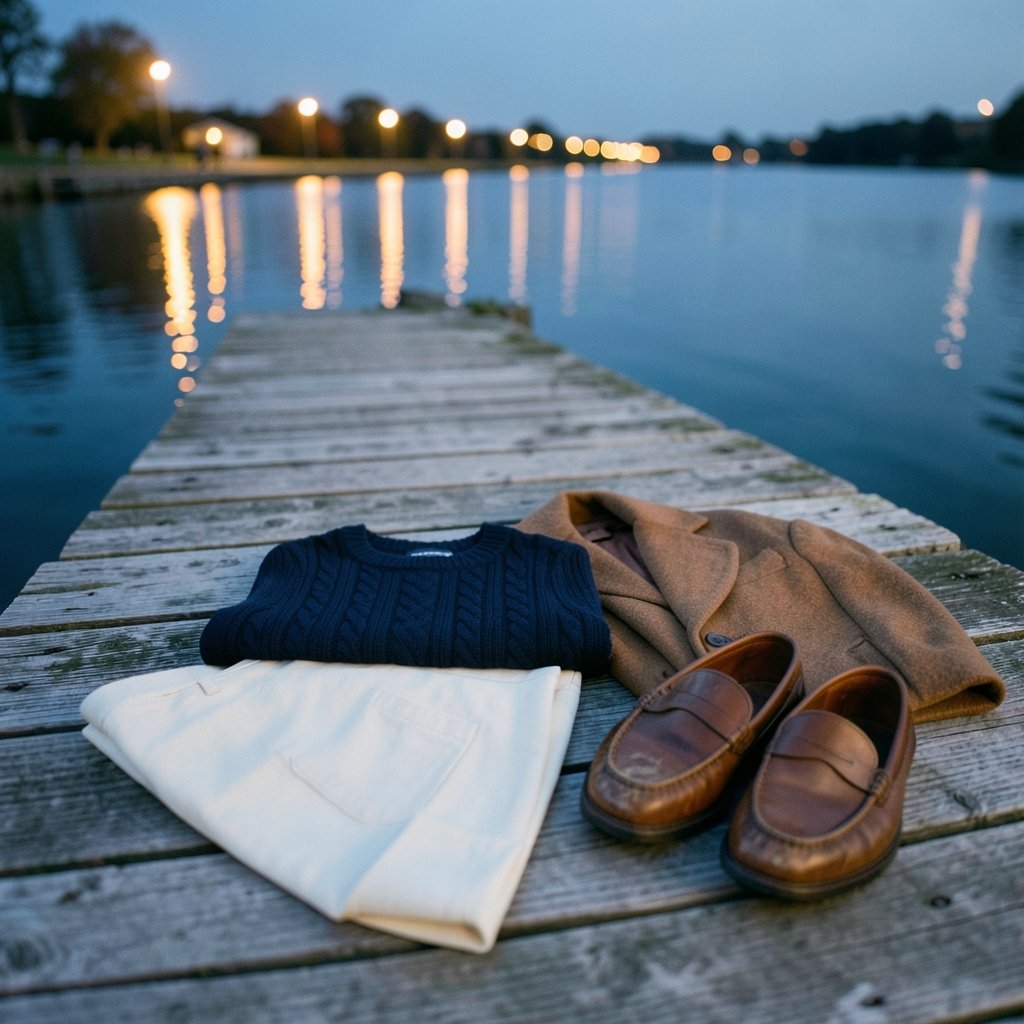
Why does a plain navy sweater and a pair of well-cut trousers look expensive while a logo-covered outfit looks cheap? That is the question behind old money fashion, an aesthetic built on understatement, good materials, and clothes that fit. It borrows from real dress traditions, gets sold as a lifestyle, and is easy to get wrong. This guide explains what the look involves, where it came from, and the practical mistakes that give it away.
What Old Money Fashion Actually Means
The phrase describes a style built around quiet, well-made clothing associated with inherited wealth. Think neutral colors, natural fibers, minimal visible branding, and tailoring that follows the body rather than the trend cycle.
It helps to be honest about the term itself. “Old money” as a fashion label is largely a modern media and social media construct. It is not a documented dress code of any historical class. The aesthetic is a remix of older traditions: British country and sporting dress, Ivy League campus style, and mid-century American preppy dressing.
That history matters because it explains the look’s rules. Country clothing was built for weather and movement. Campus dress was built for a uniform social world. Neither was designed to impress with logos. The status signal came from fabric, fit, and context, not from a label on the chest.
Why Understatement Signals Status
There is a real theory behind this. In The Theory of the Leisure Class (1899), economist Thorstein Veblen introduced the idea of conspicuous consumption, the practice of spending to display wealth. He also described pecuniary emulation, the habit of copying the spending of people one rank above.
Veblen’s framework cuts both ways. If everyone can buy the logo, the logo stops working as a signal. Understatement becomes the smarter move because it requires knowledge rather than money alone. Sociologist Pierre Bourdieu made a related argument in Distinction (1979): taste itself functions as a class marker. Knowing which shade of beige, which collar shape, and which fabric weight reads as “right” is learned, not instinctive.
That is the uncomfortable core of old money fashion. It looks effortless, but the effort is invisible. And invisible effort is exactly what makes it hard to copy.
The Core Elements of the Look

Strip away the marketing and the aesthetic comes down to a short list of choices. None of them are expensive by default. All of them require attention.
| Element | What It Looks Like | What It Avoids |
|---|---|---|
| Color | Navy, cream, camel, gray, olive, forest green | Neon, loud prints, high-contrast logos |
| Fabric | Wool, cotton, linen, cashmere, silk | Shiny synthetics, thin blends that pill |
| Fit | Tailored but not tight, room to move | Skinny cuts, oversized streetwear shapes |
| Branding | Hidden or absent | Large logos, monogram prints |
| Condition | Pressed, polished shoes, clean lines | Wrinkles, scuffs, visible wear |
Color and Fabric Do Most of the Work
A muted palette is the fastest route in. Navy, cream, camel, gray, and olive mix with each other without effort, which is why the look photographs so well. Loud color forces every other piece to negotiate with it. Neutral tones just cooperate.
Fabric matters more than most people expect. Natural fibers drape, breathe, and age well. A wool blazer from a decent maker will hold its shape for years. A cheap synthetic version loses structure after a few washes. The difference is visible from across a room, which is precisely the point.
Fit Is the Real Luxury Signal
Here is the practical truth: a $60 blazer that fits properly beats a $600 blazer that does not. Tailoring is what separates the look from a costume. Shoulders should sit at the shoulder bone. Sleeves should end at the wrist bone. Trousers should break once, lightly, over the shoe.
Most people skip the tailor. That is the single most common mistake. A $20 alteration on an inexpensive jacket can do more for the silhouette than doubling the budget. The aesthetic rewards precision, not price tags.
Where the Aesthetic Came From
The look draws on three traditions, and knowing them helps you shop with intent.
British country dress gave the aesthetic its tweeds, waxed jackets, field coats, and knitwear. These were working clothes for weather, later adopted as leisure wear. Ivy League style contributed button-down shirts, loafers, chinos, and the blazer. Mid-century American preppy dressing pulled it together into a recognizable uniform of polo shirts, cable knits, and boat shoes.
The 2020s version is a rebrand. The phrase quiet luxury spread widely around 2022 and 2023, often tied to television coverage of wealthy families and to luxury brands pulling logos off their products. Whether quiet luxury is a genuinely new trend or an old preppy and minimalist look with new packaging is a fair debate. The honest answer is probably the second. The clothes have not changed much. The marketing language has.
That rebranding explains why the aesthetic shows up in seasonal trend coverage year after year. If you want to see how the look gets reinterpreted for retail, the 2026 fashion trends guide is a useful comparison point, and the broader 2026 fashion trends female tag shows how quickly the same neutrals get resold each season.
How to Build the Look in Practice
You do not need a fortune. You need a plan, a short list, and patience. Here is an order of operations that works.
- Audit what you own. Pull out everything in neutral tones. Set aside anything with a visible logo, a shiny finish, or a fit you have been ignoring.
- Fix the fit first. Take two or three pieces to a tailor before buying anything new. Sleeve length and waist take-in are cheap and transform how clothes read.
- Buy fabric, not labels. Check the tag. Look for wool, cotton, linen, and cashmere. Skip blends that pill after a month.
- Build a small core. One navy blazer, two pairs of trousers, three knit sweaters, two button-down shirts, one pair of leather loafers, one pair of clean white sneakers.
- Buy secondhand where it makes sense. Quality tailoring holds up. A used wool coat in good condition often beats a new fast-fashion version on both price and longevity.
Common Mistakes People Make
The first mistake is buying the aesthetic as a costume. Head-to-toe preppy styling reads as dress-up. Real wearers mix one or two signifiers with ordinary clothes.
The second is confusing beige with quality. A thin beige polyester knit looks worse than a well-made navy wool one. Color is not the signal. Material and construction are.
The third is ignoring maintenance. Scuffed shoes, wrinkled shirts, and bobbly sweaters undo everything. A shoe brush, a clothes brush, and a steamer cost less than one new sweater and do more for the look.
The fourth is chasing the trend too hard. The aesthetic is cyclical, and it gets recycled constantly. The fashion trends 2026 tag shows how often the same quiet pieces get rebranded as new. Buy for the long run and the trend cycle stops mattering.
What Actually Works
In practice, three habits carry most of the weight. Buy fewer, better pieces. Learn your measurements so you can shop secondhand with confidence. And build a small maintenance kit so your clothes stay in condition.
There is a useful parallel in other buying decisions: the same logic that applies to buying used trucks to avoid money pits and find a keeper applies to secondhand tailoring. Check the seams, inspect the wear points, and walk away from anything that needs more repair than it is worth.
The Criticism Worth Hearing
Old money fashion has a real image problem, and pretending otherwise is dishonest. The aesthetic is largely performative. It is sold as a look, which arguably contradicts its own premise. If the point is that wealth does not need to announce itself, then selling the announcement-free look as a product is a contradiction.
Critics also note that the style borrows heavily from specific class traditions while stripping the context. The clothes were never just clothes. They marked membership in a particular social world. Wearing them without that world is a form of borrowing, and it is worth naming.
The fair defense is that good design is good design. A well-cut wool coat is not a moral failing. The problem is not the clothing. It is the pretense that the clothing makes someone something they are not. Wear it as a style, not a status claim.
Old Money Fashion Beyond Clothing
The aesthetic has spread well past wardrobes. It now covers interiors, weddings, travel, and food. The same signals apply: muted palettes, natural materials, and an avoidance of anything that looks like it is trying too hard.
You can see the same pattern in how older, understated traditions get rediscovered and repackaged. The old money phrase and what it really means today traces how the term keeps resurfacing, and even food follows the pattern: angel salad and why this old-fashioned dessert still shows up is a good example of a retro item returning because it reads as heritage rather than novelty.
The overlap with European luxury is obvious too. The Italian luxury fashion tradition built much of its reputation on exactly the values this aesthetic claims: fabric quality, construction, and restraint. That connection is not accidental. The look is a global remix of European craft traditions filtered through American campus style.
Even illustration has picked up the theme, with artists like Angelica Hicks turning runway moments into drawings that poke at exactly this kind of status dressing. The aesthetic is now a subject as much as a style.
Conclusion
Old money fashion is less about money than about attention. It rewards fabric knowledge, fit, maintenance, and restraint. It punishes logos, shortcuts, and costume dressing. The history behind it is real, the theory behind it is real, and the criticism of it is fair. None of that stops the look from being genuinely useful. A small wardrobe of well-made, well-fitting, neutral clothes will outperform a closet full of trend pieces in almost any setting. Start with fit. Buy for fabric. Skip the logo. That is the whole trick, and it has been the same trick for a century.
Frequently Asked Questions
What is old money fashion?
It is a style built on understated, well-made clothing associated with inherited wealth. Key markers include neutral colors, natural fibers like wool and linen, minimal visible branding, and tailoring that fits rather than follows trends. The term is a modern label for a mix of older British country, Ivy League, and American preppy dress traditions.
Is old money fashion expensive?
Not necessarily. The look rewards fit, fabric, and condition more than price. A moderately priced wool blazer that has been tailored will read better than an expensive one that fits poorly. Secondhand shopping and a good tailor stretch a small budget further than buying new trend pieces.
What colors count as old money?
The core palette is navy, cream, camel, gray, olive, and forest green. These tones mix easily with each other, which keeps outfits looking calm and deliberate. Bright neons, loud prints, and high-contrast logos work against the aesthetic.
Is quiet luxury the same as old money fashion?
They overlap heavily but are not identical. Quiet luxury is a marketing and media phrase that spread widely around 2022 and 2023, describing logo-free, high-quality goods. Old money fashion is the broader aesthetic. Many observers argue quiet luxury is a rebranding of older preppy and minimalist styles rather than something new.
How do I start building this wardrobe on a budget?
Audit what you already own, then spend first on alterations rather than new purchases. Build a small core of neutral pieces in natural fabrics: one blazer, two pairs of trousers, three knit sweaters, two shirts, and one pair of leather shoes. Buy secondhand where quality holds up, and keep a basic maintenance kit for shoes and knitwear.
Why does the aesthetic get criticized?
Critics argue it is performative and commodified. It is sold as a look, which contradicts the idea that real wealth does not need to announce itself. Others note it borrows from specific class traditions while stripping their context. The clothes themselves are not the problem; treating them as a status claim is.














