Clary sage is one of the hardest-working notes in perfumery, and one of the least known. It is the herbal lift in Montblanc Explorer, the backbone of Hermès H24, and the quiet warmth in Acqua di Giò Eau de Parfum. It smells green and warm at once, a little nutty and a little like tea, with a musky sweetness underneath that keeps a perfume from smelling thin or sharp.
Most people who wear it have never heard its name, and most who have heard it think it is the sage in their kitchen. It is not. Clary sage is Salvia sclarea, a tall Mediterranean herb grown for its oil. Kitchen sage is Salvia officinalis, a separate species with a sharper, more savoury smell.
This article explains what clary sage is, where it comes from, how it ends up in a bottle, and how to tell it apart from its cousins: the plant, the molecule behind its smell, and its role in the fougère family.
Key takeaways
- Clary sage is Salvia sclarea, a tall Mediterranean herb grown for its oil, and it is a different plant from kitchen sage and Spanish sage.
- Its smell is herbal, warm, and slightly sweet, nutty and tea-like, not sharp or savoury the way garden sage is.
- Sclareol is the molecule behind its warmth, and it also works as a natural fixative that helps a perfume last.
- It anchors fougères and fresh woody scents, usually in the top or the heart, where it bridges bright citrus and deep woods.
- A label that says “sage” can mean garden sage, Spanish sage, or clary sage, so check which plant is named before you assume.
What clary sage is, and where it comes from
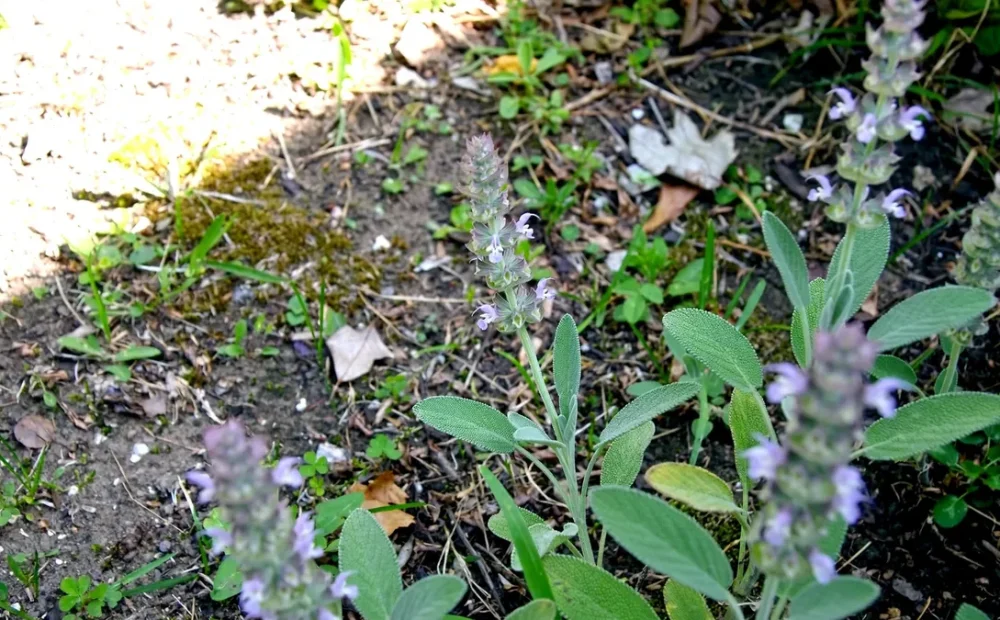
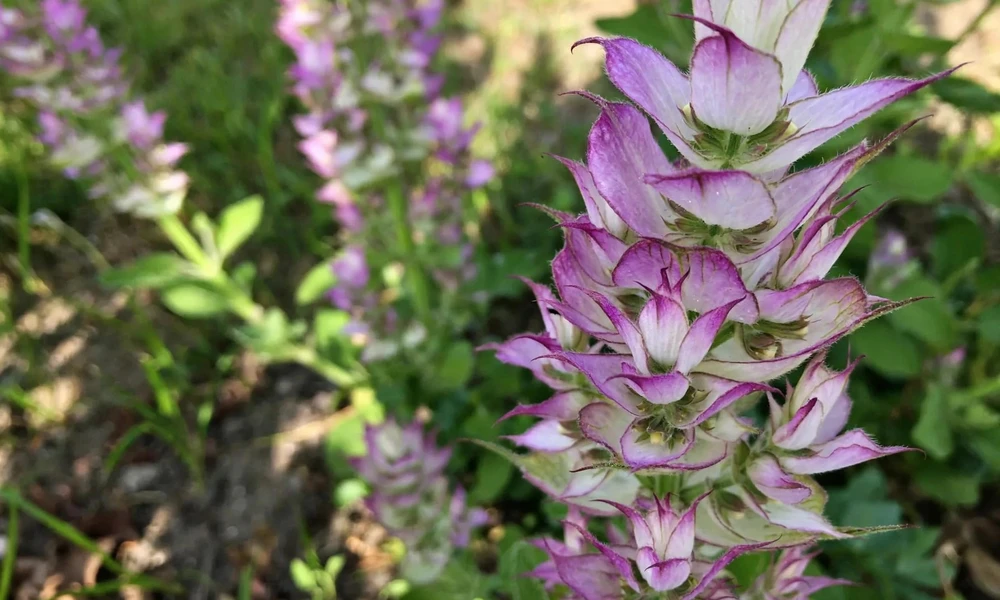
Salvia sclarea is a biennial herb: it grows leaves in its first year and flowers in its second. In the wild it grows across the Mediterranean, from southern France and Italy through the Balkans to Central Asia, usually on dry, sunny slopes where little else thrives. The plant can reach a metre tall, with large, wrinkled leaves and tall stems of small lilac-pink flowers that open in early summer.
Most of the world’s clary sage oil now comes from cultivated fields. Provence in southern France is the most famous source, and Bulgaria and Italy grow large amounts too. The crop is planted in rows, left to establish in its first year, and harvested in its second, when the flowers are open and the oil content peaks, usually over a few weeks in June or July.
The plant’s history in medicine is older than its history in perfume. Herbalists used it for centuries as a remedy for sore eyes, which is where the name comes from, and for skin and digestive complaints. Perfumers came to it later, for the oil’s warm, musky sweetness and a molecule called sclareol, one of the most useful fixatives in the trade.
How clary sage ends up in a perfume bottle
The journey starts in the field, when the flowering tops are cut and taken to a still, usually within a day. Steam is passed through the plant material, carrying the volatile oils with it, and the steam is then cooled so the oil separates from the water. The result is a pale yellow oil that smells herbal, warm, and a little sweet. The yield is small, which is why the oil is not cheap.
That oil is only one of the materials a perfumer can buy. There is also clary sage absolute, made by solvent extraction rather than steam, which smells richer, sweeter, and more floral than the oil, and there is sclareol itself, isolated from the oil and sold as a single molecule. The oil is the lightest and most herbal, the absolute is the warmest and most rounded, and sclareol on its own is the musky, amber-like warmth. A related herbal material, hyssop, is made in a similar way, and comparing the two oils is a good way to learn how much of a note comes from the plant and how much from the method.
Once the material reaches the perfumer’s bench, it is used in small amounts. Clary sage oil is strong, and a little goes a long way. It is usually added to the top or the heart of a composition, where it can lift the opening and bridge the gap between bright citrus notes and deep woody or musky bases. The perfumer tests it at several doses, because the difference between a lift and a flat smell can be a fraction of a percent.
Nine facts about clary sage in perfume
Salvia sclarea grows wild across the Mediterranean and is now farmed in Provence
What it shows: Clary sage is a Mediterranean plant first and a perfume material second. It grows wild on dry, sunny slopes from southern France and Italy through the Balkans, and it is now cultivated in Provence, Bulgaria, and Italy, where the warm summers and poor soils suit it.
What to consider: The farming matters because it decides the smell. Oil from Provence is often softer and more floral, while oil from Bulgaria can be greener, so two perfumes that both list clary sage can smell different.
Only the tops are distilled, and only for a few weeks a year
What it shows: Only the flowering tops are distilled, not the roots or the seeds, and the harvest is timed for the few weeks when the flowers are open and the oil content peaks. Steam passes through the cut plant, and the oil is separated from the condensed water.
What to consider: The yield is low and the timing is unforgiving. Cut too early and the oil is thin and green; cut too late and it turns heavy and dull.
Sclareol is also why clary sage works as a natural amber fixative
What it shows: Sclareol is a diterpene alcohol found in clary sage oil, and it is responsible for much of the note’s warm, musky sweetness. Perfumers also value it as a fixative, which slows the evaporation of more volatile notes and helps a perfume last longer on skin.
What to consider: Sclareol on its own smells different from the whole oil: warmer, muskier, and less green. When a perfume smells ambery and clean without an obvious amber note, sclareol is often doing the work.
It leads the opening, then steps back as the woods and musk arrive
What it shows: In most compositions, clary sage sits in the top or the heart. It arrives in the first minutes as a fresh herbal lift, stays through the middle hours as a warm bridge, and then fades as the cedarwood, vetiver, and musk of the base take over.
What to consider: Because it fades, a perfume can smell strongly herbal in the shop and barely herbal by the evening. Judge it after a full day of wear, not after a single spray on paper.
Its name means “clear eye”, from an old remedy for sore eyes
What it shows: The species name sclarea comes from the Latin clarus, meaning clear, and the herb was known for centuries as “clear eye”. Herbalists soaked its seeds in water, where they formed a mucilage that was used to wash the eyes and remove grit.
What to consider: The old medicinal uses are not a guide to modern safety. Clary sage oil is a perfume material, not an eye treatment, and it should never be used undiluted.
Bergamot, lavender and cedarwood turn up beside clary sage most often
What it shows: Look at enough pyramids and a pattern appears. Bergamot brightens clary sage and gives it a fresh opening. Lavender is its traditional fougère partner, and the two have been paired since the nineteenth century. Cedarwood dries it out and gives it structure in the base.
What to consider: The partners change the note more than most people expect. With bergamot it smells bright and clean; with cedarwood it smells dry and woody; with lavender it smells traditional. If you like clary sage in one perfume and not in another, the partners are usually the reason.
The 1970s barbershop classics made clary sage a men’s-cologne staple
What it shows: Clary sage was already in Dunhill for Men in 1934, but it became a men’s-cologne staple in the 1970s, when Paco Rabanne Pour Homme in 1973 and Lacoste in 1984 put it at the front of the aromatic fougère style. Those scents defined what a men’s cologne smelled like for a generation.
What to consider: The note faded in the 1990s, when aquatics took over. Its return came with the modern fougère revival: Montblanc Explorer in 2019 and Hermès H24 in 2021 both put clary sage back at the centre.
The absolute is richer and sweeter than the oil, from the same plant
What it shows: The oil is steam-distilled and smells light, herbal, and green, with a clean warmth underneath. The absolute is solvent-extracted and smells richer, sweeter, and more floral, with a honeyed depth the oil does not have. They come from the same plant, but the extraction method changes which molecules survive.
What to consider: A pyramid rarely says which one was used, so two perfumes can both list clary sage and smell quite different. The absolute is used more in fine fragrance, the oil more in aromatherapy and in soaps and candles.
The dose decides whether clary sage lifts a blend or flattens it
What it shows: Dose is everything with this note. A small amount lifts a composition, makes it smell clean and expensive, and helps the top and base connect. A large amount crowds out the other notes, turns the whole perfume powdery and flat, and leaves a dusty, almost chalky impression.
What to consider: This is why perfumers use clary sage as a bridge rather than a lead, except in deliberate statements like H24. If a perfume smells dusty rather than herbal, the clary sage is probably overdosed.
Clary sage, garden sage, and Spanish sage: telling them apart
The three sages are different plants with different smells, and the confusion between them is the single biggest source of error in this corner of perfumery. Garden sage, Salvia officinalis, is the culinary herb: sharp, savoury, camphor-like, with a smell that belongs in a kitchen rather than on skin. It appears in perfume rarely, usually as a small, savoury accent.
Clary sage, Salvia sclarea, is the perfume sage: warmer, softer, and sweeter than garden sage, with a nutty, tea-like quality and a musky warmth from sclareol. Spanish sage, Salvia lavandulifolia, sits between the two: greener than clary sage, softer than garden sage, with a lavender-like freshness. A related herbal note, mugwort, is greener and more bitter than any of the three sages, and it is a useful comparison.
The practical test is simple. Smell the plant or the oil if you can: garden sage is sharp and savoury, clary sage is warm and musky-sweet, Spanish sage is green and lavender-like. On a perfume pyramid, trust only the full name. “Clary sage” means Salvia sclarea. “Sage” on its own means the perfumer did not specify, and you should not assume.
The caveats that matter
Clary sage is a well-established perfumery material, and the information here comes from published pyramids, perfumer interviews, and botanical sources. Even so, a few honest limits apply. Pyramids are marketing documents as well as technical ones, and they do not always list every material, nor do they always distinguish between the oil and the absolute, or between clary sage and garden sage. Retailers copy pyramids from each other, so an error in one listing can spread to many.
| Detail | What is known |
|---|---|
| The plant | Salvia sclarea, a tall Mediterranean biennial with lilac-pink flowers, not kitchen sage |
| Where it is grown | Provence, Italy, and Bulgaria, on dry, sunny ground with little water |
| How the oil is made | Steam distillation of the flowering tops, harvested when the flowers are open |
| The key molecule | Sclareol, warm and musky, a natural fixative and a starting point for amber molecules |
| Where it sits in a perfume | Top or heart in most compositions, fading into woods and musk over hours |
| What it pairs with | Bergamot, lavender, cedarwood, vetiver, and geranium more than any other notes |
| Safety in perfume | Generally well tolerated in finished perfume; undiluted oil should be diluted before skin contact |
| What it is not | Not garden sage, not Spanish sage, and not white sage, which is almost never used in perfume |
If you buy clary sage oil for home use, dilute it in a carrier oil before it touches your skin, keep it away from your eyes, and store it in a cool, dark place. If you are pregnant, breastfeeding, or using prescription skincare, check with a clinician before using undiluted essential oils.
Checklist: smelling a clary sage perfume honestly
Use these checks when you try a perfume that lists the note, and again after a full day of wear.
- Make sure the pyramid names clary sage, not just sage.
- Smell the opening first: the herbal lift in the first minutes is the note at its clearest, before the base takes over.
- Compare it with garden sage: if you can, smell the two side by side, and the difference between sharp and warm becomes obvious.
- Notice the drydown: clary sage should fade into warmth, not dustiness, and a powdery, flat drydown usually means it was overdosed.
- Ask whether it is the oil or the absolute: the absolute smells richer, and it explains why two clary sage perfumes can smell so different.
- Wear it for a full day: the note changes more over eight hours than most.
Frequently asked questions
How would you describe the smell of clary sage?
Herbal, warm, and slightly sweet, with a nutty, tea-like quality and a musky warmth underneath. It is green without being sharp, and it smells clean rather than soapy, and in a perfume it reads as a fresh lift that softens into warmth.
Is clary sage the same as Spanish sage?
No. Clary sage is Salvia sclarea, and Spanish sage is Salvia lavandulifolia, a different plant. Spanish sage smells greener and more lavender-like, while clary sage is warmer and muskier. They are cousins, not the same material, and a pyramid that names one does not mean the other.
Does clary sage oil need diluting before it touches skin?
Yes. Undiluted essential oil should be diluted in a carrier oil before skin contact, and kept away from the eyes. In a finished perfume, the note is present in small, regulated amounts, so normal use is not a concern for most people, but the raw oil is a different matter.
Why do so many men’s colognes use clary sage?
Because it gives a clean, barbershop character that is hard to get from any other single material. It bridges bright citrus and deep woods and keeps a fougère from smelling soapy. The 1970s classics made it the default herbal note for men’s cologne, and the modern revival has kept it there.
Can I grow clary sage at home for perfume?
You can grow the plant: Salvia sclarea likes a sunny, dry spot with poor soil, and it flowers in its second year. Turning it into oil needs steam distillation equipment, and the yield is small, so most people are better off buying the oil. A related note, wormwood, is another herb with a long history in perfume.
Is clary sage used in women’s perfumes?
Yes, though it is less common than in men’s colognes. The note itself is not gendered, and it appears in women’s and unisex perfumes where a herbal, green character is wanted, often paired with florals. If you like herbal scents, try it without worrying about the marketing.
The bottom line
Clary sage is a Mediterranean herb, Salvia sclarea, whose warm, herbal, slightly sweet oil has anchored fougères and fresh woody scents for nearly a century. Its key molecule, sclareol, gives it both its musky warmth and its power as a fixative, and its role is usually that of a bridge: it connects bright citrus to deep woods and keeps a composition smelling clean.
The one thing to remember is the name. “Sage” on a pyramid can mean three different plants, and only “clary sage” means Salvia sclarea. Check the full name, smell the perfume on skin for a full day, and judge it by how the herbal note changes over hours rather than how it smells in the first minute.