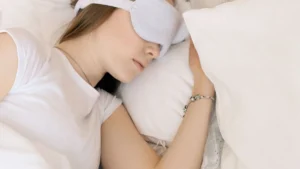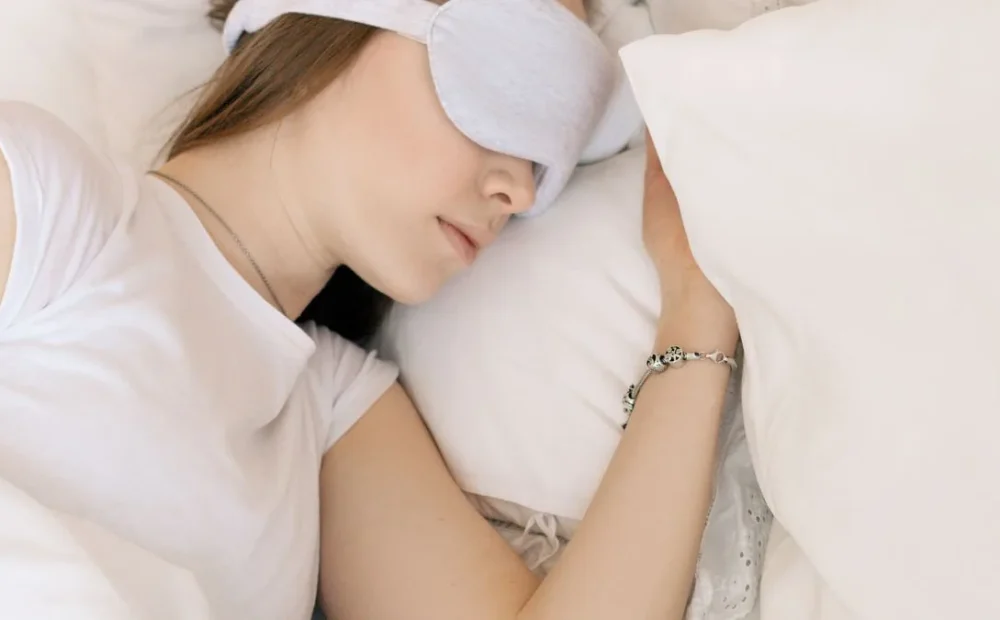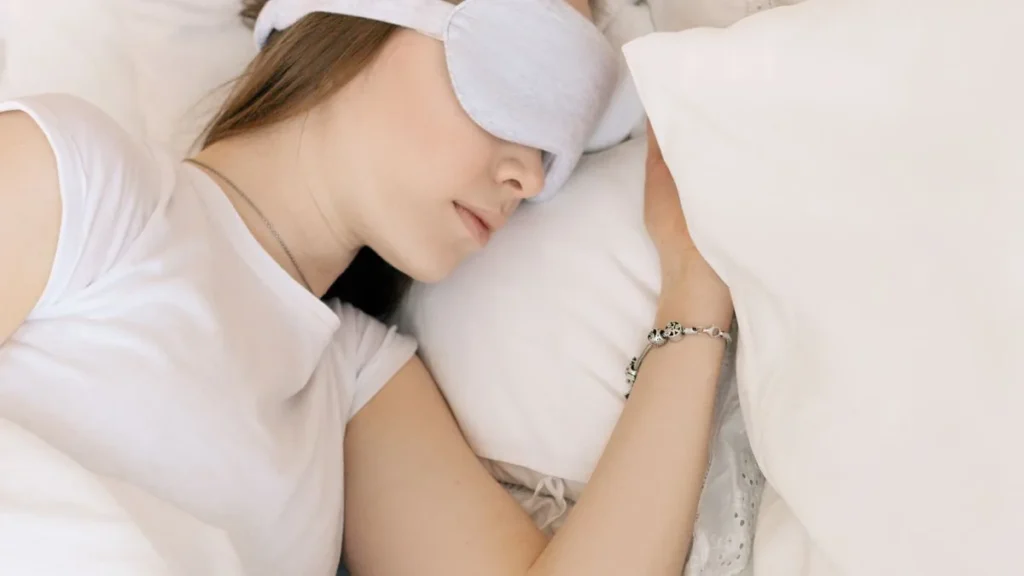
A silk sleep mask is a soft band of silk worn over the eyes at night to block out light. It sits lightly across closed eyelids, held by a strap around the back of the head, and its job is simple: to make the world dark, even when the room is not.
It sounds almost too simple to matter, and that is part of its appeal: no app, no habit to learn, just put it on before you turn out the light. Yet it touches on sleep, skin and hair at once.
This guide explains what a silk sleep mask is, how it differs from satin and cotton, what silk does for skin and hair, and how to choose, fit, wash and wear one.
Key takeaways
- A silk sleep mask is first of all a light-blocking tool: darkness helps you sleep, and the silk is about comfort, not magic.
- Real silk sleep masks are usually mulberry silk, measured in momme; 19 to 22 momme feels substantial, not heavy.
- Silk is smooth and gentle on the thin skin around the eyes: less tugging, fewer sleep creases, less friction on hair than rough cotton.
- Satin is a weave, not a fibre, so a satin mask can be silk or polyester; the label, not the shine, tells you which.
- A mask will not fix broken sleep alone, and anyone with an eye infection, a recent eye procedure or a skin condition that flares under cover should check with a clinician first.
What a silk sleep mask actually is
A silk sleep mask is three parts: a front panel covering the eyes, a lining against the skin, and a strap holding it in place. The front panel is usually padded or layered, since one thin layer of silk lets light through. On a well-made mask the lining is silk too, not a cheaper fabric against the skin.
Flat masks lie on the lids, suit most sleepers, and pack down to nothing. Contoured masks have a dome over each eye, so the fabric never touches the lashes; side sleepers usually prefer them. A wide, flat strap spreads pressure and tangles hair less than a narrow cord, and an adjustable slider sets the fit once.
How a sleep mask helps you sleep
The honest answer starts with light. Your body runs on a roughly 24-hour rhythm, and light is the strongest signal telling it to be awake or asleep. Light reaching the eyes, even through closed lids, suppresses melatonin, the hormone that helps you feel sleepy. A mask that genuinely blocks light gives your brain the dark signal it needs, even in a bright bedroom.
The clearest benefit is for people sleeping in bright rooms: shift workers sleeping by day, travellers crossing time zones, anyone whose curtains fall short. In a properly dark room a mask adds less. It can also anchor a nightly ritual; see our guide to the best sleep routines, where the mask is one small piece of a larger pattern.
Mulberry, charmeuse and momme: the silk explained
Most good silk sleep masks are mulberry silk, from silkworms fed on mulberry leaves, whose long fibres give the fabric its soft hand and sheen. Charmeuse is the weave you will see named most often: a satin weave, glossy outside and softer against the skin. The shine comes from the weave, not the fibre, so polyester charmeuse can look similar on a screen.
Momme measures silk weight: the higher the number, the heavier and denser the fabric. Sleep masks usually sit between 16 and 22 momme: at 16 the silk feels light and cool, at 19 to 22 more substantial and longer-lasting. Below 16 it can feel thin and wear quickly; above 22 it starts to feel heavy on the face. A mask that states its fibre and momme is telling you something; one that only says silky or silk-feel is telling you something else.
Silk versus satin, cotton and foam
The mask aisle is confusing because the words overlap: silk is a fibre, grown by silkworms; satin is a weave, floating yarns to make a glossy face, and it can be woven from silk, polyester, nylon or rayon. So a satin mask might be silk, and a silk mask satin-woven; only the fibre line settles it.
Cotton is the plain alternative: breathable, washable and cheap, but rougher, so it creates more friction and absorbs moisture from skin and night cream. Foam masks block light well but trap heat and cannot be washed easily. Silk sits in the middle: smoother than cotton, cooler than polyester satin, less absorbent, so night cream stays on your face. Its weaknesses are gentler washing, a higher price, and no rigid structure.
| Mask type | Feel on skin | Light blocking | Breathability | Washing | Best for |
|---|---|---|---|---|---|
| Mulberry silk, flat | Smooth, cool | Good, if layered | Good | Hand wash, gentle | Everyday, travel |
| Mulberry silk, contoured | Very smooth, no pressure | Very good | Good | Hand wash, gentle | Side sleepers |
| Polyester satin | Smooth, can feel warm | Good | Fair | Machine wash | Budget, easy care |
| Cotton | Soft, more texture | Fair to good | Very good | Machine wash | Hot sleepers |
| Contoured foam | Soft, structured | Very good | Fair | Spot clean only | Total blackout |
| Gel or cooling | Cool at first | Good | Poor | Spot clean only | Puffy mornings |
| Weighted | Gentle pressure | Good | Fair | Hand wash | Pressure lovers |
| Blackout, multi-layer | Varies by outer fabric | Excellent | Fair | Machine wash | Day sleep |

What silk can do for skin and hair
Silk’s gentleness is real, but be precise: the skin around the eyes is the thinnest on the face and creases easily. Smooth silk slides rather than drags, so it tugs less and presses in fewer sleep lines: a modest win, not a treatment, and it will not erase lines already there.
The same applies to dark circles: a mask does not lighten pigment, but better sleep and less puffiness can make the under-eye area look brighter. If dark circles are your main concern, the eye cream matters far more; our guide to the best eye creams for dark circles covers what actually helps, and a mask is the quiet partner to that routine, not a replacement for it.
For hair, the benefit is friction again: hair rubbing a rough strap or coarse edge can tangle and break, particularly at the hairline. A smooth silk strap slides over hair instead of catching it, and is less likely to dent a fringe. Silk contains a protein called sericin, often used in hair care for its smoothing effect, as our guide to silk protein for hair. A mask will not repair damaged hair, but it touches your hair all night, so its fabric is worth a thought.
Fit, shape and straps: getting it comfortable
A mask that fits is one you forget. The panel should cover both eyes fully, with a little margin, so no light leaks in at the sides. The bottom edge should sit flat against the bridge of your nose, or in the cut-out provided, rather than floating above it.
The strap should hold the mask snugly without pressing your temples or leaving a red mark; wake with a headache and the strap is too tight. Adjustable straps are worth it, because heads vary more than masks do. Side sleepers should check it does not shift against the pillow or dig in at the fastening. If you wear eyelash extensions, a contoured mask is almost essential: a flat mask presses directly on the lashes all night.
How to wash and care for a silk sleep mask
Silk is a protein fibre, like hair, and dislikes the same things: hot water, harsh detergent, rough handling. Hand washing is safest and takes five minutes: cool water, a little gentle detergent, a short soak, a gentle swish. Never wring it; press the water out between a clean towel.
Some masks are machine washable on a cold, delicate cycle in a mesh bag, which suits sturdy, higher-momme silk but shortens the life of lighter silk. Air-dry flat, away from direct sunlight. Do not tumble dry, iron on high heat, or bleach it. Wash it once or twice a week, more often in summer, and keep a spare in rotation. Replace it when the elastic goes slack or the silk thins: a mask that no longer blocks light has stopped doing its job.
Who should skip one, and when it will not help
A sleep mask is low-risk for most people. With an eye infection, a stye or conjunctivitis, do not wear one until it clears: a warm, covered eye suits an infection. After eye surgery or laser treatment, follow your clinician; a mask is usually off limits until healing is complete. The same applies to skin conditions that flare under covered, warm skin.
Some people find a mask claustrophobic, especially restless sleepers, and it becomes one more thing to fight at bedtime. If you wake repeatedly to adjust it, or take it off in your sleep every night, it is not helping; a heavier curtain may be the better answer. It will not cure insomnia, replace a regular sleep schedule, or undo late-night screens, late caffeine, or a warm bedroom. It works best as part of a calmer evening: dim lights, a regular bedtime, a cool, dark room.
Before you buy: a quick checklist
- Fibre first: the label should say 100% mulberry silk, 19 to 22 momme.
- Silk on both sides: the lining against your skin should be silk, not a cheaper fabric behind a silk front.
- Light test: hold it to a bright light; if you can see through it, it will not block light at night.
- Adjustable strap: a slider or hook-and-loop tab sets the fit once, and a wide flat band is kinder than a narrow cord.
- Shape for your sleep style: flat for back sleepers and travel, contoured for side sleepers and lash extensions.
- Washable in practice: if you will not hand wash, buy one genuinely machine washable on cold, and a spare.
Frequently asked questions
Is a silk sleep mask better than a regular sleep mask?
For comfort, usually yes: silk is smoother, cooler and gentler than cotton or polyester. For blocking light, design matters more than fabric. Silk wins on feel, not darkness.
Can I wear a silk sleep mask every night?
Yes, if it is clean and fits well. Wash it weekly, let it dry fully, and replace it when the elastic slackens or the silk thins. Dry eyes? Loosen the strap or take a night off.
Does a silk sleep mask help with wrinkles?
It can reduce the sleep creases a rough fabric presses in overnight, because silk slides rather than drags. It does not reverse wrinkles or replace skincare.
Will a silk sleep mask damage my hair?
No, it is gentler than most: a smooth silk strap catches hair less than a narrow cord, and silk does not absorb moisture the way cotton does. Tie long hair loosely and keep the strap flat.
How do I stop my sleep mask slipping off at night?
Tighten the strap slightly, keep it flat and untwisted, and check the panel stays put when you turn over. A contoured mask grips better, and a low, loose plait helps very smooth hair.
Is a silk sleep mask worth it for travel?
Yes: it weighs almost nothing, blocks cabin light, and helps in hotel rooms with thin curtains. Pack it in its own pouch.
The bottom line
A silk sleep mask is a simple thing: it blocks light, feels good against the skin, and asks nothing beyond wearing it. The silk is the comfort layer; the darkness is the point. Buy it for the darkness, choose the silk for the comfort, and judge any mask by its label, fit and light test.
If you sleep in a bright room, travel often, or share a bed with a late reader, a good silk mask earns its place. If your room is already dark and your sleep sound, it is a luxury, not a necessity.
Note: This is general information, not medical advice. If you have an eye or skin condition, or sleep problems that persist, speak to a clinician.